
In December 1968 a plane carrying Gabriel Garcia Marquez and Carlos Fuentes touched down in Prague. The two authors had come to show solidarity with Czechoslovakia’s writers and to discuss the year’s historic events: how the hopes of Dubček’s Prague Spring had ebbed into the interminable autumn of the Soviet patriarch (totalitarian time ran slow, Solzhenitsyn had warned).
Their host was the Czech novelist and essayist Milan Kundera, who has died in Paris aged 94. Mindful of the need to talk freely, Kundera took his guests to a sauna, the one place in the city impossible to bug. As the steam rose and their bodies began to overheat, the visitors asked where they might sluice off the sweat. The Czech led them to a back door opening onto a hole in the frozen Vltava. He motioned towards the river and they clambered down, expecting him to follow. But Kundera remained on the bank, bellowing with laughter as these hothouse flowers of Latin-American literature emerged like popsicles from the icy waters of Mitteleuropa.
“The second Czech K” as Fuentes called him, was 39 in 1968 with a growing reputation as poet, dramatist, essayist and formidable intellectual. His first novel, The Joke (turned down initially for opposing official ideology), had finally been published the year before, gaining cult success, but this moment when socialism with a human face met the “threatening fists” of power was decisive, providing not just the setting for his best-known work, The Unbearable Lightness of Being (1982), but the governing theme of his oeuvre: how to be a novelist in an age when “political demagoguery has managed to ‘sentimentalize’ the will to power”. For Kundera, who once defined himself as “a hedonist trapped in a world politicised in the extreme”, and whose novels are replete with bodily pleasures and humiliations, the lyrical intoxication of poet and revolutionary were dangerously allied.
He was born in 1929 in the Moravian capital Brno, where his father, a pianist, composer and musicologist, was head of the Janáček Music Academy from 1948 to 1961. The son also studied composition, and while his father did not make a professional pianist of him, music was a lifelong love, often summoned in his novels and essays. At Prague’s Charles University, he studied literature and aesthetics and like most of his generation was caught up in postwar euphoria, attracted to the possibilities held out by communism, after the blight of nazism and collaboration, of a Czech society reborn. The Russians liberated the country in 1945 and no one was surprised when the following year the communist party won 38% of the vote and formed a coalition government. Kundera joined (“I too once danced in a ring. It was the Spring of 1948,” he confesses in The Book of Laughter and Forgetting, 1979), and some of his poetry at this time displays the kind of lyrical enthusiasm he would later decry.
He switched his degree to film but in 1950 was expelled for “anti-party activities”, an incident that gave birth to The Joke. Allowed to return to his studies, he rejoined the political fold in 1956, remaining in the party for the next 14 years. His humour and freewheeling, speculative manner as a teacher of world literature at the Prague Film School influenced many Czech new wave directors, Milos Forman among them. But from the start, being funny was a serious business. In The Joke a man sends a postcard with the mock salutation, “Long Live Trotsky!” The irony is lost on the censors, the result disastrous. Similarly, the stories that make up Laughable Loves (1963-8), move in a blink from farce to horror: the book was completed three days before the Soviet invasion.
Like many artists and intellectuals he was involved in the movement to create a de-Stalinised socialism. At the Fourth Congress of the Writers’ Union in 1967, Kundera gave a rallying speech arguing that Czechoslovakia’s existential precariousness (frequently overrun, its language threatened) placed it in a unique position from which to address the 20th century, but this could be realised “only [in] conditions of total freedom”. However, after the invasion, and Dubček’s humiliation at Soviet hands, his belief in the possibility of change unravelled: he lost “the privilege to work”, his books were removed from libraries and, by 1970 and normalizace – the policy of undoing Dubček’s reforms and returning to the old standards – he could no longer publish.
His Kafkaesque view of power led to disagreements with the dissident playwright Václav Havel whom he attacked for encouraging the illusion of hope (“moral exhibitionism”) in a situation where history preordained defeat. Only apart from the fray could you record your testament and tip your hat: this is how the novel faces power, he argued famously, with “the fight of memory against forgetting”. Havel – who remained in “the country of the weak” (The Unbearable Lightness of Being), was imprisoned, then fought to lead a new Czech nation in the finally successful Velvet Revolution – admonished him: history is not a clever divinity playing jokes on us; we are “creators of our own fate”. But Kundera had long since left the stage.
At about the same time, in 1968, he started being translated abroad, a “traumatic” experience for him: he accused publishers in the west of acting like Moscow censors, when they, too, tried to “normalise” his work to fit Western standards. But he took a job in France at the University of Rennes, and four years later his Czech citizenship was revoked. He considerably revised into French all his works written in Czech, then set a novel in France, Immortality (1988), concerning the proliferation of the media’s “imagology”. Finally he began writing entirely in French (despite which, he won the 2007 Czech State Prize for Literature). His Gallic novels – Slowness (memory intensifies as speed reduces), Identity (1998), Ignorance (2000), and The Festival of Insignificance (2014) – were well-received though none had the impact of the earlier Czech works.
The Book Of Laughter and Forgetting, the first novel to come from his exile – essayistic, multi-storied, but with scenes so transparently born of argument as to be “almost hypothetical” (James Wood, The New Republic) – stages a battle between devilish anti-meaning and the angelic one true idea of communism. He pictures these celestial figures laughing in the face of one another, a murderous dialectic against which the writer, with his love of variety and inconclusiveness, has no defence: “the terrifying laughter of angels…covers my every word with its din.”
His writing contains much of this dark laughter, strewn with gags, pranks and paradoxes, and there are good reasons for this. He exploits the vein of black comedy that central European history gives its writers as a birthright, but more ambitiously (and Kundera is nothing if not ambitious) it is humour, originating in the laughter of Boccacio, Cervantes and Rabelais, that he sees underpinning the European novel, and which he argues, in four volumes of essays, has uniquely shaped modern western consciousness.
Octavio Paz thought “Humour… the great invention of the modern spirit”, and for Kundera no one better explored and disseminated this idea than Don Quixote’s children: those unheroic, self-deluding and body-bound creatures whose mortal comedy produces in the novel an art of essential ambiguity and polyphony. His defence of its mockery and refusal to judge (even as he senses its demise) is that springing from the novel’s pages comes no less than our understanding of what it is to be an individual, and with this, the idea of “human rights”.
All of which may seem a heavy load for any book to bear, and perhaps explains why some critics find his writing too didactic (“all talk and no story”), and find the weight of argument defensively deployed and insufficiently balanced by the lightness of touch required by comedy and eroticism. For all Kundera’s engaging intelligence, John Updike also felt a “strangeness that locks us out.” Unlike Marquez, or Rushdie – the company to which he aspired – there is no sign of the shaman, no risk of being thought a sham. Perhaps his refusal to fall for anything – neither politics’ nor poetry’s intoxications – his pedagogic desire to disabuse and disenchant, and his view of the novel as a supremely moral and rational art, leaves him, peculiarly, a novelist disinclined to enchant. For some though, like the novelist and essayist Geoff Dyer, Kundera’s importance lies precisely in this extension of the novel into meditative interrogation, by which, Dyer thinks, he “recalibrated fiction to create forms of new knowledge”.
In 2008, after an investigation conducted by Prague’s Institute for the Study of Totalitarian Regimes, an accusation was made against Kundera in the Czech magazine Respekt. It was claimed that in 1950 – the year he was expelled from the Party – Kundera gave the name of Miroslav Dvořáček to the police. Dvořáček, a pilot, had escaped from Czechoslovakia but returned as an intelligence agent for American anti-communists; he was subsequently arrested, only narrowly escaped the death penalty, and served 14 years in a labour camp. Kundera denied that he was the informant and a group of international writers including Fuentes, Garcia Marquez, Rushdie, Philip Roth, Orhan Pamuk, Nadine Gordimer and J.M Coetzee came swiftly to his defence in a letter declaring him the victim of “orchestrated slander”. Havel said he thought the way events unfolded too “stupid” for Kundera to have been involved, and that his old friend and adversary, who had scrupulously kept away from the media, rarely giving interviews, had “become entangled in a thoroughly Kunderaesque world, one that he has so masterly managed to keep at a distance from all his real life.”
The following year, Kundera published Encounter, a series of essays, some going back twenty years, in which he returns to “old themes…old loves”. In ‘What Will Be Left of You, Bertolt?’ he says that the love of art is dying in Europe. Now, rather than “the work itself”, attention is trained upon the life which has become the focus of a need to “ferret out Sin”, to uncover and defrock. (So, a new biography has Brecht abusing girlfriends, sympathising with Stalin, secretly homosexual and smelling badly). What began as the task of demystification in criticism has become a matter of accusation: Europe, he warns, is “moving into the age of the prosecutors.” The essays in Encounter seek to redress this by re-reading those who have been “misunderstood”, celebrating others unjustly neglected. In one, about Bohumil Hrabal, the wondrous author of Closely Observed Trains, Kundera reiterates his view of the relation of politics and art, and his belief in the pre-eminence of the novel in the struggle for human liberation: “One single book by Hrabal does more for people, for their freedom of mind, than all the rest of us with our actions, our gestures, our noisy protests!”
This obituary was published online by the Guardian on 12.5.2023, and in print on 13.5.2023.

To read Buchi Emecheta’s novel, The Joys of Motherhood (published by Allison and Busby in 1979, now republished in Penguin Modern Classics), is to be reminded how much work is still to be done exploring the global nature of the twentieth century’s two world wars, and their impact on populations who had no say in their beginning or ending, and little understanding of why they were conducted. Emecheta’s novel is set in Nigeria and traces the life of Nnu Ego who, having failed to produce a child, is forced out of her father’s traditional Ibo village to marry a stranger in Lagos. When she arrives in the capital in the mid-1930s, she finds herself in a busy, complex city where, under the rule of British colonists, old traditions are falling away, emasculating Nigerian men and clouding traditional gender roles.
Having grown up among powerful Ibo men who worked in the fields, when Nnu Ego first meets the man she is to marry in Lagos, she is repulsed by the sight of this “jelly of a man” who washes clothes for an English family. She winces as she watches Nnaife “hanging out the white woman’s smalls” or pretending not to hear when the “master” calls him a “baboon”. But these grievances seem as nothing after Nnu Ego’s longed-for first child dies suddenly, and then Nnaife’s employer returns to England to fight in the Second World War. With only two weeks’ notice, the family loses its income and home. Despite the strain on their marriage, the ill-matched couple survive these calamities: Nnu Ego sells cigarettes to passing commuters and Nnaife finds work as a grass-cutter on the railways. But just as they are beginning to find their feet again, and Nnu Ego at last experiences “the joys of motherhood” after giving birth to sons, Nnaife and several of his workmates are pressganged into the army and sent overseas to fight for the British in Burma. Hearing the news of Nnaife’s abduction, neighbours gather to sympathise. “Why can’t they fight their own wars? Why drag us innocent Africans into it”, one of them asks. “The British own us”, another replies, “just like God does, and just like God they are free to take any of us when they wish.”
In The Joys of Motherhood, this alarming sense of powerlessness, and the attempts to overcome it in hostile circumstances, is conveyed by Emecheta with an insightfulness born of experience. Although this is not an autobiographical work, details from Emecheta’s family life are sewn into the novel’s pages, helping to illuminate Nigeria’s painful transition from traditional patriarchy to colonial modernity. Like her father, a railway worker who died of a wound contracted while fighting for the British in Burma, Nnaife never really understands the central drama of his life: why he was shipped to Burma to fight what he had been told was a European war. In the same way, Nnu Ego’s existence echoes that of Emecheta’s mother who was sold into slavery as a young girl only escaping when her “mistress” died. In the ironically titled, The Joys of Motherhood, Nnu Ego is plagued by the spirit of a slave-girl who refuses to die with her mistress. And just as Emecheta’s mother had, Nnu Ego puts all her energy into working so she can afford to educate her sons, while keeping her daughters at home where they suffer from malnutrition. But this bargain does not pay off for Nnu Ego. Instead of supporting her in old age, the educated boys forget their mother when they emigrate to America and Canada, leaving her to die alone on a roadside. The family finally come together again to provide a magnificent funeral but despite this, when Nnu Ego’s offspring call upon her spirit to make them as fertile as she was, she does “not answer prayers for children.”
This review appeared in the TLS on 14th April 2023.

The years assayed in Selby Wynn Schwartz’s new novel, After Sappho, between 1885 and 1928, are perhaps for women in the West some of the most remarkable in our history. Towards the end of the nineteenth century the bicycle and typewriter were changing women’s lives, bringing freedom of movement and the possibility of skilled wage labour to millions who were previously corseted and – in the case of middle and upper class women – cosseted. Within forty years we were moving through cities in unprecedented number, driving automobiles and working heavy machinery during the war, dressing in loose-fitting garments and beginning to vote. How did this happen? It wasn’t just technology that drove the revolution in everyday life, transformed relations between the sexes, and fundamentally altered the way women looked at one another and understood themselves. Women, individually and collectively, fought to make this happen. “Power lies in the shadows”, Rebecca Solnit wrote recently, and Wynn Schwartz gathers a teeming cast of American and European women who broke out of marginal existences where they lived overshadowed by men, to seek the light.
After decades of feminist scrutiny of this history, Wynn Schwartz is just one of a group of writers, scholars and thinkers who are now asking us to reconsider the period, and in particular, the part that lesbians played in it. Among their books are No Modernism Without Lesbians (Head of Zeus, 2020) Diana Souhami’s recent biography of four key players in the development of modernism: Sylvia Beach, Bryher, Natalie Barney, and Gertrude Stein; Lesbian Modernism (Edinburgh University Press, 2019), Elizabeth English’s study of the narrative strategies that writers used to outwit censorship; and Susan S Lanser’s work on how lesbian literature shaped the modernist era (rather than the other way around) in The Sexuality of History: Modernity and the Sapphic (University of Chicago Press, 2014).
But in Wynn Schwartz’s seductive, elegiac and unclassifiable work (After Sappho is a fiction that contains a multitude of ‘real’ women) the case is made for lesbian pre-eminence in this era not only with the weight and detail of accumulated fact – she gives us biographical information, precis of misogynist laws and court cases brought against the “Cult of the Clitoris”, descriptions of books, bodies, paintings, buildings and furniture – but in the way her protagonists float through the narrative as her writing absorbs and articulates history’s more intangible flows. With great finesse, Wynn Schwartz conjures the feelings, atmospheres, influences, rumours and desires that emanated from these women and swirled around them. She creates a style akin to the optative in ancient Greek grammar, a mood of hovering uncertainty with which lesbians, she tells us, in the precariousness of their lives, were well-acquainted (“if only, if only…let it be so”).Wynn Schwartz also dramatizes those complex questions of identity and solidarity the women faced, elaborating the pathways of connection they built by studying, gathering, and, most mysterious of all, by “becoming”. What they found in Sappho’s poetry were “words we had crossed centuries to find”, words that proposed daring alternate ways of being, liberating them from the bonds of patriarchy. In After Sappho, Wynn Schwartz follows scores of these women who having encountered the poet’s words, abandoned their old lives and – like all good modernists – went in search of the new.
Why Sappho?
A classical education, Virginia Woolf observed in 1925 in her essay ‘On Not Knowing Greek’, is the bedrock of learning in the west, and, as the disgraced ex-Prime Minister, Boris Johnson, has been keen to remind us, it is also a badge of elitism and a weapon of rhetorical power. If state education is denied us, Woolf and others argued, it must be fought for. But alongside this we should seek out Sappho and the women who subsequently taught her work for ourselves. Threaded through After Sappho is the idea that for many women at this time, to become a lesbian meant a life of study and devotion, meant becoming an inveterate reader. A surprising number of Wynn Schwartz’s retinue turned themselves into autodidacts, making pilgrimages to Lesbos, teaching themselves Greek, and creating their own translations of ancient texts. Others, in a concerted act of overturning, rewrote classical histories and myths in the light of feminism. This project of remaking the classical world was in line with advice given by one Woolf’s lovers, Vita Sackville West: “The only revenge one could take on certain men was to brazenly rewrite them”. But besides redressing perceived injustices to women in stories written by men, this revisionary imagination was perhaps most pointedly applied to the story of Sappho’s death, which, some male scholars claimed, saw her committing suicide by flinging herself of a cliff for the love of a man.
The repeated act of looking back to Sappho lends Wynn Schwartz’s novel a mood of retrospection, a mood, she explains, that is expressed in Greek grammar as the genitive of remembering. Greek “is the language that has us most in bondage” Woolf wrote, “the desire for that which perpetually lures us back”. Part of the lure of Sappho’s poetry, of course, is that is comes down to us in pieces – something which has been attributed in part to the sexism of early male scholars who believed that, as a woman, her work was unworthy of preservation. Despite this, the portions we have of Sappho’s writing imbues in our contemporary appreciation of what remains of her work, and the little we know of her life, a sense of longing – for something that in its piecemeal state is forever in need of completion. This state of imperfection is mirrored throughout After Sappho in the struggle to “become” a lesbian, to find oneself in a denied and disregarded Sapphic tradition, and to imagine a future “Afterworld”, as Sappho called it, in which women might live and love freely.
The fragmentation of Sappho’s work also acts as an analogue for the fascination that many modernists had for Classicism. When turn-of-the-century archaeologists began uncovering the ruins of Ancient Greece, their discoveries excited the modernist imagination, encouraging writers and painters to look for new forms in very old ones, and influencing the apocalyptic aesthetic which found its way into the poetry of, among others, T.S. Eliot and W.B. Yeats (“These fragments I have shored against my ruins”/”somewhere in the sands of the desert”). The two movements also had in common a pared-back aesthetic, a belief in the centrality of art, and democratic impulses – until, in the case of modernism, these were hijacked in the 1920s by fascist populism, something to which a handful of Wynn Schwartz’s women were drawn.
Who are “We”?
Wynn Schwartz’s narration takes place in the plural first person and there are many elements to her collective “We” and “Us”. First it is affirmative of numbers, companionship and solidarity, a radical assertion of a common history and a mutual understanding of what “We” think about ourselves and the world at any one moment. As with the use of “We” in Annie Ernaux’s sweeping history of postwar France , The Years (Fitzcarraldo, 2018), Wynn Schwartz’s collective approach asks the reader to endlessly rethink the narrator’s identity as her fluid multiple narrator morphs in shape and meaning. Mostly in After Sappho, the “We” denotes a lesbian identity, but it also encompasses straight women engaged in the cause of female liberation, bisexual women, and transvestites – women who wanted to be male, or those who presented themselves as masculine in order to refuse the cramped space of femininity. There is even the occasional male, Oscar Wilde, or Isadora Duncan’s brother, Raymond, included within the elastic parameters of the story. And finally, towards the end of the novel, there is a Black woman, the dancer Ada ‘Bricktop’ Smith, and Nathalie Barney’s servant, Berthe Cleyrergue (“she could cook, she could sew, she had intelligent green eyes”), gesturing towards the lives otherwise missing from this collective identity.
Within her broader narrative, Wynn Schwartz threads the stories of individual women and their amorous, friendly and sometimes fractious relations with one another. Some are well-known (Woolf, Colette, Gertrude Stein) others less familiar: much of the early part of the story relays the battles of Italian feminists, communists and lesbians against their country’s draconian laws. There are the women who acted as salonistas, teachers, leaders and icons (Nathalie Barney), and around these, acolytes and followers, a chorus giving voice to questions, rumours and praise songs. Others are activists demanding the vote, rights, and access to education; then there are artists of all kinds: writers and translators (Djuna Barnes, Renée Vivien, Sibilla Aleramo), painters (Romaine Brooks), designers such as Eileen Grey who wanted to reinvent everyday life and turn houses inside out, as well as actresses (Eleonora Duse, Sarah Bernhardt) and dancers (Liane de Pougy, Maud Allan, Eva Palmer-Sikelianos), some of whom who specialised in Greek song and culture, dressing in robes and making their own leather sandals. There are the “voyantes”, those Cassandras and Sibyls who imagined what most of us cannot, the lamplighters shining the way to possible futures in the Afterland. Finally, there is The Author herself, making the book into a collaboration between the past and the present, and proving by her words the vindication of posterity. In After Sappho, Wynn Schwartz draws lesbians out of anonymity and into history, ensuring that those who were ignored, excluded or denigrated will now and in the future be looked back upon as trailblazers. As Sappho predicted: “You may forget but let me tell you this: someone in some future time will think of us.”
What did “We” do and how did “We” do it?
It’s worth noting that one of the reasons for the freedoms gained by women in this period was due to the money many had available to them. An unusually large number of Wynn Schwartz’s women were American heiresses and some were members of the European aristocracy, though often, like La Duchesse, Elisabeth de Gramont, they were also class traitors (“as noble in blood as they come but hardy as a wildflower, and a communist to boot”). Others, like Wilde’s niece, Dolly, were relatively poor and made an art of living off their friends. But to create the precious spaces (the salons, the stages, the islands villas) where women could breathe freely, required not only ingenuity but hard cash. Unlike the young heiresses in Edith Wharton’s The Bucaneers (1938) who came to Europe in the late 1880s only to tie themselves down to the fag end of the English aristocracy, these daughters of American industrialists and business barons, on inheriting vast fortunes, understood that money gave them the freedom to run their own lives. And this is what they set about doing: challenging themselves to consider what their existences had been and might yet become, and testing the extent of the liberty they had been accorded. Very few of them attempted to follow in their father’s footsteps and build business empires, instead they sought to dream up alternate versions of themselves through art; others found a different kind of reverie in their pursuit of women, alcohol or drugs.
For many the first sign of defiance was in the renunciation of the name they inherited, adopting instead one of their own devising. Then they took to nature (“out the back window and into the pine tree to read poems from a century less muffled in fabric”), draping themselves sensually over some hanging bough, at ease to think with a book in hand or to contemplate the vast blue sky. This was a trial version of living like the Greeks, out in the open rather than shut in as so many women had been cloistered throughout history. It was, after all, in the name of the “natural order” that women had been held back and kept indoors, but what exactly is “natural” many began to ask, as they undid their corsets and took to wearing trousers. From these acts of self-conjuring, and having opened themselves up to the sensuous pleasures of the physical world, they were better equipped to follow their dreams, for each woman to think about building an “island of her own invention”.
One way to announce the changes they were making was to write a manifesto, letting the world know what was on your mind, and inciting in others the demand for change. Another was to embark on a portrait of the newly-fashioned women in whose company you now resided in Paris or on some Greek island. Romaine Brooks’s muted and stripped-back paintings declared the boldness with which many had reinvented themselves, and the seriousness of their enterprise, with none displaying the collusive charm of traditional female portraiture (“Amazons not nymphs, Romaine said brusquely”). In literature, too, it was necessary to find new forms to express new selves (“some acts can only be written as fragments”). Woolf’s Orlando was so radical it made “no recourse to a category at all” – a lesson learned by Wynn Schwartz who, in After Sappho, has triumphantly devised her own free-floating form that glides through collective history while presenting, just as Brooks had, sharp vignettes of individual lives.
Unlike the portraits of many lesbians in literature, Wynn Schwartz avoids the damnation inflicted upon them in narratives that end, ineluctably, in bitterness, recrimination or death. Radyclffe Hall’s The Well of Loneliness (1928) is, of course, the template for many such stories and Wynn Schwartz rightly categorises the novel as a kind of wrong turn or dead end. Her novel, by contrast is partisan, often celebratory, and frequently characterised by surges of hope. But this does not mean it is sentimental in its portraiture. She does not shy away from the fact that some women put themselves on the wrong side of history, siding with the enemy in debates about empire and war. Perhaps the most egregious of these examples were those who succumbed to the fantasy of fascist modernity. The majority of women, of course, were horrified by “the virile hour”, seeing in its ultra-masculine culture the antithesis of everything they had being trying to give birth to.
Why Lina?
After Sappho draws to a close with a chapter called “Afterwords” which follows the last days of molten-eyed Lina Poletti as she fights against the virile hour, writes countless manifestoes and broadcasts to her compatriots, proclaiming “We are the chorus…the voice of us shall never be silenced”. Poletti was one of those Italian activists, name changers (“Cordula sounded like a heap of rope, Lina was a swift sleek line”), lovers and poets. But she was often misunderstood by her sisters. Even after we’ve written her, Wynn Schwartz avers, she still seems elusive and beyond our comprehension. In other words, Lina is like Sappho, and the thousands of other women lost in history that we must recover, because they can take us to novel states, “beyond ourselves”. The act of searching, studying and rediscovering goes on. La lotta – et l’amore – continuano.
Gayl Jones, The Birdcatcher, Virago – TLS
Catherine is in paradise, or Ibiza, which is a pretty good stand-in. Her life is adorned with palm trees and sunsets, and she is in possession of a beach house, successful art career, caring husband, and a good friend, Amanda, who often stays with the couple. Yet, for some reason, Catherine keeps trying to kill her husband. From this startling premiss Gayl Jones weaves a novel that is part mystery, part thriller and wholly captivating.
These three black Americans live a bohemian existence at the edge of Europe: Catherine works on a sculpture called The Birdcatcher, her husband, Ernest, writes about popular science, and Amanda makes her living as a travel writer. They spend their evenings wandering the old town and walking on the beach. But despite the beautiful scenery, Catherine’s violent outbursts and repeated incarceration in psychiatric institutions, suggest that, for her at least, paradise is a prison.
The Birdcatcher is narrated in the first person by Amanda, and it is through her watchful eyes that we encounter this loving but lethal relationship. The compelling oddness of the situation is compounded by the fact that everyone carries on as normal. Ernest tells Amanda about an article he is writing on psychokinesis and a woman who causes destruction as the “only way of expressing her little dissatisfactions.” But when Amanda asks if this might apply to his wife, Ernest replies, “I’ve stopped trying to explain Catherine”. The conspiracy of silence is not confined to Catherine’s behaviour: she accuses Amanda of covering her own life in secrecy. Gradually, The Birdcatcher’s enigmatic present opens out to Amanda’s past, making the reader privy to stories she keeps from Catherine – about her travels in Brazil, and the complex ways in which racism and sexism have stymied her relationships and discouraged her writing ambitions. After Catherine and Amanda visit a white friend, Gillette, the novel’s central question takes shape: what must a woman sacrifice to become a great artist? Gillette has a strangely unboundaried relationship with her daughter, who devours anything put in front of her. While the women watch the girl eat, Gillette uses poisonous mushrooms to create wild, unfettered canvasses, and pronounces: “Never kill your work for a man or a child, kill them first”.
Having begun her career to considerable acclaim in the 1970s, Gayl Jones fell from view before resurfacing when Beacon Press in America began publishing new fiction from her in 1998. The writer’s difficult life led to a rocky publishing history. Her champion and editor, Toni Morrison, dropped her from Random House because she disapproved of Jones’s relationship with her husband, a man Morrison thought unstable and abusive. The couple ran away to Europe to escape a warrant for his arrest, but shortly after returning to America a stand-off with the police resulted in his suicide. In Britain, Virago are now presenting The Birdcatcher as a “new novel”, though it appeared first in German translation as Die Vogelfaengerin in 1986. Jones is an outstanding writer and with The Birdcatcher’s emergence in English, alongside revived publications of her whole oeuvre, a vital part of the American literary canon has at last been restored.
Given her history it’s unsurprising that Jones shuns the limelight. It’s not just that her dramatic life-story has taken the focus from her work, it’s that her highly literary novels have sometimes been read through the lens of supposition about her life. A 2021 New Yorker review by Hilton Als argued that Jones’s subservience to her husband deformed her fiction. Earlier in her career June Jordan said that Jones’s portraits of black women reinforced degrading stereotypes.
Perhaps it is in part because of these kinds of criticism that Amanda’s narration in The Birdcatcher is dialogic; she addresses her readers in a way that acknowledges the arguments she might face from them (“feminist friends would be disappointed…”), or the subconscious errors that all authors make (“I started to write…”). Similarly, ideas that deny black literary tradition are incorporated in the novel (Gillette tells Catherine that black people have no “really great literature…so you really can’t use any great literary allusions in your work”) only to be belied by Jones’s artful and allusive fiction which makes reference to many black authors. Yet The Birdcatcher never succumbs to didacticism: much of its fascination lies in how expertly Jones allows meaning to surface, leaving the reader to decode the intention behind Catherine’s murderous behaviour, the possibility that Gillette has in fact poisoned her child, or that among Amanda’s secrets are a daughter she has abandoned. The girl is called Panda, and like one of Amanda’s lovers whose black skin has turned half-white, the name suggests that while not everything in life is simply black and white, however far to paradise you may run, racism and the structures of oppression cannot be transcended.
There’s a portrait of an author in The White Family (2002) – Maggie Gee’s novel about racism, written in the wake of the Stephen Lawrence murder – which is surely meant as a rebuke to the complacency of British fiction at the time. Thomas has written a minor novel and is now working on a “phony” book about postmodernism and the “death of meaning”. The irony of this is that he is embroiled in a story whose ample meanings pass unnoticed by him, just as they were overlooked by most British fiction then produced by white writers. The uncommoness of Gee’s tale is something Bernadine Evaristo notes in her Introduction to Telegram Books’ new edition of The White Family: “A rare white voice exploring race as a British novelist”.
Caught up in his books, Thomas doesn’t get out much, but when an attractive young teacher moves into a neighbouring flat, he finds himself agreeing to talk to a class of her students about his work. Wondering what it is that writers do exactly, he tries out a few clichéd phrases: “Writers don’t know where their stories come from. They come like magic, in the middle of the night”; then “writing is a way of bringing people together”, before coming up with an explanation that he thinks will seize the kids’ imaginations: “I’ll tell them, writers are time-travellers. Sending messages from six thousand years ago.”
Telegram Books have also just published Maggie Gee’s latest novel, The Red Children, and though set a few decades in the future, the messages Gee sends in it arrive from even further back in time than Thomas had estimated. They come in the form of a small band of naked children, washed up on the seafront in Ramsgate. For the people of Kent, Gee reminds us, this is not a particularly unusual sight as they have been used to migrants turning up on their beaches as far back as Julius Caesar’s landing. And just up the coast sits a large boat presented in commemoration of the Vikings’ arrival. More recently, climate change has brought refugees in smaller boasts, while viruses have seen people fleeing from the city’s “hot, germy cages” to Britain’s seaside towns.
But there are crucial differences with these new arrivals: the children’s red skin, prominent foreheads, indecipherable language, constant laughter, and the way they cling to one another, are all strange, and to some in Ramsgate, disconcerting. Are they quite human, a few residents wonder? Predictably, the more scaremongering reactions are whipped up by the town’s nationalist group, “Put Britain First”. Despite this, the good sense of the school’s headmaster prevails. The noisy, gangly children are welcomed into the town, proving against the expectations of many, to be mathematical geniuses who quickly pick up English and develop a fascination for history. When more red people arrive – one of whom, known as the Professor, is particularly erudite – it becomes apparent that the oddness of the newcomers stems from the fact that they are Neanderthals, driven by climate warming from the caves where they’ve been hiding in Gibraltar, just as 40,000 years ago their ancestors were driven south by climate cooling.
Written twenty years apart, the two novels are companion pieces in the stories they tell about xenophobia, and both analyse how failure and disappointment propel those characters drawn farthest into bigotry. The White Family is essentially a tragedy in its unflinching depiction of how prejudice deforms all aspects of life, while The Red Children, despite its discussion of ecological destruction and species extinction, is more resilient, veering into comedy. This in part mirrors the times when the books were written, reflecting small advances in our understanding of racism and willingness to confront it. Minor characters from the earlier work reappear in the later, now older and with greater authority – so Winston, a child in The White Family, develops into the head teacher in The Red Children who proves instrumental in encouraging the town to welcome and incorporate the newcomers. The unlikely optimism of The Red Children may also derive from the stage it was written in Gee’s career: this is her seventeenth book and the playfulness of the red children, and their intense curiosity, are infectious, leading some of the more curmudgeonly townspeople to act, despite themselves, with generosity or even heroism. This enjoyment of life spreads out across the town and throughout Gee’s narrative in a way that is often a feature of late-stage work, together with gratitude for the planet’s beauty, and a profound sense that we are all connected: Bob Marley’s ‘One love’ is a constant refrain.
Perhaps the greatest difference between the two novels, however, is in their treatment of what we might call ‘common ground’. The patriarch of The White Family is a park-keeper. His pride in the park and other communal spaces (many of which were fostered in the postwar years by the welfare state) give his family a sense of belonging: “We liked it here. It was our – El Dorado. Once upon a time, it had all we needed.” The tragedy of The White Family is that as Britain changes and new kinds of people enter the park, hospital, church or shop, the Whites, steeped in myths of empire and racial superiority, feel threatened and diminished. The message that the red children bring, by contrast, is that new understandings of history and science, shorn of supremacist assumptions, can help set us free: there is no need to feel threatened by outsiders as we have always interbred with newcomers, and this newness has made us resilient. If fear was the terrible motivator for the White family, what the red children bring, for all their differences, is awareness of our “likeness” – “in five or six generations, who will know the difference, or notice?”
“The tarmac of the path glistened like ink. I imagined stepping into it and slowly sinking up to my waist.” If you need any reminder that Graeme Macrae Burnet is a writer who revels in metafiction there is plenty of evidence in Case Study, his tortuous, cunning and highly self-conscious new novel, filled with doubles and dopplegangers. Readers who equate self-referentiality with literary integrity, or who simply enjoy being toyed with, are in for a treat.
Burnet has always wanted his readers to think about who is speaking in his fiction, and to separate his own life from those of his characters. For this reason, his books are framed in elaborate ruses involving manufactured versions of himself, which remind us that, in fiction at least, charlatanism often points the way to truth. In the two published volumes of his Detective Gorki trilogy (The Disappearance of Adèle Bedeau, 2014, and The Accident on the A35, 2017) Burnet presents his texts as “translations”, while in his Booker prize-shortlisted His Bloody Project, (2015), a certain “G.M.B.” alleges he “came across” the documents that comprise the bulk of the novel in an archive. Now, in a preface to Case Study, “G.M.B.” returns to tell us that the diaries on which this work rests were sent to him in response to a “blog post”. And sure enough, you can find a blog by Burnet on Goodreads, where he claims to have “unearthed” works by one A. C. Braithwaite, a 1960s “enfant terrible” and the author of “Kill Your Self” and “Untherapy”.
Braithwaite is one of two adversaries in Case Study, a psychotherapist described in the press as “Britain’s most dangerous man”. The other, doing battle with this charismatic philanderer in the time-honoured manner, is a young, isolated and unworldly woman. She adopts the pseudonym “Rebecca Smyth”, the first name after Daphne du Maurier’s heroine, the second an affectation to make her seem more plausible when she first arrives at Braithwaite’s shabby office, disguised as a “nutter” and asking for treatment. It is she who imagines herself “sinking [in] ink”, and her diaries record her posing as a patient to discover if Braithwaite’s menace extends to murder, or at least if his therapy is responsible for her sister’s death. “Suicide makes Miss Marples of us all”, she observes after the sister kills herself following a session with Braithwaite. “One cannot help looking for clues.”
The clues come thick and fast, though many are concealed in an updated “Strange Case of” story, which reimagines the traditional game of cat-and-mouse between detective and criminal as one between a therapist and patient. This allows Burnet to deliver a riveting psychological plot, rooted in the therapeutic counterculture of the 1960s, that keeps overturning ideas about madness, identity and culpability. The air of indeterminacy is deepened by Braithwaite’s encounters with two of the Sixties most charismatic iconoclasts: the radical ‘anti-psychiatrist’ R. D. Laing, and Colin Wilson, who reframed existentialism for British readers with his work of literary criticism, The Outsider (1956). Braithwaite’s egotism, though, overwhelms his admiration for the men, making him boorish and violent. Eventually, he is ejected even from this camp of intellectual outcasts.
Braithwaite certainly thinks of himself as an outsider, hailing from a Northern, puritanical family who fail to understand his unorthodox thinking. But unlike “Rebecca”, whose waywardness is met with criticism and chastisement, once he arrives at Oxford, his nonconformity is understood as a sign of genius. By the time he reaches bohemian London, his iconoclasm fits right in. Here he mingles with Joan Bakewell, Princess Margaret and the closeted actor Dirk Bogarde, who announces that it’s “fine to be your own doppelganger”. This sums up Braithwaite’s philosophy: there is no such thing as authentic identity, he argues, everything is manufactured by “family, decorum and responsibility”, so why not play around with different personae?
What is so smart about Burnet’s novel, and the source of much of its humour, is the introduction into this permissive environment of “Rebecca”, the mousey homebody who ends up outwitting the so-called genius. In a text that runs parallel to her diaries, “G.M.B.” presents Braithwaite’s biography, supplying ample evidence of the therapist’s fraudulence, conceit and misogyny. And yet nothing is straightforward: contradictory accounts defy easy judgement, as do the abundant clues, hinting, crucially, at what is missing from Braithwaite’s solipsistic analysis – the social and cultural forces that shape behaviour.
As time passes, the macho guru figure falls from fashion, while Rebecca’s strident individualism – promising a path to female emancipation – looks increasingly prescient. But in the 1960s, when suicide by women reached its peak, the problem of finding a feasible female identity was immense. As if to indicate that something is wrong with the model of freedom “Rebecca” tries to enact, and the more dominant the proto-Thatcherite side of her becomes, the more she behaves like a split personality. Soon her strange conduct pushes us to question her sanity. Sitting in Braithwaite’s waiting room she obsesses over a tear in the wallpaper, and during one session with him she pulls a mouse wrapped in tissue from her handbag. She thinks of ending her life by walking into water with “stones in her pocket”. And, of course, the place where this all happens is Primrose Hill.
“I have rather been toying with you”, “Rebecca” announces in a postscript, and these literary allusions (to Agatha Christie’s The Mousetrap, Roland Barthes’s “tissue of quotations”, the suicides of Sylvia Plath and Virginia Woolf, the “Mad Woman in the Attic” stories of du Maurier, Woolf, Charlotte Brontë and Charlotte Perkins Gilman) all add to that sensation. But Case Study is more than a work of power play. For all the author’s distancing techniques he still pulls the reader into his tale, leaving us with ink on our hands, too. This is a sign not only of our immersion, or “sinking”, in literature, but of the way Graeme Macrae Burnet’s crafty text demands that each reader confront the madness in us all.
This review was published in the TLS on 8.10.21 as ‘When Charlatans Lead to Truth’.
“Make it big!”, is how Sophie Lewis, the English translator of Poetics of Work, recently explained her choice of title for Noémi Lefebvre’s slim fourth novel, aware that the modesty of its offering (coming in at just 112 pages), might lead to this brilliant, witty, utterly contemporary novel being overlooked or underestimated. This is precisely the fate of its ungendered narrator, who spends the book in a Socratic battle with their father, mostly about the disciplinary uses of work, but also about the absence of poetry in modern life, the racism of France’s increasingly militarized state (“Are we at war?” is a constant refrain), and the totalitarian power of western democracies in the twenty-first century. This power comes together, here, in the figure of the father-as-myth, a tyrannical daddy who embodies not only the state’s neoliberalism, patriarchy and colonialism but also its liberal critiques, making his authority of such a magnitude as to seem unassailable, and inculcating in his child a deep sense of futility. Finding him everywhere and doing everything, the narrator at first finds themselves nowhere, fitting into none of what Lefebvre calls “the categories that civilised humanity expects”.
The first of these controlling categories is gender. Although it is hard to read Poetics of Work without assuming Lefebvre’s narrator is female (the way the father dismisses and humiliates them particularly makes it seems so), no indication of this is given in the novel. Such elusiveness is just one of many ways in which the narrator fights back, allowing them to speak as the voice of a generation that has found itself locked out of employment and housing, questioning the values of a society that no longer works for it: “who is this we, Papa”? Liberally educated, and pursuing, idiosyncratically, ideas that help them to understand the strange new world they inhabit (reading Klemperer for his analysis of fascism, and Kafka for his understanding of father-fear and the difficulty of dissent, as well as internet memes and pieces of pop culture), our narrator chips away at the father’s granite logic and sense of entitlement, as if knocking a statue from its pedestal. Slowly his monolithic qualities are unmasked as a fraud: Papa hasn’t actually read many of the thinkers that he uses to bolster his oblique yet emphatic pronouncements. And the child knows the father better than his public image: for much of the time he is either mysteriously absent or feasting on junk food while watching daytime soaps in his underpants.
Through the process of questioning and unpicking the logic of authority something starts to shift. The narrator finds “solidarity” and agency in city crowds as “someone among everyone…loiterers against the law”, and we sense that, finally, we are approaching the autumn of the patriarch, or maybe even their final winter.
This review appeared in the TLS as ‘Knocking a Statue’ on 13.8.2021.
While it may appear that British fiction is now an encompassing, multicultural affair, Nadifa Mohamed’s novels challenge this idea, rendering physical and psychological landscapes that are largely absent from the canon of a country yet to come to terms with its colonial past. Her previous books were set in Yemen in the 1930s and Somalia in the 1980s. Her latest, The Fortune Men, takes us to a multiracial community in 1950s Wales. Once again Mohamed is intent on expanding her world, listing its teeming varieties and presenting a wealth of character and language: Somali, Welsh, Arabic, Yiddish, Hindi and German all jostle together on her pages. But this proliferation contrasts with the constricted minds of many people in postwar Britain.
The Fortune Men is predicated on the real life of Mahmood Mattan, a Somali man who was hanged for murdering a Jewish woman in Cardiff in 1952. Mattan always maintained his innocence and decades later, after a long campaign by his family, the conviction was finally quashed. In Mohamed’s novel – as he was in life – Mattan is nicknamed “the ghost”, without fixed work or address he haunts the fringes of society. But Mattan is also a globally connected figure: speaking five languages he is more worldly than the people who dismiss him as an illiterate alien. It is this tension between the perception of Mattan as a shadowy figure, someone who can be easily fitted up for murder, and his struggle to make sense of his wide-ranging life which fires up The Fortune Men, illuminating something the wandering Somali half-grasps: he is ahead of his time, a passenger on “the ship of a world to come”.
As a writer, Mohamed shares with her protagonist the loneliness of the pioneer, which is perhaps why she tips her hat to a handful of novels which have lit the path to this “world to come”. (Salman Rushdie’s The Ground Beneath Her Feet, 1999, Bernadine Evaristo’s Mr Loverman, 2003. and Andrea Levy’s Small Island, 2004, all make incidental appearances). What distinguishes The Fortune Men from these earlier works about immigrant experience is the level of (controlled) rage on display. Perhaps this can be attributed to the fact that although seventy years separate the story and its telling, Mohamed’s descriptions of racist violence are still shamefully relevant. Perhaps it is a mark of the growing confidence of a new generation of black writers at work in Britain, among whom Mohamed is one of the outstanding figures. Or it may have to do with the fact that this is the first of Mohamed’s novels to be set in the heart of the empire.
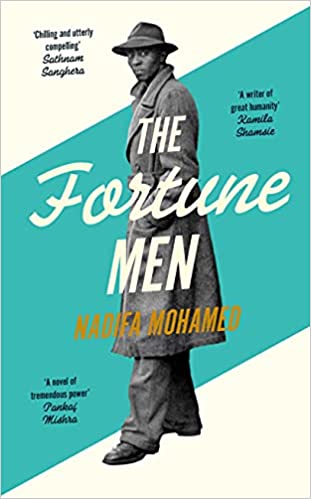
The Fortune Men begins as the new queen takes to the throne, a change of regime that will have little impact on Mattan, a sailor who has abandoned the ocean for life as a gambler, roué, and petty thief in the cosmopolitan enclave of Tiger Bay. Mattan has walked the length of Africa and sailed on every sea but he is held now in this Welsh port by his love for a local girl and their three sons, though their marriage is bedevilled by prejudice, fear, and Mattan’s inability to settle down. A few streets away Diana, a war widow, and her sister Violet, close up the shop they keep. Violet’s brutal murder traps Mattan in a fate he struggles to comprehend. “The police are all liars”, he thinks and, once accused, his strategy is to dissemble and invent, a tactic that has served him well in a life of wriggling free from the hands of his mother, his brothers, bosses and lovers, from anyone who would pin him down.
Many writers are now thinking about how to represent racism without reinscribing its justification or depriving its victims of agency. One answer, deployed by John Keene in Counternarratives (2015), is to uncover the irrationality of prejudice, allowing characters to escape its logic. Another, used by Colson Whitehead in The Underground Railroad (2016), is to introduce fantasy into historical events. But in fidelity to the facts of Mattan’s life, Mohamed does not grant herself the leeway of creative circumvention. In releasing their characters from historical facts, the American writers break out of the realist form. Mohamed, by contrast, stays within its confines, revealing the intractability of the system which betrayed Mattan, and his cognitive dissonance in the face of its injustice. It is Mattan’s own lawyer who seals his fate. He recognizes his client’s evasiveness but is incapable of interpreting it as a strategic manoeuvre, characterising him as a childish liar and “semi-civilized savage” (here Mohamed quotes from the court record).
Terrifyingly, the novel’s final act of imaginative outwitting belongs not to the victim but the perpetrator. The British state performs a kind of conjuring trick revealing that Mattan’s cell was never a place from which release was possible or justice could be obtained: hidden behind a piece of furniture in the cell, an execution chamber was hiding all along. Two warders “heave the wardrobe aside to reveal an entrance to another room. A noose hangs from the ceiling. The familiar cell swims around him and his mind cannot make sense of it.”

In the early 1980s, I read Andrea Dworkin’s Pornography: Men Possessing Women. Many of the young women I knew at the time were reading the book and it was part of the reason they were turning to radical feminism. Dworkin’s representation of an epidemic of trans-generational male violence against women shook me to the core. I remember in particular her descriptions of household utensils used in sadistic acts made me uneasy at the sight of everyday objects such as kitchen knives and glass bottles. In Everybody: A Book About Freedom, Olivia Laing revisits Dworkin’s polemic and recalls a similar experience she had reading Pornography the following decade, how its “terrifying and incantatory” words transformed the library where she sat into something “sinister”. Dworkin’s intent was to find a form of words that would wake women up to what she considered an ongoing genocide. A difficult task not least because, as Jacqueline Rose observes in On Violence and On Violence Against Women, there are “obstacles that litter the path between sexual violation and language.” Perhaps chief among these is the fact that sexual violence has so often been cloaked in silence, the crimes largely unreported, the victims, ignored or pilloried if ever they tried to speak – a fact which makes the powerful eloquence of these two new books even more remarkable.
In Everybody, Laing quotes Rose’s words on language (taking them from a 2016 essay subsequently reworked into Rose’s book). Though these works are related, their writers have set themselves different tasks: Rose questions why violence seems more ever-present and visible, Laing investigates the body’s powers and pleasures, as well as its discontents. They have different styles, too – Rose’s is more oratorial, Laing’s more personal – and sometimes their attitudes diverge: for instance, from the outset Rose proclaims her opposition to Dworkin’s idea of an immutable masculinity, while Laing gives Dworkin’s thesis its full context and due, before she dissents from portions of the argument.
But there is plenty of common ground between these books, which goes beyond their feminism. Both are radically subversive and yet impressively learned works that address violence at an individual and state level, reminding us that despite neo-liberalism’s privatisation of our bodies and emotions, the personal is still political. Both swim in the stream of this perilous moment – of would-be totalitarian leaders, BLM, #MeToo, Covid and climate change – progressing broadly from discussions of sex to race. Both look to thinkers, artists and activists for examples of how to respond to oppression while imagining the world otherwise, how to embody and “manifest a freedom that is shared”, as Laing puts it. And both are threaded through with the lives and ideas of psychoanalytic pioneers: in Rose’s case the connecting figure is Sigmund Freud; in Laing’s, it is Freud’s pupil, Wilhelm Reich.
As Laing reports, it was over the question of “body language” that Reich first began to part company with his mentor. He came to believe that the talking cure was not enough: perhaps the past isn’t just buried in the memory but stored in the body, too, a burden that by touching their patients, therapists could alleviate. Although this was forbidden in psychoanalysis, Reich went ahead anyway and found his patients achieved a release of blocked energy which he called “streaming” or “orgone”. Laing tracks Reich through the 1930s in Berlin, when, full of optimism, he coined the phrases “sexual politics” and “the sexual revolution”, up to his painful split from Freud. The older man felt Reich’s theory about magical orgasmic energy was wild enough, but his membership of the Communist party and refusal to submit to Nazi demands for the Aryanisation of psychoanalysis, caused the final rupture between them.
At first Laing reads Reich alongside Christopher Isherwood. Both were involved with Magnus Hirschfeld’s ground-breaking Institute of Sexual Research, finding liberation in Berlin’s cabarets and underworlds before escaping from what Isherwood memorably called “Hitler’s weather”, when the streets were “scarlet with swastikas”. Once Reich is exiled from fascism in America, she winds the maverick’s life through the Beatnik world of Ginsberg and Burroughs, who popularised his invention of the notorious Orgone Box, an energy “accumulator” in which the patient could be sexually and spiritually recharged. She goes on to find echoes of Reich’s intellectual struggles – liberation in a box? – in feminist artists who reacted to restrictive gender norms by creating art concerned with freedom and confinement, pointing to the work of Ana Mendieta “where the body was many things at once…always in flux”, and Agnes Martin, who painted grids, nets and little boxes composed of dots or dashes where “there is nothing to hang onto…inducing a kind of rapture in the viewer”.
A consideration of the de Sade’s years in the Bastille leads Laing to explore imprisonment by the state, and in one’s own body, including discussion of the contesting responses Dworkin and Angela Carter made to the Marquis – the former uncovering the actual harm and pain suffered by de Sade’s servants and prosititues, the latter viewing the transgressiveness of de Sade’s writing as metaphorical and didactic, suggesting that “there might be something useful to discover in the interminable prison cells of his imagination”. Then Laing analyses the impact of incarceration on the neglected black gay activist Bayard Rustin and on Malcolm X, throwing up interesting correspondences between Malcolm X’s critique of “the global trans-historical system of white supremacy, the grotesque forced domination of one kind of body over another”, and Dworkin’s of male supremacy. She ends with a eulogy to the woman who sang “I wish I knew how it would feel to be free”, the ultimate liberation artist, Nina Simone.
As in her earlier books The Trip to Echo Spring (2013) and The Lonely City (2016), Laing displays a talent for parallel biography (including elements of her own), and for uncovering the myriad ways that art is always an act of resistance. Like Christina Stead, she is not a writer who romanticises the margins, recognising the risk of becoming wayward to the point of meaninglessly weird, or succumbing, as Reich did in the Fifties, to a climate of paranoia and violence. In Laing’s judicious and moving account, we come to understand how the man who called for free female sexuality turned into a wifebeater, how someone who “longed to help people unlock the prison of their bodies, ended up locked in a prison cell himself.”
If Laing’s project is to rehabilitate Reich and present him as emblematic – traduced and cast out from the mainstream but vindicated by the impact his prescient ideas had on later activists – Rose’s reading of Freud, an ongoing project for her, re-presents this canonical figure as continuingly relevant and more subversive than many have understood. “For a woman”, Rose argues in one of two chapters on sexual harassment, “Freud comes close to saying that normality in and of itself is an injury from which no girl will ever recover…it is a type of invasion.” While in an essay on recent political protest in South Africa, Freud’s attention to “hidden histories” casts light on what happens when liberation movements carry around “an additional psychic burden”. In this case, their relationship to a previous wave of activists, to whom they owe a debt, but whose project of emancipation has stalled, descending into corruption.
In both books there are productive tensions: Rose argues with radical feminists (Dworkin’s collaborator Catharine MacKinnon comes in for repeated knocks), while Laing does battle with Susan Sontag, particularly her (punitive and contradictory) ideas that illness is without meaning – or that it’s meaning derives from a lack of willpower. And inevitably there are unresolved paradoxes: Rose’s essays are titled after Hannah Arendt’s work On Violence (1970), to which she adds and On Violence Against Women, explaining her augmentation of the subject. Acknowledging Arendt’s influence, she redeploys the philosopher’s view of power as thoughtless, and of violence as stemming from a vengeful “impotence of bigness”. But Dworkin herself expressed similar opinions, arguing that “The immutable self of the male boils down to utterly unselfconscious parasitism”, and “He is always in a panic, never large enough”. To some extent, I think that the arguments between radical, socialist and liberal feminism which characterised the women’s movement in the Seventies and Eighties, have today collapsed. This, in part, is because women of colour, seeing the limitations of each of these schools, demanded a more inclusive, intersectional approach which now shapes the way many feminists think; and in part it’s because, unexpectedly, some arguments seem to have crossed over, as is the case of those socialist feminists who argue an essentialist line against transgender women.
Rose dedicates two essays to thoughtful dissections of recent debates about what trans means – including the fear of some cis women that they are being erased or marginalized, or the argument that only post-op are people ‘properly’ trans – before insisting that “For me, trans women have earned their place at the banquet of feminism”. For Laing, the genesis of her book was the feeling of never having been at home in her own body, and she now embraces a trans identity while married to a man and keeping her female name and pronouns. This widens the possibilities of trans, which some critics regard only as an extension of the dreaded sexual binary. In Everybody, Laing notes that Hirschfeld found in his study of sexuality there are “forty-three million possible combinations of gender and sexuality”, adding, gleefully: “Imagine telling J.K. Rowling”.
At the end of On Violence, trying to answer her own question about about the proliferation of violence against women Rose argues that we will not conquer the problem without facing up to it. We must acknowledge the human frailty that the “bloated masculinity” of autocrats and domestic abusers seeks to deny. This is not so far from and Laing’s opening observation that “our bodies carry our unacknowledged history, all the things we try to ignore or disavow”. Both writers show what a long way we still have to go to free ourselves from violence, stigma and shame, but their books bring us closer to understanding the task and the prize. As Laing writes, “The free body: what a beautiful idea!”
This review first appeared in the TLS on 11.6.2021 as ‘Stored in the Body’.
Anna North, Outlawed. Bloomsbury – TLS
We may think that witches are a thing of the past but only last month Mary Beard admitted that the term was still hurled at her on Twitter, just as it has been used for centuries as an insult against women beyond child-bearing age. Plagues too, were something most of us, in the West at least, had thought consigned to history. But as 2020 reminded us, the past has a way of erupting into the present. Understanding this, in her new novel, Anna North plays similar tricks with ideas of progress and time. A reimagined Western set at the end of the nineteenth century, Outlawed begins in the aftermath of a pandemic that has weakened fertility and left ‘barren’ women vulnerable to accusations of witchcraft.
North’s inquisitive protagonist, Ada, is the daughter of a midwife who battles against the patriarchal religion flourishing in the pandemic’s wake. Soon, the teenage girl becomes a wife who is unable to conceive, and as the month’s pass with no sign of pregnancy, the town’s latest pariah. Her life in danger, Ada is bundled off to a nunnery for safe-keeping. She escapes from this cloistered space, however, preferring adventure with a team of cross-dressing bandits. But even as Ada succumbs to the romance of outlawry, living wild and learning how to survive in the bitterest of winters, the question spurring her on concerns the biological mystery that led to her banishment: why do so many women have trouble with conception?
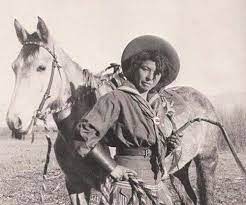
North has a lot of fun taking liberties with history: the group Ada joins are a female version of the Hole in the Wall gang, all exiles and misfits from the punitive mainstream, for reasons of sexuality, race or insubordination. Their charismatic (in today’s parlance, non-binary) leader is the “Kid”, and Ada is renamed “Doc” because of her medicinal skills. These narrative freedoms are mirrored in the gang’s ungoverned behaviour: when Ada first encounters them they are dancing, singing, drinking and kissing under the moonlight. But such freedoms are hard-won, reliant, North emphasises on expertise – in horses, food, firearms and fooling people: one member teaches the others how to dress like flighty women or to bind their breasts and walk like macho men, conning the unsuspecting in the execution of Kid’s elaborate hold-ups.
Kid is absent from the novel’s final scam, holed away from the rest of the gang with a debilitating depression. This at first seems jarringly anachronistic, the concern about mental illness of a piece with Outlawed’s highly contemporary views of identity. But with great intelligence, North manages to weave these current preoccupations into a historical narrative, asking her readers to reconceive how gender might operate, but also how we might build community, democracy and leadership to effect political change.
This review first appeared in the TLS on 28.5.2021.

Jonathan Coe, Mr Wilder & Me. Viking – TLS
“Flawed and bonkers, but I like it” is how Jonathan Coe once described Fedora, the penultimate Billy Wilder film at the heart of his thirteenth novel, Mr Wilder & Me – an assessment that catches the manner of much of his own work. As Stanley Kramer’s 1963 movie declared, It’s a Mad, Mad, Mad, Mad World, and among contemporary British writers, Coe has been one of the readiest to see that art needs something of the unhinged to adequately encompass life. In his novels, ‘normal’ people are often besieged by forces of derangement and excess, forces so powerful they sometimes beget supernatural beings: there are monsters in the cellar in his 2015 novel, Number 11. Coe’s engagement with cinema helps him manoeuvre between these different realms or realities – an imaginative response to a divisive British class system. His best-known work, a satire on rampant Thatcherite privatisation, was named after the Pat Jackson 1961 film What a Carve Up!. But it is Billy Wilder – an Austrian-born, Polish-Jewish Hollywood director – who has been Coe’s guiding light as a writer, leading him to claim the director as his “first literary influence”.
Coe’s longstanding obsession with Wilder’s The Private Life of Sherlock Holmes might seem a more obvious subject for him to explore, but Fedora is the film that best conveys Wilder’s coupling of the mad and the melancholy, a mix which also infuses Coe’s writing. In Wilder’s film, an aging Hollywood star, the eponymous Fedora, subjects her daughter to plastic surgery so she can impersonate her mother on screen, sustaining the myth of her undying beauty. As Coe notes, Wilder forbade his writing partner, Iz Diamond, from adding jokes to their script because he wanted to create a wholly serious work. This means the demented behaviour, so liberating in their previous films, here manifests itself in catastrophe: in Fedora, impersonation results in a lethal loss of self, and the movie’s camp quality derives not from cross-dressing or wisecracking, but its elegiac mood.
The film’s melancholy also infects Coe’s novel, making it more subdued than some of his earlier fiction, particularly in its examination of late style. The narration by a fictional character, Calista, begins in London and looks back to her first encounter with Wilder and Diamond some forty years earlier in Los Angeles, followed by her employment as their translator during the shoot for Fedora in Greece, Munich and Paris. Mr Wilder & Me is divided into chapters named after each of these places, and Calista’s wistful memories are matched by Wilder’s own nostalgia, as he is prompted by each new location to reminisce about different moments in his life.
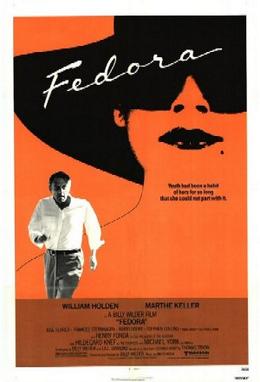
Alongside this narrative retrospection, Coe reflects on the demise of Wilder’s viability as a director, the “invisibility” of women like Fedora once they lose their looks, the end of classical Hollywood, and even of cinema itself. There is something terminal, too, in his characters’ judgement that British culture is not European. For the Polish Diamond, for instance, “England is not Europe”, while Calista notes that her Greek family “found many [British] customs and mores to be occult, eccentric and indeed incomprehensible”.
Although narrated in 2020, much of Coe’s book is set in the 1970s. The Wilder that Coe gives us is painfully aware that his Mitteleuropean light comedy, with its touches of elegance and ennui, is now seen as old-fashioned compared with the mean streets and dangerous spectacles offered by Scorsese, Spielberg and Coppola – the “kids with beards”, as Billy and Iz call them. By this point, the two Europeans responsible for such quintessentially American films as Sunset Boulevard (1950) and Some Like It Hot (1959) are struggling to finance Fedora. The ascendancy of a younger generation means that Hollywood’s once revered stars have become fallen idols, kicked out of paradise. Trying to obtain finance from German bankers, and keep up with the vogue for violence, the older men joke about branding their film, “Jaws in Venice”.
The foil for Coe’s tale of fallen gods and goddesses is Calista, the modest “& Me” of the title. She is another of Coe’s ‘normal’ people, pitched against beings of another order. This time, however, these are not reactionary and destructive; they are creators, and Calista is grateful to be admitted to what remains of their “heaven”, a cultured world very different from her own prosaic one. The ingénue – an obvious stand-in for younger readers, unfamiliar with cinema history – is schooled by Wilder in the delights of French wine and cheese, but her greatest lesson concerns her mentor’s part in the story of Central European writers, directors, musicians and artists exiled by fascism to Hollywood. Deepening his novel’s homage, Coe has Calista write a script about Wilder’s period at UFA, Germany’s principal film studio, where he worked alongside Robert Siodmak, Fred Zinnerman, Emeric Pressburger and many other Jews who were all sacked in 1933, but defied the anti-Semites by going on to create archetypal American movies, or, in Pressburger’s case, in partnership with Michael Powell, the greatest British films of the postwar period.
Coe has fun, too, with many of the transatlantic ironies this culture-crossing produced, notably Wilder’s exasperation when Al Pacino, the boyfriend of Fedora’s German star, insists on ordering cheeseburgers even in Europe’s finest restaurants. Beneath Wilder’s unspoken irritation – why can’t Americans adapt to Europe the way Europeans adapted to America? – there is a larger point, Having lived through the horrors of war and fascism, and, like Pressburger, having lost family in the camps, Wilder chose by and large to make sardonic comedies. In other words, the violence that the “kids with beards” are so attached to seems unearned, the product of a settled existence. A director, Wilder contends, should give their audience “something elegant, a little bit beautiful … You don’t need to go to the movies to learn that life is ugly.”
By the end of his novel Coe, with an elegant touch of his own, brings together Calista’s and Wilder’s worlds with the use of one word. Calista is inspired by Wilder’s “fundamentally generous impulse” to create Fedora in the teeth of disregard, and she decides that her family must also find the “impulse…will and energy” to solve their domestic problem. These impulses to give to one another, whether in everyday acts of kindness or in acts of transcendent creativity, are not so different, Coe suggests. In this way, he collapses his habitual divisions, reuniting mortals with the gods of art.
This review appeared in the TLS on 6.11.2020 titled ‘A Fedora Tip to Beauty’.

With the third volume of her trilogy about the life of an “ordinary” African woman, Tsitsi Dangarembga has completed one of the most penetrating accounts we have of the continent’s difficult, often violent, transition from colonization to globalization. Since 1950 millions of people have fought to emancipate themselves from European rule, only to find that the nations which emerged from this struggle were not always the ones they had hoped for, and the work of liberation must go on.
Part of the power of Dangarembga’s account comes from the angle at which she approaches this history. Unlike many novels about Africa’s turbulent decolonization, in This Mournable Body, the central character, Tambu, is unremarkable. Brought up in Rhodesia in rural poverty, now as an adult in the 1990s, eking out a living in Zimbabwe’s capital, she is neither a freedom fighter like her sister and aunt, nor an activist like her cousin, nor even, in any straight-forward manner, a victim. And yet the circumstances of her early life – a childhood in the 1960s during the war of independence (described in Nervous Conditions, 1988) in which a brother was killed, her sister, maimed; teenage years in a convent (The Book of Not, 2006) where “closeness to [the racism of] white people…ruined your heart” – have damaged Tambu’s capacity for empathy, and bred in her an all-consuming need for self-preservation. When we encounter her in This Mournable Body, Tambu’s determination to succeed, coupled with the constant thwarting of this ambition (white colleagues appropriate her work, her age and sex discount her), have left her an intriguingly complex and perverse figure.
In the first two novels of her trilogy, Dangarembga introduced the young Tambu in a bright first-person narrative which drew the reader in. In this third volume, where we find the weary adult Tambu “labouring to define the beginning of her fading”, the author has chosen a second-person narrator who sounds at times like Tambu’s taunting, internal voice, at others, a condemnatory universal force. This tactic allows Dangarembga to fully exploit the second-person’s accusatory form: a “you” that singles out Tambu, emphasising her egotism and isolation, as well as her feelings of persecution. “You cannot afford definite conclusions for certainty convicts you”, the narrator upbraids her when she is unsure if she has broken another rule at the hostel where she lodges. Tambu’s materialist fantasies can make her envious and cruel (she joins a mob attack on a glamorous woman from the hostel), and cause her to block out her past where “nothing ever glittered and sparkled”. But the energy of her discontent also propels Tambu forward into new situations in which, incapable of masking her resentment, she fails repeatedly. Unable to find “prestigious” work, Tambu returns to teaching but sabotages her advancement with a frenzied attack on a pupil, enraged by the confidence her young charges display. A voice inside her head tells her the pupils are not a threat and need only guidance, but this is dismissed. Desperate to outshine others, she “fights…against the perils of contemplation”, deluding herself about what she has done.

Tambu’s self-deception mirrors that which Teju Cole describes in his 2015 essay, ‘Mournable Bodies’, after which Dangarembga named her novel. “Moments of grief”, Cole wrote, following the terrorist attack on Charlie Hebdo, do not “absolve us of the responsibility of making distinctions”. The west’s “ahistorical fantasies” overlook its atrocities, making it difficult for many to understand why they are being attacked. In Unmournable Bodies, Tambu is equally incapable of frank self-assessment and therefore bedevilled by a past she cannot reckon with or take responsibility for. When Tambu’s mother sends her a bag of “mealie meal”, she hides it away, feeling the corn porridge mocks her desire for advancement and rebukes her for neglecting parents living in near-starvation. Made mad by this situation, she lands up in a mental hospital only to be rescued by her cousin, Nyasha, who has recently returned from Europe married to a white man. Inexplicably to Tambu, even with these “advantages”, Nyasha chooses to live at the margins, teaching young women to analyse their lives through storytelling.
Finally, a chance encounter with a white acquaintance leads Tambu to a job in one of Zimbabwe’s few booming businesses: eco-tourism. She works hard following orders, but when her boss asks her to give an opinion, she cannot. In a subtle and intelligent novel that dissects Zimbabwe’s political malaise through the crisis of one woman’s personality, this is one of Dangarembga’s most interesting arguments. Unlike many of her contemporaries Tambu has not been tortured, yet her awareness of how her country men and women have acted under conditions of war and starvation mean that she is paralysed by fear. Knowing the brutal penalties meted out to those who offend, or even stand out, she is incapable of original thought. The imagination, Dangarembga seems to suggest, is not an inviolable attribute to which we have recourse whatever the circumstances: to flourish it requires the freedom from retribution neither Tambu, nor many other “ordinary” citizens in Zimbabwe enjoy.
Irene Sabatini’s Act of Defiance is set after Dangarembga’s story, addressing events in Zimbabwe during the last two decades. Sabatini’s protagonist, Gabrielle, is also an ordinary woman, but as a middle-class lawyer in Harare, she escapes her country’s descent into lawlessness, fleeing to Colombia and Italy. Growing up, her status as “Coloured” made her a target of cruelty. Now, an adult, she is slow to realise “The Old Man” – as Gabrielle refers to Robert Mugabe – is becoming increasing malign. Once nicknamed Vasco de Gama (someone opening routes between west and east), far from creating a more tolerant country, he and his marauding ex-soldiers turn Zimbabwe into a pariah state, terrorizing all opposition. Gabrielle and her client, Danika, the child victim of a sexual predator in the “Party”, are kidnapped from a courthouse in the capital, then raped and tortured in one of the “interrogation” camps overseen by a leader who emancipated his people, but now tyrannizes them.
Sabatini’s story unfolds in alternating chapters which juxtapose sunny scenes of Gabrielle’s love affair with an African-American diplomat, and the nightmare conditions at the camp where a boy in the Youth Army “re-educates” his hostages by screaming twisted revolutionary slogans: “Down with imperialist saboteurs!…Down with economic prostitutes!…Down with gay gangsters!” As the American writer, John Keene noted in his story ‘Lions’ (2015), the situation in a country like Zimbabwe is all the more horrific for its degeneration from liberation to barbarity, and for the way in which the language of enlightenment is perverted into an instrument of subjugation.
Dangarembga and Sabatini have written compelling novels about brutal experiences: both feature the hyena as a metaphor for derangement (every laugh in This Mournable Body feigns, mocks or threatens); and both contain what Dangarembga has spoken of as the “location of hope” – something that sustains humanity and possibility in circumstances where they face erasure. For Sabatini, the act of defiance which snaps Gabrielle out of her “fear-fuelled inertia” is the creation of a centre in her Harare home to help people like Danika; for Dangarembga, it is Nyasha’s storytelling project run from her garden – modest, improvised projects which might pass under the radar of power. In a trilogy which has foregone consolation, however, perhaps Dangarembga’s most significant assertion of the possibility of hope, is Tambu’s liberation from her histrionic selfishness, as she works, finally, to pay her debt to Zimbabwe’s unmourned bodies.
This review appeared in the TLS on 19.6.2020 titled ‘Ahistorical Fantasies’.

There is an interview with the movie critic David Thomson in which he tells a story about being at film school, picking up other students’ off-cuts from the editing suite floor and splicing them together. When he shows the finished work to his classmates, he experiences a revelation. Instead of laughing off the series of random images, as he expects, they sit around discussing the meaning of what they’ve seen. Whatever you do to disrupt chronology, Thomson realizes, the mind will always try to make connections between the disparate, to find sense in sequence and to construct a narrative.
Thomson’s story reminds me of a time in the early 1980s when I was working at a cinema in Brixton. In those days it was called The Little Bit Ritzy, one of a dozen or so independent picture houses scattered across London, many housed in old music hall theatres, that shunned mainstream fare in favour of a broad repertoire. At some point, an agreement had been struck between the independents that anyone working in one of them should be able to watch films at the others for free. Because the repertoire was then so vast, it meant that in the course of a year an avid filmgoer could get a pretty good education in the history of the medium. On any given day it was possible to watch ground-breaking movies by Georges Méliès and D. W. Griffith. There were Sergei Eisenstein, Dziga Vertov and the films of the Russian Revolution; Hollywood’s slapstick antics in the silent era, and then, once movies began to talk, its subversive screwball comedies and film noir dramas, bristling with wisecracks and comebacks. You could witness the nightmare premonitions of German Expressionism in the 1930s, and the hardships endured in Italy’s post-war Neo-Realist cinema, born in the rubble of its decimated cities. From the 1950s there were the Japanese masters of film, Yasujiro Ozu, Kenji Mizoguchi, Akira Kurosawa and Masaki Kobayashi, together with the iconoclasm and optimism of the French Nouvelle Vague. In the 1960s an anti-colonial Third Cinema emerged in Africa and Latin American, in which directors defied the edicts of imperialists and dictators as they flouted the rules of genre, all the way up to the 1970s when Martin Scorsese and Paul Schrader (a Catholic and a Calvinist) turned their cameras on the hoodlums and guttersnipes of America’s mean streets, redefining the nation’s uneasy love affair with God and the gun.
In those tatty, rundown theatres of light we drank it all in, intimating that the nostalgia we felt for places and times we’d never inhabited had something to do with our own sense of displacement. We hoped the glamour, guts and glory we found in these other worlds might give us ideas about how to handle ourselves in our own when, under the pressure of cuts inflicted by Margaret Thatcher’s new government, the dismantling of state support for community groups, and new stop and search powers for the police (SUS), London’s streets were becoming ever more jittery. Often, towards dawn, when I left the Ritzy after an all-nighter, wandering home up Railton Road, I would fancy myself as Bette Davis in All About Eve (1950), or Jimmy Cliff in The Harder They Come (1972), as Jean-Paul Belmondo or Hanna Shygulla – anyone with style and attitude or a sense of mystery that the guys on the frontline might recognize and respect. The frontline was the area on and around Railton Road known for its drug dealing and resistance to police incursion. Unlike the surrounding back waters of South London, which shut up shop at tea-time, the road had a palpable energy that lasted through the night. This was particularly so in the summer, when the West Indian migrants who had settled in the area sat out playing dominoes while reggae and calypso boomed from loudspeakers stacked on the pavement or wedged into open windows.
The road was made up of Victorian terraces, mostly council properties, but a number were empty or squatted – the ones closer to Brixton by black people, the ones up nearer Herne Hill, by white. There was an off-licence that stayed open late, and a man called Joseph who hung around there used to call out “Hey, blondie!” whenever I passed by. Over my shoulder I’d maybe try throwing back Mae West’s quip, “I used to be Snow White, but I drifted”, a double entendre casting doubt on the wisdom of acting like a fairytale heroine, and on the idea of racial purity. Joseph was pointing out that on his road I was the interloper, and I was acknowledging it, while trying to suggest that it did not necessarily follow from the differences between us that we should be enemies. Like many white kids of my generation I had grown up listening to reggae and punk: the rallying cry of Linton Kwesi Johnson (“Fashist an di attack, Den wi countah-attack”), or Tom Robinson’s admonitory, “Better decide which side you’re on”. When the battle lines were drawn at Wood Green, Lewisham and Southall, the taunt the National Front hurled at us of “race traitor” was one we adopted as a badge of honour.
A similar reversal of meaning took place at the Ritzy. Apart from the straight man who ran the place and one other woman (whom, it was rumoured, had struck a deal with R. D. Laing, in which she cleaned his house in exchange for therapy), the cinema was staffed by gay men, most of whom lived in a cluster of squats on Railton Road, all in varying states of dilapidation and inventive reconstruction. Many had their gardens knocked together. As with the communal spirit that the West Indians had created further down the road, this was another attempt to forge a shared space. In some respects, the Ritzy was a satellite of the gay squat; and the love of film, with the other ways of being that it proposed, was part of the glue that bound together everyone in its orbit. They were all cineastes, well-versed in Hollywood lore: Louella’s and Hedda’s gossip, intended to keep the stars in line (later extended to naming names before the HUAC), and the scandals of homosexuality, infidelity and murder, proving that stars were mortal and messy, as exposed by Kenneth Anger in his infamous photobook, Hollywood Babylon (1975). It wasn’t just that they were alert to a film’s every camp moment – Marlene Dietrich and Greta Garbo flirting with the girls, Jack Lemon and Tony Curtis reinventing themselves through drag, the thwarted heterosexual romances of Rock Hudson and Doris Day, the homoeroticism of Butch and the Kid – but that they understood as a kind of reflex what Michel Foucault was theorizing in The History of Sexuality at about the same time: any presentation of a subject, however couched in disapproval, was also a dissemination of information, a way of “spreading it around” and, therefore, an opportunity to learn what others were getting up to.
Even when films punished their characters for shady behaviour or illicit desire, in the suffering and angst of actors like Dirk Bogarde or Montgomery Clift, or in the rabid jealousy of Mrs Danvers in Rebecca (1940), there was affirmation that such desire existed. This confirmed the suspicion of many in the Ritzy’s largely white audience that much of what was important in life, went unnoticed or unspoken – something that Brixton’s black community learned in their infancy. They didn’t have to wait for a film at the Ritzy or a report by Lord Scarman’s to inform them that the system was rigged or that the police were institutionally racist. Reading against the grain was something gay and black people had in common. This is not to say that the relationship between the two groups on Railton Road was always easy. The press would often refer to the fact that the police were afraid to go onto the frontline, a tacit recognition that this was ground over which the state had little control. And when the gay squats were joined by an anarchist bookshop, the sense of white encroachment onto this hard-won black territory only sharpened.
I got the job at the Ritzy when I was twenty, after three exciting and turbulent years working for Rock Against Racism. When the Tories were elected in 1979, the rhetoric of the Front – who’d we’d been fighting on the streets and in the dancehalls – become mainstream. Thatcher set the tone of her premiership the year before declaring in a Granada television interview that British people were afraid of being “swamped by people with a different culture”. In reaction to this new climate of “respectable” xenophobia, we began staging gigs under the banner of Rock Against Thatcher. I organized one of these with the Birmingham band UB40, at the Ritzy. Not long after the concert, RAR imploded, falling apart, as left-wing groups often do, over accusations of selling out and sexual betrayal. Unable to think of any work that might live up to the insurrectionary spirit of RAR, I wandered down to the cinema and talked my way into employment.
It was another job of the night; even in the daytime we worked in the dark. And, as in RAR, we were all dreaming, though not always of a better world: up on the giant screen there were nightmares, too. At a RAR gig or an anti-Nazi demo you ran the risk of getting kicked with a Doc Martin or hit with a brick; here, by contrast, violence was aestheticized and the blood ran in Technicolor. On a wet Wednesday afternoon, the local unemployed, some pensioners, and a few skiving school kids might be tempted out of the rain and into the reassuringly womb-like world of the cinema auditorium. Here they’d perhaps settle down for a thought-provoking double bill of dystopian films: Costa-Gavras’s adaptation of the Vassilis Vassilikos novel about the military junta in Greece, say, paired with Fahrenheit 451 (1966), François Truffaut’s version of Ray Bradbury’s novel about the destruction of literature by a totalitarian regime. On good days, you’d come down from the projection box into the foyer to find these disparate groups munching on the aduki burgers we sold in the interval and talking about the similarities between the indignities they’d witnessed on screen and those they’d experienced in the post office, class room or dole queue. As with any good RAR gig, we were giving people a context for their immiseration, together with ideas about how to outwit it.
Before I moved into Railton Road, I was sharing a flat in the Oval. How I’d acquired this now seems hard to credit. In the years before Thatcher introduced her “right to buy” policy, many council houses were so run down, Lambeth couldn’t place people on the waiting list in them. Without money to improve the stock, they resorted to putting cement down the toilets of empty properties in order to stop them from being squatted. This vandalism caused such a furore in the local press that someone in the council came up with the idea of circumventing the waiting list by allowing people to queue up for what were deemed “hard-to-let” places. One starry night, we took sleeping bags and Thermos flasks down to the town hall on Acre Lane and, along with a bunch of students and drop-outs, camped out on the pavement. In the morning we were allotted a four-bedroom flat.
I moved into the flat with my older brother, Will, and three female students he’d fallen in with from King’s College University. Will was working for Lambeth Council in their mail room and, after an earlier period as an anarcho-syndicalist tai-chi teacher, had recently gone over to Trotskyism and joined the Socialist Workers Party. When he and other workers were asked to despatch letters informing Lambeth tenants of their new “right to buy”, he was so angry about the privatization of communal property that he exercised one of those acts of workers’ resistance that happens more frequently than is generally acknowledged, and began throwing the letters into the bin, encouraging others to do likewise. Eventually someone higher up in the pecking order found out what many of the mail room staff were up to and reported them. The story was leaked to the press and an MP stood up in the House of Commons to make a speech about the seditious revolutionary at Brixton town hall, “He should be put in jail. You can’t have people interfering with Her Majesty’s mail!”
Much as I approved of Will’s activities, once living together at the Oval we soon found ourselves embroiled in battles about who was dictating the conversation, or not doing the dishes, in short, about “male domination”. These weren’t remarkable debates: by the early 1980s the subject of sexual politics was becoming increasingly fractious on the left. The male hierarchy of the SWP, for instance, appalled by the critique of Sheila Rowbotham and other socialist feminists in Beyond the Fragments (1979) proposing “no hierarchy, no elites, no chair, no committees, no speakers and even no meetings in some cases”, concluded that feminism was a marginal, bohemian form of politics, (a “reformist . . . retreat into lifestyle”), and promptly closed its magazine for female members.
Finding that our arguments were also rebuffed, I and two of the other women at the flat, Colette and Fran, jumped ship. We returned to the town hall and were given another place to stay, this time in Streatham. Meanwhile, at the Ritzy, I had become friends with two of my co-workers: Jamie, an Australian whose insolence and wit stood out in a group of already defiantly camp men; and Chris, his boyfriend. Chris was a brilliant pianist and when the ancient projector broke down periodically, he would entertain the audience by playing the clapped-out piano on the side of the stage. For reasons I cannot recall, it was decided between us that Jamie and Chris would move into the flat in Streatham, and we would take over their squat on Railton Road. Nor do I remember what the other gay men felt about the invasion of straight women onto their turf. Up to that point there had been a division: the Railton Road squats were inhabited by gay men, while women, many of whom were lesbians, squatted houses further north on Villa Road.
What I do have fixed in my mind’s eye is a scene of transformation that took place not long after we moved in: Colette is sitting on a chair, surrounded by the severed locks of her long brown hair, cut from her head with a pair of scissors I am wielding. The image I have is tangled up with a self-portrait by Frida Kahlo where she also sits legs akimbo, wearing a man’s suit, her shorn hair in disarray on the floor. The following year, at a pioneering exhibition in the Whitechapel Gallery curated by Laura Mulvey and Peter Mullen, I encountered the painting with a flood of recognition, as if I’d had some hand in bringing it into being. Colette’s transformation however was not original but wholly emblematic of its time and place. A middle-class student of Medieval History, after we moved into Railton Road and I cropped her hair, she gave up men, abandoned her studies and became a plumber, enrolling on a course run by the GLC women’s committee designed to encourage women into the manual trades.
Not long after we moved into Railton Road we became lovers. The success of Colette’s reinvention, however, only underlined the failure of my own: I remained a socialist feminist rather than a lesbian separatist as many of the other women around me were becoming, and though I was constantly advised to, I refused to cut my hair simply to fit in. For many the act of reinvention was a way of signalling renunciation: Colette appeared to have changed her class as well as her sexuality. Nor was it lost on me that having struggled with the “sexist” demands placed on women by “patriarchy” (words still not heard on the television), the bohemian enclave I had landed in was now also forcible in its demand for conformity.
At the squat we achieved a look soon popularized in the Sunday colour supplements, but through want of money and material possessions. The wooden floorboards were uncarpeted and, in places, holes in the walls where the house was collapsing had been shored up with glass bricks we’d found in surrounding empty buildings, letting some light into the verdant gloom of the living room which was stuffed from ceiling to floor with spider and cheese plants, aspidistras and lemon verbena. The steps from the kitchen down to the back garden (a tangle of weeds and thorns) had long since collapsed and we threw rubbish out onto a heap. How we escaped a plague of rats I have no idea. Perhaps it was the cold that kept them away. But even in winter we were convivial, sitting out on the front steps at all hours of the day and night, drinking coffee, sometimes sharing a line of coke, listening to Steel Pulse, chatting to neighbours, arguing about politics, and waiting for Linton Kwesi Johnson’s daily pilgrimage up Railton Road.
Johnson walked up the street on his way to the Race Today offices, where along with Darcus Howe and Farrukh Dhondhy, he was a member of the magazine’s editorial collective. It was whispered among those in the know that, in a small flat above the office, the great intellectual and historian C. L. R. James was now living out his twilight years. Dressed in our monkey boots and colourful charity shop coats, we chattered noisily on the steps, spreading ourselves around, but when Johnson approached, an uncharacteristic stillness descended. In comparison with our clamour and sprawl, the poet was an impressively restrained figure. His trilby and trench coat were sharply cut, and it was hard to know if his taciturnity, when we were bold enough to say hello, came from a customary display of self-discipline, or signalled a more specific hostility to our presence.
One evening a fight broke out on the road, drawing us onto the steps to see what was happening. A man and woman were shouting at each other in what sounded, respectively, like Jamaican and Brummie accents. From time to time one of them reached out to slap or grab the other. On the pavement next to them a young girl stood watching. Eventually the man walked off down the road, sucking in his lips and “tssing” in disgust. As they seemed to have nowhere else to go, we invited the woman and girl into the squat for a cup of tea. Flo had a battle-worn face that looked much older than her thirty or so years. Her sleeveless dress showed off the bruises on her upper arms. Janet was maybe nine or ten, wearing a belted cardigan over what looked like a school uniform.
They remained with us that night, and the next morning Flo went off to look for a place for them to stay. But she didn’t come back. When we learned from Janet that this wasn’t unusual, we tidied up one of the squat’s empty rooms and put up posters to cover cracks in the walls in the hope it would seem a friendlier place to stay. Flo eventually returned, but for the next six months or so we looked after Janet. At first, she joined in whatever we were doing: I still have photographs of her holding a placard on an anti-apartheid demonstration, and another where she’s looking doubtfully at an aerosol message scrawled on a wall in Brockwell Park: “A woman needs a man like a fish needs a bicycle”. When it became clear that she might be with us for some time, we enrolled her in the local primary school. We told social services and they didn’t object, arguing that our unconventional arrangement was better than separating a kid from her mum.
While this was happening, I continued to work at the Ritzy. One evening we were showing a bill of French films that included Alain Resnais’s famously opaque rendition of Alain Robbe-Grillet’s screenplay, Last Year at Marienbad (1961). The film jumps back and forth in time, making it difficult to ascertain when any given event is happening. Our daily routine at the cinema was that a stack of films would arrive in tin cans from various distributors. Whoever was in the booth, carefully lifted the reels out and spliced them together, spooling them up to full size on the rackety old projector. Once a film started, it was part of the job to peer through a small window looking out across the auditorium to the screen beyond to check that the film was being shown in the right ratio and was staying in focus. That night I realized to my horror that I had put the reels together in the wrong order. In the interval I ran down to the foyer where people were milling around as they always did, buying coffee and home-made quiche or banana bread (it was a mark of the cinema’s independence that we didn’t sell popcorn) and talking about the film they’d been watching. A sense of dread came over me. I expected complaints. I thought I might even be fired. But instead, just like the students watching David Thomson’s disordered montage, people were earnestly discussing the meaning of what they had seen.
I became aware that some of the other workers weren’t just splicing the films to make them up and break them down, they were taking slices out of them, too. Mostly this was for personal use, but one guy did it systematically and built up what would become a well-known film archive with the frames that he took. It wasn’t something peculiar to Brixton: you could tell from the celluloid passing between theatres that some of the twenty-four frames from every second of film had been spliced out. Often key scenes were truncated or occasionally missing altogether, particularly in iconic films such as Casablanca (1942) or Kagemusha (1980). Given the number of films we worked on, it was perhaps inevitable that after the Marienbad debacle, news of my error got out. Soon others at the cinema, particularly in the dead of night, began to look for films where we might repeat the scene shuffle, only now on purpose. The films selected for this game included other European arthouse movies, but also some of the 3D American B-movies, especially anything by Ed Wood, whose gloriously gimcrack productions such as Plan 9 From Outer Space (1959) were, in their own way, equally abstruse, and therefore suitable for revision.
I loved working at the Ritzy, not least when we screened recent films in which – and this was still rare – actresses were given fully three-dimensional roles and allowed to command the centre of attention, films such as The Lost Honour of Katherina Blum (1975), Diablo Menthe (1977), The Marriage of Maria Braun (1978), Les Rendezvous D’Anna (1978), Messidor (1979), Coal Miner’s Daughter (1980), Gloria (1980) and Barbara Kopple’s powerful documentary about miners’ wives in Harlan Country, USA (1976). But, at the same time, there seemed to be a backlash against treating women as something more than instrumental, and this led to disagreements at the cinema, both about the films we were showing and those that we weren’t. Some of us complained that we were not projecting enough black films, unlike the Ace Cinema over the road (later to become the Fridge nightclub) which drew more diverse audiences by showing Kung Fu and blaxploitation movies. And of the films we were exhibiting, too many seemed to present women merely as objects of humiliation or targets of physical cruelty. Perhaps it was the visceral impact of projecting a film as often as three times a day, but the violence on screen began to get to me.
We had recently shown Michael Powell’s Peeping Tom (1960), in which the central character is a man who murders women with the point of his camera tripod, filming the terror on their faces as they die. Then there was Taxi Driver (1976), which Martin Scorsese had made after studying Powell’s film. It was one of a growing number of vigilante stories we were screening. And because it had just come out on its first run, we also showed Scorsese’s latest film, Raging Bull, about the boxer, Jake LaMotta. The sequences of fists pummelling into De Niro’s face, his sweat and blood splattering in slow motion across the screen, worked their way so effectively into my mind that I found them hard to dismiss, even in sleep. More troubling still – because this violence wasn’t staged in a ring but was domestic and banal – were the scenes in which De Niro punched his blonde girlfriend in the face, kicked her to the ground and slammed her into a bathroom wall.
In interview, Scorsese argued that in his canon the depiction of violence against women reveals an unpalatable truth about masculinity, making his films into works of feminism. As a young viewer watching women constantly battered, raped and killed, this was not the impression I came away with. Claiming that cinema’s depiction of male violence is somehow part of the feminist project, ignores its necessary corollary: female powerlessness in the face of an (apparently) inescapable fate. No doubt it was frustration with the habitual representation of women as victims that caused the Dutch filmmaker, Marleen Gorris, to turn the tables. In A Question of Silence, released the following year, a secretary, a waitress and a housewife join forces to kill an anonymous man in a shop. The most startling thing about the film is how the plot turns on the women’s shared, but unspoken, history of abuse at the hands of men. The answer to the title’s “question” about the women’s motivation, is the systemic nature of patriarchy – something not legible to the men involved in the subsequent trial, just as it was absent from scores of contemporary films in thrall to the violence of charismatic men: gunmen, serial killers and vigilantes, nearly all of them, loners.
Scorsese’s glamourized brutality was in marked contrast to the transcendent beauty of another film we were then screening: Andrei Tarkovsky’s evocation of life in twentieth-century Russia, composed of his father’s poetry, his childhood recollections and dreamlike images of decomposition, accident and flight in which plaster crumbles from walls, milk spills across a table, a bird escapes from an invalid’s clasped hand, and his mother levitates above her bed. Zerkola (1975, released in the UK a few years later as The Mirror) seemed like a cinematic response to Vladimir Nabokov’s injunction: Speak Memory!
Angela Carter was a regular visitor to the Ritzy. She lived up the road on the far side of Clapham Common, and would, a decade later, immortalize Brixton’s theatrical history in her last novel, Wise Children (1991). I think she came to watch Tarkovsky’s film, though she may have seen it at another cinema, and one night a few years later, when I was baby-sitting for her young son, we had a conversation about how his extraordinary imagery remained etched in the imagination. We discussed the powerful feeling of dread conveyed by the lead actress, Margarita Terekhova, when she makes an error at the printing press where she works. The full horror of living under totalitarianism is palpable in Terekhova’s fear of the retribution her Stalinist bosses will exact. At the same time, Angela was struck by the actress’s striking, non-airbrushed looks, so unlike the hyper-sexualized depiction of women routinely found in American cinema.
The year before Wise Children was published, when Carter’s head was full of that book’s rebellious Brixton heroines, she reviewed Barry Paris’s biography of Louise Brooks, another ungovernable female performer. Brooks was an American actress whose defiant sexuality and quicksilver beauty was only fully realized when she left Hollywood to act in two German films: G. W. Pabst’s adaptation of Wedekind’s play, Pandora’s Box, and Diary of a Lost Girl (both 1929). At the end of the review, having praised Brooks’s luminosity, and her self-possession, Carter goes on to reflect on how the actress saved herself from the habitual fate of women in American movies. She spins a recuperative tale about Marilyn Monroe, the epitome of the American blonde, rescuing her from Arthur Miller’s self-serving characterization in his autobiography, Timebends (1987). Miller depicts Monroe as a “self-destroying” beauty who wants only to sleep forever: “death was her companion everywhere and at all times”, he writes. In Carter’s revision of Monroe’s life, she imagines her escaping Miller’s clutches by travelling to Europe, just as Brooks had done. Once in Moscow, Monroe pursues her interest in Russian literature (something mocked in America) by agreeing to play Grushenka in Tarkovsky’s film adaption of The Brothers Karamazov. But the film is banned by the Soviet censors and does not re-emerge until perestroika, by which point Monroe – again, following Brooks – has long since withdrawn into private life. The story’s fairytale ending is typically didactic and Carteresque: as an old woman, Monroe can enjoy the adulation of her beauty and talent without suffering for it; immune now to the projection of destructive male fantasies upon her, she escapes her fate.
Of course, we had to wait for Gorris’s and Carter’s instructive reconfigurations of the world. In Brixton, in 1981, as my uneasiness grew about the cumulative effect of the films we were showing at the Ritzy, the programmer pursued the line of influence that ran from Powell to Scorsese, to one of Scorsese’s followers: Larry Cohen, scheduling his 1976 movie, God Told Me To (released in the UK as Demon). The American critic Roger Ebert wrote of Cohen’s cult film that “there were times when I thought the projectionist was showing the reels in random order, as a quiet joke on the hapless audience”. This time I was not the culprit. But the act of editing – or censoring – in the projection booth, had taken hold. Fed up with the seemingly unstoppable narrative in which women were assaulted and dismembered in order to demonstrate a thesis about masculinity, or simply for the sake of titillation, I was appalled by Cohen’s gratuitous full-screen projection of a vagina in his film. It was not because I was a prude, but because of what the vagina symbolized. In this shlock horror film, a vagina is shown on the body of Cohen’s antihero – who, like De Niro’s taxi driver, is yet another serial-killing vigilante – representing some sort of satanic portal, a gateway to death. That night, when breaking the film down into individual cans after the show, I cut out the offending material, put it in my pocket and took it home. Back at the squat I shoved the roll of celluloid into a wooden box which contained letters from family and friends and forgot all about it.
What came next: further discontent at the Ritzy, this time, I think, over pay, which resulted in a group of workers going on strike. We stood outside the cinema urging people to boycott the place. The atmosphere was good-natured, and many who were sympathetic to our cause did indeed turn away. The next day we returned to picket again, but then a brick dropped, as if from out of shot, landing not far from where we were standing. We looked around, struggling with the idea that our small disruption could have given rise to such a violent reaction. Then a group of kids started running down the high street, followed by police officers. There was something comic about the speed with which they zigzagged around and the police tried to follow, making it look like a speeded up scene from the Keystone Cops, playing at sixteen rather than twenty-four frames per second. When one lad was kicked to the ground by a policeman, the words of another Brixton boy flashed through my mind, David Bowie’s homage to cinema, “Life on Mars”: “Take a look at the lawmen beating up the wrong guy. Oh man, wonder if he’ll ever know”. Only this time what was unfolding wasn’t a game you could cut up and rerun.
Everyone in Brixton knew that the police and the paramilitary SPG had been using the SUS laws to pick on, and pick up, young black men with increasing frequency. In a deliberate echo of Thatcher’s hostile speech on alien cultures, they called this Operation Swamp 81. At the picket outside the Ritzy, standing just across from the town hall, we watched as the numbers of people running about seemed to magically multiply. Soon there were sirens and flashing lights all around. The police emerging from the back of unmarked vans wore visored helmets, and wielded shields and truncheons. They looked as if they’d stepped out of a sci-fi movie about a totalitarian state. By now the chaos of the scene had solidified into deliberate acts. When improvised missiles shattered the windows in Woolworths, and people formed a queue to pass out trainers from a shop on Coldharbour Lane, it was obvious what was happening: we dropped our placards and ran off to join the riot.
This was Saturday tea-time and the riot blazed until Monday night. The police withdrew temporarily from the area. On streets of burned-out buildings and overturned cars, it was a tactic calculated to increase the sense of vulnerability, so that residents would demand they return to protect them – a tactic learned from America. The carnivalesque atmosphere that had prevailed on Railton Road over much of the weekend, turned into something more menacing. A few days later, at six in the morning, I woke to find three men in my bedroom. They were undercover police officers who’d smashed their way through the bottom half of our front door. My first thought was for Janet, asleep in the next room, and I begged the men not to frighten her. Pleading had no effect, however, and soon, eleven officers were milling around the house, searching it from attic to basement. It took a while to establish exactly what they were looking for. Eventually, one of them produced a warrant – incredibly enough, for firearms. Minutes later, another opened my wooden letter box and pulled out the film I’d stolen from the Ritzy. Holding the vagina footage up to the light, he raised an eyebrow and said triumphantly to the officer in charge, “Aha, I think we have something here!” I laughed. He seemed to be running lines from a Joe Orton script. Disappointed in their hunt for weapons, the police were cheered up by the idea that they’d uncovered some sort of lesbian squatters’ porno ring. When they left, they took with them my letters and the celluloid. “To be used as evidence”, the officer in charge said, jabbing his finger at me.
Talking to others on Railton Road who had also been raided, we struggled with the realization that someone high up in the police force actually believed the black inhabitants of Brixton were incapable of organizing their own riot, meaning that it must have been coordinated by white people: the French and Italian anarchists at the bookshop at number 121, perhaps with the help of the gay squatters. Maybe it was the giant feminist fist we’d aerosoled in our porch that caught their attention. Or perhaps the whole thing was just an exercise in division and intimidation. At any rate, one of the letters the police took was from my dad. And when he heard what had happened, he did what outraged middle-class parents do in these situations: hired an expensive lawyer who duly had the film and letters returned to me.
*
After the riots, Lambeth Council decided to knock down some of the squats, including ours at 147, as part of a process of gentrification which continues to this day. During a recent visit to the area I found myself in one of the surviving buildings. The large, rambling houses are no longer communal and have been divided up into individual flats. Now, rather than drag queens living on the dole, working at cash in hand jobs and the endless task of refashioning oneself, the occupants are barristers and television executives. Before their wrecking ball was taken to our home, Lambeth rehoused Colette and I in yet another hard-to-let place, a ground floor flat in an Edwardian mansion block in Camberwell where we were burgled continually. Eventually, having stripped us of even the lampshades, the thieves left us alone.
I’d been thrown out of school when I was fifteen for trying but failing to organize a strike. And now another one I was involved with had collapsed. Workless, I started hanging out at the London College of Printing in Elephant and Castle, where Jamie was taking a degree in film. Today there are barriers at the entrances in colleges and universities, and security officers ask to see ID cards. In 1981, it was possible to walk in unhindered and attend lectures or seminars: the teachers either didn’t know or didn’t care that I wasn’t enrolled on the course. Jamie introduced me to Stella, one of his fellow students. When she was six months pregnant, the three of us went off to Northern Ireland to make their degree film. We went because two days before the Brixton riot, Bobby Sands had been elected to parliament. He and other hunger strikers were trying to gain special category status in recognition that these were not ordinary crimes, but political acts. A few months later Sands died of starvation, by the end of the summer there were nine more deaths. Thatcher’s response to rioters on the mainland (“No one should condone the rioters. . . .They were criminal”) and to H Block strikers in Northern Ireland (“Crime is crime is crime, it is not political”) was identical, refusing to admit the possibility of an underlying cause. We had been present at the Brixton riot and had some grasp of what provoked the uprising. But we knew very little about Northern Ireland, and so took this as an opportunity to go there and find out for ourselves.
In Belfast we stayed with a housing activist on the Falls Road, interviewing several women in Sinn Fein. In Derry, we filmed a member of the IRA – a teenage girl who lay in bed under a crucifix and told us about her imprisonment after sending a letter bomb. The girl’s espousal of female martyrdom, and her willingness to die or to carry out acts of violence in the name of religion, was one of the creepiest things I had ever heard. Out on the streets we took stills of armoured trucks, soldiers on foot patrol, metal checkpoints and giant boulders dumped on the pavements which looked highly surreal amid the cafes and shops, as if they’d landed from outer space. We thought about what it must be like to live in a paramilitary state, and what it would take to defy your rulers. We also fought among ourselves, Stella and I berating Jamie for cruising in the republican clubs, which seemed unnecessarily risky in a place where only a few years earlier the Reverend Ian Paisley had launched his “Save Ulster from Sodomy” campaign. Disgusted by our cowardice, Jamie lambasted us as petty-bourgeois homophobes. Not long after we came home, Emiliano was born. In the early weeks of his life, Stella carried him round in a basket, which he lay in contentedly during a screening of the first film he ever attended: El Salvador, Another Vietnam (1981).
Like Jamie, and like just about every other person I was meeting in London, Stella came from somewhere else. She had arrived in England as a seven-year-old when her family migrated from Cyprus in the hope that she and her sisters would find a better education here. Her parents were quite conservative, and as a teenager she had crushed their hopes for her by hooking up with a Mexican student she fancied as some kind of Che Guevara figure, but who was actually studying for a doctorate in agriculture at the University of Reading. When I first got to know her, she’d just returned from living in Mexico and had a three-year-old daughter. Carla babbled away in a language of her own making mixing Spanish, Greek and English. I remember thinking that this kid was the future – one of a generation of mixed-race polyglots who would grow up and take over the country.
I now spent my days as a freelance researcher at the British Film Institute Library on Tottenham Court Road. I was working for the Australian cabaret artist Robyn Archer, who wanted to turn her show, A Star Is Torn, about women in showbusiness, into a book. The job involved photocopying reams of material on Billie Holliday, Judy Garland, Edith Piaf, Carmen Miranda, Susan Hayward, Patsy Cline, Marilyn Monroe and Dinah Washington, and making notes about the destruction wrought on them by the industry, At night, I went over to Stella’s and while she played with Emiliano, fed him and changed his nappies, we wrote her degree dissertation on Cuban cinema. We were interested in those filmmakers who’d studied under the Neo-Realists in Rome, and then brought home the Italian commitment to making cinema about the lives of ordinary people. Unlike British directors, who hadn’t progressed much beyond kitchen-sink realism in their depiction of working people, these Cuban filmmakers told stories enlivened by the folklore and fabulism intrinsic to Latin America culture. And they were formally inventive, using disruptive techniques of collage, animation and frame-breaking that asked their audiences to think about the construction of the film they were looking at rather than simply loosing themselves in its storyline.
We watched Memoirs of Underdevelopment (1968), Tomás Gutiérrez Alea’s film about bourgeois complacency. It features an intellectual in Batistas’s Cuba, critical of the dictatorship he is subject to, but unwilling to risk anything to challenge the regime. We read Julio García Espinosa’s manifesto, ‘Towards an Imperfect Cinema’ (“Nowadays, perfect cinema – technically and artistically masterful – is almost always reactionary cinema”), taking it to heart. Most of all, we were moved by One Way or Another, the only film made by Sara Gomez before she died of asthma in 1974, the year of the film’s release. Gomez was young and Afro-Cuban, and this was one of the first works of art I had seen which proposed the idea of intersectionality, a politics that addressed different kinds of inequality without feeling the need to place them in a hierarchy of competition. Like Alea and Espinosa, Gomez mixed found footage with dramatized sequences in her reflective polemic about slum clearance. One of the most memorable elements of her film is a repeated shot of a wrecking ball slamming into the side of someone’s home. This striking image is a visual pun which Gomez deploys at key moments, underscoring the destruction involved in clearing away old housing to create better places for people to live, but also the difficulty of breaking down old habits of thinking and behaviour.
I had a photograph on my wall, torn from a magazine, that depicted one of the Soviet Union film trains from the 1920s which went around the country showing movies to people in places where there were no cinemas. When Stella and I read that ICAIC – the Cuban cinema institute established by Alea and others after the revolution – had also fitted out lorries that took films to far-flung places, we decided to apply to the GLC to set up our own modest version of this idea. Our proposal, titled Moving Movies, was that we be funded to equip a van with a screen, a 16mm projector, and thought-provoking films which we would show in schools, youth clubs, old people’s homes and maternity wards. The GLC declined to fund Moving Movies, but they did invite us to a symposium on Women and the Media. Most of the participants spoke in a jargon that was then starting to leak out of universities which introduced new ideas about power but cloaked them in an irritatingly opaque language. There was one woman, however, who stood out from the rest: a young Sikh who’d just finished a degree in anthropology at the University of East Anglia. She talked with passion and humour about how she wanted to make popular films that would change the world. I noted that her nametag said “Gurinder Chadha”. Stella and I looked over at one another, nodding in silent agreement: she could join our gang.
This memoir appeared in the Brixton Review of Books, Issue 7, Autumn 2019 as ‘The Ritzy, the riots and the rest: Brixton 1981, as witnessed by Kate Webb’.

In 1982 the French structuralist critic, Gärard Genette, suggested that we think about texts as palimpsests, overlaying earlier writings from which they imitate and borrow. Annie Ernaux alludes to this in The Years, her outstanding new memoir of France since the Second World War, writing of the “palimpsest sensation” in which different moments of life “float on top of each other”. This sensation of inhabiting different times simultaneously has inspired her to write a book “base[d]…on real experience”, where the past is always present. Yet rather than any relationship to what has come before, English language reviewers, reading Alison L Strayer’s sensitive translation, have been struck by The Years’ startling originality, finding in Ernaux’s history of consciousness something radically new. Edmund White begins his New York Times review stating, “This is an autobiography unlike any you have ever read”, while John Banville makes an even larger claim, declaring: “The Years is a revolution, not only in the art of autobiography but in art itself.” The innovation they are pointing to derives not from Ernaux’s melée of styles and sources – we are accustomed to texts that mingle recollection, dreams and meditation with literary quotation and official histories – but from her reimagining of the memoir itself.
The Years dilates the genre from a record of the intimate and subjective to an account of collective experience. It is a masterly and audacious work that dares to speak for a generation, and to do so at a time when, as Ernaux observes, the glut of photographs and films on digital technology is supplanting human recollection, bringing “another form of past…into being…with little real memory content”. The questions of how to retrieve the past under these circumstances, and of how to conceive of our relation to what we call history, are discussed throughout Ernaux’s book. Her stated aim is to “reconstitute a common time”, and to “capture the lived dimension of history”. In search of this elusive dimension – something more accidental and scattered than the grand historical narratives of agency and progress suggest – she uses manifold techniques. A suspicion of causality in conventional histories leads to the “search for a self outside of History, the self of suspended moments”, and she imagines these as an “image of light and shadow streaming over faces”. But The Years is also notable for the weight of sociological data it contains, and for its passionate taxonomies, seizing upon each new realm of human ingenuity and productivity.
This dual emphasis on the transcendent and the material makes it hard to divine whether Ernaux, like many of the postmodern thinkers she cites in her memoir, takes the Althusserian view that history creates us (rather than the other way around). She describes the excitement and freedom generated by successive machines, from cars to computers. But as her chronology progresses, she also reveals a European people increasingly conditioned by capitalist advertising and consumerism, their memory and imagination annexed by technology, preoccupied more with the goods that they own than the good that they do. Perhaps, though, the Althusser question is the wrong one and Ernaux’s originality consists in her refusal to treat these categories as mutually exclusive, or at least in her attempt to convey a more ambiguous relationship between them. In her pursuit of the way “time courses through us”, Ernaux catches what’s in the air and then embodies it: she lists and glosses ideas, fashions and beliefs as they change with the times, in turn, reconfiguring our sense of who we are. After the war she describes how “We lived in a scarcity of everything, of objects, images, distractions, explanations of the self”. Forty years later, by contrast, she finds, “We were inundated with explanations of self”. Rather than Marx’s historical actors, destined in their behaviour, Ernaux shows people in flux (“thrown into history” as Heidegger put it): struggling to engage, often missing out on big events, only intermittently active in the public realm, as if history was something we could slip in and out of: “we entered history again, abortion rights demo”. At other times, though, people are caught up in the euphoric sweep of ideas and events, in the rush of the new – “another great story emerged” – leaving little sense of how human agency created these things and brought them into being. More often what The Years reminds us of is the frequency with which we are taken off-guard by history when the world suddenly catches alight.
Ernaux’s starting point is 1940, the year she was born. Beginning with the traditional society of post-war France she tracks the movements, ideas and inventions that splintered – and in some cases bolstered – the nation’s homogeneity: the movement of people into suburbs and cities, the progressive enthralment to consumer goods, the explosive radicalism and creative energy of 1968, the dawning awareness of gender inequality coupled with relaxing attitudes to sex and the declining influence of the Catholic Church. Perhaps most depressing – and this is one of the themes that casts doubt on the idea of historical progress – is the persistent ignorance of, and hostility to, migrants: “That they called themselves French, we privately found absurd.” Coupled with this is the degree to which the country, despite rapid global changes affecting it, has remained consistent in its habits and mindset. One of The Years’ central tropes is the family meal, giving the sense that whatever else happens in France there will always be a table laden with “hors d’oeuvres and fois gras”. In the immediate aftermath of war, Ernaux tells us, most French people “spent their lives within the same fifty kilometre radius”. For many the world beyond was gleaned only in the pages of Constellation (the French equivalent of Reader’s Digest), with its tagline: “the world seen in French”; while a postcard from a cousin doing military service in Tunisia would invoke “a state of dreamy stupor”. For the time, such attitudes are not unexpected, but what’s striking in Ernaux’s account, is how romantic and parochial the French worldview remains, how crude an understanding it has of its colonial past. As late as the 1990s she writes: “it was tacitly acknowledged that Africa lived in an earlier period of history, with barbarian customs…”
All this Ernaux relays without the testifying authority of a single voice. Instead, The Years is narrated with compelling force in generalisations and imperatives that gather ‘everyone’ up in the tide of history: “people said”, “everyone had started to believe”, “we berated ourselves for”. Within this collectivism, though, different perspectives emerge. The first, and perhaps most profound, is between generations. In relating the national and the family story from one generation to the next, Ernaux not only exposes the gulf of experience and understanding between “the old farts” and “the whatever generation”, she also makes us question the reliability of memory and the partisanship of story-telling. Those who lived through the war explain how they once thought and spoke about themselves: “From a common ground of hunger and fear, everything was told in the ‘we’ voice and with impersonal pronouns, as if everyone were equally affected by events.” The nature of that “common ground”, and the challenges posed to it as the years roll on is one of Ernaux’s central concerns. Implicit here is that her own use of the “‘we’ voice”, while encompassing the truth of a generation born of war, “hunger and fear”, is also one distinct from it, carrying critique: after all, not everyone was “equally affected by events”, there were collaborators as well as resisters. And later in her story, the “we” Ernaux presents, poses the question of who is not included in the collective: a “they” beginning to arrive in France’s larger cities. Refugees from Algeria and beyond, are noted, mostly for the hostility they provoke. In its failure to accept these newcomers and their diverse experiences, the shared French narrative starts to appear more exclusionary and coercive.
Interrogating the meaning of “common ground” more directly, Ernaux uses her own life as the spine of this communal tale. In a way that is still unusual, the unnamed woman at the heart of The Years is an exemplary figure: (as far as anyone is capable of) she stands for the whole. This has an interesting effect on the narrative, opening up possible new meanings. One is the suggestion that those traits once taken to be feminine – demonstrated in the woman’s uncertainty and confliction– are understood now as more expressive of the universal condition. Similarly, it is perhaps the woman’s marginalisation that best conveys the writer’s sense of how history is experienced. Just as Ernaux tells us repeatedly that this “she” (never an “I”) holds back at the family dinners which punctuate the book, while men take centre stage, determining the conversation, so her engagement with historical events is sporadic, mediated, accidental (she is fractionally too old to feel the full rapture of youth during May ’68, having already settled into the life of a mother and housewife), or it is associative (what she recalls of the miners’ strike is how clammy the weather was).
As a girl she develops a sense of who she is from the stories told to her: “family history is social history”. But at the same time, there arises a suspicion of what these heroic tales omit (French collaboration), and their subsuming of her experience into the adults’. Worst of all is the dispossession she experiences when shown photographs of herself as a baby and is unable to recognise herself in them. This is perhaps a reference to Lacan’s notion of the mirror phase, just as later one can detect Sausserian ideas about language, and nods to other structuralist thinkers who were so influential in shaping the mind of Ernaux’s generation, teaching them to look behind received meanings and habits of thinking, but also foretelling a future “depleted of reality”. During the steel workers strike while the men are burning tyres Ernaux’s woman passes by on a train reading Foucault’s The Order of Things. In a way that speaks volumes about French culture, it is not thought worthy of comment that a schoolteacher should be reading Foucault, nor that this collective portrait should pay so much attention to the country’s intellectuals, its secular saints. The deaths of Sartre, De Beauvoir, Barthes, Genet and Camus are one of the constants that toll through the book – defining events that mark the passage of time, but also, under pressure from the “commercial imagination” co-opting all spheres of thought, the decline of the public intellectual.
Another recurring trope in The Years is Ernaux’s use of photographs (and later home-movies and videos). These are presented in a dispassionate manner, describing from posterity the woman posing for the camera and speculating on her thoughts, or sometimes lack of them. As a teenager, The Years describes the collision of bodies and ideas: “We were overcome by nausea and the absurd. The sticky body of adolescence met the superfluous being of existentialism.” Later there is the thrill of Foucault’s proposition of a life without sin: “Adults suspected us of being corrupted by modern writers and of having no respect for anything.” But as her life proceeds there is an increasingly Woolfian sense of the traps of time. Ernaux counts down the woman’s biological clock, noting the redundancy she experiences after a certain age. Her residual pleasure in “having once again ‘been a good hostess’”, “mindful to play the role of moderator”, also seems like a Woolfian compensation, of the kind afforded to Mrs Dalloway. The woman’s feelings about biology and time connect the concerns of postwar French theorists such as Kristeva, Cixous and Irigary to the earlier English writer. But Ernaux’s representation of a C21st French woman still imprisoned by her body feels oddly anachronistic, as if she was living out of time, her biology a truer determiner of self than the ideas that emancipated her in youth, or the laws, Ernaux records, slowly advancing women’s control of their bodies.
The woman works outside the home, but it is her interior sense of self that Ernaux concentrates on. Over the years, her role of hostess is a constant one, while her job away from the family is only cursorily alighted on, as if it were a less real part of her existence. Underscoring this, there is just one photograph of her as a teacher together with a group of mixed-race students. Rather than an actor in the world, Ernaux focusses more on her habits as a bourgeois figure, consuming goods, which feeds into another central, and increasingly dispiriting, theme of The Years: that of commodity fetishism. Because Ernaux’s emblematic figure is a woman, she comes at times into troubling alliance with the mindless consumer whose attachments to things make her appear homogenized and superficial. And yet it is this opacity which also gives her a spectral presence in the text, just as humans have in history. Reading this way, the woman’s enigma is suggestive not only of a notion of femininity still widespread in France, but of the difficulty of apprehending humans in time.
Ernaux’s elegant solution to these problems – of how to know ourselves and how to unravel the mystery of what animates us – is, of course, to write. In The Years the desire for a literature of her own builds in the woman’s life to the point where its pressure finally disintegrates the text. The Years comes to an end fragmenting into snatches of memory, both collective and individual, small radiant moments suffused with “a light from before”. The book the woman will write is the book Ernaux has written, and in it she has discovered a way for the woman, in all her obscurity and doubt, to epitomize us: “She will go within herself only to retrieve the world”. It is a defiant and triumphant assertion of the humanist idea that anyone can speak for everyone, and in each of us we can find something of us all.
Several years before writing her collective epic, Ernaux published a slim volume of memoir, Happening, now translated into English by Tanya Leslie. This is a more conventional autobiography being a personal story about an abortion the author had as a young woman. But it foreshadows The Years in several ways, not least in its final epiphany that an experience which was once confined to the margins – regarded as private and shameful – might become, through writing, legible and even liberating. “Maybe the true purpose of my life is for my body, my sensations and my thoughts to become writing, in other words, something intelligible and universal, causing my existence to merge into the lives and heads of other people.” At a time of increasing separation between nations and individuals, Ernaux reminds us of our shared humanity and the importance of extolling – however various we become – the common ground we all inhabit.
This review appeared in the TLS on 26.7.2019 as Time’s Arrow.
Nawal El Saadawi, Writing and Fighting – TLS
“If I find pen and paper, that is more dangerous than finding a gun”, an officer announced when Nawal El Saadawi was imprisoned in Al-Qanater jail in 1981 for “crimes against the state” (she had been running a feminist magazine). Despite this warning, in Walking Through Fire, the second volume of her autobiography, following Daughter of Isis (1999), El Saadawi describes how she managed to hide writing implements under the floor of the cell that she shared with twelve other women – an assortment of Marxists and prostitutes who had also fallen foul of Anwar Sadat’s regime. Her smuggled notes were published a few years later as Memoirs from the Women’s Prison, part of an extraordinary body of work from Egypt’s most prominent and longstanding dissident which includes memoirs, travelogues, novels, stories, plays and polemic. For El Saadawi, keeping pen and paper close to hand has been a lifelong habit. As a child she hid them under her pillow at night, and as writing was always associated in her mind with death, she asked a teacher if she would find them waiting for her in Paradise – a question that led to her expulsion. As an adult she keeps them next to her bed, ready to dash down whatever ideas surface from her sleeping mind. To deprive her of these vital tools, or to ban the writing that ensues from them – as politicians and clerics have tried throughout her life – has only roused her to action. “It was pen and paper that made me divorce two husbands”, she writes defiantly in one of many sentences that jump off the pages of this memoir like a raised fist.
From the outset El Saadawi understood, as the Australian novelist, Christina Stead, once put it, that “to write is to fight”, and for women in a highly patriarchal society, this is doubly so. “She spoke the unspeakable”, Margaret Atwood thought. In her writing she has been a pioneer, exposing truths about her own life and the lives of other women that few before her had dared to utter in public. These memoirs continue this tradition, counting out her life in a series of trials and betrayals. At the age of six she underwent FGM, an operation sanctioned and watched over by her mother. At nine she experienced terror when her periods began, as she did again, later in life, when they ended. And in her early twenties she qualified as a doctor without any training in the operations she would have to perform (“how could a virgin girl push her body through the bodies of these males” to volunteer?) Then there were the husbands: the revolutionary idealism of her first soured into nihilism and jealousy of her work; the conservativism of her second led him to beat her, till she aborted their child and repeatedly attempted suicide.
When – against such treachery – she did succeed in writing, successive governments and political opponents menaced and spied on her, closed down the organisations or magazines she established, censored and banned her books, put her in jail, called for her beheading and then put her on a death list, forcing her into exile. Walking Through Fire takes us up to the millennium, but her troubles have not ended with age. In 2001 she was taken to court and threatened with a forced divorce from her third husband – Sherif Hatata, who is the translator of these memoirs – this time for the “crime of apostasy”. The lawsuit failed but El Saadawi divorced him anyway for “violating her rights” when after 43 years of marriage he began an affair with a woman fifty years his junior.
The accumulated facts of El Saadawi’s life sound grim but this is not the experience of reading her memoir, which is stormy and vivid, characterised by great intellectual and emotional restlessness. In Walking Through Fire even weaknesses (platitudes, political jargon, unnecessary repetition, and a rather chaotic chronology) retain the authenticity of lived experience – because sometimes this is how we speak and think: in shorthand, in a hurry, obsessively and associatively. Allowing this messiness to show gives her story a pungency and intimacy that more varnished memoirs sometimes lack. And what shines through it all is her indomitability and self-belief. The book takes its title from something her mother once said about her: that Nawal could be thrown into fire and come out unscathed: “No one in the world is cleverer than she is.”
Nawal El Saadawi, 2018
El Saadawi says repeatedly that she dislikes adornment or “gloss”, and writes proudly of her plain-dressing and plain-speaking, often quoting her peasant grandmother who talked with the pithiness of the illiterate. Asceticism or plainness, of course, is as much a style as the veneer she mistrusts, but it has political ballast here, chosen as it is in reaction to the signifiers of the powerful men she has had to contend with. These she describes sitting at large desks in front of gilt-framed portraits of their leaders, wearing the same moustaches and shiny shoes, copycat generalissimos right down to their verbal tics. After graduating from medical school in Cairo, alone, divorced and with a small child, El Saadawi establishes a rural clinic in the village where she grew up, Kafr Tahla. Quickly aligning herself with the local people, she watches warily as the names of politicians who rule over the the villagers change, but never their behaviour – a living demonstration of the old anarchist slogan, “whoever you vote for, the government wins”.
Her scepticism about authority leads to an understanding of how language re-entrenches the powerful, not just through tub-thumping demagoguery, or the men in smoke-filled rooms, always talking over one another as they repeat the same lines, but in the inherent sexism and hypocrisy of language itself. “The Arabic language was not made for me, does not speak to me”, she writes, mirroring the alienation of women writers across the globe who have struggled to express themselves when the language they were born into does not seem to fit: “It was not made for me, uses divine words and expressions that deny my existence.” She interrogates phrases such as “man of the street” and “free man”, comparing them to their (derogatory) female equivalents. And she notes that when men speak of revolution it is taken as a matter of belief, while when women do the same, it is regarded as a sign of loose morals.
Such linguistic offences are not technical, however: they give cover to what men do to women. Some of the most affecting tales here are not those El Saadawi tells about herself, but the multiple stories of prepubescent girls married off by their families to men old enough to be their grandfathers. At the clinic she hears of a girl, Masouda, married at twelve and hounded by demons. She attends a zar (exorcism) held by local women to rid the girl of this curse. The exorcism fails and El Saadawi takes Masouda under her wing, figuring out that behind the demons and fainting fits lies the trauma of repeated assault by her geriatric husband with a chair leg. Despite this, the police come to return the girl to her husband/owner (as a wife she is considered by law to be property) before she has had time to heal. Masouda runs away again and is eventually found drowned in the Nile. Seeing her childish, emaciated body El Saadawi recalls the myth of Osiris, the ancient insatiable river god who people tried to appease by throwing virgin girls into the water.
Egypt’s rich mythology, though, is also a source of reinforcement for El Saadawi, as she identifies with the talents and predicaments of different deities, claiming their god-like mantle for her own. At times, the sense of her exceptionalism veers from pride into something approaching uncharitableness. Three of El Saadawi’s closest female friends accompany her throughout this period, acting like a chorus who comment on politics and patriarchy. While there is comic effect in this (one friend appears as a po-faced communist, another is cheerfully out for what she can get) their compromises do not always seem to be matched by complete transparency about her own negotiations with authority. Whether this is a question of egotism or perhaps merely the effect of writing her autobiography around the many other memoirs she has already published, is hard to divine. But given what she has had to face, and her outstanding bravery in standing up to bullies and naysayers, it seems certain that without powerful self-belief and faith in her own instincts, she would not have survived.
More importantly El Saadawi writes about the experience of failure and loss: there are chapters titled “Love and Despair”, “The Defeat”, and “An Aborted Revolution”. Among writers of the left it is often women who – rather than adhering to heroic and falsifying romances – have produced the most honest, and therefore useful, accounts of lives spent battling to redress the harm of vastly unequal societies. As with Christina Stead and Christa Wolf, for instance, for Nawal El Saadawi this does not mean abandoning her belief in the necessity for change, but it does entail the kind of truth-telling that exposes her to pillory and danger. “I write what I live”, she said recently in interview, and this life has borne out her childhood intimation that the act of writing might threaten her with death. But she keeps on because writing also has the potential to bring joy, endowing a different kind of transcendence or liberation. Illustrating this, El Saadawi deploys the image of flight – unsurprisingly, a rhetorical device that crops up repeatedly in women’s writing. At the beginning of her story, on her journey away from Egypt, “spreading my wings”, she is flying into exile. After giving her account of all that led up to this moment she ends Walking Through Fire with the journey home. On this flight she eats greedily, drinks lustily and flirts outrageously with a handsome stranger, overcoming her fear of death and her “fear of flying”. They talk about cinema, censorship and the failure to free Palestine. He tells her she looks like Sophia Loren, she thinks he looks like Gregory Peck. Finally he asks what she does for a living, and when El Saadawi answers that she’s a writer, his reply is a vindication of her life: “That’s wonderful”, he says, “Then you’re a free woman.”
This article appeared in the TLS as ‘Writing and Fighting‘ on 8.1.2019.

Female Human Animal – TLS
“I was born in the wrong century”, the London-based Mexican novelist, Chloe Aridjis declares near the beginning of Female Human Animal, Josh Appignanesi’s new low budget film, a knowing blend of the assured and the amateurish which understands its place in cinema history and consequently has a lot of fun playing around in it. The times are soulless she declares, quoting her idol, Leonora Carrington, who felt the same way. But Aridjis is a romantic nevertheless, a would-be adventurer searching for love, so she adds: “You have to keep giving the century a chance. See what happens.” It’s a sentiment that also reflects the film’s defiant stance: the times may be bad but you still have to roll the dice, play the game, put on a show.
The show being put on here is an exhibition of Carrington’s work at Tate Liverpool which Aridjis was asked to curate because of her friendship with the English-born artist who had once hung out with the surrealists in France before running off to live in Mexico. But just what kind of a show are we watching? Appignanesi begins by presenting a staged documentary with Aridjis – a magnetic presence – playing some version of herself. The camera follows as she unpacks Carrington’s plastic-wrapped paintings, gives nervous press interviews, presents an excruciatingly awkward bookshop event, and talks to friends about the lack of suitable men in her life. At home we see her writing by the light of a laptop, her cat beside her, two eyes glinting in the dark. Appignanesi’s noirish shots of the woman and her snarling animal recall Jacques Tourneur’s psycho-sexual thriller, Cat People (1942). Intercut with this are images of Carrington’s haunting, anthropomorphic paintings and footage of interviews with her. She also loved cats, hated the idea of female confinement, and defied male logic in her art: in one interview she observes that intellectualising is a waste of time.
As if to demonstrate this belief in the arational, a man materializes out of the blue before Aridjis, and the unlikely couple embark on a game of cat and mouse. From here the film coils into more surreal territory, and the version of herself that Aridjis plays slips seamlessly from something approximating the real, into the imaginary. But just as the genre of the film remains in doubt, so, too, the question of how much of the action takes place in Aridjis’s mind is left unresolved. This aesthetic of uncertainty perfectly underscores the suspense of the film’s action, and as in the underground and queer cinema that Female Human Animal is indebted to, Appignanesi finds a poetry and politics in trashy and ephemeral production values: here, it’s the heterosexual mainstream that is depicted as perverse. Shot on VHS, Female Human Animal resembles the polaroid photography and early video of the 1980s – enthusiastically trying out slow motion, blurry images, colour saturation, and parodies of horror conventions. The retro look and nods to predecessors (Hitchcock, Chabrol, Warhol, Morrissey, Akerman and Gorris all come to mind) demonstrate that Appignanesi knows precisely where his film is “coming from”, both cinematically and in terms of its feminist discourse. At one point Aridjis tells a friend she is looking for men to molest, “men with hair”; another time she is fascinated by a man devouring a meal of meat; ultimately, she transforms herself from hunted to hunter – all of which suggests the director has learnt a thing or two from his mother, the feminist Freud critic, Lisa Appignanesi, and from Angela Carter whom she interviewed in 1985.

Chloe Aridjis in Female Human Animal, 2018
There’s another display of the unity of aesthetic and story in a superbly excruciating scene between Aridjis and the strange man, where the film’s amateurishness matches and amplifies the characters’. Marc Hosemann plays Aridjis’s would-be lover with an antic mix of the sexual, dangerous and comic, raising the prospect that he is a projection of her unconscious desire. As in The Big Sleep (1946), the two interview one another as prospective lovers. But unlike Bacall’s and Bogart’s flirtatious ingenuity, every question Aridjis asks is banally mirrored back or answered in statements flagrantly designed to tell her only what she wants to hear. “Do you have money?”, she asks, “Yeah”, he answers, quick as a flash, “I’m super-rich”. In a buffoonish parody of the desirable heterosexual male, he tells her: “I love…meat, sex, art in that order.” Rather than Hollywood stars exuding sexual chemistry and verbal wit, Appignanesi gives us a nightmare of embarrassment and ineptitude. Yet in this mis-matched comedy there is a contemporary version of Hollywood’s wisecracking romances, one that is both painfully recognisable and oddly sexy.
Since the war years when cinema started showing women in positions of authority, Hollywood has delighted in cutting them down to size, depicting them as incompetent and implying that they are not cut out for the role of professional. As a result, many actresses have made a career out of dramatizing female neurosis. Appignanesi’s film is a powerful antidote to this, framing Aridjis’s lack of confidence in a way that exposes the conditions women operate under. Meeting misogyny everywhere (creepy, presumptuous and humiliating men, a father who chips away at her confidence, a lover who tries to choke her to death), Aridjis’s insecurity and bemusement is not only unsurprising but redefines what is logical: in contrast to the arrogant and affectless males she encounters, her uncertainty seems fully human.
At the end of his film Appignanesi returns to the plastic motif, expertly bringing us back from the metaphorical into the material world. The tired old stories of victim and predator are still clogging up our imaginations, he suggests, just as rubbish continues to resurface, lethally choking the environment. And what can we do with this knowledge? Perhaps, as Carrington proposes, we can “re-enchant the world”, turning detritus into art. So Appignanesi recycles the dancing plastic bag scene from American Beauty (1990), only this time around the aesthetic pleasure we receive is undercut by an awareness of the disseminating and deadly nature of what we so thoughtlessly trash. Finally, as in all the best thrillers, he concludes with a warning that our problems are only just beginning, revealing the nightmare laying in wait: in this case, reams of plastic coursing off a production line.
“What have you learned, Chloe?”, Aridjis’s father asks repeatedly down a crackling telephone line. Quite a lot, Female Human Animal suggests, coming, as it does, at the end of a long line of film and feminist explorations of the politics of desire.
This review appeared in the TLS as ‘Material Desire’ on 11.10.2018.

Transcription, Kate Atkinson’s eleventh novel, sees her returning to the detective fiction she honed in her series about Jackson Brodie, the haunted private eye who, after the murder of his young sister, chased the killers of girls. It also pursues some of the themes of her more recent fictions, Life After Life and A God in Ruins, which explored the ambiguities of war, and questions of chance and fate, with lives played out in multiple permutations. There is, however, no professional detective in Transcription. Instead it falls to an ordinary young woman to fathom the meaning of her life and, by extension, what it means to be caught in the net of history.
This time around it’s not so much life after life, but aftermath and afterlife that Atkinson is concerned with, making the point that our lives are not tidily parcelled but extend beyond moments of drama into periods of consequence and reckoning. Bookended by two brief scenes in 1981, Transcription jumps between 1940 when a newly-orphaned, 18-year-old Juliet Armstrong is recruited as a typist into MI5, and a decade later when she’s working as a producer of children’s radio programmes for the BBC. In the later period she finds people long thought dead, abroad, in prison or simply gone from her life returning to haunt her. Is this her imagination running away with her – the thing Perry, her boss at MI5 repeatedly warned against. Or should the threatening notes she’s been receiving be taken seriously?
Contained in this predicament is the question Atkinson wants us to consider: what does it mean to be a good reader – of her book, of course, but also of the world? The transcriptions Juliet makes are of secretly recorded conversations between English fifth columnists – disaffected aristocrats, “frustrated housewives” – and Godfrey Toby, someone they believe to be a Gestapo agent, but who in fact works for MI5. These transcripts run throughout the book alerting the reader to the details we often miss and the information we misconstrue. Juliet is held to be proficient at her job precisely because she has an active imagination (despite his warnings, she casts Perry in the role of her romantic lead) and compared to other transcribers is good at filling in the gaps. But how accurate is her version of events, and indeed how accurately do we read Juliet? The job is made harder by the fact that at both MI5 and the BBC (organisations, Juliet notes, which swap personnel with remarkable ease), everyone seems to be a copy, whether playing versions of themselves, performing in the Great Game as a spy, or acting in the children’s radio histories she keeps re-writing, trying to enliven and ennoble them.

Juliet’s name suggests a predetermined role in life but – not wanting to end up like one of Brodie’s doomed girls – she tries to avoid the fate it predicts. Understanding how the game works is the first step to self-preservation so, refusing to be hunted, Juliet chooses the role of hunter. This, though, is not easy. Perry’s rules (“it’s in the details”, “don’t give too much away”) are useful in her apprentice as a spy and as a woman, yet even to him she rarely says what she means. Her undisclosed thoughts are bracketed like ghosts in the text, indicating an unspoken opposite that seems like English irony, but which also has a touch of a more continental dialectic.
The endless role-playing, however, makes it hard to detect which “side” anyone is on, and, therefore, who they are opposed to. Often the signs are ambiguous: M15’s rationale for killing people in the name of a “greater good” looks like fascist instrumentalism; the BBC’s pretence that there are no sides in history, broadcasting programmes with “Serfs galore (quite happy – most unlikely)”, resembles authoritarian propaganda. Even the record of fifth columnists that Juliet tries to recover is confusingly called The Red Book, and while the vileness of anti-Semitism is a given, it is not at all clear that the much vaunted “This England” – at least as an idea – is worth fighting for.
Amid all this Atkinson creates a contemporary version of a ripping good yarn (nudging us to the realisation with references to John Buchan and Erskine Childers). Her trick is to combine propulsive plot with a high degree of self-consciousness, and in Transcription the fiction comes with a skin so thin it is almost transparent. What she reveals of its inner working is a novel full of smoke and mirrors, of artifice and redirection in which all that is solid melts into air – quite literally in the case of Godfrey Toby: “the mist closed around him once more and he disappeared.” Toby, perhaps a double or even triple agent, turns out to be, like “This England”, an enigmatic construct. And Juliet lives long enough to understand that the red books of either side have more in common than we once imagined. As she lays dying she hopes her son will understand, “Nothing mattered, and this was a freedom, not a burden.” What matters are not the red books, strong-arming us into preordained plots, Atkinson seems to be suggesting, but how sceptically we read.

In September 1952 Brian O’Nolan wrote to the Secretary of Ireland’s Department of Local Government. “I PROTEST TO YOU IN THE STRONGEST POSSIBLE TERMS AGAINST THE EXCLUSION OF MY NAME”, he fulminated in a long and detailed letter concerning his omission from a list of people recommended for promotion. It was an early shot in a battle which would eventually see him scuppering his career as a high-ranking civil servant. The question of names exercised O’Nolan all his life, as we can see in this new volume of Collected Letters, edited by Maebh Long. Now famed in his homeland as the last of Ireland’s literary trinity – the antic holy ghost, coming in third after James Joyce, the father of modernism, and Samuel Beckett, the son – elsewhere in the world O’Nolan’s reputation is more uncertain. Is It About a Bicycle? is the title of a recent collections of essays on Flann O’Brien, the pen name which he used primarily for fiction but which makes its first appearance here as the signatory of a series of mischief-making letters to the Irish Times, and is given to the volume as a whole. Other than the image of a bicycle, and the character of a policeman, which crop up repeatedly in his work, it is O’Nolan’s multiple names – their meaning and proliferation – for which he is perhaps best known.
Born Brian Ó Nualláin in 1911, to a Catholic, Gaelic-speaking family in Strabane, schooled at home with his siblings to avoid contamination by what his father considered an imperialist language and education, it was not until he was eleven years old, when he began attending school, that he spoke English on a regular basis. A brilliant student, he read German at University College Dublin and then, like his father, went on to the civil service. But the urban Gaelic he heard in Dublin was different from that which was spoken at home, and the English he learnt at his Christian Brotherhood school was different again from the “official” English spoken in the halls of government. The difficulty O’Nolan consequently had in finding a secure home in language, and his scepticism about its capacity to generate meaning or facilitate communication, are ever-present and alive in his writing, constituting a strong source of its ingenuity, as well as, at times, some obscurity.
O’Nolan’s noms de plume – or noms de guerre as he calls them in these spiky letters – were not merely, as many supposed, a means of separating his daily conforming work life from his dissident life as a writer. They were also an expression of this uncertainty as to where he stood in relation to language, and the problem, therefore, of identifying himself simply or singly. The refusal to limit himself, or to be put in his place, is apparent in his first novel, At Swim-Two-Birds (1939), in which the narrator, a literature student, famously announces: “One beginning and one ending for a book was a thing I did not agree with”. The many beginnings and endings of a book, he goes on, may be entirely dissimilar, “inter-related only in the prescience of the author”. It is a telling phrase, raising the idea of gamesmanship, a kind of cat-and-mouse the reader must play in order to detect those ideas O’Nolan has in mind, which hold together multiplying narrative threads. That some meanings might remain ambiguous did not bother O’Nolan. In a letter to a publisher, worried about how comprehensible his work would be for an American audience, he rebukes him: “a measure of bewilderment is part of the job of literature”. This undermining of reality, and the doubt it builds in the reader, was not without purpose: in his writing O’Nolan is an exuberant iconoclast, ridiculing received ideas of Art (“misterpiece”, not masterpiece), pieties concerning the Irish language, and the tricks or lies perpetrated by powerful institutions such as the Catholic Church. Graham Greene, in the jacket blurb for to At Swim-Two-Birds, wrote that it incites in the reader “the kind of glee one experiences when people smash china on stage”. Formally, too, O’Nolan parodied and toyed with many genres, in the process exposing the power plays at work in them. These are some of the reasons why he has been called the godfather of postmodernism, why his work has proved so elusive, and why it has engendered a cult following of dedicated cognoscenti, John Banville, Jonathan Coe and the actor Brendan Gleeson among them.
In letters to colleagues in the civil service O’Nolan uses both the Gaelic Ó Nualláin and the anglicized version of his name (though at one point he denies that this is the case). These, together with Flann O’Brien, and the one he adopted for his journalism, Myles na cGopaleen (later, just na Gopaleen), make up his own (un)holy trinity of names. But there are many other denominations in his pantheon, among them: Brother Barnabas, Count O’Blather, An Broc, Lir O’Connor, the Sligo of Southpaw and George Knowall. In his second novel, The Third Policeman, written in 1939–40 but rejected by publishers, only coming into print posthumously in 1966, the protagonist has forgotten his name, leaving other characters to try and affix one to him so that he can be hanged for murder. A name will damn you, hang you, far better to have none or many. In his letters he is always on the alert for other people’s name changes, particularly where they indicate pretension or the wish to smuggle in covert meaning. One letter to the Irish Times takes the form of a poem in which he mocks contemporaries who have changed their names after falling victim to the “Celtic twilight”, outing Seán Ó Faoláin as “plain John Whelan”.

This is part of a batch of letters from the late 1930s in which O’Nolan, deploying a series of aliases, mocked with increasing brilliance and comic cunning the pretensions of O’Faolain, Frank O’Connor and others, by generating evidently bogus personas with anachronistic biographies and false memories. These farcical “characters” betray themselves at every turn, exposing their humbug while displaying O’Nolan’s considerable skewering skills. In one, he writes “‘Flann O’Brien’ – who is this hooligan skulking behind a pseudonym? Who Is Sylvia?”, then slyly alludes to O’Connor’s own modified appellation: “Mr. O’C.nnr . . . (who can rest easy that his name is safe with me)”; repeats to the point of redundancy the phrase “One more word and I have done”; and is “reminded of” a French walking tour with Yeats in the 1890s, the poet loftily and absurdly claiming that his address was simply “Dublin”, before signing off with his own address as Tintern Abbey. The Irish Times’s editor finally called a halt to this malarkey, but not before recruiting O’Nolan to write “Cruiskeen Lawn”, one of the most extraordinary and long-lived columns in newspaper history, in which O’Nolan continued to parade fake erudition, deflate grandiosity, decry cliché and comment on neologisms and street talk.
The year before his death, the matter of names was still exercising O’Nolan. In two scathing missives to the poet John Jordan, he attacked his drinking companion for violently contradicting him on the matter of George Bernard Shaw’s pen name: Corno di Bassetto. The reply from Jordan accusing him of libel elicits a withering request: “I beg you to stop using words you do not understand”, then lectures him on etymology: “LIBELIUS (dem of L., Liber) ‘A little book’”, and the clue it gives that libel must be published. He can send by closed post, O’Nolan adds threateningly, the “most derogatory appraisal of yourself and your behaviour, and there is no libel”. As with his Irish Times letters, O’Nolan is still intent on taking down a peg or two those he deems to have offended, but the boasting and excess, once deployed in the spirit of mockery and fun, of a game that gave pleasure to readers and which others joined in, now seems reduced to a nasty put-down. There was, however, perhaps a point to his pedantry: O’Nolan was an expert provocateur (“to be offensive . . . takes skill and practice”), and knew precisely the limits of his art.
Or so he imagined. Reading the letters today, the humour still burns brightly but among many laugh-out-loud moments and fascinating subversions there is one case of provocation that sticks in the craw. In The Dalkey Archive (1964), the last novel O’Nolan published in his lifetime, rehashing portions from the then unpublished The Third Policeman, there are two “feature” characters. One is James Joyce, who has faked his death and is living incognito as a barman in Skerries; the other is Saint Augustine. In letter after letter to friends and acquaintances, O’Nolan asks – and it is nearly always in capital letters – “WAS AUGUSTINE A NIGGER?” The only one of his correspondents who seems to have challenged him about this was the dramatist John Keyes Burn, who went by the name of Hugh Leonard, and who adaptedThe Dalkey Archive for the stage in 1965 as The Saints Go Cycling In. In a draft of the play, Leonard uses the word “black” to describe Augustine, but is overruled on the basis that this is a “neutral humbug term”.
O’Nolan’s delight in the frisson of the word and his “dead-set” insistence on using it, even against Leonard’s reminders of its “contemptuous meaning”, is deeply offensive, and it won’t do to excuse this as a matter of the times in which O’Nolan was living. As the letters show, like all serious journalists he was a voracious reader, often commenting on world events such as Kennedy’s assassination or the Cold War nuclear stand-off. He was aware, too, of the Civil Rights movement, making reference to Martin Luther King’s knowledge of the American Constitution, and calling the all-white South African rugby team who were visiting Ireland, cowardly “penny-boys of a fascist regime”. But his provocative impulse went further than bandying around an odious word: what the letters also suggest is that in his research on Augustine O’Nolan believed he had uncovered a little-known fact about the saint but was frustrated in his attempts to confirm it. “Don’t tell me in reply what you THINK”, he says to his recipients, “I know more about that man than does anybody on this earth but I still don’t know the colour of his skin.” In Augustine he felt that he had found a stick with which to “chide the church” (“not to jeer at God or religion”), and to expose its hypocrisy about who Augustine was. He brags in a letter to W. L. Webb (my father), then literary editor of the Guardian, that The Dalkey Archive is a book “so new, so bombastic and so disrespectful it will create holy murder”. It seems O’Nolan believed he was on the same track that later a very different kind of iconoclast would take: in Black Athena (1987, 1991, 2006), Martin Bernal, too, argued that powerful institutions, in this case, universities, had denied the African roots of Western civilization.
Over the years O’Nolan’s two principal correspondents were his friend from university, the architectural writer and Joyce scholar Neil Montgomery; and, later, Timothy O’Keefe, the publisher to whom he owed the resurrection of his career when he brought At Swim-Two-Birds back into print in 1960. (There is surely a book to be written on literature’s saints of rescue – O’Keefe, Francis Wyndham, Diana Athill, Randall Jarrell, John Calder et al – who revived the careers of forgotten writers.) Montgomery was a lifelong supporter, apart from a brief moment in 1964 when, after starting his own newspaper column, he trod on Cruiskeen Lawn territory, and O’Nolan accused him of plagiarism. Montgomery withdrew the column and the men continued their habit of co-operative letter-writing in which they often annotated one another’s epistles before returning them. In one of these annotations, Long tells us, Montgomery identified O’Nolan’s use of “massive incomprehension” as part of his intellectual armament. And in other letters, O’Nolan displays a keen ear for the Irish propensity for refusal following centuries of domination by the British state and the Catholic Church. In one to O’Keefe, it is not the refusal to acknowledge but the refusal to believe that amuses him. At a party given by the crew filming Of Human Bondage, Brendan Behan’s father – “Stephan Behan (the da)” – is sceptical about the story of Christ on the cross. “But the nails, Myles, the NAILS!” “What nails Stephen?” “Sure there were no nails at all in them days. Dya folly me? Yer man was TIED to the cross!”
Many of O’Nolan’s letters concern money. There are fierce but fastidious compositions directed at banks, insurance companies, the police, the passport office, and the paymaster general, usually arguing that he has been left out of pocket, and challenging unyielding bureaucracy with his own equal intractability. The letters are reminders to any aspiring writer about the financial precariousness of most literary lives, as well as the amount of business that has to be contended with. A stream of documents detail his painstaking relations with editors, publishers, agents, book designers, adapters of his work, and translators from many countries. Frustrated by a system in which so many parties take a cut, reducing his income to pennies, O’Nolan mounts a successful campaign to force the Irish government into a tax agreement with West Germany. “Publishers tend to treat their authors as pimps their whores”, he protests. He had a reputation as a boozer, but O’Nolan was also extremely hard-working and resourceful: besides novels in English and Gaelic, a variety of newspaper columns, reviews and translations, he wrote plays (Faustus Kelly, for the Abbey Theatre) and a television series (O’Dea’s Your Man for RTE).
And he was a great getter-up of schemes, proposing elaborate ideas, often while touting for work, about how to promote or improve, for instance, Guinness, the Irish Hospital Sweepstake, or the Irish Tourist Board, as well as a host of literary magazines. Even towards the end of his life, he was still on the look-out for new avenues for his writing. When my father reviewed the newly republished At Swim-Two Birds, praising it, as Long observes in a footnote, as “one of the few experimental works of twentieth-century fiction which seem not to be sick at heart”, O’Nolan wrote to him. He said that after publication ofThe Dalkey Archive he might have to decamp to Mexico, though some snags had arisen in attempts to rent Trotsky’s former villa, but meanwhile might he make a “modest proposal” for a weekly news and advice column on Ireland: “I guarantee not to send you any rubbish”. He signed off with the legendary line: “I await your view on this proposal that I should have my agony in the GUARDIAN”.
In the next two years O’Nolan’s health deteriorated, following multiple (often alcohol-induced) accidents. Subjected to endless blood transfusions, he lay in his hospital bed suffering “sheer day and night pain”, without entirely understanding what ailed him: “some complicated glandular disorder insofar as anybody can say . . .”. But in his final letter he is still thinking of new ruses, hoping to be back “on active service again” and planning a lecture tour in Germany. Writing about his latest idea for a television series, he describes the character of one Policeman Pluck: “In addition to being the dumbest cluck imaginable, he is an amalgam of Frankenstein, Groucho Marx, the Little Flower and President Johnson . . . he transcends all his situations”. But for all his creative copiousness, death had his name and this was one “situation” he could not invent his way out of. Brian O’Nolan died a fortnight later, on April Fool’s Day in 1966.
This review of The Collected Letters of Flann O’Brien. Dalkey Archive Press, edited by Maebh Long, appeared in the TLS on 3.8.2018 as “A Measure of Bewilderment”.

Nell Dunn podcast – TLS
A discussion with Thea Lenarduzzi and Lucy Dallas about Nell Dunn and her book of interviews from 1965, Talking to Women, now reissued by the Silver Press.
https://www.the-tls.co.uk/freedom-books-flowers-moon-july-19/
Interviews are the least praised, and least appraised, of literary forms, particularly those devoid of commentary. Perhaps this is because their intimate relationship with speech is thought to decrease their value as writing. In Talking to Women, however (originally published in 1965, and now reissued by the Silver Press), the novelist and playwright Nell Dunn shows how stimulating the form can be, expertly steering her conversations to appear uninhibited and freewheeling. Consisting of nine interviews conducted in 1964 with female friends who range from society heiresses to factory workers (Dunn herself was both), the book provides a rare portrait of what happens when women get together to talk.
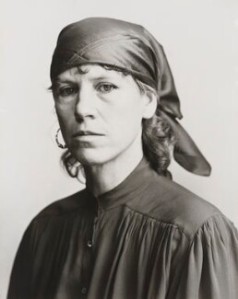
Nell Dunn by Snowden, 1982
You can read the rest of this review at the TLS website where it was posted on 17.7.2018 as “Something to Say For Herself”. The print version appeared in the 20.7.2018 issue.

The Book of Chocolate Saints – Jeet Thayil’s second novel, following his successful debut, Narcopolis – begins with a poet on the verge of flight. Francis Xavier Newton is about to abandon his wife in Bombay. He is being drawn west again, a lure ever since his childhood in Goa, where he grew up precocious and taciturn, beguiled by Christian saints and English literature. The novel begins in medias res and circles around, coming at its subject from multiple angles – a polyphonous, polyglot approach that encourages the reader to question: “This is my take on the matter, of course. You don’t have to agree”. By this point in his life, Newton has already tried out bohemian enclaves in London, Paris and Milan. Now, with his new muse, Goody Lol, he’s running away to the corrupted place he calls “Amurka”. Like all poets, he’s both an outcast and an absconder, even from poetry itself. Having published when young two brilliant volumes of verse, the words have run dry, so he’s turned his hand to painting – which is easier to dash off, makes money (unlike the “poverty of poetry”), and slots him comfortably into New York’s art scene, with its pastiche and plagiarism, readily-available drugs and uninhibited women.
In New York, Newton encounters Dismas Bombai, a fellow émigré, who has happily swapped India’s caste marks for America’s brands, paying their exorbitant prices with wages from an expat newspaper, the Indian Angle. Bombai wangles an interview with Newton and goes on to become his friend, biographer, and betrayer. Both men witness the nasty racial turn of American politics (a phenomenon mirrored in India’s rising sectarianism) and the stories of men like Amrik, a Sikh attacked during 9/11 for wearing a turban, or Balbir Singh, murdered in Arizona, because to ignorant American eyes he looked like a Muslim terrorist. In The Book of Chocolate Saints, Amrik becomes Newton’s manager – just one of many indications that Thayil’s novel is, like the contemporary artworld, at home in its inauthenticity, mixing “real” people with fictional ones, who themselves are often predicated on the once-living. Newton, Thayil has said in interview, was patched together from the Indian poet, Dom Moraes, and the artist, Francis Newton Souza; Amrik Singh Bhopal shares his first two names, with Amrik Singh Bal, a man who was the victim of a racist attack in California in 2015. That there is a parasitic element to all this, Thayil acknowledges with nods to Frankenstein and vampires, which contribute to the book’s larger debate about fiction’s dual tendency to cannibalise and conjure, and the air of disreputability associated with certain kinds of writing: the name Dismas, Thayil tells us, pointedly, means thief.

Sridhar/Thayil
Eventually Newton returns to India; Dismas, hot on his coattails. Here the opportunist biographer interviews academics, journalists, art activists and other poetry camp followers for an oral history of Newton and the Hungry Realists – a “real” group of poets who surfaced in Bombay in the 1970s. To call them a group, however, is perhaps to miss the point. Because in Thayil’s knowledgable anatomy of poetry (the poems preceding each of his novel’s chapters come from his own Collected Poems, 2015), the Hungry Realists are presented as a clique of infighters, brought together by their common sense of exclusion, but revelling in their obscurity: “They took pride in not publishing and not writing. One book and then nothing for a decade.” The talk about poetry, however, is prolific. For many, Auden’s question about what poetry can or cannot make happen, is urgent once again in this new “time of rage”. Then there are arguments about linguistic authenticity, and the (for some, deplorable) use of the coloniser’s tongue. There is India’s lingering sense of cultural inferiority, exacerbated when western poets like Ginsberg display “orientalist” responses to Indian poetry – praising Tagore’s Bengali mysticism while disdaining Newton’s English-language modernism. There are the clamours of the unacknowledged poets (the untouchables, the women) among this already-marginalised group; and, most insidious of all, there is the romance of the self-destructive poet: alienated, intoxicated, and suicidal, “the suicide saints” whom Thayil taxonomises from Anna Akhmatova to Reetika Vazirani, “a partial list because a complete list would be endless”.
And the Indian angle here? What’s novel is that these debates take place through the prism of Indian poetry. We are now the emblematic poets, Thayil is telling his readers, and our concerns (including post-colonial anxiety, linguistic diversity, and a greater global awareness) have become cardinal. Part of what Thayil’s novel is doing is attempting to rebalance the books: the Chocolate Saints are those that have been largely missing from the picture, whitewashed or ignored, and the profound sense of absence this creates chimes in his novel with the roll-calls of poetry’s lost and martyred. There are further allusions to women’s historical invisibility in the sharp portrait of Goody Lol, a woman seeking sexual liberation, who late in life (as is often the case for women artists) has her own exhibition of portrait photography exploring, quite literally, the ties that bind.
Among the most compelling aspects of Thayil’s ambitious, wide-ranging and utterly contemporary novel are its reflections upon poetry and fiction. As he demonstrates amply here, one of the novel’s strengths as a genre is its sociability, its being in and of the world: magpie, multiple, dependent. Whereas the ideal poem, he suggests, might be more like one of Arun Kolatkar’s, the Maharashtra poet, a poem of the people which “used the demotic” yet was still “a poem that did not care what you thought of it, an untouchable poem that didn’t seek you approval or understanding”. Perhaps a secular (novelistic) reading of poetry’s “holiness” – a word used by Eric Gill in the epigraph to The Book of Chocolate Saints – would suggest that what poetry has to teach the novel is its non-compliance with the times, its utter inadequcy as a thing to be bought.

Matthew De Abaitua, Self & I – TLS
It’s hard to know how to summarize Self & I, Matthew De Abaitua’s memoir of the critical period in his life during which he worked as an amanuensis for Will Self, falling under his influence. It is partly a hagiography with Self as the holy saint of literature: visionary, intoxicated and in possession of the keys to the magic kingdom – but it is also a study of working class ambition, an exegesis of the Self canon, a critique of masculinity, a window onto the last pre-digital moment, and a review of that bankrupt and hollow decade in which even the counter-culture was in hock to the establishment. Self & I begins as Tony Blair is elected leader of the Labour Party and ends three years later with the literati and the art crowd celebrating as the country follows suit; an Epilogue takes us to 2003 and Blair in Basra giving a motivational speech to the troops. “This was the true end of the Nineties: the party that became a war.”
In 1994 De Abaitua is a twenty-two year old student on the Creative Writing course at UEA when Self blows into town. Lately divorced, the writer hatches a plan to escape the scene of his marital breakdown in London by moving to a remote cottage in the Suffolk countryside. In order for him to write free from distraction, he employs De Abaitua as a sort of family stand-in, someone who can furnish the cottage and keep the “Will Self industry” ticking over. De Abaitua answers Self’s mail, transcribes his interviews (with Adam Phillips, Martin Amis, and Self’s elected “mentor”, J. G. Ballard), arranges trips to Brazil and Australia for him and waits like a lonely wife for his return. He is also a substitute son, a literary heir of sorts who Self takes it upon himself to mentor and correct: snorting whenever the babbling De Abaitua succumbs to cliché, encouraging him to use his dreams for surrealist experiments, and generally advising the working class lad on how to get ahead in literature: “Don’t be too chippy. People don’t like it”.
De Abaitua has no illusions about his role: “amanuensis…translates as slave-at-hand”, he notes; and unlike a family member he “must not – in any way – contribute to [Self’s] sense of guilt or obligation.” (Guilty memories get in the way of moving on, of creating new fictions.) Yet the twenty-two year old is thrilled by the idea of their intimacy, fancying himself a partner-in-crime: “We’ve staked too much on the virtues of vice to change course now.” They embark on long treks across an appropriately Ballardian hinterland – a nuclear power station looms over the sea into which Self plunges, taking the “Sizewell cure” for his scratched and infected face, lacerated during opiate nightmares. De Abaitua thinks of the two of them as a latter-day Withnail & I; Self’s cultural reach is more extensive: their posture, he smirks to a visiting journalist, is more akin to the Ladies of Langollen.

To the young De Abaitua, part of Self’s mystique as a writer is his shamanic familiarity with transcendence (getting constantly off his head on whatever’s to hand: alcohol, mushrooms, Horlicks home-brewed with local poppies, “special cigarettes”), while maintaining a fastidious work ethic. He is at his desk every morning at nine, instructs his protégé on “the importance of clean work surfaces”, prohibits television, or reading and listening to music at the same time (“else we become inattentive”), and takes vigorous constitutionals.
During one of Self’s absences, De Abaitua’s parents visit the cottage and this opens up memories of the life he has left behind on the outskirts of Liverpool. Here, the role-models he had were an older brother who beat him to “toughen him up”, friends who jump on any sign of someone getting above themselves, a father whose “sense of how to behave in the world” is learned from his job in the police, and Terry, a dockworker he meets when temping during the student vacation: “Terry and I assume the role of bad mentor and unlikely pupil”. When he tries to talk to Terry about art and literature (De Abaitua is reading A. S. Byatt’s Possession) his co-worker man replies scornfully, “What’s the point of that?”, it has nothing to do with the hard reality of his life which he offers up as a cautionary tale. Against these men, Self seems the perfect mentor, introducing De Abaitua to a world of cerebral disobedience that offers a route away from Poverty Lane – the street where he played as a child. The eager student, now learning how to behave from Self, recites the writer’s catechism: “non-compliance is how we make ourselves attentive to the true social relations that control us.”
But as his time at the cottage comes to an end, and De Abaitua is left drifting at the edges of the literary world, we await the inevitable challenge to Self’s conception of the way things are. He does not openly rebuke his mentor, nor betray him: De Abaitua’s dedicated explication of Self’s writing displays the kind of attention born of love. (Rebuke he reserves for himself, with many self-lacerating references to his festering ambition, his failures as a “nearly-writer”). Yet when he comes to the subordinate story of his own life, “a footnote in history”, it is full of observations that reflect back on “Self Country”. For De Abaitua’s is another country altogether, in which ecstasy is not something you get from amyl nitrate but from the relief felt at the change of shift by manual workers bored out of their minds.
What’s interesting here is that having demonstrated his mastery of the Selfian mode, De Abaitua chooses not to represent himself in this vein. His own life story is told in resolutely realist fashion: no arcane vocabulary, “exploded metaphors”, or disproportion of scale, all beloved by Self and tactically deployed in his fictions. This tells us something about the class-bound nature of culture in Britain. Even later in life the fear of affectation does not leave De Abaitua. As a Creative Writing lecturer he still feels fraudulent, imagining his students thinking: “Does he know what he sounds like?” De Abaitua’s accessible style also hints at the luxury of Self’s outlawry, and at its loftiness. “Will doesn’t do small talk” the young man learns early on in their relationship; a manner De Abaitua tries to emulate but finds impossible to sustain among the coercive communality of Liverpool’s pubs and clubs.
Not that any of this is Self’s fault, he is his own man with his own demons and these old debates about the politics of literary aesthetic will not be resolved between the two of them. But for De Abaitua there is the question of where his initiation into Self Country leaves him. After a depressing period at the Idler, where an anti-work credo is extolled by upper-class entrepreneurs, De Abaitua meets up with Self again. The older man, sensing him at a loss, does what all good mentors do, telling De Abaitua to stop procrastinating and have his say: “You have to step up, Matthew”, because in the end for the writer there is only the work.
“I have not forgotten our white cottage”, the young De Abaitua reads from Les Fleurs du Mal in 1994, reclining on the sofa in the Suffolk cottage he is sharing with a remarkable and troubled writer. Baudelaire’s elegiac phrase seems to anticipate De Abaitua’s future self, looking back at this moment. Then he recalls his mentor’s lesson: “Forgetting . . . keeps us moving forward”. However, understanding the value of a lesson does not mean always having to obey it. Matthew De Abaitua did step up, publishing three novels. But perhaps his greatest achievement will be this compelling reminiscence of the time he spent with Will Self, which, however fraught with ambiguity, turned out to be a spur to the life he had always wanted.

In her keynote lecture for a conference on The Muse and the Market in 2015 Aminatta Forna mounted a powerful advocacy for the political novel, challenging the assumption that politics or ‘subject’ undermines literary aesthetic. “A political novel can fail as a work of art as much as any other novel”, she argued, “but the fact that it is political does not sentence it to failure.” Her own approach to fiction is something like Paul Klee’s approach to his art: where Klee talked of taking a line for a walk, she says, “when I write a novel it is like taking a thought for a walk”. In Happiness, Forna’s fourth novel, the thought up for consideration is that in the west many people’s lives are so sheltered they have become terrified of suffering, pathologising even ordinary loss or grief as trauma. Perhaps this desire for safety, she speculates, has also led to a fear of incomers – a fear expressed in blindness to the many migrants at work across the city, or in terror when confronted with wild creatures in urban territory, with the sudden “opalescent eye shine of an animal” in the road.
These fears are scrutinised, and countered, in Happiness by Attila, a debonair Ghanaian psychiatrist visiting London for a conference on PTSD, and Jean, an American wildlife biologist in the capital to study urban foxes. They are both adapting to life after recent losses: his incurred by the death of a beloved wife, hers by a divorce that has separated her from her son. The two collide on Waterloo Bridge one winter evening and then again in a nearby underpass when they intervene to stop a white beggar from being attacked. These collisions are followed by many more to the point where London, the novel’s third major character, is depicted as a place that continually puts one kind of person, or animal, in the path of another: a Bosnian street performer opens the door for a fox meandering through the National Theater; a Sierra Leonean traffic warden notices a boy loitering alone by the Thames; and a flock of parakeets make their home in Nunhead Cemetery, aggravating the local council but delighting the joggers and dog-walkers.
Not all encounters are welcome or convivial: one frightened woman crosses the road to avoid coming face to face with a recently-bereaved acquaintance. Against such antipathy, Forna proposes that rather than fencing off our lives in fantasy (“prelapsarian gardens”), the best hope for survival, and, indeed, for happiness, is to cultivate “a sense of something that goes beyond [our]selves”. Once worlds collide it takes curiosity, empathy and will to draw people together. When Attila tells Jean about his runaway nephew, caught up in an immigration sting, she realises she can help him, having knowledge of the city from tracking foxes. She also has access to a network of people who assist in monitoring the foxes’ movements: migrant road sweepers, traffic wardens and security guards, all with expertise in London’s street culture. And they volunteer to search for the boy. The reason they are willing to help is their sense of solidarity, something echoed in the silent nods of acknowledgment that pass between Attila and other black people as they make their way through the city.

Aminatta Forna
The correlation of Forna’s idea that some in the west have become insular and enclosed, is that those most exposed to suffering – having learnt from it – may have developed greater emotional resources. In her rather Nietzschean novel, which emphasises knowledge, tenacity and resilience over victimhood, this is demonstrated time and again. Which is not to say that Forna is an idealist. Happiness is an outward-looking book, yet in passages that punctuate the London story, set in Bosnia, Sierra Leone and Iraq, the ravaged places where Attila has worked with civilian and combatant victims of war, there is no doubting the suffering that human beings inflict upon one another, and upon other species. Here, Forna thinks deeply about our responsibilities and how we can all get along. Attila tells Jean: “Some in my profession believe animal cruelty is an early indicator of worse to come”. While she points out that foxes have moved into cities not, as widely held, because we stopped hunting them in the country, but because fast food means “the sidewalks have turned into ‘all you can eat buffets'”. Where Jean is fascinated by the culture of the natural world and inter-species relationships, Attila responds to the horror he’s witnessed by cultivating his love of food, dance and language, conversing with a colleague in Esperanto, the dreamed-up speech of international fellowship.
The novel ends with Attila’s own conference keynote lecture in which he calls on the work of Frantz Fanon, R.D. Laing and the anti-psychiatry movement, to argue that “trauma does not equal destiny”. He also returns to his love of Robert Graves who went back to the trenches, deciding “he preferred the suffering of war to the insufferability of civilisation”. Goodbye to All That might well have provided an alternative title to Forna’s piercingly intelligent and interrogative novel which, like the earlier book, registers tectonic shifts taking place in the world and provokes us to think anew about war, and what we take for peace and happiness.

I was saddened to learn of the recent death of the Guyanese writer Wilson Harris. In 1985 I was employed by Tariq Ali and Darcus Howe to work as a researcher on a film they were making about Harris for Channel 4. He had moved to London in 1959; the following year, Faber and Faber published his debut novel, The Palace of the Peacock. By the mid-1980s there were rumours he was in line for the Nobel Prize but nothing came of it. Despite a fascinating canon of novels, short stories, poetry and non-fiction as well as a knighthood in 2011, he remained an isolated literary figure, living in the suburbs of Chelmsford. Today, he is perhaps most familiar to those who study postcolonial literature.
As part of my research, I interviewed Wilson and spoke to younger Guyanese writers he influenced such as Fred D’Aguiar and David Dabydeen. I also interviewed Angela Carter – a family friend for whom I occasionally babysat – who knew Wilson and admired his work. We talked, initially, on the phone. She described him as the “Guyanese William Blake”, adding “it’d be fun” to promote Wilson; “he’s an extraordinary man”. She told me about meeting him in Austin, Texas, where she was teaching creative writing and he lectured every spring semester. One night they all went out to dinner with a student who was a Vietnam war veteran. “Wilson took a deep breath and started explaining to this man why capitalism was wrong, why corporal punishment was wrong. Somebody had to explain to this man how the world really is, and Wilson did it in a very unassuming way. Talk to Wilson about that: how he changed Hank from writing about killing people to writing about being guilty about killing people. And there were many others like him.”
Shortly after this conversation I visited Carter’s home on The Chase in Clapham. We chatted about pop culture and film – Angela used to visit the Ritzy in Brixton when I worked there as a projectionist, she was knowledgeable about cinema and loved to talk about it – then we began the interview proper.
You can read the interview, published in the TLS on 27.3.2018, here.
Why do some writers of significant, or even major, fiction fail to find a secure footing in the canon? The obvious marks of achievement for an author are remaining in print, market success and critical acclaim – the extent to which writers are assimilated into the story of literature, recognized for their place in a national tradition or as part of a literary movement. For those who fail to maintain availability, sales or notice, and whose neglect seems palpably unjust, we have the much-used compensatory phrase, “a writer’s writer”. Usually offered as high accolade, indicating appreciation by an elite circle of peers, it can mask a more uncomfortable truth about the failure of critics, academics, publishers and the reading public to find room in the house of fiction for books that are held to be in some way unfamiliar, uncompromising or heterodox.
Sometimes the cause of such neglect is baffling: “Why he isn’t better known, I simply don’t understand, because he’s outstandingly good”, Philip Pullman wrote recently of his favourite overlooked writer, MacDonald Harris. Often, though, there is an observable kinship between novels that get lost along the way: many are themselves concerned with ideas of waywardness, homelessness or oddity, with marginalized people and places. All too often their portraits of obscurity are projected back on them, with the result that they are themselves neglected. One example of this treatment is the writer’s writer Christina Stead, hailed over the years by Mary McCarthy, Angela Carter and Jonathan Franzen, yet despite successive rediscoveries, never breaking through to a more general acceptance.
In some cases, overlooked novels achieve notoriety precisely because they have been left to languish at the periphery. Zora Neale Hurston’s Their Eyes Were Watching God (1937), falls into this category, as does Aidan Higgins’s debut novel, Langrishe, Go Down (1966), reputedly the greatest Irish novel serious readers may never have heard of. Writing in the Irish Times, Derek Mahon confirmed not just the novel’s reputation, but the author’s, as “fugitive . . . a thing of hearsay among initiates”. Langrishe concerns four sisters (one already dead) marooned outside Dublin in Springfield, one of Ireland’s decaying Big Houses. The novel is set in the 1930s as fascism creeps across Europe; the Langrishe women are creatures living at the edge of the continent and the end of their wits: ignorant, impoverished and condemned to the loneliest of spinsterhoods, which has turned them in on themselves and set them against one another. The two sisters who narrate the novel fret continually about their fall from respectability, wondering how they have arrived at a place so far beyond the pale.
With Langrishe’s latest revival by the Apollo Press, John Banville, in a new after word, has declared the book a “masterpiece”. But he also acknowledges its rough passage, quoting Higgins’s rueful observation that a fortnight after Langrishe’s publication, “sales sank to a dribble”, while Samuel Beckett’s scathing assessment – he thought it “literary shit” – did little to improve the book’s fortune. Beckett was a friend to Higgins, however. And it was on his recommendation that John Calder decided to publish the novel. The unjust evaluation was probably born of a horror of “Oirishness” – the “old-fashioned and placating nature” of Irish “yarnsters” which Higgins himself lambasts William Trevor and John McGahern for in March Hares, a posthumous collection of non-fiction from the Dalkey Archive. Perhaps Beckett felt that Langrishe failed to lift itself sufficiently out of the grip of Irish history and tradition, or to find a new form as rigorous as his own – “as cold as refrigerators” is how Higgins memorably describes Beckett’s late style in the opening salvo to March Hares, “The Hollow, The Bitter and the Mirthless in Irish Writing”.
By the time Higgins took up the pen, the authors he admired – James Joyce, Flann O’Brien and Djuna Barnes – were either dead or past their prime; the scene had moved on to the more radical formalism of the Nouveau Roman, making his high modernist style seem out of step with the era. During the postwar years, the anglophone world was slow to catch up with the demolition of “réalité” that was invigorating French fiction, Beckett being the exception: he was living as an emigré in Paris. Then, in the 1950s, Calder began publishing not only Beckett in English, but also many of the Nouveau Roman writers. By 1966, when he brought out Langrishe, ideas about exhaustion and bankruptcy were in the air. Angela Carter’s first novel, Shadow Dance, which was published at the same time, has a pervasive sense of people living in aftermath, embroiled in traditions and beliefs that are decaying or worn out. And the following year saw the publication of Frank Kermode’s influential collection, The Sense of an Ending: Studies in the theory of literary fiction; written with knowledge of the Holocaust and in fear of impending nuclear war, Kermode identifies the apocalyptic strain of the literary imagination.

Aidan Higgins, by Suzy O’Mullane, 2002
Part of the problem for Higgins was the way critics placed his novel. Because of its Big House subject, historical references (James Connolly, Éamon De Valera, Constance Markiewicz, etc) and melancholy lyricism, many thought of it primarily in a national context – another brick in the wall of “old Irish miserabilism”, as Eimear McBride described the tradition recently on Radio 4 – as existing, therefore, in a space disconnected from these continental debates about literature and politics. But this is perhaps a category error: Langrishe is not an example of the isolation of Irish culture, but rather a work that critically dissects it. Disputing the novel’s reading by many reviewers, Higgins underscores this point in another piece included in March Hares. In it, he asserts, “on the subject of misunderstandings and cognate matters, may I be here permitted to state categorically that Langrishe, Go Down is not a Big House novel, nor ever was intended as such”.
John Calder, thinking back over some of the writers he championed during his (heroic) career, singled Higgins out as “greatly under appreciated”. “He is a very strange man”, Calder told an interviewer in 2013, “A great writer, though.” No doubt lack of appreciation played its part in that strangeness, leading to some of the bristliness on display in March Hares, where he returns repeatedly to the matter of Ireland’s “deeply conservative reading public”, the fantastic sales of the “sobsisters” (Nuala O’Faolain, Frank McCourt), the ever-present faces of the fashionable literati (Colm Tóibín, Roddy Doyle), his own remaindering (out of print again), and the all-too-brief mentions of his work in anthologies of Irish literature. Yet he is astute enough to understand that, for an artist, there is existential validation in being excluded: “To feel out of place is, to be sure, quite a salubrious state for a writer to find himself in”. No doubt this is why writers at the edge so often become experts in reinvention. Higgins’s own talent for redeployment and recycling – characters reappear, later memoirs replay passages from earlier fictions – is at odds with the complete lack of wherewithal demonstrated by the Langrishe sisters. He has said the women were based on himself and his brothers, who had grown up in the house that Springfield is modelled on: the sisters, he writes, were characters “in drag”. Presumably one of the reasons for changing their sex is that women more plausibly embody the “weakness” and redundancy that he was intent on exposing.
Langrishe contains some of the most poignant and beautiful writing to be found anywhere on the evanescence of time and the cycles of nature. Inlaid against this lyricism, though – as is often the case in studies of lateness – there are moments when people start to regard themselves anthropologically, and odd notes of the parodic edge into view: “Pray sir, did you ever meet a lady who is a sort of specimen of a bygone world?” Carter’s critique of Britain as a country past its sell-by date still manages to find a way forward for her characters: in the new Sixties culture of camp and cut-up, they recycle and sell off busts of Queen Victoria, clown noses and soldiers’ uniforms. But at Springfield, though the Langrishe women, cloistered in their only heated room, are also surrounded by detritus from the past – pictures of sabre-waving soldiers, a “blackamoor” statue, a sarcophagus vase-stand – these symbols remain oppressive because the stay-at-home sisters have no countering point of view, no way of learning how to flount authority or play in the ruins of their history.
The only outside voice in Langrishe comes from a German doctoral student, Otto, who takes up residence in the gatehouse, lives off the land and pays no rent – a situation the sisters, in their “stifling stasis”, are incapable of doing anything about despite a desperate need for funds. With his masterful manner and apparent knowledge of all things, Otto quickly seduces Imogen, the youngest and prettiest of the sisters, the family’s “one hope”. But because of the novel’s a-chronology, the reader knows from the outset that the hope of this affair, begun in the summer of 1933, is doomed: Langrishe opens in the winter in 1937, with the once lovely Imogen now surrounded by stout bottles, her hair and teeth falling out; it closes after two deaths and a funeral in 1939, “squashing” all hope for the Big House inhabitants and, following the Anschluss, for Europe as a whole.
“Mother Eire was never young”, Higgins writes in March Hares, chastizing Joyce for his mythologizing, and in Langrishe she is a brute, an old hag who squashes the lives of the Langrishe girls like insects. The novel ends with Imogen back in the deserted gatehouse, hiding away among “rotting wainscots” and “mildewed walls”, “spiderwebs” and “dead flies”. In another passage from March Hares, entitled “Ancestral Voices”, Higgins says (playfully, camply) of his own upbringing: “In those stagnant times how we fairly trembled before Authority!” His novel Langrishe, Go Down deserves to be more widely known, not only for its extraordinary mournful beauty, but also for its apocalyptic vision of a culture’s squandering and rottenness, for its thoroughgoing dismantling of the Irish house of fiction, and as one of the great works of European anti-authority.

The title of Jenny Erpenbeck’s new novel, Go Went Gone, and the autumnal tone of its beginning – a Classics professor retires, leaving him at home raking leaves, mulling over memories of his wife, and wondering about the body in a nearby lake – suggests that this will be a book of endings, something akin to Anita Brookner’s stories of self-absorbed people in the twilight of their lives.
But Richard, now professor emeritus, proves to be a more unpredictable character. For a start, unlike many of Brookner’s loners, there is the strong force of history in him. A precarious beginning under fascism and war, then a life shaped by the GDR and its abrupt cessation in 1989, has left him and his circle of friends adrift in the new Germany. They have only memories of their vanished country and some sense that the place in which they now find themselves, with its advertised values of reason and law, is not all it’s cracked up to be. For a start, Richard’s pension is smaller than that of his West German compatriots. Not that he’s complaining: as a child versed in “proletarian internationalism”, he’s fully aware that compared with many on the planet, he’s well off: “Richard knows he’s one of the very few people in this world who are in a position to take their pick of realities.”
The question of what constitutes reality lies at the heart of Erpenbeck’s writing. In Go Went Gone she is at pains to show that what is often taken to be universal can be tendentious or dogmatically insisted upon, despite what ought to be glaring limitations. The body submerged in the lake and Richard’s interest in underground systems (escape routes from the Nazis, tunnels from the Middle Ages) suggest that beneath the “veneer” of reality, much in life is hidden or suppressed.
When Richard watches a News programme about a protest tent city built by refugees in the middle of Oranienplatz, he realizes that he has walked through the square without noticing this challenge to everyday life. As an academic, the recognition of his trammeled view, with its implicit lack of curiosity, rankles him mildly. So with nothing better to do, he embarks on a homemade project to discover where the refugees come from and what it is that they want.
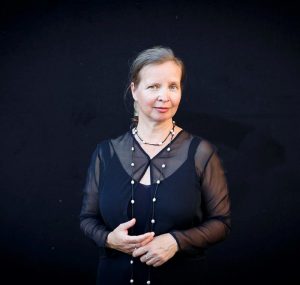
Jenny Erpenbeck
At first he sits on a bench in the square and takes notes. Then the authorities make an agreement with the refugees to dismantle the camp. Some are relocated to an unused block in a nursing home near Richard, where he finds men on mattresses four or five to a room, many depressed and sleeping in the middle of the day. But some are awake and – like Richard, with little to occupy them and no way forward in their lives as they are forbidden to work – they agree to be interviewed. Richard’s questions seem detailed but beside the point, as if, rather than facing the immediate crisis in their lives, he’s testing for humanity: “Do people have pets?” “What kind of place did you like to hide as a child?”
These conversations produce a gentle comedy of cultural difference and, for Richard, a series of realisations. The first is how little, for all his classical education, he knows about the world the refugees come from, even though, as he reacquaints himself with the story of Black Athena, he is reminded that the roots of Western civilization lie in North Africa. As he had walked through the square without seeing the refugees, so he knew of these facts but never assimilated them. Only now, through his new friendships, does the knowledge becoming meaningful. That he is unaware of where many African countries are on the map, unfamiliar with their capitals and languages is, of course, an indictment not just of Richard but of Western ignorance in general: “The American vice-president recently referred to Africa as a country.”
He becomes closer to the refugees, inviting them to his house, sharing meals and taking them to appointments with the authorities during which he starts to understand how the law is stacked against them. The Dublin II treaty prevents the men from applying for asylum (Germany is not the first European country they arrived in) and the Berlin authorities retract their agreement.
Richard’s dawning awareness brings to mind Ted Hughes’s epiphany, the fruit of his engagement with East European dissidents, about the “spoilt brats of Western civilization…deprived of the revelations of necessity”. Erpenbeck’s tone is not so dramatic: her clear, unshowy prose never draws attention to itself – at times her novel even reads like a primer, reflecting the way Richard learns like a child through reading and friendship about how the world beyond him has shaped his own.
Yet this is a highly sophisticated work in which blatant injustice (however disregarded) exists together with forces that lurk beneath the surface. At a birthday party for Richard celebrated with old and new comrades, the light falls and everyone gathers round a fire. There are stories shared by all about guilt, regret and loss, memories that usually remain submerged, too unbearable to think about, but which surface here in the company of friends. This perhaps is the common ground which earlier socialist writers were intent upon, and the scene is relayed by Erpenbeck with extraordinary emotional power, her analytical skill now matched by a tenderness to human beings that remains utterly unsentimental.
At an earlier moment Richard bemoans the fact that the loss of the GDR has meant the loss of grand ideas about humanity: now only individual action is possible. It is a sentiment that the East German writer to whom Erpenbeck seems most indebted, Christa Wolf, also expressed, saying she no longer believed in ideology, and after the fall of the Wall progress would only occur through pushes made at ground level. The inevitably cruel ending looms for the refugees and they rise once more from their beds to organise another protest, remembering the dignity they found in the Oranienplatz resistance. They know their rooftop protest will not succeed, but as Angela Carter once observed, we organise to keep our spirits up.
The verdict on the refugees’ case finally arrives and the question for Richard remains the old one: what is to be done? His answer, and the way he draws his German friends in to help, suggests some reconciliation of the grand idea with individual action, a new kind of solidarity and a way forward.

On just about every page of Jesmyn Ward’s powerful new novel, Sing, Unburied, Sing, we get a sense of Mississippi’s wild and stirring beauty: its watery bayous, ancient trees and rich Delta soil. But it is also a landscape full of menace, imprinted with memories of violence and pain. “All them black hands”, Pop tells his grandson, recounting the story of how he chased a boy escaping from Parchman Prison over the fields. The earth was so crumbly from generations of black men working it – the “free” labour of slaves and prisoners – that Pop and his dogs found it easy to track the child. In Ward’s Mississippi, racism eats away at even the most basic human relations, corroding people’s feelings for the land, their idea of home, and even their sense of family. The mystery at the heart of Sing, Unburied, Sing is the horrifying story of the prison chase that Pop finally unburdens, the story of black prisoners forced to hunt down their escaping cell mates. It’s a tale that reveals just how active a force history is in the present, and how a legacy of injustice will subvert time and thwart progress: “Parchman was past, present and future all at once.”
This is the kind of sentence that one might find in many a twenty-first century novel, where the fragmentation of contemporary life often becomes a matter of play, and societal breakdown provides a showcase for imaginative resilience. What such fictions tend to demonstrate is that you can turn the world upside down and hijack its order precisely because you are already at home in it. Ward’s book, by contrast, is marked by an ineradicable gravity about what it means to be homeless. Its disordering properties seem less like a game with literary props than commensurate expression of a corrupt system: Pop’s wife, dying of cancer, is so mistrustful of authority she tries to treat herself with woodland herbs, and when their son is killed by a white man during a hunting expedition, his death is covered up by the local sheriff. The gothic element of Sing, Unburied, Sing, which includes two ‘characters’ who are dead, has none of the titillation that often features in ghost stories; as in Toni Morrison’s Beloved, these revenants speak of the psychic disturbance engendered by bigotry and hate. The novel’s synchronicity emanates from an awareness of how suffering is passed down through generations, with pain in the past deforming lives in the present. And despite Ward’s title, which summons the dead to speak, there is even ambiguity about storytelling.
Ward reminds us that when family history is so harrowing, storytelling does not operate in the remedial fashion it routinely does for writers such as, say, Ali Smith. The tales the thirteen-year-old Jojo hears from his grandfather are of a blighted inheritance. Tales like the one about Pop’s great grandmother who was kidnapped and brought across the ocean, her skin growing around the chains. “In her village”, Pop tells the boy, “they ate fear. Said it turned the food to sand in they mouth.” Yet if such tale-telling induces unease or despair, Ward is mindful, too, of the damage silence can do: her novel’s narrative dissemination is a sign not, as it tends to be in modern fiction, of increased autonomy but of characters cut off from one another by secrets and shame. In Men We Reaped (2013), Ward’s wrenching memoir of the deaths of five young black men from her home town in Mississippi, she educated the reader about just how difficult it can be to speak of betrayal and loss when no one is listening: “silence is the sound of our subdued rage, our accumulated grief.”

Jesmyn Ward
The three narrators of Sing, Unburied, Sing are Jojo, his mother, Leonie, and a ghost-child, Richie – the boy Pop met when they were incarcerated together in Parchman. For Leonie, the family’s load has been too heavy to bear. Her yearning for another life, and the shame of disavowing her parents, has led into drug addiction. The only “balm” to her “open wound” is the green-eyed white boy, Michael, son of the racist sheriff, who nevertheless “saw past skin the color of unmilked coffee, lips the color of plum, and saw me.” But Michael is also embroiled in drugs (with the collapse of oil prices, virtually all that sustains the local economy is drug money) and he, too, has been incarcerated in Parchman. When his release is pending, Leonie packs Jojo and his younger sister, Kayla, into her car and heads north to the prison to reunite the family. But the road trip reveals how deep the schism runs in Leonie whose undefined wanting finds satiety only in the drugs her lawyer feeds her. She is at war with herself, and her children are the casualties of this war when having stuck them in the back of her scorching car, she fails to feed them properly or give them enough to drink.
For a mixed-race child such as Jojo, growing up with his embattled mother, amid the still deeply-entrenched racial politics of Mississippi, life, is like living in a minefield. But as time goes on he comes to understand a little of Leonie’s behaviour, sensing that he too feels the urge to escape: “An itching in my hands. A kicking in my feet.” And in Richie, the ghost-boy wandering the woods where “a murder of silver crows” shine in the trees (or is it the ghosts of his murdered forebears unable to pass on to the next world?), there is a parallel image of homelessness, longing and entrapment.
In Jesmyn Ward we have an important new voice of the American South – one developing perhaps into the twenty-first century’s answer to William Faulkner. Fiercely partisan yet unillusioned, her command of politics and idiom is impressive. But perhaps what is most striking is Ward’s sustained and clear-eyed attention to people who, when noticed at all, are more usually consigned to a novel’s periphery. Here they take centre-stage and are depicted with the kind of piercing clarity born of love. At the novel’s close, with the ghosts restless in the tress, only Kayla, combining traits from everyone in her black and white family, can hush the spirits with her babbling song. The resilient child sits on the porch with her grandfather, shelling nuts, and is somehow able to understand instinctively the working of deprivation: “Kayla patted his arm again, but didn’t ask for another pecan. Just rubbed him like Pop was a puppy, flea-itching and half bald, starved for love.”

In a recent lecture by Amit Chaudhuri on ‘Possible, Not Alternative Histories” of literature, he proposed the idea of authors being read to fulfil a particular need. So W. G. Sebald is valued for his melancholy European novels in the face of the ascendant global novel (an idea Susan Sontag first mooted), J. M. Coetzee satisfies the need for a writer who remains silent or speaks only figuratively in a time of extreme politics, and Roberto Bolaño answers the desire for a writer to be unclassifiable. It’s an interesting thought-experiment, not merely the concept of a writer expressing a cultural need, but the extension of the argument that readers bring something to the table, a set of assumptions that precede the act of reading. What need might Chaudhuri himself fulfil?
With the publication of Friend of My Youth, he is now the author of seven novels, greatly admired, particularly by his peers. He is often associated with a group of authors who address themes of migration, globalisation, and the difficulties of return. Michael Ondaatje’s poetic memoir, Running in the Family (1982), about a journey from Canada to his childhood home in Sri Lanka, is the obvious precursor of these works. It is a book Teju Cole discusses in his similarly lyrical autofiction, Every Day is For the Thief (2014), about an unsettling trip back to Nigeria from America, while Neel Mukherjee’s latest novel, A State of Freedom (2017), has two characters revisiting India who experience joy in old familiarities together with pangs of estrangement. As with Chaudhuri’s self-named narrator, the protagonists of these books are distrustful of memory with its glitches and blackouts, disoriented by changes wrought in the intervening years, and often treated like tourists in the land of their birth. When Chaudhuri crosses into Mumbai via the new Sea Link bridge (a journey also made by a returnee in Mukherjee’s novel), he is immediately tested by his taxi driver for authenticity, regarded as suspiciously as he himself views the new buildings rising across the city, “interlopers” disturbing his sense of how things ought to be. A writer, he is in India on a brief book tour and wants to reunite with the friends of his youth. But the oldest of these, Ramu, is away in rehab, others are not available, and anyway his habit of referring to the city as Bombay rather than Mumbai, its name for the last twenty years, indicates that the journey he has in mind might be just that: a chance to revisit memories, reflect on old relationships, and ruminate on the child he was, the man he has become.
Friend of My Youth is virtually plotless in the traditional sense, meaning that the novel has few events: Chaudhuri arrives, books into a club and notes its refurbishment; visits a district of the city he once knew and reflects on its “continuity” (the tranquillity artificially preserved by wealthy residents). He runs shopping errands for his wife and mother, is interviewed by a young journalist, and has dinner with a bookseller. But these unremarkable scenes do not mean that the novel is uneventful: the drama of the self, spun from Chaudhuri’s meditations and recollections, is artfully composed and utterly absorbing. At the heart of this drama are two shifting relationships: one with the city, which he comes to understand he knew very little of in his privileged youth; the other with his turbulent friend Ramu. Like Chaudhuri, Ramu is another “fantasist”, but instead of writing, he kicked against the dogma of the everyday through drug addiction. As Chaudhuri moves across the city, thoughts of the absent Ramu ripple through his mind, and like the Taj Hotel which was blown apart by terrorists in 2008 and then reassembled, he is increasingly engaged in the effort of trying to piece back together the mystery of their friendship: “There’s no question of going back. But the painstaking joining up of fragments is clear too.”
As Chaudhuri’s revisits more recent memories of Ramu, it becomes clear that what has sustained their long relationship is a common feeling of unbelonging, creating a mutual sensibility which on idle walks through the city they have exercised and refined (the novel opens with a quotation from Walter Benjamin). On these perambulations they note how globalisation has sent land prices soaring and caused landmarks to be knocked down. The city’s shiny new buildings are mirrored by Ramu’s bright insistence that he is alright, but both strike a false note. In their fifties now, Chaudhuri senses decay in his old friend, the life force leaking from him. But despite this troubling sense of an ending, of foreclosed possibility, the old friends continue their walks, and there is something stoical, triumphant even, in their flânerie: as time wastes them, so they luxuriate in the “precious wastage of time”.
During Chaudhuri’s lecture he also outlined another possible strand in literary history, one culled from his readings and misreadings. This “tradition” concerns the praise of sunlight and living in the moment, something he found in writings by Goethe, Nietzsche, Hardy, Tagore and Lawrence. In Friend of My Youth, as Chaudhuri and Ramu stroll about, “in communion” in their feeling for the city, they stop before an old building, a “gothic phantom” bathed not in sun but in moonlight, and Ramu exclaims: “I get transformed when I see these, yaar!” In an era of globalised neo-liberalism, Angela Carter once suggested, “alienated is the only way to be”. For Ramu and Chaudhuri, fantasists and escape-artists, children of a fissile city constantly “gutted…[ or] under construction”, this is a given. But awareness of our alienation can turn us inwards. What Chaudhuri perhaps senses in Ramu’s love of the city, the awe he feels (“mind-blowing!”), and the transformation it delivers, is a satisfying paradox: we are most in the moment when we are taken out of ourselves.
This review first appeared in the TLS as “The Only Way to Be” on 29.9.2017.

J. M. Coetzee, Late Essays 2006 – 2017 – TLS
One might suppose that the description of J. M. Coetzee as a South African writer was relatively uncontentious, but in an Introduction to his second volume of collected essays, Inner Workings: Essays 2000-2005 (2007), Derek Attridge – perhaps unwilling to define an Afrikaner writer steeped in the European tradition as African, or simply mindful of Coetzee’s well-known elusiveness – seems reluctant to place him in this way, and tries instead to define him through negatives: “Coetzee himself is usually thought of as neither a European nor an American writer: for most of his writing life he has lived in South Africa, and half his novels take place in that country. He now lives in Australia…”.
“That country” and its neighbouring territories – where Coetzee’s Afrikaner ancestors settled as colonists in the seventeenth century, where he was born and brought up, and where he lived on and off for over 50 years – is the place to which he returns in Late Essays 2006-2017, a new collection that winds across the continents of Europe, America and Australia, before giving Africa the last word. His envoi on the diaries of the nineteenth century tribal leader Hendrik Witbooi underscores the mixing and complexity of colonial history: the Boers “way of life had become as much African as European”, while Witbooi and his mixed-race tribe behave like white colonists, “plundering, castle-rustling”. But, scrupulously, Coetzee goes beyond Witbooi’s lifetime to the emergence of the European colonizers’ “larger and more sinister project: genocide”, a fact that cannot be ignored in his final reckoning.
Of course, there may be more to be said on the subject. Coetzee’s notoriously disciplined work rate may yet produce successive volumes – Later or Latest Essays, perhaps? Such an idea would not be out of character for a writer who studied and taught in various universities (Cape Town, Texas, Buffalo, Harvard, Adelaide, Chicago) between 1963 and 2003, and whose novels bear the imprint of this experience, engaging in postmodern games that resist conclusiveness while tipping their hat to literary history and theory. Beckett and Kafka are returning presences in his work, and in Foe (1986) Coetzee reimagines the story of Robinson Crusoe and Man Friday from the perspective of a woman castaway on their island who tries to tell her own version of the colonist’s story. She finds she can speak plausibly only with the aid of a man’s intercession, and as her words are mistranslated by a male writer called Daniel Foe, so she misrepresents Friday, who is mute. As with Jean Rhys in her revision of Jane Eyre, (“Read and write I don’t know. Other things I know”), the focus is on the politics of language and the problems of interpretation, appropriation and the value denied those who speak in foreign tongues – or not at all. In later work this concern extends to the cruel treatment of “dumb” animals.
Coetzee’s engagement with literary history was attacked at the peak of the battle against apartheid as nostalgic or irrelevant. I doubt it escaped his notice that the language of this criticism – Michael Channon argued that Foe provided a “masturbatory release…for Europeanising dreams” – resembles that used by hard-line communist critics who, in the inter-war years, condemned modernist writers for failing to respond to social upheavals in the prescribed realist fashion: Mike Gold denounced Proust as the “master-masturbator of bourgeois literature”, and Karl Radek accused Joyce of being morbid and backward-looking.
Coetzee resisted any such pressure. When he wrote directly about apartheid in South Africa he was excoriating, but by flouting orthodoxy and insisting on imaginative freedom he continued to trouble readers. It was not only Thabo Mbeki who was disturbed by the depiction of black men raping a white woman in the Booker Prize winning, Disgrace (1999). Frequently, the unsettling tensions in Coetzee’s work have lain between its controlled austerity its lapidary elegance, and the risk he has run of giving offence, in writing to the edge. Over time his fictions have became increasingly self-reflexive (among his characters are numerous avatars bearing his name), digressive and provisional (“to be explored…”), and removed from what many now regard as the bad faith, or at least the untenable use of realism at the end of the modern era. Elizabeth Costello (2003), for instance, consists of a series of lectures on the industrialisation of animals, hanging on only the flimsiest of story skeletons; Dairy of a Bad Year (2007) develops three parallel narrators demarcated by dividing lines; while Summertime (2009) sees the biographer of a writer, one “J M Coetzee”, interviewing unimpressed ex-lovers following the death of the author. The problem of placing Coetzee geographically or intellectually was the subject of an essay by Hedley Twidle which won the Financial Times/Bodley Head competition in 2012. As Twidle observed, for many reviewers the difficulty of analysing Coetzee’s writing is fuelled by the feeling that he has got there before them: his fictions include their own auto-assessments, creating a critical redundancy.

All of which sets up intriguing questions when it comes to Coetzee’s own literary criticism. As with the two earlier volumes of his collected non-fiction, many of the selections in Late Essays, including those on Goethe, Irène Némirovsky, Beckett, Philip Roth and Patrick White, were originally published as reviews for the New York Review of Books. An insightful essay on Zbigniev Herbert first appeared in the small magazine, New Walk. But half of the essays began life as Introductions to other writers’ works (among them pieces on Defoe, Nathaniel Hawthorne, Gustave Flaubert, Ford Madox Ford, Heinrich von Kleist and Leo Tolstoy, as well as Beckett and White again). A glance at the Acknowledgements reveals that nearly all of these were for volumes published by El Hilo de Ariadne. What we are not told is that they are part of a grander project of canon-making that Coetzee has entered into with the Argentine publishing house to select, introduce and publish his own Biblioteca Personal – along the lines of Borges’s personal library for Hyspamérica. These books, Coetzee has said, are not only works that he greatly admires, but ones that have had a formative influence upon him as a writer.
Other than Hendrik Witbooi, all the writers discussed in this new collection are by men – Némirovsky is the only female exception – who made a living from their pens. The first essay, on Defoe notes that this was a profession “which, if he did not invent…he certainly pioneered”. He was, too, “an accidental pioneer of the novel of realism”, not quite understanding what he was doing, but how could he when he was “not only making the story up as he went along, he was making the form up too”? Defoe’s innovative writing emerged from his position as “an important social actor: the inquisitive, acquisitive man or woman of the ascendant protestant middle class”, and from “a certain inborn genius”. In interview Coetzee once said “there are no generalizations that serve and are true for all writers”, and the reach and depth of these sophisticated, authoritative essays certainly prove the case. But across generations and continents there are some recurring themes, reflecting perhaps Coetzee’s own preoccupations as a writer as much as those of the people he speaks of. It is the accident of talent (“which it is death to hide”) combined with specific historical forces and the way these feed into a work that he alights upon when trying to unravel the mysteries of writing – mysteries even to authors themselves who “cannot always tell the deepest motive behind [their] writing”. Kleist, for example, was born into a Prussian military family but lived “in the shadow of Napoleon Bonaparte’s grand plan to redraw the map of Europe”; becoming sick of army brutality and discovering the sceptical philosophy of the Enlightenment, he tried to fashion himself into a writer. These illuminating details help to explain why Kleist’s stories are so paradoxical, concerned as they are with people “torn between competing forces and impulses.” In the same way, Coetzee finds in the satiric counter-attacks, the ironic masks or Aesopian fables of Herbert’s poetry “evidence of his historical situation as a man trying to live out a poetic and intellectual vocation in a hostile environment”.
Along with the particulars of background and talent, Coetzee keenly identifies the honed techniques and “writer’s tricks” which keep pushing the form into new territory: Flaubert’s “ability to formulate larger issues…as problems of composition”, Kleist’s “invisible or buried narrators”, Roth’s complication of story “transmission”, and the methods Becket took from psychoanalysis (keep talking, free-associate: there is no point, and no end). In a group of novels by Defoe, Hawthorne, Flaubert and Ford concerning sexual betrayal, Coetzee seems less interested in the betrayals themselves than in the way in which their depiction makes of their creators (as with his own challenging stories) opponents of hypocrisy, moralising and cant; even as in the case of an essentially conservative writer such as Ford, the ambiguities and double-standards that The Good Soldier exposes, make him so. Indeed, one can draw a line in Coetzee’s thinking from the rebellion against bourgeois manners – Emma Bovary’s “right to desire in the face of the pious disapproval of society”, Ivan Ilyich’s “unseemly suffering…a breach in social decorum”, or Kleist’s Marquise, inexplicably pregnant (a plot so offensive one reviewer thought that even to summarise it was “to ostracize oneself from polite society”) – to the idea of the artist as an outsider.
Among many models of the author which Coetzee entertains, the romantic idea of the writer as outcast, pilloried for truth-telling yet steadfast in fidelity to their vision (“the great Accursed One” described by Rimbaud), is perhaps the one he finds most compelling. In Patrick White’s novel The Vivisector, he picks out the artist as “Luciferian angel”, and in an essay on Samuel Beckett he anoints Kafka as “the angel Misfit”. The Irish writer was the subject of Coetzee’s doctoral thesis: a lifelong preoccupation, he gets more attention here than anyone else. In Beckett, being an outsider is reformulated not only as the artist’s condition, but humanity’s – in our “plight of existential homelessness”. Coetzee’s quality of attention to Beckett is superb, though one could argue that he misses something of the comedy at the kernel of his work. But in the last of four pieces on him in Late Essays, Coetzee performs an imaginative dance with Godot’s creator that masters some of his playfulness, revealing, perhaps, as much about Coetzee as it does about Beckett.
In an essay of parts, divided by numbers, he begins by reflecting on how the mind/body divide gave rise to the dualism of radically self-conscious humans, an over-adaptation some thought, leading them to wonder if “the hyper-reflective Western bourgeois male” was doomed liked the dinosaur. Then, in a move that is part-homage, part-usurpation, he muses on what Beckett left out of his world picture: “the great scheming animal mind…incommensurate with human thought”. So he tries to conjure this for himself with a story about a laboratory animal also struggling to understand where it fits in a “universe [that] is never as it appears to be”. Coetzee rounds off with the true story of how in 1937, after his professor at Trinity saw an advert in the TLS, Beckett applied for a Cape Town University lectureship. He failed to get the job, of course, but for a moment Coetzee imagines another universe with Beckett, Crusoe-like, “an indolent Irish castaway” at “the southernmost tip of Africa” teaching Romance languages to daughters of the merchant class, even marrying one of these “sweet-breathed, bronze-limbed Calypsos”, and wondering would he ever have returned to Ithaca. The idea of Kafka or Beckett as university professors amuses him: “What would Kafka teach, anyway? How not to fit in?” But ever alert to the counter-thought, refusing all conclusions, Coetzee reminds us that Kafka was once a “perfectly competent insurance adjuster”.
How can we know the mind of a writer? What kind of portrait can we draw of these elusive creatures? Beckett and Kafka were both lean and both had a piercing gaze, Coetzee notes, and their photographs show men “whose inner being shines like a cold star through a fleshly envelope”. It is a beautiful image with the ring of truth about it, but one, characteristically, that Coetzee quickly dismantles: if soul and flesh belong to distinct realms, no photograph can tell the truth, and our conjunction “is an everlasting mystery”.
This review appeared in the TLS as “Plundering, rustling” on 22.9.2018.

Neel Mukherjee has had a two-handed literary career working as a reviewer of other people’s novels and writing his own: in 2014, his second novel, The Lives of Others was shortlisted for the Man Booker Prize. His latest book is a state-of-the-globalized-nation novel which gives human particularity to those deadened concepts we pass around such as migration, inequality and neo-liberalism. A State of Freedom breaks into five chapters, each telling the story of a distinct individual in India, whose connection is only fully revealed in the final pages. Mukherjee has observed wryly that due to stereotypical ideas about the Indian novel, whatever their formal properties, his fictions tend to be read as family sagas. Perhaps with this in mind, the relationships in A State of Freedom are more often horizontal than generational, and the stories, taking place across the country, emphasise wildly different fortunes and experience. Refuting Western preconceptions, one of Mukherjee’s protagonists, a manqué cookbook writer, asserts that there is no such thing as Indian food (the cuisine varies tremendously between states and cultures, something Mukherjee shows in mouth-watering detail), and in his novel there is no exemplary character: everyone’s perspective is partial and fragmented, and the ability to read the lives of others is less a product of education than a function of power. So the beggars, servants and manual labourers who appear ghost-like and inscrutable to the wealthy émigré visitors of the first two chapters, glimpsed only in their “periphery of vision”, emerge subsequently from this state of illegibility into fully-realised human beings, each with their own chapter, context and rationale.
The story begins with a man undone by India, a returnee after years away in America, now “broke[n] down” by an event made all the more horrific for seeming inexplicable. The unnamed man, bursting with pride but sensing he is “no longer a proper Indian”, has brought his young son in the back of a chauffeur-driven car to the Taj Mahal. But the American boy is too young and too hot to appreciate his father’s tales of emperors banqueting under white moonlight, and is bewildered by an onslaught of beggars and amputees from whom his father tries to shield the stunned child. This brief sketch opens the novel like a short, sharp slap, alerting the reader to how proclamations of India’s dizzying too-muchness – hoardings in multiple languages and styles make the father think, “how unsettled their orthography” – become the excuse for not really looking at the violence of poverty, or reading the effect on everyone in its orbit.
Mukherjee, on the other hand, confronts us with the deranged performances of both master and slave. There is Lakshman, forced by poverty to beat and tether a wild bear so that it will dance for a handful of rupees. The power struggle between this unlikely couple is profound, and the entertainment they produce enacts their mutual humiliation. And Milly, in service from the age of eight, treated like an animal by successive employers, forced to sleep on the kitchen floor, fed leftover scraps, and beaten when she breaks a cup. The worst of these employers becomes so enraged at any sign of independence she imprisons Milly, and threatens to brand her face with a hot iron: “Flat 10”, the narrator observes, “had become like a circus.”
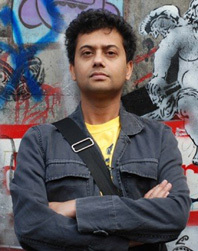
Neel Mukherjee
Mukherjee repeats certain words, complicating his novel with every accretion of meaning. So the cookery writer observes that recipes handed down can never be reproduced: each cook brings their own “hand” to the food, and it is this unique creativity, the expression of freedom, that power is threatened by and seeks to control. In Milly’s village Maoist rebels cut off her brother’s hand, while the ‘romantic’ emperor who built the Taj Mahal, cuts off his workers’ fingers so that his mausoleum can never be reproduced. In the same way, images of breaking amass to the point where the story withdraws from its own performance, reduced to a break-down of material cost (rent, water, electricity, food).
Finally in its dialectical ending A State of Freedom’s artfully-handled piecing together of story fragments is held in tension by a counter-force of textual disintegration. Capital letters and full stops disappear, sentences fragment, words break into poetic suggestion reminding us of the reduced, hollow men and women, trapped and fated by an order the writer would break, while acknowledging that art, in the end, cannot achieve this: “he is husk of course he is at last”.

“We don’t think Iraq books are going to sell,” Whitney Terrell’s editor told him when he first submitted The Good Lieutenant. Because he had spent years as an embedded reporter in Iraq, and believed he had something to say, Terrell treated this as a dismissal of his novel, rather than of its subject. Concerned that his tale of a soldier ruined by war was banal, he decided to run the narrative back to front, rewinding his protagonist from innocence lost, through killing, kidnap, lying, training, enlisting, all the way home to an American “philosophy” of goodness and innocence, to a belief that the rules of the family and the rules of the military were one and the same: “You don’t fucking run out on people…You don’t lie – or at least not to the people who are supposed to be on your side.”
The reverse narrative, as a technique of recuperation, has been deployed in war novels before, of course: Martin Amis used it to undo the murders of Nazis doctors in Time’s Arrow (1991), writing under the influence of Kurt Vonnegut who, in Slaughterhouse Five (1969), sucked bombs back into American planes to stop them from being dropped on Dresden. Chroniclers of twenty-first century wars face the same problem that Vonnegut dramatized so intelligently and with such imaginative courage: how to create an anti-war novel while exploiting war’s language, technology and murderous intent for the sake of a gripping or poetic narrative. They also face new difficulties. The so-called “global war on terror”, drifting from Afghanistan to Iraq and Syria, has gone on for so long it seems intractable and fathomless; the phrase “fog of war”, adapted from von Clausewitz, is often used to explain our intellectual resignation. At the same time, with combat live-streamed on the internet, and news bulletins on the injured or dead, on patches of ground gained or lost, on cities under siege or weapons deployed (most recently, “the mother of all bombs” dropped on Afghanistan), war is endlessly repeated and over-familiar. Under these circumstances, as Terrell’s editor warned, finding a readership for a war novel can prove difficult.
The books on this subject that have proved popular, selling in their millions in America, are those that publishers call ‘kill memoirs’ – tales of exploits in battle in the ‘authentic’ voice of an army veteran. The most notorious of these is probably Carnivore, co-authored by Sergeant Dillard Johnson, whose claim of a KIA (killed in action) rate of 2,764 dead Iraqis, trumpeted by his publisher, has been disputed. Despite their popularity, many soldiers, and war reporters such as Terrell, have instead chosen to write fictions that bear witness to the experience of war while complicating the one-sided bravado of the kill-and-tell accounts. These novels and stories have appeared in two waves: what distinguishes the latest batch from earlier works such as Kevin Powers, The Yellow Birds (2012), or Phil Klay’s powerful story collection, Redeployment (2014), is the desire to broaden the picture. So Terrell’s The Good Lieutenant and Brian Van Reet’s Spoils, both published this year, give the lead role to female soldiers. Similarly, they make serious efforts to incorporate the voice of the “enemy” – a late recognition of John Berger’s decree that “never again will a single story be told as though it were the only one”. In Spoils, side by side with the story of an American soldier, there is that of a jihadi who fought in Afghanistan and Chechnya before ending up in Iraq; in The Good Lieutenant, a deaf Sunni man and his Shia friend play pivotal roles. Roy Scranton devoted a part of his excoriating novel, War Porn (2016) to the life of an Iraqi mathematician caught up in the war; while Elliot Ackerman goes further still, making the ambiguous figure of an Iraqi interpreter into the central character of Dark at the Crossing (2017). His novel concentrates not on the action of war, but on the refugees and the NGO workers who gather at its edges – in a Turkish park full of rough-sleeping doctors and architects; on a roadside near the Syrian border where abandoned kids sell lighters, mints, their own bodies, anything to put food in their bellies or catch a ride out of limbo.

Whitney Terrell
The Good Lieutenant takes place in 2006. Its central figure is Emma Fowler, a working class midwesterner, suffering from guilt over a brother she was forced to mother from a young age, and has now left behind. Recruited into the army, she begins an affair with a fellow sergeant, a middle class man called Pulowski, who is fond of advising her how to assert authority over a platoon of men who – because of her homilies about looking out for one another – have taken to calling her “Family Values”. It’s an unlikely nickname but it sets up the tension Terrell wants to explore between the military’s rules, hierarchies, technological and linguistic abstractions, and its codes of honour and fraternity, which Fowler clings to and tries to inculcate in her men.
In contrast to the quagmire that Fowler inhabits – judging what amounts to “illegal crap… pulled” by other officers, finding the line between self-preserving and trigger-happy soldiers, negotiating the gender and class wars that carry on inside the military one – Terrell writes well about the simple pleasures of sex. These scenes are a reminder of the playfulness and vulnerability of the body, of all that the violence of war can eradicate in one explosive moment. Which brings us to the inevitable ending where The Good Lieutenant begins, with a reconnaissance mission gone awry after a soldier’s kidnap, with Fowler holding Pulowski’s bleeding body in her arms, and with “Family Values” now a justification for the laying waste of anyone outside the Family. By The Good Lieutenant’s last act, having got to know something of their story, we feel for the Iraqis – one is “innocent”, a fan of American films and its images of freedom, the other in cahoots with the enemy. For all this, it’s hard not to feel that their their torture and killing is made instrumental to the real tragedy of the book: the corruption of Emma Fowler.
As in Terrell’s novel, Van Reet disrupts the chronology of his story. Spoils opens in 2003, with a mortar attack on American troops at a roundabout in Iraq, before ranging back over two years leading up to the event, and then progressing to the eight weeks in which their fate is determined. Like Emma Fowler, Specialist Cassandra Wigheard (another young, white, working class midwestener) joins an army that is full of “mixed messages”: soldiers are indoctrinated about their mission as great liberators while training to ironic ditties about slaughter: “Shot ninety-eight till my barrel turned blue. Then pulled out my knife and democratized the other two.” After her truck is hit, Wigheard is kidnapped with two male soldiers by a group of mujahideen, who hide their prisoners in a disused factory. Among the captors is Abu Al-Hool, an Egpytian growing weary of war and wrestling with his faith; Dr Walid, one of the new Islamist ideologues, encouraging the filming of prisoners’ executions; and a young Yemeni recruit who the older men compete over, each trying to pull him over to their way of thinking.

Brian Van Reet
Imprisoned in a lightless cell, Wigheard emerges as the toughest of kidnapped soldiers, tapping on the wall to check on her comrades, building a relationship with the young Yemeni guard, and surviving even when she is cast out into an animal pen because of her periods. But as Van Reet makes clear her resilience is in large part just a product of youth: the adult fear of death makes taking the risks necessary to win a ground war “too unlikely a feat for anyone but a megalomaniac, a closeted suicide or a teenager.” Finally there is Sergeant Sleed, who provides one of the novel’s most arresting scenes when he and a renegade group break into one of Saddam’s golden palaces in search of trophies. But as in The Good Lieutenant, the spoils of war refer to more than bounty: like Emma Fowler, Wigheard suffers a cruel fate, but this time, the pity of her lost youth is joined with that of someone from the other side – the young Yemeni, who dies with his hand in hers.
Like many earlier Iraq novels, The Good Lieutenant and Spoils focus on contemplative soldiers who believe in the ultimate rightness of their mission, while being aware of the lies and rottenness of war – often showing them in opposition to more jingoistic and gung-ho figures. But whatever their political or intellectual stripe, all the soldiers in these stories ironize their situation (when Pulowski and Fowler are photographed outside the army HQ, he jokes: “Say WMD!”), and this irony is quietist, reinforcing their lack of agency and making them more dependent on the military machine. Terrell’s and Van Reet’s attempts to enlarge the story are significant, but as Scranton has argued of the preponderance of novels about the post 9/11 wars, they still fail to address the broader question of responsibility. This leaves the reader’s sympathy with soldiers on the ground who remain victims of a situation where “everything is going to shit too fast to believe”, the deaths they perpetrate, exonerated or subsumed by the ethical dilemmas which they face. In the summer of 2016, exasperated by this state of affairs, Scranton took to Twitter: “You know what would be awesome? More veterans whining about how nobody understands the moral complexity of being an imperial stormtrooper.”
Elliott Ackerman, however, has evaded this trap. As an ex-soldier who fought in Afghanistan and Iraq, and more recently as a war correspondent in Syria, perhaps his more varied experience has afforded him a broader perspective. If he does not directly address the Scranton question of who is ultimately responsible, he does expand the focus to think about the war’s effects beyond the site of battle. Death at the Crossing tells the story of Haris Abadi, an Iraqi made guilty by his time as a translator for the American army, who has moved to Michigan before returning to the Middle East with the idea of fighting for the Free Syrian Army. He lands up in Turkey, and makes a failed attempt to cross the border, but is ripped off by a Daesh operative. Without money or wherewithal Haris hangs around the border – one of the ephemeral spaces that war creates, filled with plastic tarpaulins, sagging tents, impromptu cafes, shipping containers, satellite dishes, and scrawny kids who fight to stay alive by ganging together, adults who give up and lay down by the wayside.

Elliot Ackerman
Picked up by Amir, a former Syrian revolutionary now conducting research into the border kids for an NGO, Haris is taken to Antep where Amir has an apartment. Since the euphoria of revolution turned into the despair of war, Amir has struggled with his beliefs. Worse than this, he is plagued by guilt because a group of fighters he allowed into the basement of his daughter’s nursery, accidentally blew up the building, resulting, in all probability, in her death. Despite this, Amir’s beautiful, wife, Daphne, made crazy by her loss, and not knowing for certain what happened, is determined to return to Syria to search for her. These three displaced adults inhabit a circle of sexual attraction, but even this life-force is not strong enough to break down their individual isolation and doubt. Rather than irony, the tone here is one of futility, a sense that no one in the vicinity of war can escape its deathly pull. When Harris and Daphne finally cross back into Syria, paying a Daesh member to take them, they are now so morally compromised that they pick up one of the young border boys, Jamil, who wants to become a fighter, simply because he can navigate the way. Arriving at Daesh’s headquarters inside Syria, they find a wall covered with pictures of martyrs. But Haris notes that martyrdom is not about sacrifice, as Americans think: “The literal meaning was ‘he who bears witness’… Haris considered Amir, Daphne and even Jamil. Watching them, he no longer felt like a voyeur in their war – he was their witness.” It is unclear how Haris can be their witness, except at a metatextual level where the statement can be read as a declaration of the novel’s extension of interest and sympathy.
Perhaps Scranton’s complaint against soldiers who focus on their own involvement in these wars, failing to envisage a larger context, should more properly be levelled against non-combatant writers. As if to reassure us about the dearth of American fiction that engages the bigger picture, many critics have cited the argument that the ‘best’ war novels are only produced long after the event. But there have already been a welter of post 9/11 novels from the big beasts of American literature (including works by DeLillo, Franzen, MacInerney, Messud, Pynchon, Safron Foer and Updike). These, however, have all concentrated on the effects on what American politicians like to call “the homeland”; none have addressed the havoc wreaked on other countries. This, perhaps, is a sign of the parochialism of the American imagination, its failure to consider the wider world, or at least to imagine the consequence of its actions for the “other side”.

Boualem Sansal, 2084: The End of the World (translated by Alison Anderson). Europa Editions – TLS
Two things we can say for certain about the troubled times we live in: art and literature are once more being viewed in the light of politics, and these complex, often convulsive politics are throwing up strange bedfellows, complicating the act of interpretation. Take the Algerian writer, Boualem Sansal, and the American President, Donald Trump, for instance, and the warnings both men have issued about Islamic fundamentalism. In Sansal’s dystopian novel, 2084: The End of the World, (unabashedly based on George Orwell’s Nineteen Eighty-Four), the narrator wonders how he can reach back in time to warn people about the catastrophe of totalitarianism that is about to befall them. Set in a future when the clocks have stopped, and following a Great Holy War, an authoritarian theocracy (resembling ISIS, though never named as such) has taken control of the planet. Abistan is now the only country in existence, Abilang, the only language spoken. Religious pilgrimages traverse mountains and deserts but like many other aspects of life, the country’s geography, “so vast and so thoroughly unknown”, remains obscure; obligatory prayers are held nine times a day, and public executions and stonings keep the masses bowed down. The ignorance of history, deleted from Abistan’s official records, or of any other way of life, has created willing adherents to the creed of “Submission”. Only a few artefacts remain from some unacknowledged prior existence and these are hidden in a secret museum called the “Louvre”.
A few days after the publication of Sansal’s novel in English, an Egyptian fundamentalist – as if from some alt-right playbook, wielding a machete and shouting “Allahu Akbar” – assaulted soldiers guarding the real-life Louvre. President Trump issued a warning on social media: “A new radical Islamic terrorist has just attacked in Louvre Museum…GET SMART U.S.”, and as an afterthought: “We must keep ‘evil’ out of our country!” Sansal, who has described the collective effort of North African writers as the “struggle to free ourselves from evil and archaic dictatorship”, has been on a list of banned authors in Algeria since 2006, but in France his work has been lauded: 2084 won the Académie Francaise’s Grand Prix du Roman, and Michel Houellebecq praised Sansal for going further than he had dared to in Submission (2015), his controversial novel imagining an Islamic France. In Paris recently, Sansal gave a lecture to journalists: the French are acting like “useful idiots”, he told them, pandering to Islamists who are akin to Nazis and in the process of taking over their country.
Sansal’s speech seemed like a howl of pain from a man who has seen his country transfigured by Islamisation: once his home town had one mosque, now there are eleven, and he has watched non-religious friends become pious and conformist. But his appeal to the superiority of a secular and modernist France comes at a time when racist, anti-Muslim feeling is rising: Marine Le Pen – who herself said the spread of Islam in France was akin to Nazis occupation – may soon be elected President. Such a climate means that translators of fiction have to think, more than usually, long and hard about the inflections they give to any story. As Elisabeth Jaquette, the English translator of Basma Abdel Aziz’s The Queue (2016) – another dystopian novel examining the way Islam is used by the state to bolster its own power – told me: “In a country like Egypt, where Islam is the state religion, writing against a Muslim regime is writing against state authority; in the US/UK, it plays into prevailing Islamophobic narratives.” Alison Anderson’s deft and intelligent translation of 2084 from its original French into English, helps to overcome such binary thinking by conveying Sansal’s abhorrence of a system that controls people’s minds, while explaining that the system was not originally evil but has been corrupted: “an inner malfunction in an ancient religion which had once brought honour and happiness to many great tribes…its workings had been broken by the violent, discordant use that had been made of it over the centuries, and this had been aggravated by the absence of competent repairmen or attentive guides.” In the current political context of fear-mongering and obfuscation, and of competing arguments about the free play of the imagination versus the need to defend the bullied or traduced, the challenge for readers is to encounter texts from other countries without prejudice or complicity, or at least to recognise when these might be in play.

Boualem Sansal
Ati, the protagonist of 2084, wrestles with his dawning non-belief. At a mountain sanatorium where he goes to recover from tuberculosis (one of many intertextual references to Orwell), he becomes obsessed with the “legend of the border”, something that if found would belie Abistan’s claim of global domination. He makes illegal journeys to the ghetto, to “Abigov”, the centre of power, and is finally taken to a compound where the “Louvre” museum is housed. In all these places he finds different ways of living and hears other languages spoken. Abistan, he learns, is a religio-corporate empire whose rulers, the Just Brotherhood, plot against one another over the pilgrimages’ commercial concessions. Yet he remains credulous, failing to read the signs when he first meets the museum’s curator, and recognise that he is a double agent. By the time he understands this, Ati has made a deal, agreeing to entrap one side of the feuding Brotherhood to help another’s bid for power in return for safe passage to the mountains.
The Machiavellian figure behind this operation bears some resemblance to O’Brien in 1984, but unlike Winston Smith, Ati’s collaboration does not require torture. Sansal forgoes what Stephen Spender called Smith’s “total conditioning”, and the absolutism of tragedy for something more in keeping with his faith in modernity and pluralism. At the culmination of Sansal‘s moving and cautionary story, Sansal dispenses with the totemic moment of Ati’s betrayal in favour of a hurried synopsis. The novel ends with quarrelling messages from different factions of the state. The final report of a man in the mountains searching for the border reveals the regime’s false news, or doublespeak, opening under pressure to multiple readings, and thus to a glimmer of hope: “If the border does not exist, and that is certain, its legend does and is still growing.”

Joy Williams, The Visiting Privilege. Tuskar Rock; Ninety-Nine Stories of God. Tin House – TLS
“Was it only a dream that Literature was once dangerous, that it had the power to awaken and change us?”, Joy Williams wondered recently in an unpublished essay. Among her peers, Williams’s attempt to put language to work in this way, to make it shake us from complacency, has won the admiration of writers as various as Raymond Carver, Stephen King, Edmund White, Chuck Palahniuk, George Saunders and Don DeLillo. She has written four novels featuring oddballs and discontents, and two non-fiction works – one, a sort of anti-tourism book about the Florida Keys, the other an ecological polemic, Ill Nature (2001). But the bulk of praise has been for her oblique and acerbic short stories, and her skill in conveying something beyond or below their frame, making darkness visible, or at least tangibly felt. Many have now been collected in The Visiting Privilege, together with some new stories. Written over the last forty years, these unconsoling tales (“There is no happy ending”, one character warns) lay bare the disturbed psyche of America. Cumulatively they seem to foreworn of the derangement we are witnessing in the age of Trump, the loss of proportion and propriety, and a vast carelessness, even about the truth. Beginning in ordinary circumstances her stories often lurch into something more sinister or perverse, presenting solipsistic individuals, environmental decimation, cruelty to animals, and an uncertain sense of what constitutes reality. The ‘Visiting Privilege’ of the title story, like the ‘Honoured Guest’ of another, intimates that man’s stay on earth is temporary and on sufferance – an idea that rebukes our habit of exploitation, but also sets the limits of our freedom. The question of who or what we have exhausted – God, other species, the environment, or maybe the author herself – and what we might have to forfeit as a result, looms in them all.
The short story still has a privileged place in American literary culture, finding a home in prestigious magazines such as the New Yorker, the Paris Review or Esquire where Williams’ husband, L. Rust Hills, was literary editor for many years, and it is taught on creative writing programmes where these days a sizeable portion of American writers learn their craft. The appeal for the neophyte lies in the story’s evident constraints, which can make it a more visible ‘turn’ than the novel, a form for showing off (something George Plimpton once castigated Williams for). And its principal subject is perhaps the biggest one of all. If the novel is pre-eminently concerned with time, and what we do inside it, the short story’s subject is time ending, and how we face death. Not by accident is one of the greatest story collections called The Dead.
Perhaps it is the story’s deathly cast which makes the form resonate so strongly in America: its shifts in gear or sudden revelations alerting us to the fact that life is never stable or safe; and its brevity warning that the end is always nigh, or just around the corner – especially in a country where, as Williams observes, opportunities for death proliferate with every new six-lane highway. Williams’ mastery of the form stems in part from her understanding of this. Her epigraph to The Visiting Privilege is from Corinthians: “we shall all be changed. In a moment, in the twinkling of an eye”; and her most frequent character, showing up in over half of these stories, more frequently still in the later ones, is Death. The endpapers to The Visiting Privilege show a supremely American image of a group of people in a convertible driving breezily towards their fate. While in the book’s culminating moment, in the final story, ‘Craving’, a couple, who like nothing better than to drink and drive, abandon their effort to sober up in various rented rooms and motels, and head out to the road to flirt with death, playing their favourite game of tailgating, “teasing” the car ahead, before coming to an inevitable bad end.
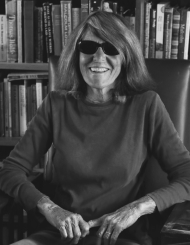
For Williams, death, in its infinite variety, is the great deconstructor, pulling apart the ordered reality we cling to and exposing it as a sham or delusion, or at the very least as more furtive and strange than is generally acknowledged. For instance, in ‘Marabou’ a mother’s funeral for her drug addicted son begins with a kind of benevolent comradeship as his friends turn up and share their memories, but the wake descends quickly into unsettling territory and the story ends with first one and then several of the friends returning to her house and refusing to go away. In ‘The Honoured Guest’, another mother, “condemned” with cancer finds the torment of its slow progression brings her daughter to the verge of suicide. In both, someone tells a tale about the cruel or bizarre treatment of an animal – metaphors that serve to emphasise human beastliness – and in both, speech becomes inchoate and threatening: “Words at night were feral things”, the dying mother thinks, vowing not to speak after dark. But as so often happens in Williams’ stories, communication breaks down into angry or bemused non-sequiturs, painting a vast aloneness and inadequacy, particularly in the face of death. One tale that conveys a rare degree of compassion in this astringent collection, ‘The Mother Cell’, concerns a group of women, all mothers of killers, who have come together unwittingly, as if drawn magnetically to the same spot on the map. Their talk is declamatory and disjointed, but in their shared predicament this is tolerated, expected even, as if in their situation only ruptured conversation is fitting. In the same way, there is collective agreement that seeking redemption would be tasteless. More often, though, Williams’ characters struggle to come to terms with one another and are oddly affectless and blind to the people around them. There are several stories where the death or sickness of others is treated as an occasion for self-aggrandisement, a chance to play a starring role in the proceedings, often with an underlying violence to those people the characters in question are purporting to help.
But despite such mordancy, nearly everything Williams’ writes is laced with comedy – for the writer, death’s silver lining. In her novel I’m Dying Laughing, Christina Stead (an author much admired by Williams) identified the character of this humour, both disturbing and disabusing, of which Williams is such an expert: “American humour is another way of seeing the truth; and what a vision!…it is homespun, godlike truth stalking in from the plains and the tall timber, coonskin and deerhide, with a gun to disturb our little home comforts.” Many of the stories in The Visiting Privilege not directly concerned with the Grim Reaper are enlivened by just such a scything humour. Williams’ narrators are experts at cutting people down to size: “Martha is a comfy woman with a nice complexion but her hair is the colour of pork”; “She had corn kernels in her teeth, but apart from that she was the very picture of an exasperated woman.” Her humour can suggest aberration: “I saw an odd thing there in the mountains. I saw my father pretending to be lame”; or veer into something more sinister: “He goes at her without turning on the light. ‘I didn’t want to wake you up’, he says”. Often it turns on dehumanisation or the difficulty of acting naturally, as if we have forgotten how to behave, even in the most basic human relationships: “It is hard to know how to act when one is with the child, alone.”
This dark comedy is even more in evidence in Ninety-Nine Stories of God, a book of vignettes modelled on Thomas Bernhard’s The Voice Imitator (1997). These comprise amusing, shocking or unexpected tales, like the fait divers beloved of nineteenth century French newspapers, as well as philosophical statements or speculations, and many brief pieces in which the Lord is brought down to earth – their humour deriving from incongruity (the Lord adopting a turtle, the Lord giving a dinner party), or from mortals failing to recognise His omnipotence. In story 99, Williams distils the preoccupations of her oeuvre: inadequate human beings struggling to understand the mystery of life, death and a reclusive God. Here, the Lord is in Maine, in the messy home of a psychic who is trying, but failing, to see Him: “this can’t be that unusual”, she thinks. But then she has an epiphany. Maybe the point is not to see Him, but to “go directly to the questions most everyone had and visualise from there. What’s going to happen after I’m dead?”
From early in her career Williams was making notes about the human disinclination to take responsibility or to pay for one’s pleasure: “They loved jumping off the cliff but…but they hated the climb back up”, says the narrator of ‘Taking Care’. By the latter stages, however, inertia has turned into intransigence. So a man attending a church meeting week after week looks down at a paper-clip wedged in the cracks of the floorboards, and wonders why it hasn’t been cleared away, but never picks it up. And a woman seeing a postcard she can’t remember displaying in her kitchen, of a city she doesn’t like, decides, perversely, she has “no intention of taking it down”. It’s in these details as well as in the bigger, showier battles with death, violence and environmental harm, that Williams illuminates the darkness in America where, rather than action, selfishness and stubborn refusal have become the hallmarks of resistance. Perhaps this is what Williams means when she says “I write out of a sense of guilt…There’s not enough guilt around these days for my taste”. She has even wondered if over-attention to the self, “this obsessional looking at the human [might] bring about the death of literature”. For Williams self-absorption is inextricably linked to the contemporary shoulder shrug, the ‘whatever’ attitude she fears is not just killing the great enquiry of literature but dehumanising mankind. In the collection’s final story, ‘Craving’, the car crash finale is brought about by something the drunk, careless couple seem to have conjured from their own squandering destructiveness. Another car smashes into them, a deliberate act by a driver who seems, terrifyingly, to be less than human: “Then whatever was driving it slammed on the brakes.”
“I believe that God is (and must be) a transcendent presence in any work of art”, Williams has said, but exasperated by her fellow Americans, wreckless and profligate, driven by death wish, she seems to doubt whether a work of art can accommodate them. She is now working on a novel set in the desert which will depict “species unknown, species never seen”.
This review appeared in the TLS, titled ‘Death Driven’, on 16.12.2016.

Ali Smith is that rare thing in Britain: a much-beloved experimental writer. Part of her attraction for readers is that she continually connects formal innovation and the freedom to reinvent a story with the freedom to reinvent the self. It’s a beguiling proposition that can make liberation seem like a matter of style. Following the success last year of How To Be Both, the most dazzling and accomplished of her novels, Smith planned to write a long-gestated novel quartet, its four volumes reflecting successive seasons – an idea that would allow her to pursue her fascination with what is perhaps the novel’s greatest subject: time. But the times overtook her, and the events of 2016 turned Autumn, the first of her intended novels, from a farce in an antique shop into a meditation on the upheavals of Brexit.
Autumn opens by acknowledging that it is a tale, one, which like all tales, is influenced by others and fashioned in part from their language. “It was the worst of times, it was the worst of times”, Smith begins, and once again, “things. They fall apart”. From the imaginative place Christina Stead once called the Ocean of Story, and Salman Rushdie, the Sea of Story, a figure emerges, washing up on some unknown shore. He is a literary figure trailing the memories of Odysseus and Crusoe in his wake, who questions everything (is he dead or alive?) and keeps changing shape, morphing from nakedness to leaf-dressed Green Man, from old age to youth. Daniel Gluck is his name and he recalls a life of good fortune, of being lucky through the accidents of time. But as he strolls along the beach to discover what kind of world he has landed in, Gluck finds the corpses of children lying close by holiday-makers sunning themselves under parasols. Something is amiss here: in more ways than one the times are out of joint.
From these dreamlike beginnings, Smith’s novel jumps into a prosaic world where Elizabeth Demand keeps vigil at Gluck’s bedside as he lies unconscious in a care home, hovering at death’s door. A refugee from fascism in Europe, Gluck was once a neighbour who befriended her in lonely adolescence. Watching him now, she thinks back over this vital relationship in which he opened up the world of art to her. The rest of her time is spent queuing for a passport in a soon-to-be-closed-down Post Office, battling with the Kafkaesque bureaucracy that seems determined to stop those unhappy about Brexit from leaving the country. She also visits her mother who lives in an English village where the mood is turning sour. People glower at strangers on the street, someone has daubed “Go Home” across the front of a house, and a faceless company erects a giant fence around a patch of common land. Meanwhile her mother, in the grip of nostalgia, obsesses about an antiques TV show. This is England 2016, Smith tells us: narrow, suspicious and backward-looking. As the three parts of her book progress through the season’s three months, the political climate darkens with the weather.
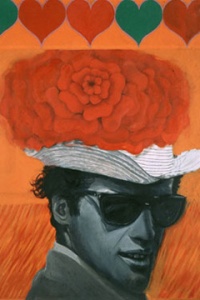
Pauline Boty, With Love to Jean Paul Belmondo, 1962
Against this all too familiar gloom, Smith offers ideas about the moral value of art. In How To Be Both she argued for the inherent “friendliness” of narrative, here (drawing on The Odyssey) she makes a demand for “hospitable” stories. And where in the former novel she lionised the swinging Sixties and the young, free and stylish women of the French pop scene, so here the figure of hope is another Sixties figure, the similarly young and glamorous pop art painter, Pauline Boty, discussing in particular her portrait of Jean-Paul Belomondo with a huge open rose on his head. It is clear that Smith is emphasising the delight and openness of art, its ability to hearten and fortify us in difficult times. But is this enough? The unease in Autumn stems not just from troubling signs of a nation becoming more divisive and cruel, but from a writer looking to aesthetics as a salve for ugliness in politics. The final demand of the book, the demand of art, is that we pay greater attention – in this case to a “wide-open rose” still blooming in the depths of November: “Look at the colour of it”. But it feels as if Smith has failed to do precisely this, to look hard enough at what’s novel in the Brexit situation, what might disturb well-trodden narratives, relying instead on the consolations of art.
This review appeared in the Spectator as ‘Things Fall Apart‘ on 19.11.2016.

Songs of Freedom: Rock Against Racism
When Syd Shelton recently published his photographs from Rock Against Racism, full of the drama and intensity of the times, I joined him and the critic Paul Gilroy, at Autograph Gallery in the East End of London to discuss the RAR years.
Forty years later, among all the theories advanced about its origins and politics, one glaring fact about RAR is often forgotten: at its root was the shared love of music. This is why thinking about the performers who appeared on our stages, and the music they played there, seemed like the best way to cut through the arguments and get to the heart of RAR. Syd, Paul and I each selected three tracks that in some way epitomized the era. What follows are a reflections on the music I chose, and on my involvement with a movement that interrogated the past, prefigured future networking organisation, and celebrated the turbulent era we were living through with – as Syd’s photographs attest – passion, style and commitment

Track 1. Winter of ‘79 — Tom Robinson Band (1977)
There are many songs that convey the wild and apocalyptic imagination of the late 1970s and early 1980s in Britain – the pervasive sense of urgency and danger, of state violence and fascist threat – but Tom Robinson’s ‘Winter of ‘79’ differs from others in treating the moment historically. Written in 1977, the song predicts an uprising in 1979 and then looks back at the insurrection from a time in the future when a world-weary activist addresses a new generation: “All you kids who just sit and whine, you should have been there back in ’79, You say we’re giving you a real hard time, you guys are really breaking my heart”. Robinson’s prophecies weren’t far off the mark: the next few years would see tanks in Belfast, bombs in London, and riots in cities up and down the country. Like many of the period’s best songs, his catch the jittery mood on the streets. You can hear it especially in ‘Long Hot Summer’, which was inspired by the Stonewall riots, and in the shifting allegiances of ‘Up Against the Wall’, where he confronts his audience with the question: “Just whose side are you on?”
Robinson wasn’t alone in his sense of foreboding, further warnings of collapse can be heard in the songs of many other bands who played for RAR: in the Clash’s ‘London Calling’, Aswad’s ‘Judgement Day’, the Ruts’ ‘Babylon’s Burning’, Stiff Little Fingers’ ‘State of Emergency‘, and, most potently perhaps, in the weird atmospherics of the Specials’ ‘Ghost Town’. On the verge of Thatcherism and the neo-liberal takeover of the world, much of the music of this pivotal moment records the sound of a country breaking apart, of old communities dying and new ones struggling to be born. And it’s importnat to remember that pop music hadn’t yet been fully assimilated into capitalism, it was a playground the young still had largely to themselves, which meant these songs rang out like warning shots fired across a radio that no one in authority was listening to.
Tom was the first person who made me think about how you could link people together under the radar. Something of a graphomaniac, he wrote long letters to his fans, connecting them to one another. In the winter of 1977 I was seventeen, working in the hat and glove department of Debenhams on Oxford Street, and looking for people to share my anger with. He put me in touch with two Jewish schoolgirls from Camden who called themselves Scruf and Scruff; Karen, a stylish secretary, the daughter of East European immigrants; Alan, who was serving in the army in Northern Ireland and being tormented by other soldiers for his love of punk; Patsy, the daughter of West Indian immigrants who was working as a back-up singer; and a razor-sharp Irish girl who went by the name of Anna Gram, and lived on the estate behind my mum and dad’s house in Clapham. Anna approached me on the Northern line one day, my badges giving out a signal, demanding to know if I was the Irate Kate that Tom Robinson had written to her about.

Patsy, Anna, Karen and Scruff at the RAR Carnival, Victoria Park, 1978 (c) John Sturrock
Not long after this happened, decanted early from work one evening because of another IRA bomb threat, I walked out of Debenhams and made my way over to the East End where RAR were a holding a meeting. I remember being embarrassed by my boring work clothes as I descended into a basement of noisy punks, socialists, writers, photographers and graphic designers, most of them a decade or so older than me. By the end of the evening I was so fired up by their heady talk (they discussed Toussaint L’Ouverture, Alexandra Kollontai and Kurt Weill as if they were old friends), that I chucked in my job and volunteered to become RAR’s first full-time worker.
Red Saunders, the man who dreamed up RAR after Eric Clapton’s racist outburst in Birmingham, donated desk space I could use in his Soho photographic studio. Every morning I’d walk up Great Windmill Street as elaborately painted women pushed chairs out in front of the sex shops, smoked and drank espressos, and waited for the day’s punters to slink in. At the studio, the photographers put out their paraphernalia – maybe a wind-machine for a glossy Sunday Times portrait of Kate Bush – and I’d set to answering the letters that had begun to pour in from across the country. We quickly outgrew our spot in Soho and with the money coming in – school kids’ pennies sellotaped together, the odd fiver from a supportive vicar, tenners from the anarchist bookshop stocking RAR’s innovative poster-magazine, Temporary Hoarding – we could afford a room in Clerkenwell, not far from the Marx Memorial library. Here the operation got a little more sophisticated: the RAR office became the hub and contact point for a much larger group of people and activities.
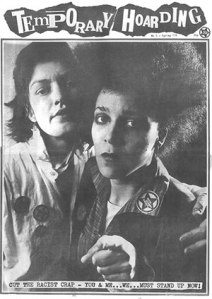
Ruth Gregory and Darla Gilroy on the cover of TH.
By day I’d liaise with the now elected RAR committee and the rapidly increasing number of RAR groups in the UK and abroad, communicate with bands and their managers, send out press releases, gestetner newsletters, order new badges and stickers, encourage people to write reviews and reports for Temporary Hoarding, pay bills, draw up agendas, and talk to other groups with whom we often collaborated (the campaign against the Corrie anti-abortion Bill, the Right to Work marchers, and CURB, who organised against violent bouncers). By night we’d run letter-writing sessions, often working into the dawn with a gang of volunteers – teenagers, like my sister Jo and her friends, skiving from school; shop assistants, machine operators and secretaries bunking off work. We’d all squeeze into RAR’s tiny office, sackfuls of mail strewn around the floor. From the letters flooding in it was evident that there was a nation of kids out there, bored out of their minds, and horrified by the spectre of the National Front marching on their high streets. They described living in nowhere towns and suburbs that closed down at seven o’clock, aching for a life less parochial. What they wanted was the glamour of dissident art and radical ideas – a new world they tried to fathom by listening to John Peel late into the night or reading James Baldwin under the covers by torchlight.
RAR became a network before we knew what a network was. We told these kids: here are the addresses of other music fans in your area, set up a RAR group, design a poster, put on a gig, write your own fanzine, and challenge the local National Front. We told them anyone could do it and wrote step-by-step Gig Guides showing them how. And in Temporary Hoarding, the Mekons published an article explaining how to build your own PA system, while the Au Pairs described how they recorded their first single by borrowing their mum and dad’s holiday money. The explosion of punk and reggae meant that there were bands all over the country hungry for gigs. And there was massive energy and frustration everywhere you turned, which RAR tapped into and transformed into action.
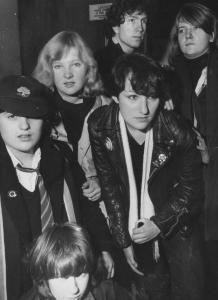
(Clockwise) Tom, Jo, Karen, Scruf, Scruff & Kate in a launderette during the TRB/Stiff Little Fingers tour, 1978 (c) Syd Shelton
As well as organising our own gigs, tours and carnivals, RAR took a stall round the country when the TRB went out on the road. The band dressed like the school kids they sang about, “sullen, unhealthy and mean”, and Tom had 302.0 stencilled on his shirt. This was the code for homosexuality in the World Health Organisation’s classification of diseases – something he’d been alerted to by Paul Furness, a key RAR activist, who worked in the Records Office of Leeds General Infirmary. One of the characteristics that marked Robinson out from many of his contemporaries was that along with his insolence and irony in songs like ‘Glad to be Gay’ (“The British police are the best in the world…”), he also understood, instinctively, the importance of bringing people together. It was not enough to complain about discrimination against gays if you ignored what was happening to your “brothers in Brixton, backs to the wall”. Racism, sexism and homophobia – these things were all part of the same problem, and we would sink or swim together.
For RAR, too, solidarity was the watchword. As David Widgery, the East End doctor who wrote so passionately for Temporary Hoarding, argued in an article on colonialism: “there’s no us without them“. This is why Robinson was so important to RAR, a movement dedicated to routing racism, but also to exploring a much broader cultural politics. He understood how to express and channel anger, but he was also hugely charismatic and convivial – something you can see in Syd’s great shot of him at the first RAR carnival in Victoria Park. Tom is facing the audience, back to the camera, his arms wide open, embracing the crowd.

Track 2. Oh Bondage, Up Yours! — X-Ray Spex (1978)
This was the moment when women got bored of being fans or groupies and started taking to the stage. There were all-girl bands like the Slits, the Raincoats, 15.16.17, and the Bodysnatchers; women who fronted otherwise male groups such as The Selector; or mixed groups such as the Au Pairs. Many of these were tribal, slotting into the already-established indie, ska or lovers rock scenes. But X-Ray Spex’s singer, Poly Styrene, couldn’t be pigeon-holed. Part Somali, part Scottish-Irish, she was like the advance party for the new self that was going to reinvent Britain. And her music was equally idiosyncratic. She captured the spirit of the time like no one else. Poly got started, as many others did, after seeing a shambolic, end-of-the-pier Pistols gig, and deciding she’d like to have a go herself. That was the basic punk DNA — an egalitarian anyone-can-do-it, but you had to have swagger. It was a defiant attitude that boasted (as Angela Carter once described Louise Brooks’s manner): “This is me. Now show me what you can do.”
In ‘Oh Bondage, Up Yours!’, Poly moves between two voices: the masochist “Bind me, Tie me”, and the refusenik “Up Yours!”. She began by talking in an excruciatingly coy voice: “Some people say that little girls should be seen and not heard”, then yelled out, “but I say, Oh Bondage, Up Yours!”, and the music kicked in. It was a declaration of war: and whether you read this as a women saying she was tired of the sexist shit and wasn’t going to take it any longer, or more broadly as a cry against all the ties that bind, Poly was here to tell us she had something to say and was going to be heard. But her sense of herself as a performer also says a lot about the aesthetic of punk. As she indicated repeatedly in interview, she didn’t think of herself as a tortured artist writing about her own suffering, but as someone who was playing with ideas and words, sending up clichés and unexamined dogma. So when X-Ray Spex played at the first RAR carnival, Poly appeared sartorially resplendent in a twinset, as if in pastiche of Margaret Thatcher. But she refashioned the archetypal English look, combining her tweeds with dayglo socks and an African headscarf.
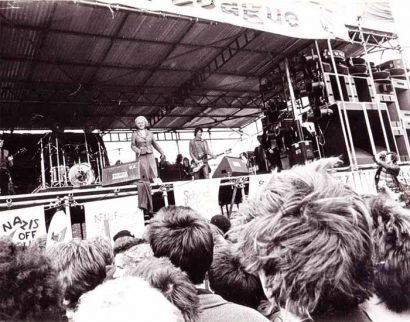
X-Ray Spex, RAR Carnival, Victoria Park, 1978.
Punk is often been characterized as angry or nihilistic, and there are still endless arguments about its origins and purity: were you early enough on the scene, were you authentically English or, as John Lydon accused others, singing in an American drawl, imitating Jamaican patois? In fact, like some of the best reggae, its main mode was reportage of under-reported lives and places. RAR acts like The Members vividly evoked ‘The Sound of the Suburbs’, Steel Pulse announced a ‘Handsworth Revolution’, while John Cooper Clarke, appearing at the Northern RAR Carnival in Manchester, was scathing about the misery and tedium of much everyday life: “The bloody train is bloody late, You bloody wait you bloody wait, You’re bloody lost and bloody found, Stuck in fucking chicken town”.
But as Poly Styrene demonstrated, anger wasn’t the only mode; there was parody, too. The Clash had a nice line in skewering capitalist commodification in songs like ‘Lost in the Supermarket‘, as did the Gang of Four in ‘Damaged Goods‘ (“I can’t work, I can’t achieve, Send me back”), and X-Ray Spex in ‘Warrior in Woolworths’, or the sweetly melancholic, ‘GermFree Adolescents’. Other bands dragged up in the clothes of the oppressor: Robinson sometimes appeared on stage dressed as a policeman, while Steel Pulse donned long white robes for their protest song, ‘Ku Klux Klan’, which they played in an electric performance at the first RAR carnival.
Steel Pulse, RAR Carnival, Victoria Park, 1978
When Poly sang about ‘Identity’ she wasn’t talking about her own, but the idea of it as something manufactured: “Did you do it before you read about it?”, she mocks. There’s a sophistication here which was evident among many of the bands who played for RAR and RAS (Rock Against Sexism): groups like the Gang of Four, the Mekons and the Au Pairs. RAS was the brainchild of another Temporary Hoarding writer, Lucy Toothpaste. She was also a member of the RAR committee, alongside Syd, Red, Widgery, TH editors and designers, Ruth Gregory and Roger Huddle; photographer and banner-maker, Robert Galvin; myself, John Dennis and Wayne Minter – who both joined me at the RAR office. (After death threats and a letter bomb, our operations moved to Cable Street and then to Finsbury Park.)
RAR had been keen to put women on our stages but Lucy rightly saw this wasn’t enough: the aim of RAS was to challenge sexism throughout the music industry. And this meant challenging the bands, too. In the Au Pairs interview she and I conducted for TH, and in another we worked on with the Gang of Four, she’s particularly interested in ideas of power, in dissecting the aggression that then characterized so much music, asking: what did it mean, was it necessary, and how might a woman utilize the power invested in her when she walked up to the microphone and took control of the stage?
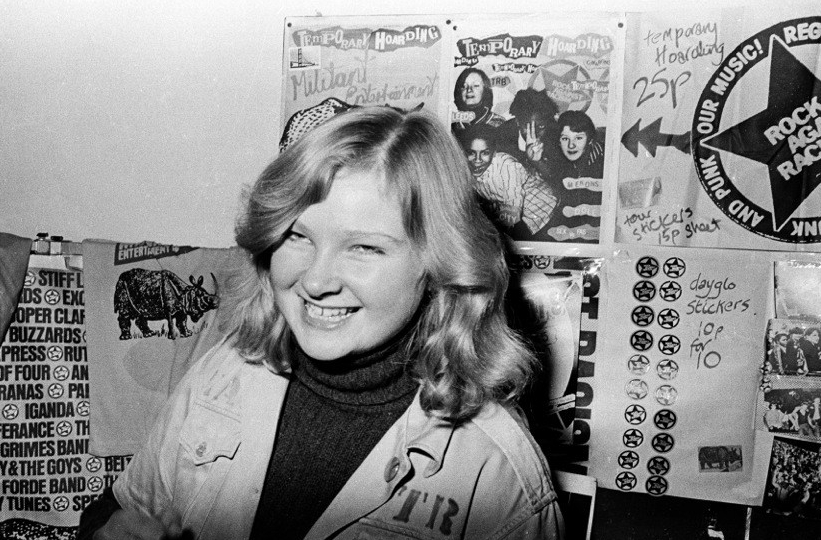
Kate on RAR’s Militant Entertainment Tour, 1979 (c) Syd Shelton
Track 3. Sonny’s Lettah – Linton Kwesi Johnson (1979)
In one of the finest examples of the reportage song, Linton Kwesi Johnson brought us news from the front line, conveying just what it felt like to be an immigrant or the child of immigrants living in Britain. RAR supporters had seen how thuggishly the police behaved at Wood Green, Lewisham and Southall, where Blair Peach was killed, and at a succession of anti-NF demos, and these had been widely reported. But this LKJ song, or dub poem, described something the TV and newspapers weren’t talking about: attacks on individual black people, the casual, everyday assaults and insults meted out on the streets and in the back of police vans. ‘Sonny’s Lettah’ is about SUS – the stop and search tactics the police started to deploy at this time under the cover of a nineteenth century law, the 1824 Vagrancy Act. Nearly forty years before the #BlackLivesMatter campaign, it revealed a commonplace cycle of police violence, followed by black people’s self-defence, then their criminalisation.
The singer, Sonny, finds his brother, Jim, picked up by the police and roughly handled: “Jim start to wriggle and the police start to giggle”. Sonny responds angrily and the incident ends with Jim charged with SUS and Sonny charged with murder. The whole thing, immaculately produced by Dennis Bovell, is told in epistolary form, in a letter sent from Brixton Prison to the brothers’ mother back home in the Caribbean. The song is notable for the way that it contrasts the deference and respect Sonny show to his mother with the brutality of the British police when someone challenges their authority. To this brutality, LKJ answered with militancy. ‘Fite Dem Back’, he proposed in another song, and, more pointedly, “We don’t rock against racism, we fight against it.”
The demand for respect, even in the midst of disobedience and insurrection, was something that the black community kept insisting on. Black people were not, as the police or politicians said, or the gutter press frequently reported, aliens or savages, but people with cultures and histories of their own. And reggae musicians often extolled their culture, expressing a determination to resist those who would deny or eradicate it. Dennis Bovell’s band, Matumbi, who performed at RAR’s first official gig, made just this point in a song called ‘Black Civilisation’. For many alienated white kids this was a new idea. If black people had a culture in which they took pride, what was white culture? What was whiteness? It made legible to them something that had previously been invisible. At the first RAR carnival the Clash sang a furious version of ‘White Riot‘, their response to this sudden realisation. They were abetted in this by Jimmy Pursey, the Sham 69 singer – a band with a significant National Front following. Pursey was incredibly loyal to his largely working class supporters and reluctant to tell them what they should think. But his appearance at the carnival confronted the racism among some of his fans, a stand underlined in a song he released shortly after, ‘If the Kids are United’: “Understand him, he’ll understand you, For you are him, and he is you”.

Slowly these values of respect, and of cultural curiosity and appreciation, injected something new into the anger of punk, shifting the way that a whole generation learned to talk to, listen to and live with one another. The moment when black and white musicians came together at the end of every RAR gig was nearly always achieved with a reggae jam, something celebratory and uplifting – sentiments largely unavailable in the disaffected vernacular of punk. This coming together, and the ecstasy of the crowd at many RAR gigs and carnivals – the joy in celebrating a togetherness that politicians from Enoch Powell to Margaret Thatcher kept denying – was most frequently orchestrated by one of England’s finest live bands, Misty in Roots. Misty often performed with the Ruts, stable mates on their co-operatively owned Southall record label, People Unite; with the TRB; with Elvis Costello at the second RAR Carnival in Brixton; but also, crucially, with Pursey and Sham 69. And when Clarence Baker, the singer from Misty was brutally beaten by the police during the Southall, putting him in a coma, RAR responded with two benefit concerts at the Rainbow called Southall Kids are Innocent, at which Aswad, the Clash, Misty, the Ruts, the Members, Bongo Danny, the Pop Group and Pete Townshend all played.

The final RAR Carnival at Leeds in 1981 featured the Specials. Like The Beat and UB40, they were a mixed-race band who had come up playing through the RAR clubs. Together on stage, they embodied everything RAR stood for. And in songs like ‘Doesn’t Make it Alright’, their lyricist, Jerry Dammers, addressed head-on the way that poverty and alienation led to prejudice and violence, telling their audience “it’s the worst excuse in the world”, but also suggesting a way out of the trap racism set for working class kids: “Just because you’re a black boy, Just because you’re a white, It doesn’t mean you’ve got to hate him, It doesn’t mean you’ve got to fight.”
On the thirtieth anniversary of the first RAR carnival Jimmy Pursey expressed what many people involved in RAR and the music of this critical moment felt: “We are still depressed by the government, but we are not confused by our culture. Britain is a multi-cultural society and it always will be if I have anything to do with it.” That was a decade ago. Then, in the summer of ‘16, UKIP and Farage dominated the airwaves, bigotry went unchallenged on the BBC, Britain voted to turn itself back into an insular little country, and the blood of foreigners ran on our streets. Perhaps this winter we should be remembering the architect of punk, John Lydon, a man inspired and educated by his love of reggae, singing to us in ‘Rise’: “I could be black, I could be white”, and then repeating insistently, as if trying to instil the message: “Anger is an energy”. Forty years on from RAR, when the country is sleepwalking back into fantasies of racism and separation, we could do, once again, with some of that galvanising spirit.
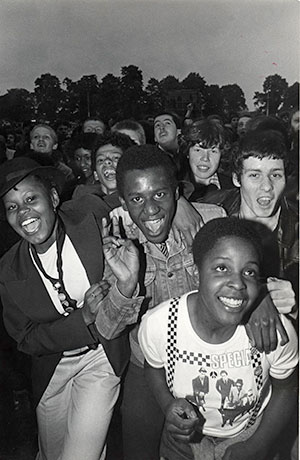
RAR Carnival, Leeds, 1981 (c) John Sturrock

“Clearly literature is never where you think. It is not in the story. It is in the elbows of the sentences…It is guarded, dissimulated, behind a piece of canvas, disseminated in the idiom…” For Hélène Cixous the elusiveness of literature has long been a badge of honour, something she has diagnosed in her criticism and perpetrated in her fiction over nearly half a century of writing. Her work has always explored what it means to be a writer, the prerequisite “state of without-me” necessary for an author to be inhabited by her characters. In turn, those who “possess” Cixous most powerfully are themselves missing, for it is the dead – their loss, absence, and revisitation in memories or dreams – who give life to her beguiled, yet ultimately death-defying prose.
Two new associated works, elegantly translated by Beverly Bie Brahic, epitomize this condition. They aim to “give death its due” while at the same time, dismantling its power over us. Both are subtitled “Los, A Chapter”. Both are haunted by “The-Book-I-Don’t-Write” – a platonic or ultimate book whose failure to materialize has preoccupied Cixous over the years. And one is described as “the journal” of the other. Contained within these works there is the promise of more to come in the “Los” series, but “none will be more first than the other” Cixous reassures us, characteristically refusing any suggestion of hierarchy. The books also elude classification, being in turn, poetic elegy, dream diary, time-travel and ghost story, and their uncanniness is mirrored in the narrator’s sense of herself as spectral (“I myself am the shadow of myself”) and scattered (“I have several selves to house, I visit myself diversely”).

Abstracts and Brief Chronicles of the Time tells of the narrator’s attempts to come to terms with an author’s death, a Latin American writer called Carlos (Cixous was a friend of Carlos Fuentes). His unexpected loss evokes memories of their love affair and nostalgia for the revolutionary upheavals of 1968, making her marvel: “To think that in France you [could] kill a state with ridicule.” The “Los” of Cixous’s subtitles also refers to the transvestism of authorship and, in particular, to the figure of William Blake’s Los whom she imagines as the kind of circular puzzle she’s partial to: “the malefemale offspring of the author he is”. In the companion journal, Death Shall Be Dethroned, Cixous’s narrator discovers that her letters to Carlos have been stored in a box at Princeton University, giving rise to further meditation on their life together and on his turbulent afterlife, still inhabiting her head and her heart. The locked box has the allure of Pandora’s: it is a kind of “death’s door”, containing “the excess, the phosphorescence” of their relationship.
For Cixous’s generation the death of the author, of course, means the amplification of authorship, the freedom to speak in other voices. So her texts are sprinkled with quotations and commonplaces: “Call me Ishmael…Call me Los…Call me It All Depends”, she jokes. But for all Cixous’s inclusiveness (“The whole troop of them. Welcome!”), and her refusal to be pinned down (all her thoughts contain counter-thought), she is never as universal as she aspires to be. However atopic Cixous’s writing becomes, her “state of without-me” is unrealizable. This is because anonymity is in itself a style – defining, like any other – and it places her on the literary map. That she is aware of the paradox only makes her efforts more heroic. What matters in her lifelong writing project is the determination to be “myriad-minded”, to elude ready-made meaning, and to ceaselessly interrogate herself and her art. So, Cixous asks us: “This life born of death, might this be literature?”.
This review appeared in the TLS on 9.11.2016 as Hélène Cixous and her Art.

Rachel Cusk is a writer who provokes strong reactions in her readers, and her critical reputation has swung wildly in a short space of time. Many, who not long ago were offended by the overflowing emotion of her memoirs of motherhood and divorce, are now full of praise for her current trilogy of novels, admiring particularly their restraint. What’s interesting about this turnaround is that while Cusk’s mode of presentation has changed, her subjects — the uncertain nature of reality, the relation of the individual to society, and the calibration of power — have not. Moreover, switching her focus from an outraged, opinionated woman to a recalcitrant, enigmatic one, has intensified her writing and clarified her project.
In Outline and Transit, the two volumes published so far, we learn little more about Cusk’s first person narrator than that she is recently divorced and temporarily living apart from her children (they phone in occasionally, often in a state of mild distress). We know, too, that she is a writer disinclined to interject or interpret, emphasising instead the value of listening. The people she encounters (ex-lovers, builders, hairdressers, friends, fellow writers, students, relatives) all tell her stories that stand out from the day’s ordinary muddle with an electric charge. The purity of these narratives and the individuated humanity they contain has a narcotic, transporting power, yet they remain at the centre of the writer’s daily life, and her occasional prompts or questions show her shaping them. In both novels the writer is named only once, and her name, Faye — which denotes either unreality or belief — underscores her scepticism: ‘I did not have the blind belief in reality that made others ask for concrete explanations.’ Instead Cusk’s rather proud and brittle narrator is drawn to dramas of perception — the neurosis involved in looking and judging, and the reciprocal fear of being misread, disregarded or found out.
At the beginning of Transit, Faye is homeless. An estate agent warns her that buying a house requires ‘the blindness of fixation’, but she immediately feels he is trying to marginalise her, and decides she will ‘want what everyone else wanted… run with the pack’. She acquires a shoddy house in an expensive neighbourhood and then battles to make it over in a style of her own. But something about the process of following convention, and becoming fixed or placed, leaves her at odds with herself. It’s as if Cusk has taken central metaphors from literary criticism — about the figure of the modernist artist, exiled and unaligned, about the estrangement of the woman writer in the house of fiction, about the violence of creativity — and translated them back into life. From the outset the house is inhospitable: floors undulate, plaster blisters, the garden is full of grot and junk. And she is beset by neighbours who intimidate or humiliate her. The tenants in the basement make dark threats about noise, while the members of the perfect family next door — who eat al fresco while talking loudly in multiple languages — high-handedly informs her that by tradition they are given the apples from her tree.
There is a great comedy of mismatching and cross-purpose here, but the reader is never allowed to find consolation in it, nor any affinity with Faye, whose alertness to her neighbours’ class-inflected putdowns and incursions are mirrored in her own petty-bourgeois snobbery. But Cusk is not writing to be liked. She once said admiringly of D.H. Lawrence that he left more room for the reader to hate him than any other author in the English language. In Transit, the ‘ambiguous glint’ of Cusk’s writing often induces a sense of panic about the validity of one’s own responses, and frustration at being unguided through an uncertain world where, as her hairdresser observes, ‘the fake generally seemed to be more real than the real’. But this refusal of ‘concrete explanations’, or a secure guiding narrator, is not an expression of nihilism or futility; rather, an exercise in the morality of freedom. When Faye picks up her son’s diary, she finds a message blazoned on the front: ‘You read, you take the consequences.’

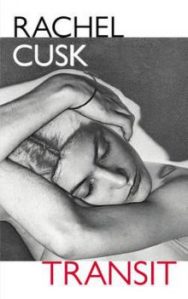
The jackets for Cusk’s novel trilogy are from Man Ray’s solarised portraits of Lee Miller – a technique which she discovered while working as a photographic assistant in his Montparnasse studio in the early 1930s. This review of Transit appeared in the Spectator on 1.10.2016.

“To be American is to be blank, and a true American is truly blank. Thus, all in all, Josie was a truly great American.” This is Dave Eggers’s narrator, at the beginning of his latest novel, Heroes of the Frontier, joking about the story’s heroine. Given the state of Josie, an angst-ridden single mother, it is a self-evidently false statement – but the logical fallacy is just one of many means Eggers uses to interrogate contemporary reasoning, or, to be grand about it, the logic of late capitalism. His book is among a group of recent novels about families which, like much current American fiction, are preoccupied by the legacy of trauma and the question of whether this can be overcome. The blankness referred to here is psychological as well as geographic. Josie has no idea where her family hail from, remembering only “vague references to Denmark . . . some connection to Finland”. So when, in quick succession, she is deserted by her husband, sued for malpractice as a dentist, and faced with the news that a young patient she encouraged to enlist has died in Afghanistan, she feels she has nowhere to run to but America’s furthest edge: the empty wilderness of Alaska. Packing her two small kids into the back of a rickety RV, she heads out into its vast open spaces, searching for “purity” – a blank canvas on which to redraw their lives.
Josie has become so worried about the “anxiety of influence” (Harold Bloom’s phrase, smuggled in by Eggers as if to pre-empt the inevitable comparisons here with Jonathan Franzen, Philip Roth et al) that she decides she is “done with all mouths, beginning with her own”. The gamble she is taking is that the “oblivion” of Alaska’s frozen landscape will help to mute and control her, to numb her anxiety and mitigate her sense of guilt. But the journey doesn’t turn out as she had hoped. Presented with the radical uncertainty of their new lives, her kids have endless questions about where they’re heading and what they’re doing, questions to which Josie has no ready answers. And she finds that having escaped the tyrannies of suburban life,the freedom of the open road presents unexpected dangers. Soon, her children’s interrogations are supplemented by her own as she tries to discern the level of threat. Some threats are just phantoms of the timid, suburban mind she is working to free herself from (a “leering” old man turns into a friend). Some are universal, such as the danger children let loose can pose to themselves. But others – like the father of a family her kids play with, who suddenly pulls out a gun – are more distinctly American. This ever-present menace feeds into the children’s enquiries about the world. Even the fiercely unafraid five-year-old Ana, when introduced to new phenomena like planets and stars, wants to know: “Are they good?”
As Josie leads her small tribe to ever more remote places – sleeping on the roadside, in campsites, or, like some latter-day Goldilocks, breaking into deserted cabins in the woods – her search becomes indistinguishable from flight. The family flees from forest fires, from possible emissaries of her husband, and from a past Josie wants to “write . . . in disappearing ink”. She is haunted by a scandal from decades earlier, known popularly as “Candyland”, involving the suicides of over-medicated Vietnam veterans at a hospital where her parents worked. Once Josie’s parents started dipping into the patients’ drugs family life collapsed as her mother fell into addiction and her father absconded to Cambodia. So the idea of starting again is not new: we learn that at seventeen Josie “emancipated herself” from her parents and then moved around, living in Panama, London and Spain. But in modern America, movement has become a dubious practice, associated by Josie with failure, insecurity and her parents’ disgrace: “Was it wonderful to have changed so many times? She suspected it was not”.
Candyland stands as the emblematic centre of Eggers’s novel, from which the ills of American – and by extension, Josie’s – life flow. The country is ignorant of the wars it is fighting (Josie and a lover argue about whether her patient died in Afghanistan or Iraq, uncertain as to how long hostilities have lasted), its people increasingly aggressive and entitled (she singles out the “breed” of lycra-clad cyclists and pony-tail mums whose rage erupts at any infringement of what they believe is their due), tranquillizing themselves with drugs, or, like Josie, unable to get through the day without knocking back the wine, and penning their children in to keep them safe. Against all this enclosing, sedating and forgetting (here we are again in Gore Vidal’s United States of Amnesia), there is the wonder and subversive riot of Josie’s children: the wild, red-haired Ana, a force of nature, “bumping into things, yelling randomly, making up words”; and the sensitive Paul, three years older, who acts as Ana’s proxy parent. What Josie wants for her children, above all, is that they don’t merely succumb to life, but show courage in the face of it; and the further they travel, the more resilient they become. Heroes of the Frontier ends with one final test of endurance, in which by heading into disaster the family overcome it, approaching “something like sublimity”, a touch of American greatness. The frontier may be long gone, but setting the inertia of his countrymen in his sights, Eggers is banking on the idea that pushing ahead still lies deep in the American psyche: “She wanted to tell every mother, every father: There is meaning in motion”.
Sara Taylor’s second novel, The Lauras, also takes the form of an American road trip. This time it is the wife who walks out on her husband, bundling her adolescent child, Alex, into the car one night and setting off on a journey that will take the two of them zigzagging across the country. The Lauras is the (still) rarely told story of a child’s romance about the life of their mother – here less a source of anxiety than of mystery, one which mirrors Alex’s own mystery, as her gender remains uncertain. The novel is narrated some thirty years after the trip by Alex in a Southern vernacular thick with the imagery of sweet things (“the land behind us was a caramel-peanut-butter smudge”) and of blood (“she lay back in the trail of the dying sun, it’s blood clotting in her clothing”), reflecting something of the country’s immaturity.
Held in Alex’s regard, “Ma” is an alluring, enigmatic presence: chain-smoking to keep herself awake, pulling in at truck stops when she is too tired to drive, and grabbing greasy burgers for the two of them to munch on. The reason for their leaving is undivulged; Ma tells Alex only that she wants to “figure out which way is up”. As they cross state lines, improvising their lives, it becomes apparent that Ma is in pursuit of the existence she had before she gave birth. Astonishing as this idea is to Alex, Ma’s focus on herself is also oddly reassuring: Alex’s questions about the safety of their trip are breezily batted away: “Quit worrying kid. We should be golden”. Pressed to reveal her story, Ma remains taciturn, only slowly doling out the tale after successive dramatic encounters with the people or places she once knew.
What Alex finally gleans is that Ma was abandoned repeatedly by immigrant parents who “were horrible at life”, forgetting to clothe or feed her, and who “didn’t understand how America worked”. Moved between group homes, then living in a station wagon, drinking absinthe, possibly dabbling in prostitution, she encountered a succession of girls called Laura (the intensity of her relationship with the first makes the name talismanic), each of whom demonstrated styles of being that, even in unpromising circumstances, offered new possibilities. Alex gets into trouble hitching to another city to post tan (untrackable) letter to their father. Along the way, they are forced into performing a blow job on the man who picks them up. But though Alex later traces “the blank in me to that event”, when explaining what happened to Ma, Alex creates a story that holds back the worst of the journey. Alex does this in part because they have no words for what has been done to them, nor their ambivalent feelings about it, but also because Alex has learnt from Ma’s continence.
What marks Taylor’s novel out from many of its contemporaries is how little psychic damage Alex and Ma sustain – or pass on – from their experiences. Indeed, the storytelling mode allows them to cast their lives as adventures through which they “hustle”, extemporize, love and sometimes act heroically. Alex understands that “reality rarely rustles up a satisfying narrative shape”, but their “mythic desire” gives them the ability to see Ma not just in relation to themselves, but as autonomous, sometimes even as legendary. When Ma finally reunites with one of the Lauras, Alex describes them as “outside of humanity, the way lovers are”. There’s a lesson here, important for storytellers, but also women and all kinds of outsiders, about not giving yourself away too easily, about possessing your own life. What it instils in Alex is the bravery to be their own person (to maintain an open sexuality and not be boxed into definition) and confidence in their own instincts: “I didn’t know where I was going, and I didn’t have to know. The road was beckoning; all I had to do . . . was follow where it led”.

The intergenerational trauma at the heart of Adam Haslett’s new novel is rather harder to shake off. Imagine Me Gone features five narrators, all members of one Anglo-American family beset by the “beast” of mental illness, their lives recounted over half a century, by the parents, John and Margaret, and their three children, Michael, Celia and Alex. As one might expect of a novel exploring the irrational, there is also much concern with form – from the repressive British manners John has inherited (“asking questions wasn’t the proper form”) to the linguistic and political structures in which Michael becomes passionately interested. The novel itself is tightly formatted: divided into three acts, with an epilogue and prologue, and each section further demarcated by the different speaking voices. We begin near the end: Alex, the youngest sibling, is at a cabin in the American countryside, and traumatized by something terrible that has happened to Michael. At first he imagines the sound of a neighbour chopping wood might revive his brother – a desire stronger than reason: “What kind of person would I be if I didn’t try to call him back?”
Then comes Michael’s voice: ghostly, disembodied (and yet, like all voices in fiction, as if looming out of the ether). In what we will learn is his characteristically parodic mode, Michael speaks “as” the telephone answering machine of his therapist, one Dr Walter Benjamin. And because his is a parodic voice, always carrying multiple meanings, this is also a suicide note – a salve to himself and anyone out there listening: “[if] it seems likely that the words you are about to speak into this machine may be your last, then please know that you tried very hard indeed, and that you loved your family as deeply as you could”. In a way that only fiction can, Imagine Me Gone then proceeds to do what Alex wanted, what anyone bereaved wants: to bring the dead back to life.
Haslett’s novel masterfully negotiates the different planes on which it operates, sustaining for a long time the ambiguity whose exploration, he has said in interview, is the business of fiction. From the beginning, John expresses anxiety about the future of his garrulous son: words pour out of Michael as if nothing can contain him. John moves the family about, even back to England for a while in pursuit of work that never materializes. And this failure to settle down symbolizes to Margaret her husband’s failure to get a grip on life. On returning to the States, he commits suicide – the only way to chase the “monster” of depression out of him. Michael, called home from school in England, finds that he is numb: “You were all so upset. But I didn’t feel anything. Nothing. I was blank”, he tells Alex later. The pain of this moment lingers on in Michael’s life as an indefinable ache – something for which he finds correlatives in ideas about slavery’s “transgenerational haunting” and black music: “The backward ache. That’s what music is. The trouble – for me – is that at some stage I realized those aches, they have a history”.
From these traumatic beginnings, his siblings develop lives of ordinary difficulty, though perhaps with greater wariness: Celia struggles over the question of motherhood, Alex in building a monogamous relationship with his boyfriend. And their chapters convey this, expressed in the particularity of the real. But Michael is never ordinary: from the beginning his flamboyant intelligence and intense political theorizing make it seem as if he were somehow a different order of being. His chapters, reflecting this apartness, are delivered as exercises in literary style that challenge the “realist” frame surrounding him – whether in letters to his aunt, where his commitment to the fantastic, comic form overtakes the plausibility of events he is relating; or in medical questionnaires, in which his answers satirize the premiss of healthcare, refusing its narrow logic, while also being utterly honest: “What are your treatment goals? 1. Ordinary happiness 2. Racial justice”.

The degree to which Haslett allows the reader to entertain the possibility that these everyday forms and political structures that shape our lives may be at fault, and not Michael, is the degree to which ambiguity is richly sustained in Imagine Me Gone. But Michael’s obsessions are not just a matter of worldly critique; they are also a product of his solipsism (“the problem – for me”). At the beginning of the novel Margaret reflects on Armies of the Night and Norman Mailer’s idea that “it’s in motion that Americans remember”. But Michael never finds a cohort or movement, remaining boxed in, static in his obsessions and unchallenged in his relationships. While this may be true to the character of obsession or mental illness, it comes close to manipulation in terms of the novel. Successive black girlfriends remain somehow beyond his reach, as if such relationships were themselves a category error, outside of acceptable forms. Looking back on the story’s beginning and her love affair with John, Margaret says: “I had that American openness he admired”. However, unlike Dave Eggers and Sara Taylor, who keep faith with the idea of American openness and the possibility for remaking that it entails, Adam Haslett casts doubt on this notion. Sealing Michael’s fate from the outset, he suggests instead, as Celia advocates, the need for “acceptance” of who we are. Alongside this stoicism, in the presentation of Michael’s isolation, and the speed with which people stop listening to him, there is also something gloomier in play here, like the closing of the American mind.

At first glance Sean O’Brien’s new novel appears to focus on England’s devotion to the past. Even its title carries the sense and long-sustained rhythm of things going on as before. As if to underscore the point, Once Again Assembled Here is set in the autumn of 1968, a year often portrayed in fiction to describe a revolt into the new. But in O’Brien’s novel it merely serves as a reminder that whatever ideas were being cooked up elsewhere, here tradition and continuity would prevail.
Here, in this case, is Blake’s, a jingoistic public school on the outskirts of a city still marked by the Luftwaffe’s bombing raids. In the peculiar way in which enthusiasm for England often turns on the degree to which one is excluded from its centre, this gloomy provincial establishment — stuffed with military historians, minor poets nursing grievances and an army of boys acting out war games — sees itself as a bastion of the country.
Stephen Maxwell, a retired history teacher, still lives in the school’s grounds. A man of marked literary pretensions, he has been commissioned to write the second volume of Blake’s history. In an Epilogue from 2010, however, he warns us that the secret ‘manuscript’ we are about to read is not that dreary tome, but his private, shadow journal — a darkly entertaining thriller of secret goings-on, treason and murder. Maxwell confesses from the outset that he is guilty of having a hand in the murder and of maintaining the cover up all these years. However, his many references to Boys’ Own adventure stories, tales of espionage and war, and in particular to Graham Greene, give us a clue not only to this manqué novelist’s imaginative aesthetic, but to the moral wriggle-room the English like to afford themselves: Maxwell’s style gives him the leeway to portray himself as a kind of hero, even as he admits to being a culprit.
This moral and intellectual murkiness is reflected in the novel’s landscape. The autumnal Blake’s is often wreathed in fog or mist, and Maxwell’s sojourns into the war-scarred city are by night, when his literary cast of mind picks out the frost glinting off rubbled buildings or, from high windows, stars glimmering above the dark streets below. The high windows — one of several Larkinesque touches — belong to various lovers. Maxwell is far from rebellious, but his penchant for married women repeatedly gets him into trouble, leaving him with a reputation for minor disgraces, for not getting on board.

Then, rising out of the tedium and gloom, the worship of war dead and unthinking obedience to authority, something with its own sharp glint of fascination catches the imagination of Blake’s pupils.Encouraged by the aristocratic Rackham — once a German collaborator, now a quasi-Poundian poet and charismatic English teacher — they stage a mock election, mirroring the by-election taking place in the city. Maxwell’s failure to act means that, as in the city, a fascist candidate is fielded, and with incredible rapidity the atmosphere shifts from boredom to menace: a fight breaks out; a fire is set; a Jewish boy’s life is threatened.
As it transpires, for a novel about the past, O’Brien’s book is extraordinarily prescient. It’s impossible to read of Rackham’s sense of immunity without thinking of Tony Blair and the Iraq War. Nor fail to hear David Cameron’s recent tirade against Jeremy Corbyn, when Blake’s headmaster exhorts Maxwell: ‘Resign, man. Do it today.’ In 2010, O’Brien discussed the political history of this phrase — from Oliver Cromwell to Leo Amery — in Journey to the Interior, a monograph on the idea of Englishness in contemporary poetry. In this prose work, as in Once Again…, it’s the coercive clubbableness of the English that O’Brien dissects — an establishment so keen to re-enact tradition and so punitive to anyone less than ecstatic about its continuation.
Because of this, at Blake’s even someone as ambivalent as Maxwell poses a threat. But just as the pupils are excited by Rackham’s demagoguery, his poetry of blood and soil, so Maxwell is emotionally tethered to Blake’s, finding it hard to extricate himself from the school or from his affair with Rackham’s striking (in both senses of the word) sister. As the initials of his name suggest, sado-masochism runs deep in the English psyche.
This review appeared in the Spectator on 27. 8.2016 as ‘Sean O’Brien explores a very English form of sadomasochism’.

We have become accustomed in recent years to the revisionary spirit of much postcolonial fiction, but the ambition, erudition and epic sweep of John Keene’s remarkable new collection of stories, travelling from the beginnings of modernity to modernism, place it in a class of its own. His book achieves no less than an imaginative repositioning of the history of the Americas, a tilting away from the legends of white, puritan pioneers to a more complex pattern of continental colonialism. As its title suggests, Counternarratives contains “writing back” of the kind Edward Said proposed; its stories are imbued with potent dialectical energy, bringing to mind Paul Gilroy’s key idea of the “Black Atlantic as a counterculture of modernity”. Keene is not simply an oppositional writer, however: in his richly detailed accounts of black lives through history, dividing lines are continually crossed. So there are escapologists, quislings and prophets, and motifs of cultural appropriation, false consciousness, prohibited desire, illicit knowledge, forbidden artistry, and everywhere, the struggle for transcendence. Counternarratives consists of thirteen individual fictions – some of flashing brevity, others the length and intricacy of a novella. Together they act like a polytych: each story has its own integrity but an underlying intellectual coherence allows the reader to intimate their author’s power and purpose, and to identify the arrival of a writer who, like one of his own characters, has “a will of lead and a satin tongue”. A former student of E.L. Doctorow (under whose tutelage one of these stories was written), Keene is that rarest of things today, a writer whose radicalism connects the politics of history to the politics of fiction.
The stories advance in rough chronology beginning at the dawn of the seventeenth century with a glimpse of the New World and the arrival of Juan Rodrigues, Manhattan’s first non-indigenous inhabitant (and a real life personage). A San Domingo slave who bought his freedom working on ships, the child of an African mother and Portuguese father, Rodrigues is given a name by the “Mannahatta” islanders that reminds him of the secret one his mother gave him, a name she “summoned forth from her people, and swor[e] him never to reveal”. This resemblance between his mother’s words and the islanders’, helps him to unlock their language in a way that his Dutch shipmates are unable to, emancipating him into a new life. Rodrigues’s easy relations with these “first people” – cemented through shared meals, gestures and storytelling, “voices that spoke through fire and smoke” – suggests the possibility of an entirely different trajectory for American history.
From this alternative foundation story, Keene casts his eye across two and a half centuries of conquest, war and slavery, and concomitant with these, counter-struggles of resistance. ‘On Brazil, Or Dénouement: The Londônias-Figueiras’, presents a history of the country seen through the lens of two plantation-owning families who intermarry but also father children with Indian and black women – part of the “New World experiment”. Down the generations their sons are named “Inocêncio”. There is “no genius compared to that of [their] own people” they believe, without understanding who their people are. These innocents work their slaves to death, and one slaughters a whole quilombo – a colony of runaway slaves led by “a particularly defiant African”, Cesarao. Told back to front, the story begins with an historical reckoning in which the last scion of the family ends up decapitated in a São Paulo favela, known colloquially as “Quilombo Cesarao”. It’s a reversal encouraging us to rethink history and notice overlooked counter-cultures (the quilombo, the favela) in which the future may be gestating.
Against the brutal fates many of his characters suffer, Keene’s stories keep changing their shape, implying countervailing forces of ingenuity and will; and against the limited psychic space historically allotted to black people, he gives us subjectivity that exceeds its cramped conditions, queries notions of rationality, proposes other kinds of knowledge, and takes liberties wherever it can. In ‘An Outtake from the Ideological Origins of the American Revolution’, there is an exemplar of this kind of outflanking style. Zion has a talent for evasion, non-cooperation and flouting the law which repeatedly wears down the men he is sold to. As in many eighteenth century picaresques where the protagonist’s escapades are marshalled into episodes, so Zion’s sprees and outrages are divided into sections meant to contain his unruliness. But Keene hedges these with a loaded title and an interposed “Theory” – a quotation from David Hume on the origins of liberty. Together, they subvert the narrative order, transforming the meaning of Zion’s seemingly illogical acts (carousing, stealing, daring to assault white women and then, with staggering insouciance, not bothering to run away). In the face of arbitrary law which hangs “another Negro” in his stead, and a revolution in the name of liberty which will fail to abolish slavery, Zion becomes the story’s emblematic figure of reason, his flagrant disregard of the law a logical response to its great injustice.
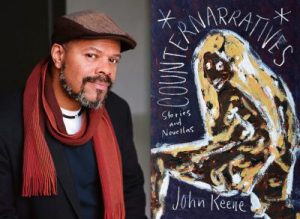
John Keene, 2016
The last entry in this section, ‘Gloss, or the Strange History of Our Lady of Sorrow’ looks further at the idea of hidden and competing knowledge. As ‘On Brazil’ gained putative authority from imagined histories of the Londônias-Figueiras’s family, so here the story opens with a (similarly invented) book: The History of the Catholics in the Early American Republic: 1790-1825. But after a page of this, we are diverted to a footnote – the ‘Gloss’ of the title. (With the “Dénouement’, the ‘Outtake’ and the ‘Gloss’, Keene is inviting us to look at things another way around and to think about what might be discoverable in the margins of official histories.) ‘Gloss’ concerns Carmel, a silent Haitian slave girl working for one Monsieur de L’Ecart, a supposedly liberal master imbibing ideas from the Age of Reason: “equality, he had more than once penned in his journal, was the proper guiding principle, though in practice it required severe restraint.” Carmel expresses herself with wild drawings prophesying revolution. Asked by de L’Ecart’s daughter about their meaning, she tries to mime: “they are going to TEAR THE WHITE OUT”. When Toussaint L’Ouverture’s men revolt, the girls are sent to live with nuns who, underscoring the story’s historical ironies, have themselves fled from the French Revolution. Keene reflects again on the contradictions of the period, asking: under the yoke of slavery “is it even possible to invoke a rhetoric of ethics?” Like Zion, Carmel makes of her circumstances what she can, responding to abuse with an “unassimilable refusal to communicate”: for this she is feared as a “spook…black witch”. Used to being misunderstood (her dutifulness read as devotion), she instead takes her duty to herself seriously, learning to read the nuns’ books in French, Latin and Greek. As the narration slips from third to first person, she creates new knowledge by recording her experience and theorising about it. But just as Carmel’s mystificatory power is questioned, so there is a counter-side to her new reasoning: becoming literate she starts to sound like Jane Austen, losing the distinctive voice of her obscurity.
The turning point in Counternarratives comes with the Civil War. In a second group of fictions the emphasis shifts from countering to encounters that take place in the aftermath of war and on into the early twentieth century when black artists and intellectuals were now ostensibly free but still struggling against the weight of stereotype and diminished expectation. In an act of writing back that should prove as significant for American literature as Jean Rhys’s deconstruction of Jane Eyre was for the English canon, Keene revisits Mark Twain’s tales of the river rats, Huck, Tom and Jim, forty years later, once adulthood and Civil War have divided them, bringing to the surface – as Rhys herself did – racism only latent in the earlier books. By projecting the three men forward in time Keene is able to throw new light on their earlier relationship, on their now-famed “adventures” which Jim thinks of rather as “sense-defying events”, the central conundrum of his life, in which he was led by Huck “into the heart of terror”, traveling south down the Mississippi, rather than north to freedom.
Keene then presents a series of duets. W.E. DuBois and George Santayana glance over at one another on the streets of Harvard, their mutual apprehension (“Of course there will be scant possibility of a friendship“) conveyed in parallel columns on the page which the reader’s eye must travel across. In Mexico city and New York, Langston Hughes hooks up with his translator, the poet Xaviar Villaurrutia – Keene’s writing now imbued with a cadenced, modernist sensibility (“this rhythm…of men…alone together…a blues”). And Miss La La, the circus aerialist, bit in mouth, soars above Edgar Degas as he tries to capture her in flight – a story spun from one breathtaking sentence: “I want to suspend the entire city of Paris or even France itself from my lips…I aim to exceed every limit placed on me, unless I place it there, because that is what I think of when I think of freedom…”
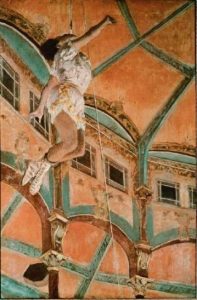
Freedom as an absolute may be impossible to attain but Keene shows us here what human beings in straitened circumstance make of the struggle – in myriad ways and with great tenacity. Their key to self-realisation is the garnering of knowledge, and as Keene quotes in an epigraph from the Barbadian poet, Kamau Braithwaite, “Knowledge is submarine”. It’s an image of fugitive power that perfectly encapsulates the cunning and audacity of Keene’s writing, but also his characters’ efforts to uncover more room for manoeuvre. A corresponding effort is experienced by the reader in the face of many textual interruptions, oppositions and aporias. ‘On Brazil’, for instance, contains the word “but” ten times in one paragraph; in ‘Blues’ the narrator notes that although Villaurrutia is Hughes’s translator, “Xavier is not sure exactly whom or what Langston means”; and in ‘Lions’ – Counternarratives’ final story, leaping into some universal present in the aftermath of colonialism – the difficulty becomes even more pronounced as efforts to interpret are frustrated by Keene’s use of knotty aphorisms: “Everybody is a monster, but only the monsters know it.”
‘Lions’ explores the history of postcolonialism and the complicity between the freedom fighter and the poet whose “odes to gore” justify – as Frantz Fanon and others did -“violence in the service of revolution”. The poet delivers a counterblast to his old friend and lover, once the beautiful revolutionary, now a “filthy degenerate lion quisling” devouring his people. Adrift from his ancestors, a mind enslaved by American pop culture, high on power (“black steel toe boots…polished by peasants’ tongues”), squandering resources, banning artists, bribing the electorate, he is the leader of a “nation of narcissists, knowing nothing”. Invoking generations of violent dictators and suicide bombers, the freedom fighter’s only raison d’etre has become his fearlessness: “the man who listens only to death.” Keene plays brilliantly upon the excessiveness of it all, the spectacular unreason resulting from the project of enlightenment and liberation. He then calls time on this historical dead end, dismembering its agents and dismantling its stories. At the last he returns to the beginning and Rodrigues’ memory of a glass blower in San Domingo, the furnace nearly devouring him as he forged – against the heat and out of it – a miraculous “blown bowl”. In homage to the millions of Zions and Carmels who forged their own lives against, and out of, the furnace of history, Keene brings the reader back to the miracle of their self-making by drawing attention to his own. Characteristically countering – even in his final decomposing words – he finishes with the excess of writing and its unreasonable defiance of the end: its promise of a way out, of more room, of something further to come: “I’ll lie here until – … … …”.
This review, titled ‘Exceed Every Limit’, appeared in the TLS on 13.7.2016.

Angela Carter Podcast – TLS
A discussion of Angela Carter’s work and legacy with TLS editors Stig Abell and Thea Lenarduzzi. Our conversation begins about 29 mins in.
https://soundcloud.com/the-tls/reviving-and-translating-giacomo-leopardi
In the “pubescent years” of the twentieth century, a young Englishman, handsome and virginal, bicycles into Transylvania. He meets an old crone who leads him to a castle, feeds him bread and stew, then ushers him to the darkened boudoir of an ageless vampire, hungry for her own dinner. But our reasonable Hero (for that is his only name) dismisses his foreboding, deciding what he sees before him is a beautiful girl whose photophobia and pointed teeth might soon be cured by an eye doctor and good dentist. That night something unexpected happens: the innocent boy awakens unprecedented feelings of love in the vampire and she leaves him unmolested. The following morning Hero discovers that his companion – now older and infinitely more human – is dead. Saved from his fate by rationalism, coupled with a chronic lack of imagination, Hero cycles away to the First World War, where the unsusceptible boy who could not shiver finally becomes a man who can.
Angela Carter’s story, “The Lady of the House of Love”, from her 1979 collection The Bloody Chamber, is one of her most brilliant deconstructions of the Gothic, historicizing both rationalism and the imagination (bicycle meets vampire) in a way that is typical of her oeuvre. “Sex comes to us out of history”, as she reminded us in The Sadeian Woman, which was published in the same year, while her good friend, the critic Lorna Sage described the combination of fantasy and materialism in her fiction as “monsters marinated in being”. Today Carter is well known, widely taught in schools and universities, and much of what she presaged – in terms of recycling and updating (“old wine in new bottles”, she called it), or gender role play and reversal – has become commonplace in the culture. Despite this, many critics find it difficult to situate her work properly. This is partly because Carter is so sui generis (she has literary offspring but few antecedents), and partly because many struggle with the relationship of politics and aesthetics in her writing.
The “reality” in this Nosferatu revamp was something of a private joke for Carter, who was inspired to write by another friend, Christopher Frayling, who did indeed journey into Transylvania – but in the early 1970s, undertaking research for Vampyres: Lord Byron to Count Dracula (1978). It is this friendship, and with it Frayling’s claim of mutual influence (“we shared a lot of conversations, ideas and inspirations”), on which his new book, Inside the Bloody Chamber: On Angela Carter, the Gothic, and other weird tales, rests. Readers may be disappointed to find, however, that of the nine pieces in his collection, only the first essay, “Angela and me – a literary friendship” is about Carter.
The remainder are selected from his writing over the past thirty or so years – rich and entertaining fare that, like the best cultural studies, looks for links, unearths back stories, investigates a tale’s reimagining and examines its reception, legacy and mythologizing. In this manner, Frayling tracks Freud and Fuseli, Hitchcock and Gounod, Jack the Ripper, Hammer Horror, Disney’s and Cocteau’s Beauty and the Beast, Conan Doyle’s Hound, the origins of Peter and the Wolf, and the state of the Gothic. Many of his tracks end up at the cinema (the fate of much art in the twentieth century), often newly minted with a happy ending. As stories pass from hand to hand, and from one kind of art to another, we find many strange bedfellows: there is Walt Disney, for instance, so proud of Fantasia’s cartoons that he announces to Leopold Stokowski: “this thing will make Beethoven”. For the purposes of Inside the Bloody Chamber, Frayling has added a brief introduction to each of these essays pointing to his and Carter’s shared interests (a joint visit to a Fuseli exhibition, a ramble together on Dartmoor) and to Carter’s own writing that relates to his subject. But the essays themselves make only occasional reference to her, and it is hard not to feel that in order to have earned his title, and the book’s selling point, Frayling might at least have rounded out his collection with a concluding essay on Carter, more gallantly giving her the spotlight rather than making her a player in his own show.
“Angela and me”, the essay in which she does feature, is an odd one. Frayling’s friendship with her in Bath in the 1970s gives us a valuable portrait of Carter during the middle years of her career which few others could offer: tracing the sources of her interest in vampires, werewolves and feral children (particularly as they fed into the stories, plays and filmscripts associated with The Bloody Chamber), her fascination with all kinds of automata, and redressing a critical legacy which has underestimated her socialism. His memories are fleshed out with the liberal use of her notebook-journals and published writing (though these are not always ascribed). And he finds in their dialogues the seeds of many of Carter’s ideas. Verdi’s Falstaff prompts a conversation where they “fantasised about Falstaff as a liberal education for Prince Hal” – an idea that crops up in Wise Children (1991); a trip to a Weber opera finds them in discussion about a Satanic western, something which “eventually turned into Angela’s play Gun for the Devil”; a conversation they had after viewing Murnau’s Nosferatu “led indirectly to Vampirella”; while stories in The Bloody Chamber were “inspired by” books and catalogues that he lent her.
This familiarity with Carter’s thinking, and their mutual reading and watching, means that Frayling is able to suggest many unexpected influences: they attend a screening of Miklós Jancsó’s Private Vices, Public Pleasures, featuring a “full-frontal Welsh hermaphrodite”, much to Carter’s amusement, just as she was transforming Evelyn into Eve in The Passion of New Eve (1977). He is also a persuasive judge of Carter’s sensibility: “her imagination was certainly more Jacobean than Shakespearian”; and in his hands her wit comes alive: “Angela relished the thought of a Good Food Guide for vampires”. But for all his excavation of their many conversations about vampirism (the impact of the First World War on the political geography of the vampire lands, Marx’s use of the vampire metaphor, and “whether human relationships are sometimes about ‘asset stripping’”), there is an odd lack of self-awareness about the terms in which Frayling frames his essay, none of the self-deprecation one might expect from someone claiming so great an intimacy with the generation of another writer’s work.

Something similar happens in a recent book from the historian Rosemary Hill, Unicorn: The poetry of Angela Carter. The origin of this book lay in Hill’s review of Susannah Clapp’s postcard-led memoir of Carter for the London Review of Books in 2012. Encouraged by the Editor, Hill extended her article into a longer essay which she packages here with fourteen of the poems that can be found in Carter’s archives. (The archives, which also include the journals Frayling makes use of, were bought by the British Library in January 2006; in May this year some of their contents were digitalized for a public website, “Discovering Literature: 20th century”). Carter wrote most of her poems during the early part of her career and those presented in Unicorn were published originally in small magazines and anthologies between 1963 and 1966, with three more from 1971, which she later incorporated into Fireworks: Nine profane pieces (1974). Hill’s essay is in three parts beginning with an analysis of the poetry, especially as it prefigures her later writing. This is followed by a sketch of the literary landscape of the 1950s and early 60s from which Carter started to write – a decade before Frayling crossed her path. Like Frayling, Hill emphasizes her rejection of the Leavisite school, with what Carter called their “eat up your broccoli” approach. She also discusses her embrace of the French avant-garde and bohemianism; and her ambivalent relationship to the Angry Young Men and the school of suffering of young women writers whom Hill identifies. A final evaluation of the prose pays particular attention to Carter’s first novel Shadow Dance (1966), written in the same years that produced much of the poetry.
The first delight of Carter’s poetry is just how recognizable it is: as Hill says, “at the age of twenty-three, she arrived as it were, in a single bound in the middle of the mysterious forest that was to keep her supplied with ideas for the rest of her life”. Most obvious is that from the outset Carter is set on rebalancing the books. She begins with a theatrical flourish – “Lights, action”, writing in quotation – “(bend the tab, slit in slot marked ‘x’)”, coming to rescue the virgin-heroine from victimhood, suffering and, above all, unknowing, by placing her on an equal footing with her hunter-seducer – a figure who was to turn up later in Carter’s fictions in the guise of devil, prankster, puppet-master or wolf. Here, he is the unicorn: “Q: What have virgins and unicorns got in common? A: They are both fabulous beasts”. The interrogatory joke remained one of Carter’s favourite forms; she opened her last novel in the same manner.
We must be grateful to Hill for publishing Carter’s poems, for rounding out the picture we have of her life as a young writer. Hill describes in the first part of her essay how Carter found her footing among the writers she was then studying at the University of Bristol, coming into her voice by reshaping, translating or borrowing from authors who at the time were deemed non-canonical, such as Thomas Browne (“hardly considered to be an author at all”) and William Dunbar: “writers of the Middle Ages and early modern period [who] inhabited the literary badlands, beyond the well-trodden path of Leavis’s Great Tradition”.
Hill writes particularly well about Carter’s love of bathos – “The iconography slithers down from illuminated manuscript to strip cartoon” – but can become pedantic, even unintentionally comic, when disturbed by Carter’s similes or confounded by her intentions: “‘Breasts like carrier bags’ is not the happiest of images. Carrier bags, after all, are often square, and even if round it isn’t clear whether these are full or empty”. And there is the odd slip: Hill asserts that Carter’s first five novels are “tethered . . . precisely to material reality in time and place”, but the fourth, Heroes and Villains (1969), is set in some apocalyptic, post-bomb future. Nor was Carter’s relationship to bohemia so straightforward; she is often at pains to show how tricky it can be for women.
More significantly, much of the middle part of Hill’s essay is oddly tendentious, at a stretch from Carter herself, who once again seems as if she is being shoehorned into someone else’s story. Hill reserves a large part of the limelight for her own husband, the late Christopher Logue, and friends such as Nell Dunn – and though much of this is interesting, it can leave Carter seeming like a bit-part player who failed to perform in the approved manner. Carter was “not always the most perceptive critic of her contemporaries”, Hill comments waspishly, when she neglected to respond with the right degree of sympathy to Edna O’Brien’s “heartstruck, tearful heroines, so different from Carter’s own protagonists”.
Because many women of this period suffered for their art (often this meant divorce, violent husbands, or suicide), Hill argues that Carter should have had more time for the downtrodden women represented in their novels. But from the outset – the girl in Unicorn tunelessly singing “I love the game, I love the chase”; and the bawdy, opinionated women in her other poems – Carter showed just what she thought of the spectacle of the suffering, submissive woman. In Shadow Dance, “rotten, phoney” Ghislaine is not as Hill thinks “a bit of a bore”, but the embodiment of female bad faith whom Carter disfigures and then crucifies. It is a stunningly combative debut, exhuming the worn-out plot of the martyred girl, in order, finally, to lay it to rest. She refused to stay dead for long, of course, and Carter found herself repeatedly battling her spectre, writing in her notebooks that she was sick to death of the female victim. In her critical writing, too, she observes how Jane Eyre swoons whenever she calls Rochester “Master”, and chastizes O’Brien and Jean Rhys for being writers “whose scars glorify the sex that wounded them”. After meeting Elizabeth Smart at a party, Carter wrote in fury to Sage saying she hoped no daughter of hers would ever be in a position to write a book like Smart’s: “BY GRAND CENTRAL STATION I TORE OFF HIS BALLS would be more like it”.
It wasn’t a lack of sympathy that Carter was expressing, but sheer indignation at being stuck in a rehashed tale, where the meanings are played out, the symbols used up. And she had no truck with women who were still perpetrating these kinds of victims in their own stories. “Never again. Never”, Carter vows in Shadow Dance, a hugely innovative novel unlike anything her contemporaries were writing, about a world where nothing is original and life is constantly “imitating rotten old art”.
My review of two books about Angela Carter was published in the TLS as ‘Monsters Marinated in Being’ on 7.7.2016: http://www.the-tls.co.uk/articles/public/monsters-marinated-in-being/

In a recent article in the Independent, the South Korean novelist, Han Kang cited Primo Levi’s The Periodic Table (1975) as an important influence on her latest novel, Human Acts. Han’s book concerns the Gwangju uprising of 1980, during which the army massacred hundreds of workers and students protesting against martial law – a moment in the country’s history that the current government is reportedly trying to erase from school text books. Wondering how to write about this contested period, Han was struck by these words of Levi: “When I returned from my life as a POW…the many things I had experienced and seen with my own eyes were blazing inside me like fire. The dead felt closer to me than the living, and I felt a sense of guilt at being a human being.”
Human Acts begins with the dead, with lines of mutilated bodies laid out by Gwangju’s Provincial Office, waiting for family and friends to claim them. The army’s desecration of corpses (Han describes them dumped in piles and set ablaze), contrasts sharply with the citizens’ attempt to reinstate the dignity of their dead children, carefully wrapping their bodies in sheets and lighting candles around their heads. These expressive rituals foreshadow this novel’s argument about the need to counter brutality through art, literature and other forms of self-expression – even while acknowledging their inability to oust a government or raise the dead.
A boy arrives at the Provincial Office, searching for a friend who was shot down as they demonstrated together. Unable to find him, he joins two women struggling to identify bodies with intestines spilling out or faces blasted away. From this fearful beginning, full of pathos, the novel moves forward in time over thirty-three years, following the guilt-ridden survivors who struggle to achieve normal lives while still facing violence in the form of state torture, censorship and repression. But it is the dead who hold sway in Human Acts, rising up into the narrative with every new bruise or feared touch, with every fresh abuse of power. Despite the government’s efforts to wipe out any memory of them, they refuse to disappear. Like the novels of Levi and Aleksandr Solzhenitsyn, Han’s book testifies to a specific atrocity while raising universal questions about what it means to be human, with all the potential for tenderness and cruelty that this entails.
Deborah Smith and Han Kang, winners of the International Man Booker Prize, 2016.
Discussing Han’s novel at the Free Word centre for international literature in London, the psychotherapist Susie Orbach told the author that she found her story difficult to read at times, likening it to A Little Life (2015), Hanya Yanagihara’s epic tale about child abuse. But Han’s treatment of trauma, the restraint with which she presents horrific events, could hardly be more different from the American’s ramped-up melodrama. Writing with great formal control, Han switches easily from empathy and interiority to a more distanced, anthropological contemplation. As the Russian formalist critic, Viktor Shklovsky, noted, narratives eschewing the middle ground in this way, create estrangement, a sensation intensified in Human Acts by the characters’ profound alienation – the sight of so many slain and decomposing bodies meaning they will never again be at home in their own skin.
Among Han’s more impressive achievements is her ability to convey disintegration and alienation in work so elegantly wrought. Her aesthetic strategies – like the formal acts of the Gwangju mourners – suggest a profound humanism rather than any abstract design. This is why Human Acts has no single perspective and is full of ambiguity: its six chapters focus on different characters, each with a unique experience, and these are further personalised by the narrative voice which varies between the first, second and third person. One chapter conveys the scattered thoughts of a soul hovering around his dead body. Another is tightly structured by the six humiliating slaps an editor receives when she submits a manuscript that enrages the censor.
In an earlier novel, The Vegetarian (2015) – also translated with great sensitivity by Deborah Smith – Han emphasizes the value of art that flouts authority with a video scene in which anonymous performers, their bodies tattooed with flowers, rolled around in sexual ecstasy. In Human Acts, the same point is made by a play where actors remain dumb, mouthing the speeches forbidden by the censor. But these creative acts of defiance are rare. Further chapters tell of an activist tortured with a pen, repeatedly stabbed into one hand while the other is forced to write a confession; and of a semi-literate factory worker unable to give testimony about Gwangju because she cannot find words adequate to the task. Like the disembodied soul wondering where it can find a home (“If I could exist in dreams. Or perhaps in memories”) her living characters are also trapped in limbo. But if Han is supremely unillusioned about the forces that silence and isolate us, in Human Acts she has created a moving testament to fiction’s capacity to house even the most liminal and oppressed, to give voice to the voiceless, whether living or dead.
This review appeared in the TLS as ‘Closer than the Living‘, on 26.3.2016.

A. L. Kennedy, Serious Sweet – Spectator
Twenty four long hours, two lonely people, one city in decline. This is the premiss of A.L. Kennedy’s new novel Serious Sweet, a work full of anger at what has happened to London since the Thatcher revolution and concern for the city’s impotent inhabitants. Kennedy’s representative Londoners are Jon, a divorced and fusty civil servant, a “passed over man” plagued by failure, and Meg, a bankrupt accountant and recovering alcoholic who jokes at her own expense that she is “Fine. Fucked-up Insecure Neurotic and Emotional”. The novel glosses over many contemporary bugbears – the loss of civility, state snooping on private lives, misogyny, and child abuse – but like the city itself, these are largely in the background or filtered through the minds of Jon and Meg. The plot of Serious Sweet, such as it is, lies in the vast interior landscapes of Kennedy’s suffering, self-lacerating protagonists (it is not by accident that Jon shares his initials with Jesus Christ).
As with other recent explorations of twenty-first century individualism (Knausgaard, Yanagihara, etc) Kennedy thinks that it takes a big novel (over 500 pages) to show just how distended the self has become. But in her case, the pursuit of people who are traumatized and adrift, and whose language is often banal (“Fuck him fuck him fuck him fuck him fuck him”, is one of Meg’s not untypical thoughts), means that it isn’t only her characters, but Kennedy’s novel itself that suffers from a sense of exhaustion: endless sweary tirades are intended to show how frustrated Jon and Meg are, but the cumulative effect is deadening, making their voices indistinguishable and undermining what is nuanced and sensitive in Kennedy’s writing.
The epigraph to Serious Sweet comes from Matthew Arnold: “to see the object as in itself it truly is”. In her effort to achieve this Kennedy gives over nearly half her book to interior monologues which intersect with, and at times threaten to swallow up the omniscient narration. It’s a technique that emphasizes isolation, showing how difficult we find it to build relationships or effect change in a world that seems to have receded from grasp. So it takes a long time for Jon and Meg, the would-be lovers, to come together, and when they finally do meet, they still behave like “prisoners in adjoining bloody cells”, making their courtship excruciatingly tentative and brittle. For the same reason both characters find it impossible to translate their outrage at inequality or corruption into effective opposition. Meg remembers the day she attended Thatcher’s funeral, turning her back on the cortege to mark her disgust. But this was an isolated act, and Kennedy dismisses the collectivism of the left just as she decries the effects of neo-liberalism. Like everything else, politics is now confined to the realm of the individual: “behind your eyelids there is black and there is red [but] there won’t be anarchy or revolution”.
What there will be, Jon finally decides, is “the other thing which is harder, which is love”. Love, Kennedy’s narrator adds, will save them – a conclusion reached only after a disquisition by Meg on distant power elites and their abuse of the poor and weak (“a kind of rape”). It’s an oddly forced ending, but of a piece with much else in this novel which makes uneasy comedy out of the clash between romantic sensibility and atomized society. Perhaps what expresses Kennedy’s ambiguity most eloquently in Serious Sweet are the random observations of strangers moving through the city. If you watch carefully, she seems to be saying, people are, on the whole, kind and cooperative. But underlying this is something more disquieting: the novel’s traditional job of bearing witness becomes here an act of detachment and voyeurism, the city appears at a distance from its people who regard it helplessly, as if through a window: “It’s the least you can do -”, Jon says, “watch”.
This review appeared in the Spectator on 14.5.2016 as ‘Disgusted of London’.

This essay was first published not long after Angela Carter’s death in 1992, in Flesh and the Mirror: Essays on the Art of Angela Carter – a book edited by the woman Carter once told me was her “best friend”, certainly her strongest critic, Lorna Sage. In 2000, it was included in Angela Carter: Contemporary Critical Essays, edited by Alison Easton for Macmillan. Virago re-published it in 2007, in an updated edition of their book with a new Introduction by Ali Smith – one of a young generation of novelists who claim Carter as an influence. For this edition Virago inverted Sage’s title to Essays on the Art of Angela Carter: Flesh and the Mirror. In May 2016, a shorter version of the essay was included on the British Library website, Discovering Literature: Twentieth Century, under the title ‘Shakespeare and Carnival in Angela Carter’s Wise Children’.
This is the original version.
1. INTRODUCTION: CRISSCROSS
I’m sure Angela Carter would have been pleased to hear that the hottest thing in pop music these days are two young mixed-race American rappers who wear their trousers back to front and call themselves ‘Kriss Kross’. Carter’s last work of fiction, Wise Children – in the spirit of the novel one could call it, perhaps, an old bird’s eye/I view of the social, cultural, imperial and sartorial history of the century now ending – is itself patterned with intersecting tracks and grooves that are made by her characters ‘crossing, criss-crossing’ the globe, by the zigzagging lines of familial and artistic descent that reaches across and into their lives; and by the writing itself, which passes through – often parodying – many genres and styles, yet remaining something completely authentic and its own.
2. FAMILY AND CULTURE: TWIN PEAKS
Wise Children is the story of ‘the imperial Hazard dynasty that bestrode the British theatre like a colossus for a century and a half’, and its bastard progeny, Dora and Nora Chance, identical twin girls who are illegitimate twice over: by birth, because their father, Melchior Hazard, denies his paternity of them time after time, and by profession, where, as a novelty act, they dance the boards in music hall, appear briefly as extras in an ill-fated Hollywood musical, and finally undress (though never beyond the G-string) in seedy postwar strip show like ‘Nudes Ahoy!’ and ‘Nudes of the World’.
The story is told by one of these lovely bastards, Dora, the wise-cracking, left-handed southside twin sister who rakes over more than a century of family romance and history. As in all the best modern fiction, the action takes place in just one day. A special day, however: it is the anniversary of Shakespeare’s birthday, which happens also to be Dora’s and Nora’s own – this year their seventy-fifth. It is the birthday and centenary, too, of another set of twins, Melchior and Peregrine Hazard, father and uncle (but which is which?) of these performing sisters, ‘The Lucky Chances’. The double-faced Hazard/Chance family is served up to the reader as a model for Britain and Britishness, obsessively dividing itself into upper and working class, high and low culture. And just as Dora proves these strict lines of demarcation to be false within her own family, so, too, her story shows the reader how badly they fit the complexity and hybridity of British society and culture.
It is relatively easy (and Carter has a lot of fun doing this) to show how we foster and exploit binary oppositions in culture in order to justify the domination and exclusion of others, and to sustain elite privilege in society, it is a much more complicated thing to respond to the fiction, the romances – family and otherwise – which we have built upon the idea of legitimacy and illegitimacy. Master of the dialectic is William Shakespeare, whose ‘huge overarching intellectual glory’ dominates the English literary canon and whose work, like Carter’s own, is brimful with ideas of doubleness, artificiality and parody. In Wise Children Carter not only weaves Shakespeare’s stories in and out of her own, she also reminds us of the extent to which his words and ideas impregnate English culture and life: his face is on the £20 note that Dora doles out to the fallen comic, Gorgeous George; and contemporary television programmes that poach their names from him like The Darling Buds of May, May to September and To the Manor Born, all make pointed, if somewhat disguised appearances in the novel.
Part of what attracts Carter to Shakespeare is his playing out of the magnetic relationship of attraction and repulsion that exists between the legitimate and illegitimate, between energy and order. This occurs most famously, perhaps, in the sliding friendship of Prince Hal and Falstaff. Near the close of her story, Dora tries to reimagine one of Shakespeare’s cruellest moments: what if Hal, on becoming king, had not rejected Falstaff, but dug him in the ribs and offered him a job instead? What if order was permanently rejected, and we lived life as a perpetual carnival? These questions are not answered directly (and I will return to her implied answers later), but this challenge to order, to the legitimate world, is made throughout the novel. When Dora describes Nora’s first sexual experience, she warns the reader not to:
run away with the idea that it was a squalid, furtive miserable thing, to make love for the first time on a cold night in a back alley with a married man with strong drink on his breath. He was the one she wanted, warts and all, she would have him, by hook or by crook. She had a passion to know about Life, all its dirty corners, and this is how she started…(p.81)
Wise Children, then, not only challenges legitimacy, it is also a celebration of the vitality of otherness. Paradoxically, though, because the legitimate and illegitimate world rely upon one another’s mirror-image of difference through which to define themselves, such a celebration of illegitimacy necessarily implies a valorisation of the system which produces outcasts. Knowing this, one of the questions Carter asks us in the novel is: what, then, should a wise child do? Revel in wrong-sidedness and, therefore, the system that produces it, or jettison the culture of dualism altogether? In answer, Carter’s wise – though now somewhat wizened – child, Dora, pulls off the sort of conjuring trick that her Falstaffian Uncle Perry is famous for: she manages both to have her cake and eat it, to revel in her wrong-sidedness, to sustain her opposition to authority, and yet to show that the culture and society she inhabits is not one of rigid demarcation, but has always been mixed up and hybrid: Shakespeare may have become the very symbol of legitimate culture, but his work is characterised by bastardy, multiplicity and incest; the Hazard dynasty may represent propriety and tradition but they, too, are an endlessly orphaned, errant and promiscuous bunch.
3. CULTURE AND IMPERIALISM
(i) ‘High’ Culture: William’s Word
The Hazard family is a patriarchal institution, but its father figures (Ranulph and later his son, Melchior) find their authority deriving not from God, but from a Shakespeare who has come to seem omnipotent in the hegemony of British culture, to embody not only artistic feeling but religious and national spirit too: for Ranulph, ‘Shakespeare was a kind of God…It was as good as idolatry. He thought the whole of human life was there.’ By becoming, each in his own generation, the ‘greatest living Shakespearian’, Ranulph and then Melchior assume a kingly status themselves. Having so often rehearsed the role of Shakespearian prince or king, these actors take on the mantle of royalty itself: ‘the Hazards belonged to everyone. They were a national treasure.’
At a late stage in the family’s history, mirroring the collapse both of empire and royalty, the imbrications of ‘The Royal Family of theatre’ make them appear as vulgar and commercial as our latter-day House of Windsor. Like them, the Hazard dynasty becomes national sport, soap opera masquerading as news. But in earlier times this regal troupe of players are not only commodities for the country (‘national treasure’), they are agents of Britain’s colonial ambition. Before the fall of the House of Hazard, Ranulph’s evangelical zeal for spreading the Word of Shakespeare is so great that he ‘crosses, crisscrosses’ the globe, travelling ‘to the ends of the empire’ in his efforts to sell the religion of Shakespeare and the English values he represents:
Ranulph. He was half mad and thought he had a Call. Now he saw the entire world as his mission field…[in] the family tradition of proselytizing…the old man was seized with the most imperative desire, to go on spreading the Word overseas. (p.17)
In Tasmania, Shanghai, Hong Kong, Singapore, Montreal, Toronto, Alberta and even Gun Barrel, North Dakato, Ranulph Hazard’s travelling theatre troupe meet in their audience a passion for self-fashioning as great as Shakespeare’s own. As a consequence, they leave in their wake around the globe a string of towns called Hazard.
Throughout Wise Children Carter celebrates the vital and carnivalesque in life. ‘What a joy it is to dance and sing!’ is Dora’s refrain, but she is aware of the effect that the enthusiasm and self-absorption of carnival can have upon others: aware, too, of the ways in which power can be harnessed by a dominant group and brought to bear upon a weaker one. So she celebrates the craziness, ‘a kind of madness’, that drives old Ranulph to travel the world taking Englishness to foreigners, yet deftly shows how intimately connected are Shakespeare’s cultural domination and British imperialism.

Ellen Terry
Carter’s connecting of art and religion reinforces this idea: Ranulph sees it as his ‘mission’ in life to perform Shakespeare throughout the world in order to persuade other people of the greatness of the Bard’s words, just as missionaries took the Bible and tried to persuade ‘natives’ of the truth of God’s Word. Ranulph Hazard’s theatre troupe literally follow in the steps of religious evangelicalism – his ‘patched and ravaged tent went up in the spaces vacated by travelling evangelicals’. They perform in ‘wild, strange and various places’, and their costumes are ‘begged or improvised or patched and darned.’ Cultural hegemony may have been an important part of the imperial vision, but acting, Carter reminds us, has always been an illegitimate profession: peripatetic, thrown-together, made-up and sexually ambivalent – in Central Park, Estella plays Hamlet in drag. Theatre, and particularly the theatre of Shakespeare, has played its role in colonising the minds of other countries, but it is also a potentially destabilising and subversive force.
(ii) ‘Low’ Culture: Gorgeous George
‘Tragedy, eternally more class than comedy,’ sighs Dora, meaning both that it has a classier pedigree than comedy and is associated with the classes rather than the masses. Carter’s qualification, however, points to her conviction that, like everything else in life, art form (choosing to write comedy rather than tragedy) is a question of politics. ‘Comedy is tragedy that happens to other people,’ she says (taking in the process, perhaps, a swipe at Martin Amis whose comedies often are).
Dora first encounters the comic Gorgeous George when she is thirteen, entertaining the masses on Brighton pier. Uncle Perry arrives unexpectedly in Brixton with a carload of good things to eat and drink, and packs the ersatz Chance family (Dora and Nora, Grandma and one of Perry’s many foundlings, ‘Our Cyn’) off to Brighton for the day. There they find George, a combination of Max Miller, Frankie Howard (‘Filthy minds, some of you have’) and Larry Grayson (’Say no more’), he comes in the tradition of the holiday camp entertainer and his jokes are endlessly insinuating, every phrase or object carrying with it some double, sexual meaning. Sex is everywhere and with it, therefore, the possibility of incest. Reflecting England’s fallen status, George’s jokes mock ideas of strength and purity, and fuel paternal anxiety about redundancy and impotency. His comedy is parodic and slippery and perfectly timed, and his punchline, when it’s finally delivered, is a withering attack on a foolishly deluded old patriarch who thinks himself the greatest stud around: the son, taken in by his father’s boasts of promiscuity, becomes worried about committing incest with some unknown bastard offspring, but his mother tells him not to worry because, after all, ‘E’s not you father.’ B-bum!
George’s final coup de grâce, after singing ‘Rose of England’, ‘Land of Hope and Glory’, ‘God Save the King’, and ‘Rule Britannia’, is to strip off before his dazzled audience and reveal a torso tattooed with a map of the world: ‘George was not a comic at all but an enormous statement.’ But even a statement as blatant as the pink- (for British colonies) dominated world (Dora smartly picks out Ireland, South Africa and the Falkland Islands) emblazoned across the body of this latter-day St George is fraught with ambiguity. Unlike St George of old, Gorgeous George no longer wins battles and rules the waves; he merely represents the idea of conquest. He is a walking metaphor, an effete mirror-image. George shows us an empire falling; having once dominated the world, this Englishman can now be master of only one space: his own body.
George’s decline, like the British Empire’s, continues apace. Dora encounters him once more as an anachronistic Bottom (his kind of peculiarly English comedy doesn’t travel) in the Hollywood production of A Midsummer Night’s Dream, a debacle over which Melchior presides, and in which she and Nora have bit parts (they play Mustardseed and Peaseblossom). Finally, back in London, George ends up hitting rock bottom: Dora, catching a glimpse of his pink tattoo, recognises him in the pathetic street beggar who approaches her for the price of a cup of tea.
(iii) Fallen
If Shakespeare provides English literary culture with a model for plurality, it is in Milton, particularly in Paradise Lost, that we find a model for dualism in the world, a dualism resulting from the patriarchal and monistic vision of Christianity. One of Dora’s refrains (she has a few up her sleeve) is the Miltonic phrase, ‘Lo, how the mighty are fallen’, which is both a silly semantic joke and a serious intimation of the world she inhabits. Many of the descriptions of fallenness in Wise Children are specifically Miltonic or Christian: for instance, both Melchior and Peregrine are figured as Godlike and Satanic. Peregrine lands into the lives of the naked, innocent, unselfconscious and therefore Eve-like Nora and Dora as Adam arrived on earth: out of nowhere. And it is of Adam that Dora thinks when she sees him, because this is to be her First Man, the man who, like the fallen angel Lucifer, will first seduce her. In the same way Melchior, ‘our father’ who ‘did not live in heaven’ but who, God-like, is worshipped by the girls from afar, is also given a Satanic side: he appears ‘tall, dark and handsome’ with ‘knicker-shifting’ eyes, dressed in ‘a black evening cape with a scarlet lining’. Later he is Count Dracula (a late-nineteenth-century Satanic pretender), ordering Dora and Nora to carry dirt over from Stratford – as Dracula had carried it from Transylvania – to scatter on the Hollywood set of his film of A Midsummer Night’s Dream.
In Hollywood, the English colony represents a parody version of the once great Empire, playing Disraeli, Queen Victoria and Florence Nightingale. Just as in Ranulph’s generation English theatre was shown to embody the nation’s imperial strength, so now the film industry in Hollywood symbolises America’s new role as a world power. Melchior’s attempt to produce a film version of A Midsummer Night’s Dream is his way of trying to conquer Hollywood, ‘his chance to take North America back for England, Shakespeare and St George.’ But the trip to Hollywood is presaged by the burning down of Melchior’s manor house, and with the English theatre symbolically erased in the fire, ‘the final degeneration of the House of Hazard’ ensues. Ultimately we find Melchior’s son Tristram, the ‘weak but charming, game-show presenter and television personality, last gasp of the imperial Hazard dynasty’, presiding over an S/M game show.

Titania and the Indian Prince, Max Reinhardt’s, A Midsummer Night’s Dream, 1935
(iv) The End
The sense of limitless freedom that I, as a woman, sometimes feel is that of a new kind of being. Because I simply could not have existed as I am, in any other preceding time or place. I am the product of an advanced industrialised, post-imperial country in decline.
It is typical of Carter that unlike many modernist writers she sees in the decline of empire – to adapt Brecht – not the death of bad old things but the birth of good new ones – her own liberation, for instance. Symbolising the newness that the death of the old might now bring into being, Wise Children is scattered with what Salman Rushdie, in a short story, called ‘the eggs of love’ . Dora’s and Nora’s bottoms jiggle like hard-boiled eggs; there are dried eggs during the war and smuggled black-market ones; Scotch eggs that landladies put out for supper; and in the snow, Dora sees egg-shaped depressions.
This is a cuspy, millennial novel, and ‘millennia’, Carter believes, ‘always gets strange towards the end’. Part of Wise Children’s strangeness is due, perhaps, to the disconcerting sense of beginnings and possibility at the moment of ending, of death. The story’s finale has a riotous celebration for the now-centenarian Melchior and Peregrine, after which Dora (who, at seventy-five has herself been thinking about calling it a day), finds that she and Nora have suddenly had motherhood thrust upon them. They toddle home – these unmarried, non-biological and overage mothers – ‘Drunk in charge of a baby carriage’.
Death has a strong presence in this book – not just the end of empire or the death of the patriarch, which Dora is happy to let go – but a sense of the presence of death in the midst of life. Dora is someone who wrestles with this, a spirited fighter who refuses to grieve for long, or give in to defeat. ‘Let other pens dwell on guilt and misery’, our autodidact narrator recites from Jane Austen. Dora’s optimism derives from both a moral and a political sense of duty learned at her grandma’s knee, whose often-recited maxim, ‘Hope for the best, expect the worst’ lies on the map somewhere between Gramsci’s ‘Pessimism of the intellect, optimism of the will’ and St Augustine’s ‘ Don’t presume, don’t despair’. Neither she nor Nora sheds a tear at the news of their beloved Tiffany’s death, though both are heartbroken by it. ‘Life must go on,’ says Nora, refusing to be engulfed by despair.
One of Wise Children’s characteristic inversions of the supposed order of life is that no one dies of old age, all are ‘untimely’ deaths – the only ‘true tragedy’, Dora says wisely: Grandma, hit by a flying bomb on her way to the off-license; Cyn’s husband, killed in North Africa in the war, and Cyn herself succumbing to the Asian flu of ’49 (the cat to the cat flu of ’51); Dora’s lover, Irish, makes his last exit in Hollywood caused by too much booze and a ‘dicky-ticker’; finally there is the apparent suicide of their godchild, the young, mixed-race Tiff, who, Ophelia-like, seems to have made her suicide a watery one, into the bosom of Old Father Thames. But this is just one of the instances in which – to use Edward Said’s phrase – Carter ‘writes back’. Her Ophelia does not give in to patriarchal abuse (by committing suicide in Father Thames): like Carter she, too, imagines herself as ‘a new kind of being’, and in the end it is she (the illegitimate outsider) who lays down the new rules of play for the Hazard dynasty.
4. A LOOKING-GLASS WORLD
(i) Pluralism and Difference
In Wise Children, Carter is able to suggest a jumbled, impure multi-culture, while showing clearly that class, racial and sexual elites which seek to exclude otherness are still a powerful and conditioning force. A reader of Foucault, Carter fully understood the way in which the dualistic structures that belong to the dying past – to Christianity, patriarchy and empire – are still extant in the present. By showing Shakespeare at the heart of English culture, as the ‘author of our being’, father to both the Hazards and the Chances (legitimate and illegitimate share his birthday), Carter is arguing that plurality and hybridity are not simply conditions of modernity, products of its wreckage, but have always existed and are characteristic of life itself. From this it follows that she does not see in plurality, as many postmodernists do, a nihilistic loss of value; rather, an existential acceptance of the facts of life and death in which contradictions are a sign of hope, and difference has to be negotiated rather than fought over as if there were only one place of rightness, one correct way of living that must be identically reproduced the whole world over. This is something that Dora’s grandma knows innately – feels it, as Dora does, ‘in her ancient water’. When, in wartime, she waves her stick in the air at the bombers overhead, she recognises that war is a result of patriarchal insistence upon monism: men fight to wipe out women and children (whom ‘she knew they hated…worst of all’ – because they are most other); but forever locked in some recidivist oedipal struggle, they fight, as well, to stop younger men stealing their thunder, to stop them taking away their distinguished mantles of poet or god.
(ii) Glasshouse Fun
But while men continue to fight wars, to battle for absolute control of land or language, Carter tells us we live now in a world of endless refraction. The days when a looking-glass reflected just one wicked witch, one absolute image of otherness, are gone. Now we have cinema, television, radio and video splintering the world ‘in a gallery of mirrors’ , a glasshouse of perpetual reproduction. Our relationship to these multiple, often contradictory reflections, especially for women, is as important and as determining as our relationship to other people. It is this awareness, critics like Lorna Sage have argued, that defines much of Carter’s work and makes it unique.
In Wise Children, however, the glasshouse is not the house of horror, the bloody chamber we have peered into with Carter so often in the past. These characters are not the glassy, fragile forms of some of her reworked fairy stories, eternally caged by images not of their own making. Dora’s narrative is a much freer, bouncier one, with a resilience that comes from a new kind of resourcefulness. Perhaps we have now lived long enough with our own shadow selves, Carter seems to be suggesting, that we are at last learning how to gain some control over them. Dora is a toughie, a survivor and a canny self-observer, and is not imprisoned by her female sexuality or the multitude of images of femininity that surround her. Rather, she seems like one of Shakespeare’s bastards, Edmund, determined not to let the Dionysian wheel of fate settle her life, but to find in the chance of her wrong-sidedness neither shame nor restraint, but opportunity. Because of this Dora is able to enjoy her own body, and the bodies of other women too. Maybe one of the meanings of the twins is a rather Laingian one: the idea that one need not be afraid of one’s image, but should embrace it, love it instead. Like the autoerotic Dora and Nora, one can ‘feast’ on oneself. (However, this enlightening idea finds it dark equation on the Hazard side, where the family seal is of an animal devouring itself – a pelican pecking at its own breast. This is because in a value system that is monistic, self-love – as I suggested above in the case of Ranulph and Melchior – inevitably implies incest or its correlative, cannibalism.)
5. FAMILY VALUES AND FAMILY SECRETS
‘Dread and delight coursed through my veins. I thought, what have I done..’ Perhaps part of the reason for Dora’s dread and delight when she momentarily wonders whether, as a young girl, she had fucked her Uncle Perry, has to do with the idea of gaining power not with a man’s weapon – his strength; but with a woman’s – her sex. One way for Dora, the outsider, to gain access to power and legitimacy of ‘the House of Hazard’ is to fuck her way inside, or at least to bring it to its knees by transgressing its laws of order and hierarchy: uncles are not supposed to have sex with their nieces, particularly when they are only thirteen – Dora’s age, it finally transpires, when Peregrine first seduced her.
Wise Children is like the proverbial Freudian nightmare aided and abetted (as Freud was himself) by Shakespearian example. Dora’s family story is crammed with incestuous love and oedipal hatred: there are sexual relationships between parent and child (where this is not technically so, actor-parents marry their theatrical offspring – in two generations of Hazards, Lears marry Cordelias); and between sister and brother (Melchior’s children Saskia and Tristram). And there is oedipal hatred between child and parent (Saskia twice tries to poison her father, and she and her twin sister Imogen are guilty of either pushing their mother down a flight of stairs or at least of leaving her there, an invalid, once she has fallen); and between parent and child (‘All the same, he [Ranulph] loved his boys. He cast them as princes in the tower as soon as they could toddle. ) Nor is Dora’s name accidental. In another example of ‘writing back’, Carter’s Dora, unlike her Freudian namesake, suffers very little psychic damage from lusting after her father (she ‘fell in love the first time she saw him’) or her uncle, or a string of father substitutes (men old enough to be) with whom she has affairs. The fact that it is the female (sisterly) body which seems most erotic to her (the nape of Saskia’s neck, Nora’s jiggling bottom) is for this Dora a cause for celebration, rather than self-hatred. Her half-sisters, Saskia and Imogen, fare less well in the game of family romance. On hearing her father, Melchior, is about to marry her best friend (another form of incest), ‘Saskia’s wails approached hysteria, whereupon Melchior smartly smacked her cheek…She shut up at once.’ It is because of this betrayal, and her father’s silencing of her anger, that Saskia takes revenge by seducing the couple’s son and her half-brother, Tristram.
Ironically, then, it is the legitimate daughters, Saskia and Imogen, who end up emotionally crippled by their family relationships (though this, perhaps, is a reflection of how rotten the family has become). These weird and troubled sisters might have received greater attention in Carter of an earlier vintage, but here Dora asserts: ‘I refuse point-blank to play in tragedy.’ Perhaps because in dealing with illegitimacy in the past, particularly female illegitimacy, Carter, in her highly wrought and self-conscious work, had sometimes aestheticised pain, even death, now, facing her own, she wanted to face it more squarely or not at all. ‘We knew nothing was a matter of life and death except life and death.’
Dora’s story-telling is a spilling of all the family secrets, bringing the skeletons out of the closet and exposing them to bright lights. This is a comment in itself: no more family secrets, no more lies, no more illegitimacies, Dora seems to assert, yet there is a powerful and unresolved tension in Wise Children between the idea of family secrets and family romance. As the Hazard/Chance family has been shown in the novel to symbolise the broader culture, so too, there is a tension between a desire for openness and equality – a world without secrets or bastards – and the seductive pull of romances from unofficial places, stories from the wrong side of the blanket, form ‘the wrong side of the tracks’.
6. HOW SHE WRITES
Mikhail Bakhtin argues that language is inherently dialogic because it implies a listener who must also be another speaker. It’s a proposition that Carter, the iconoclast, agreed with and tried to illuminate in her writing: ‘A piece of fiction is never static. I purposely try to make what I write open-ended, “user-friendly”’. She demonstrates this in Wise Children by employing a first-person narrator (a form, she said, that men were afraid to use, because it was too revealing). Carter’s mouthpiece, ‘I, Dora Chance’, speaks to her reader as if she expected him or her to reply: ‘There I go again! Can’t keep a story in a straight line, can I?’ At the beginning of the book Dora tells us that she is writing her autobiography on a word-processor on the morning of her seventy-fifth birthday, but the vernacular force of her speech is so great that later she magically appears to transcend the written word, becoming, instead, the old bird who’s collared you in the local boozer:
Well, you might have known what you were about to let yourself in for when you let Dora Chance in her ratty old fur and poster paint, her orange (Persian Melon) toenails sticking out of her snakeskin peep-toes, reeking of liquor, accost you in the Coach and Horses and let her tell you a tale. (p.227)
Dora’s a reader-teaser, endlessly drawing attention to herself by postponing the moment of revelation (‘but I don’t propose to tell you, not now…’) or prodding her reader into paying attention because ‘Something unscripted is about to happen’. She’s also a demythologiser, keen to let her reader in on the tricks of the trade: a chronicler not just of the Hazard and Chance families but of fashion through the ages – talking about brand names, she says: ‘If you get little details like that right, people will believe anything’. As with this last sentence, her gist is always more than surface level, and a huge part of the fun of reading Wise Children lies in seeing how far you can unpack the layers of meaning. How far too, you can unpick the words of others that have been woven into Carter’s/Dora’s own. There is Shakespeare everywhere, but other writers also: Milton, Sterne, Wordsworth (‘If the child is father of the man…then who is the mother of the woman?’), Dickens, Lewis Carroll making an appearance as a purveyor of ‘kiddiporn’, Samuel Butler, Shaw, Dostoevsky (‘My crime is my punishment’), Henry James and Tennessee Williams (‘They lived on room service and the kindness of strangers’) are just a random selection.
Like any postmodern novel worth its salt, Wise Children not only steals freely from other literary texts but also takes from the texts of other people’s lives and uses these too. In Hollywood, Carter has a field day. Armed, I’d say with the dirt-dishing Kenneth Anger, she has a roster of stars making guest appearances – sometimes as themselves, sometimes in various kinds of drag: featured players are Charlie Chaplin ‘hung like a horse’, Judy Garland (Ranulph’s wife is known as Estella ‘A Star Danced’ Hazard and was ‘born in a trunk’), Busby Berkeley, Fred Astaire and his wife Adele, Astaire and Ginger Rogers, Ruby Keeler, Jessie Mathews, Josephine Baker, Jack Warner, W.C. Fields, Gloria Swanson, Paul Robeson, Orson Welles (‘old buffers in…vintage port and miniature cigar commercials’), Clark Gable, Howard Hughes, Ivor Novello and Nöel Coward (Dora’s and Nora’s first dancing teacher is called Mrs Worthington), Daisy Duck with her missing back molars (it enhances the cheekbones) is a mixture of Lana Turner and Jean Harlow, ending up like Joan Crawford in TV soaps giving ‘good décolleté’. Daisy’s ‘peel me a prawn’ line is Mae West’s ‘Beulah, peel me a grape’ from I’m No Angel, and her Puck, with a ‘face like an old child’, is Mickey Rooney, who starred as Robin Goodfellow in the original model for A Midsummer Night’s Dream. Erich von Stroheim is the model for Genghis Khan, the whip-cracking, jodhpured director with a penchant for cruelty and steak-eating orchids, and Dora’s alcoholic, scriptwriting boyfriend, Irish, is an amalgam of many writers – Scott Fitzgerald, Nathanael West and William Faulkner – finally succumbing to the abundant alcohol and indifference doled out in equal measures by the studio system. There’s a veiled portrait, too, of Brecht in Hollywood, whom Dora employs to teach her German and likes because he’s one of the few people she meets out there who aren’t terminally optimistic: ‘What I say is, fuck the bourgeoisie.’
Wise Children has songs, too: music-hall and patriotic war songs, jazz and pop. And good and bad jokes: as well as Carter’s own (‘Why are they called Pierrots?’…’Because they do their stuff on piers’), she pastiches older camp comedians like Frankie Howard and Larry Grayson, and picks up on the more recent Thatcherite humour of Harry Enfield’s ‘Loadsamoney’, turning it into Tristram’s ghastly catchphrase ‘Lashings of Lolly’.
If her sources of material are eclectic, so too is her method of writing – Carter trips lightly through many styles and genres: she is an expressionist who paints ‘a female city, red-eyed, dressed in black’; a magical realist, a student of Hawthorne, Nabokov and Borges, wreathing Perry in magic butterflies; a graffitist scratching ‘Melchior slept here’ across her page; and a montage Surrealist: ‘She was our air-raid shelter; she was our entertainment; she was our breast.’ Carter is a conjuror baiting her audience – ‘All in good time I shall reveal to you how’; a romance novelist who knows where the big bucks are to be found – ‘Romantic illegitimacy. Always a seller’; a teller of tales – ‘If you believe that …’; and wise old wives’ tales. She’s a re-teller of fairy stories – ‘Once upon a time…’/’It had come to pass…’; and autobiographer and ‘inadvertent chronicler’, farceur and tragedian, fabulist and ‘rival realist’ – Sage’s phrase for Carter’s through-the-looking-glass world.
But just as this is a wise book, knowing about culture, history and politics, it is also a childlike one. The house at 49 Bard Road that Dora and Nora live in all their lives is reminiscent of the kind found in English children’s stories. Its large musty room and odd-striking grandfather clock, (mysteriously) absent father and mother, and presiding grandmother left to eke out the rent by taking in strange boarders, are all staples of the genre. Oprhaned children are free children – free of the sexually proscribing authority of their mum and dad, at least, so perhaps the (Wildean) habit of rather forgetfully losing your parents in these stories (as it patently is in Wise Children), is strategic: a way of allowing characters a little more space in which to fashion themselves.
Finally, as well as employing all these styles in her own writing, Carter shows us how a familiarity with many ways of seeing is a part of the modern condition: Dora is not only a passive observer of different genres, she also employs them to shape her own world. She does this to heighten experience, but also self-consciously, even paradoxically, to gain a sense of the constructedness of life by turning people into actors. For instance, when Estella leaves for America she imagines herself in a scene from a movie, and when Melchior, at the age of twelve, absconds from the home of his ‘dour as hell’ puritan aunt, he does so as a character from a children’s story, as Dick Whittington.
7. THE ANXIETY OF PATERNITY
(i) Literal Fathers
The question of paternity arises everywhere in Wise Children. Just ‘what does a father do?’ and ‘what is he for?’, Dora asks. And well she might, given the example of the Hazard men, all of whom disown their children in one way or another. Ranulph leaves his twin sons Tristram and Gareth, fatherless, abandoning them when he shoots their mother and himself in a lovers’ quarrel; Melchior and Peregrine, learning from their father’s example, are equally forgetful about their fatherly responsibilities. Melchior forgets to love his children, and when he remembers, it’s the chilly, arm’s-length affection that the wealthy inadequately bestow on their young. He denies paternity of Dora and Nora altogether, of course – the bastard girls he sired with his landlady one night in Brixton. (Perhaps the reason Grandma creates a romance out of her origins and out of Dora’s and Nora’s is to protect them from their repudiating father, to allow them the freedom of making themselves up rather than being determined by Melchior’s dismissal.) His brother Peregrine, a lavisher of all kinds of love, while watching wistfully after Saskia (and this is ambivalent – are his feeling for her sexual or fatherly?), denies his paternity of both her and her twin sister Imogen.
At the end of this line, Tristram stands no chance as a parent. Not, that is, until his lover, Tiffany, fights back, makes demands upon him, setting down preconditions for his fatherhood. What Carter hints at here is that it is the absence of practising fathers that causes so much grief and confusion: meaning that fathers, having never properly experienced fatherly feelings, often confuse them with sexual ones – hence the tradition of marrying your daughter, of Lears loving Cordelias, in the Hazard family. In the same way, absent fathers are mysterious fathers, which is why these enigmatic creatures become, for their children, the object of such longing and romance.
However, it is the errant behaviour of fathers that creates, among the Hazards and the Chances, so much opportunity for the breakdown of order, for transgression. It seems that in some way fatherly absence is what creates the carnival. That men are such recalcitrant parents stems from their carnival instincts, a sense of narcissism (Peregrine is far too self-involved to be able to give himself permanently as a parent); selfishness (Melchior is more interested in his work than in his children); and a desire not to be controlled or determined within a family order which limits the patriarch just as it confines women.
(ii) Literary Fathers
Such fatherly ambivalence, Carter suggests in Wise Children, might be rooted not only in carnival selfishness but in the anxiety of paternity: the eternal ‘gigantic question mark over the question of their paternity’. It is this forever unresolved uncertainty about their role in biological creativity that has led men to create a mystique around artistic, and especially literary, creativity: as critics like Gilbert and Gubar have shown, the anxiety of paternity translated into the anxiety of authorship. Here, however, Carter seems to be arguing that women, whose role in biological creativity is not in doubt (‘“Father” is a hypothesis but “mother” is a fact’), should now begin to shrug off the male anxiety that they, as writers, have been made to assume, and stop asking question such as ‘Is the pen a phallus?’ Dora does not romanticise or transform sex into something other than it is (which is what men do in their mystifying of the creative process, to cover their feelings of inadequacy); she enjoys it for what it is. A straight-thinking woman, Dora would never mistake a pen for a penis.
8. CARNIVAL GIRLS AND CARNIVAL BOYS
As I suggested above, the Bakhtinian idea of carnival is central to Wise Children. In particular, Carter plays out ideas about sexuality’s relationship to the carnivalesque transgression of order – a transgression that is, according to Bakhtin, at once both sanctioned and illegitimate. Jane Miller has argued in a collection of essays, that because of the breakdown of all barriers, particularly linguistic and bodily ones, that carnival entails, women do not appear in Bakhtin’s work as distinct from men: carnival’s amassing experience, which collapse laughter with fear, pleasure with nausea, where the world become ‘infinitely reversible and remakeable,’ ends up denying female difference. The reason Miller tenders for ‘the inability of even these writers [Bakhtin, Volosinov and other Formalists who are interested in power] to make gender difference and sexual relations central to their work’ is that they are limited by their ‘particular history and their own place in it’. What Carter seems to suggest in Wise Children, however, is a prior problem. It is not just a question of Bakhtin denying difference, denying ‘those pains and leakages that are not common to both sexes’, but that women and carnival might, ultimately, be inimical because female biology and the fact of motherhood make women an essentially connecting force, while carnival is essentially the celebration of transgression and breakdown.
Without entering into the debate about whether transgression can be revolutionary if it is sanctioned by authority perhaps it is in this seeming paradox in Bakhtin’s argument – that carnival’s transgression are both allowed and disallowed – that we can see how well-suited a model carnival is to masculinity, and how ill-suited it is to femininity.
Although some women in Wise Children possess characteristics that might be thought of as carnivalesque, it is a man, Peregrine, who embodies it: he is ‘not so much a man, more of a travelling carnival’. Peregrine is red and rude, a big man and, in the classic Rabelaisian manner, a boundary-buster, growing bigger all the time. To Dora and Nora he is the proverbial rich American uncle, a sugar daddy whose fortunes dramatically rise and fall but who, when he is in the money, spreads his bounty around with extravagance and enjoyment. He is a big bad wolf of an uncle, too, a randy old devil who seduces the pubescent Dora when she is just thirteen. He is a multiple man, and his multiplicity makes him as elusive as the butterflies he ends up pursuing as a lepidopterist in the Brazilian jungle: to Dora and Nora ‘He gave…all his histories, we could choose which ones we wanted – but they kept on changing, so. That was the trouble.’ He is a contradictory presence, a very ‘material ghost’, in whom Dora sees all her lovers pass by as she and he make love at Melchior’s tumultuous birthday party.
If Peregrine’s history is unknowable because he is so multiple, Grandma’s origins are unknown because she refuses to reveal them: ‘our maternal side founders in a wilderness of unknowability’. Grandma arrived in Bard Road at the beginning of the century with no past but enough money to set her going for a year. She is a mystery woman, dateless, nameless, ‘She’d invented herself, she was a one-off’, just as later she invents her family. And like Perry, she is a woman of contradiction, a naturist who happily reveals her naked body to the world, yet speaks with an elocuted voice, a disguise that sometimes slips as she forgets herself and ‘talks up a blue streak’. She and Perry get along famously – they are kindred spirits who joke about the idea of their being married.
Estella, Dora and Nora’s ‘real’ grandmother, also come close to one of the few descriptions of womanhood in Bakhtin’s work (‘she represents…the undoing of pretentiousness, of all that is finished, competed, exhausted’): Estella’s ‘hair was always coming undone…tumbling down her back, spraying out hairpins in all direction, her stockings at half-mast, her petticoat would come adrift in the middle of the street, her drawers start drooping. She was a marvel, and she was a mess.’ And through her affair with a younger man, Estella is the undoing of Ranulph’s old order. But unlike Perry, who is able to skip away from all his sexual transgressions, Estella is destroyed in the Othelloesque orgy of jealousy and retribution that ensues from her affair.
In the same way, Saskia is a force who wreaks havoc, but like Estella she, too, pays a price. If Saskia’s disruptiveness is carnivaleque, there is little of the carnival’s laughter in her. Saskia’s anger, as it commonly is in women, is directed to the domestic sphere of food and cooking. As a child she’d played a witch in a production of her father’s Macbeth, ‘but she’d shown more interest in the contents of her cauldron than her name in lights’. In later life she continues to be an ‘unnatural’ witchy woman who, rather than nurturing, seems intent upon poisoning people. From the age of five, when she’s seen under a bush devouring the bloody carcass of a swan, to her twenty-first birthday party, when she serves up a duck ‘swimming in blood’, her conspicuous consumption of meat is perhaps some sort of profane attempt to make herself feel legitimate, to be flesh of her father’s flesh. But finally, Melchior’s marriage to her best friend forces Saskia to recognise herself as a terminal outsider and, unable to gain the love she needs from her father, she sets about poisoning him instead. (Conversely, the motherly Grandma, who repudiates men, is an avid vegetarian: ‘she’d a passion for salads, it went with all that naturism. During her strictest periods, she’d make us a meal of cabbage, raw in summer, boiled in winter.’)
The Lady Atalante Lynde, Melchior’s first wife, after falling downstairs (or was she pushed by Saskia and Imogen?), comes to live in Dora and Nora’s basement, and is rechristened Wheelchair in honour of her new invalid status. Once at Bard Road she seems to undergo some sort of transformation: losing her upper-class tightness, she becomes another bawdy, bardy woman, asking a grocer ‘Have you got anything in the shape of a cucumber, my good fellow?’ But her transformation isn’t only psychological. Rather like Flann O’Brien’s bicyclists, or one of Bruno Schulz’s fabulous creatures, Lynde passes through a ‘migration of forms’ – the woman becomes her wheelchair, or at least, they become a part of one another. Welded together they now, like twins, contain something of the other’s personality. After a breakfast of bacon, Dora describes Wheelchair as ‘nicely greased’.
All these women, and Dora too, have elements of carnival in them, but none of them personifies it as Peregrine does. Perhaps this has something to do with carnival’s relationship to order. Carter has argued that in the ‘real’ world, ‘to be a woman is to be in drag’. If in the carnival world, by putting on masks and being other than we are, we transgress the order of the ‘real’ world, then what does this play-acting mean for women who, in the ‘real’ world, already exist in a duplicitous state of affectation? The idea of carnival seems to presuppose a monistic world: the experience of femininity contradicts this, implying that the ‘real’ world is itself a place of diversity, of masks and deception.
We can understand better the idea of carnival being both licensed and illicit if we see how masculinity operates within it. In Wise Children the anarchic solipsism of carnival allows a forty-year old man (Peregrine) to seduce/rape a thirteen-year-old girl (Dora). It could be argued that patriarchy relies upon such masculine transgression of order as a reminder and a symbol of the very force which shores it up. This is what Carter seems to be saying in Wise Children about the function of war in society: that patriarchy legitimates the violent disorders of war in order to sustain itself. Attractive as carnival’s disorder can be to women who have been trapped by patriarchy, when women become the object of this disorder – as they are in war, or in rape, or in ‘kiddiporn’ – then the idea of carnival becomes much more problematic for them, and their relation to it becomes an inevitably ambivalent one: as with Estella and Saskia, carnival is as likely to defeat women as it is to bring down order.
9. BRINGING THE HOUSE DOWN
Nora and I were well content. We’d finally wormed our way into the heart of the family we’d always wanted to be part of. They’d asked us on the stage and let us join in, legit. at last. There was a house we all had in common and it was called the past, even though we’d lived in different rooms. (p.226)
At the end of Wise Children, when Dora and Perry are having sex for the last time (‘you remember the last time just like you remember the first’), Dora fantasises about what it would be like to bring the house down, to fuck it away in some glorious carnival orgy of destruction. She toys with the idea, sensing the excitement of exerting such eradicating (warlike) power. In the end, though, Dora decides that this is not something she wants to do, because although her historical house has sometimes been a painful place to live in, a place from which people have tried to eject her, it is also where her history, her story, lies. Bastard that Dora is, this is a house that she has built too. (That the house is a metaphor for the literary canon is quite clear. Should those left outside trash the house of fiction, or try to renovate it?)
For all Dora’s carnivalesque enthusiasm, and despite her part in conjuring the fantasy world of illusion, of having lived amidst the ‘bruising dew-drops’, she’s always been able to tell the difference between what is real and fake, between what is tragedy (untimely death) and what isn’t (a broken heart). In an interview in 1984 Angela Carter said that she was essentially ‘an old-fashioned feminist’; her preoccupations were with the material condition of women: ‘abortion law, access to further education, equal rights and the position of black women’. On pornography she said: ‘I don’t think it’s nearly as damaging as the effects of the capitalist system.’ Dora, too, is of this materialist persuasion:
wars are facts we cannot fuck away, Perry; nor laugh away either.
Do you hear me Perry?
No. (p.221)
Perry cannot hear Dora because at some level the irrational, possibilising, illusion-making carnivaler cannot entertain the ordered, hard ‘real world’. But just as Dora would not throw away the historical house of order, she would not banish the chaos of the carnival either. Because it seems to her ‘as if fucking itself were the origin of illusion’, and in this carnival world of illusion – in fucking, laughter and art – there is the possibility to conceive of the world differently, to break down the old. There are ‘limits to the power of laughter’ – the carnival can’t rewrite history, undo the effects of war or alter what’s happening on the ‘news’. And there is no transcendence possible in life, Carter tells us, from the materiality of the moment, from the facts of oppression and war. But carnival does offer us the tantalising promise of how things might be in a future moment, if we altered the conditions which tie us down. It is only the carnival which can give us such imagined possibilities, which is why the creative things that make it up in life are so precious: laughter, sex and art.
Dora’s art reports from both sides of the tracks, chronicling a history of exclusion and opposition, but also of wrong-sided exuberance. She ends her story, and her day, with Gareth’s new babies, pocketed deep inside the folds of Perry’s greatcoat (carnival bringing newness into the world). As ever in the dialectical Hazard/Chance family, they turn out to be twins, but this time the old sexual divisions are broken, for this latest double-act signals a change of direction – these wise children are ‘boy and girl, a new thing in our family’. And who knows where such a strange combination might lead? With this challenge, Angela Carter signed off. Leaving the reader, in the best Bakhtinian fashion, holding the babies. But if we attend, we can hear her out there riding Dora’s wind: ‘What a wind! Whooping and banging all along the street…The kind of wind that gets into the blood and drives you wild. Wild.’ Listen, wise children, can’t you hear her shouting to us: ‘What a joy it is to dance and sing!’
Notes
1. Spring 1993
2. Angela Carter, Wise Children, Vintage, p.19.
3. If this seems rather to schematising a response, then I call in my defence Carter herself, who often iterated the idea that she intended her fiction to have direct political meaning: ‘My characters always have a tendency to be telling you something’ (Omnibus, BBC1, 16 September 1992); ‘in the end my ambition is rather an eighteenth-century “Enlightenment” one – to write fiction that entertains and, in a sense, instructs’ (Contemporary Writers: Angela Carter, Book Trust for the British Council, 1990); ‘I believe that all myths are products of the human mind and reflect only aspects of material human practice. I’m in the demythologising business’ (Angela Carter, ‘Notes from the Front Line’, in Michelene Wandor [ed.,], On Gender and Writing, 1983).
4. Omnibus
5. ‘All art is political and so is mine. I want readers to understand what it is that I mean by my stories…’ (unpublished interview with Kate Webb, 15 December 1985).
6. Martin Amis, Other People, Penguin, 1981.
7. Angela Carter, ‘Notes from the Front Line’.
8. Salman Rushdie, ‘Eating the Eggs of Love’, The Jaguar Smile, Picador, 1987.
9. Interview with Mary Harron: ‘I’m a socialist, damn it! How can you expect me to be interested in fairies?’, Guardian, September, 1984.
10. Edward Said, Culture and Imperialism, Chatto & Windus, 1993.
11. Foucault makes this argument in many of his works. It is a particularly strong theme of Discipline and Punish, Penguin, 1975, and The History of Sexuality, Volume One, Penguin, 1976.
12. Omnibus.
13. Contemporary Writers, Book Trust.
14. Carter gets the wheel of fate into the novel by having Tristram spin a wheel (of fortune) on his S/M game show.
15. This is an idea which permeates all of R.D. Laing’s work, but is the cornerstone of The Divided Self, Pelican, 1965.
16. It would take another full essay to delineate all the Freudian and Shakespearian connections in Wise Children. Here, I am just trying to indicate the extent to which they penetrate the novel.
17. Angela Carter died of cancer on 16 February 1992.
18. Mikhail Bakhtin’s work on carnival is to be found in Rabelais and His World, Indiana University Press, 1984; Problems of Dostoevsky’s Poetics, Manchester University Press, 1984; and The Dialogic Imagination, University of Texas Press, 1981.
19. Contemporary Writers, Book Trust.
20. There is a pub called the Coach and Horse on Clapham Park Road, equidistant from where Angela Carter lived in Clapham and the road where we might suppose that Dora lives in Brixton. Not Bard Road, of course (this is Carter’s invention), but Shakespeare Road, which – with Milton Road, Spenser Road and Chaucer Road – runs off Railton Road. It is also just over from Brixton Water Lane, the street known traditionally for providing digs to the theatrical profession (it is here that Marilyn Monroe’s chorus girl lives in the film The Prince and the Showgirl, 1957). Railton Road was the heart of the area known as the ‘Front Line’ before the riots of 1981 and 1983, after which Lambeth Council knocked down half of it. When, later in the novel, Dora says she prefers the heat of Railton Road at half-past twelve on a Saturday night to the freezing country house of Melchior’s first wife, she is both making a political statement – choosing the culture of the colonised over that of the empire-builders – and talking about the relative culture of these two groups. At Lady Lynde’s house she is offered lousy food and a cold bed. On a Saturday night on Railton Road, Dora would have found blues parties, drugs, booze and many other people who felt ‘What a joy it is to dance and sing!’. [The rather tatty Irish pub, The Coach and Horses, is now called The White House ,and had been turned into a fancy nightclub with bouncers at the door and stretch limos in the street. – KW 2009]
21. Kenneth Anger, Hollywood Bablyon, Straight Arrow Books, 1975. [No doubt Angela was aware that Anger played the Indian prince in Max Reinhardt’s 1935 Hollywood version of A Midsummer Night’s Dream – the inspiration for the one she writes about here. – KW 2009]
22. Contemporary Writers, Book Trust.
23. Sandra M. Gilbert and Susan Gubar, The Madwoman in the Attic, Yale University Press, 1979.
24 Jane Miller, Seductions: Studies in Reading and Culture, Virago, 1990.
25 ibid.
26. ibid.
27. I’m thinking here of the New Historicist writing on Shakespeare, and of Linda Hutcheon’s A Theory of Parody, Methuen, 1985.
28. Bruno Schulz, Sanatorium Under the Sign of the Hourglass, Picador, 1980.
29. Omnibus.
30. Interview with Mary Harron.

“First and last I was, and always would be, an American”, Jeremy O’Keefe, the professorial narrator of Patrick Flanery’s new novel, insists, with just the kind of pedantic over-emphasis that makes the reader suspicious. Equally dubious is the way that he talks. Having spent the last decade at Oxford, teaching and writing a book about the Stasi, O’Keefe’s speech is now an odd mixture of affectation and deracination (“faux-artisanal”, “helicoptering”, ). On his return to New York he finds that he is ignored or mistaken for an Englishman – something which affronts him as much as his Oxford colleagues, with “their exclusionary quality”, refusing to accept him as one of their own. His memory, too, is in doubt. When boxes containing lists of his emails and ‘phone calls arrive at his apartment, O’Keefe wonders if he sent them to himself. And now a man is watching him from the street below. Is he paranoid, or is someone monitoring his every move?
The possibilities are endless, and O’Keefe, a fastidious intellectual, is determined to explore them all in his written account of what he thinks has happened. The word “or” occurs repeatedly, leaving the reader to determine whether his uncertainty is the result of enlightened speculation or deliberate obfuscation. Perhaps, as an Egyptian student with whom he becomes entangled, implies, it’s a way of masking the latter with the former. Then again, his tendency to dilate the story could be merely a sign of vanity. Like Humbert in Nabokov’s Lolita, O’Keefe expects the law to close in on him at any moment. He feels guilty, though he’s unsure of what exactly, and he fantasizes about the purpose of his “confession”. Might it be “entered into evidence”, subversive enough to “classify”, or just an “eccentric legacy” left to his heirs? At any rate, he’s playing to an audience, his imagination so excited at the thought of being an object of even the state’s attention, that he dreams of being hooded and handcuffed, incarcerated in some Guantanamo-type prison.

Patrick Flanery, 2016
As a professor of history rather than literature, O’Keefe is not quite the stylist Humbert was, but the seminar he teaches on the Cinema of Surveillance has made him think about genre and he teases his readers about whether he’s writing a thriller or a melodrama. In the event, I Am No One, the novel encasing his testimony, follows no pre-determined rules, and culminates with a final Joycean flourish in which O’Keefe reiterates the word “yes”, confirming the openness of the novel and its opposition to all closed systems. The novel’s inherent antagonism to any authority but its own is what makes the internet, with its vast potential for totalitarian control, such a tempting subject for writers. Coming hot on the heels of works by Jonathan Franzen, Dave Eggers, and Joshua Cohen, Flanery’s brilliantly sly and funny book updates Nabokov’s Cold War story of despotic power to the present-day, “badly named” War on Terror. In Lolita, Humbert fears he is living “in a lighted house of glass”, which any nosey neighbour can peer into. Today, following Edward Snowden’s revelations of global surveillance, the fear that we are watched is no longer the province of isolated fantasists but a new fact of everyday life to which we all must adjust.
O’Keefe’s response to this Orwellian state of affairs is that we should “assume transparency…insist on the right to know as much about the watchers as they about us.” For a student of the Stasi this seems naïve. Like many who experienced Stalinism, Milan Kundera thought the idea of transparency a paradisal fantasy which the watchmen would inevitably exploit. He rebuked André Breton who dreamed of living in a “glass house”, arguing that, in reality, dissenters end up in the gulag, which soon overtakes paradise. In I Am No One, O’Keefe’s dreams of Guantanamo indicate, at some level, an understanding of a similar predicament today: the technology which enables sharing and openness also keeps us “in the eye of the camera”. But unlike some of his more pessimistic contemporaries, Flanery finds resources in the novel – itself a kind of glass house, at once open and scrutinizing – which can help us face this new reality.
This review in appeared in The Spectator on 27.2.2016 as ‘The watchers and the watched: Patrick Flanery’s I Am no One’.

California has turned to desert, its skies have stopped raining, rivers all emptied and aqueducts run dry. This is the premiss of Claire Vaye Watkins’ arresting first novel, Gold Fame Citrus, set in an all too imaginable future where man’s exploitation of the earth is turning back the clock. The blazing sun beats down on a landscape now “primordial, reptilian” from which the wealthy have fled, the poor been evacuated into camps. But there are “hold outs”, skirting the authorities, declining to leave. Inside one house, for instance, long abandoned by its starlet owner, is a young woman wittily adorned in feather headdress, dusty rhinestones and rubber galoshes. Her project for the day is trying on every silk and fur in the house. But then a scavenging prairie dog interrupts her fashion show. Startled, she kicks the air, scaring the wild beast into the library. Her boyfriend reminds her that “projects” are important, but while he is practical, digging the shithole or siphoning gasoline from abandoned cars, she sleeps too much and plays at dressing up. “Babygirl” he calls her, suitably enough, though she’s proud of her many names and incarnations, unaware of how little they’ve offered in the way of self-possession. First she was Baby Dunn, an “adopted and co-opted” poster child for the Bureau of Conservation; then Luz Cortez, ill-used teenage model; and finally Luz Dunn who now, with her boyfriend, survives in the ruins on pilfered food, bartered drugs and Red Cross ration water.
Gold Fame Citrus is a wild and glamorous book conveying all the allure of people improvising and living on the edge, as well as the strange charm of enigmatic landscape. Vaye Watkins was brought up in the Mojave desert (her father had been entangled in Charles Manson’s cult-commune), and as she demonstrated in her short story collection, Battleborn (2012), she is well-versed in the region’s seductive myths – alluded to here in the Hollywood outfits Luz parades about in, and the biographies she reads of men who forged the West by playing God and taming the land. Where she finds herself in these stories is unclear, but that startling image of a wild beast in the library suggests their tradition of rugged individuals overcoming nature is doomed. It also indicates something about the way Vaye Watkins sees her own place in literary tradition. After publishing Battleborn, which was hailed by critics, winning the Dylan Thomas Prize for Fiction, she gave serious thought to Toni Morrison’s question: “Who are you writing for?” In answer, she published an essay, ‘On Pandering’ (2015), admitting she had created the book to impress older white male writers, even though she didn’t admire the work of many of the men she had in mind. “An exercise in self-hazing” she called her behaviour, “a product of working-class madness, the female strain”.

This revelation of false consciousness seems to have provided a springboard for Gold Fame Citrus, in which many of the characters succumb to the worldview of others. Luz, in particular, lacking education, is susceptible to charismatic and demagogic men. Her boyfriend, she thinks, has “prophet eyes”. And when they make an ill-fated getaway, having also “co-opted” a small child, Ig, from a band of neglectful revellers, she finds herself rescued by an actual prophet. A water-diviner and ex-scientist, Levi (his name suggests “priestly”), leads a colony in the desert, populated by mystics, dropouts and refuseniks, camping by the Amargosa dune. As nature mutates, this vast, glittering sand mass becomes more like a sea or spreading glacier, slowly engulfing California.
Similarly preoccupied with questions of ecological disaster is Mireille Juchau’s third novel, The World Without Us, which takes place in the imaginary Bidgalong Valley in New South Wales. Here, people are suffering and impotent in the face of collapsing bee colonies, diseased cattle and polluted lakes – the result of fracking and gas drilling. Many are also haunted by their experience of life in a commune that once perched above the valley in the Ghost Mountains. At the heart of the novel is the Müller family, and at their heart, a dreadful absence, caused by the death from leukemia of the family’s youngest child, Pip (her name, a hint that time is running out). The Müllers each grieve in a different fashion: the father Stefan, a German-Jewish immigrant, drinks too much, is wracked by migraines and worries about his missing bees; his wife Evangeline, traumatized by the fire that ended the commune, now wanders in the Ghost Mountains hoping to recover memories, while the eldest daughter has stopped talking, leaving only the middle child to hold the family together, voicing her sister’s unspoken words to their distracted parents. Where emotions in Vaye Watkins’ tale are exhilaratingly free (Ig, in particular, is reminiscent of Doris Lessing’s disturbing, post-apocalyptic children, at once cutely vulnerable and terrifyingly explosive), in Juchau’s elegantly poised and controlled story, the Müller family are emotionally numb, medication pushing down all unruly feeling to an unspoken “underworld” that lies between them.
Both these novels share preoccupations with earlier fictions (by Lessing, Margaret Atwood, Helen Simpson and Barbara Kingsolver, among others) exploring the fate of women when science is turned against nature, and the alternative ways of living which spring up in response. The colony in Gold Fame Citrus and the commune in The World Without Us have been created in opposition to existing orders, their members evangelizing against the science which has lead to the decimation of the land. Like Levi, the powerful seer running the colony, the commune has its own authoritarian figurehead, called Jack, who controls the faithful. Tellingly, the two prophets use the same method of keeping their followers in line: by impregnating large numbers of women they become quite literalized versions of what Josef Stalin liked to be called: Father of the People.
It’s hard not to read the demise of ideology as well as collapsing ecology as shaping these two fictions: they share a contemporary distrust of power, whoever wields it; ambivalence about the legitimacy of any agency beyond the individual’s; and even their pleasure in language reflects back a suspicion of rhetoric seeking to persuade. In Vaye Watkins’ colony, for instance, a group called The Girls communicate in pseudo-feminist argot: “Cute is an act of erasure. Cute is gynophobia writ large” – while servicing Levi and the other men in a desert harem. Moreover, in both communities, the rejection of poisoning science and advocacy of natural healing leaves women, with their particular biological vulnerability, endangered by lack of contraception, antibiotics and modern medicine. In the same way, the benign practice of sharing becomes something creepily enforced, coercing women into sexual availability, “openness” demanded as an article of faith.
Amid the complexities of emotion and power which these writers probe so intelligently, it is this instrumentalism to which they are both especially alert. Neither Luz nor Evangeline has much in the way of learning, making them easy targets, and the disappearing worlds they inhabit are mirrored in their own lost potential. So there is not much to console in these stories: unmasking the demagogue does not in itself alleviate the problems he warned about. But there are small victories. Having never really had control over her own life, Luz fails at mothering another. She does, however, refuse to allow Ig to be turned, as she once was, into a symbol for the cause. And when the Müller child finally breaks out of her silence, she and Evangeline escape from their claustrophobic valley in search of a different kind of underworld, the Great Barrier Reef, “before it disappeared”.
This review appeared in the TLS as ‘Taming the Land’ on 21.2.2016.

Winter darkening brings its own intensities: snowdrifts on rooftops, red berries in the trees, and for the lucky few, maybe a pub fire roaring in the grate. As the nights draw in and the season’s grand finale approaches, many of us still brighten our world with carol singing, high street lights and Christmas stories – key ingredients in the mix of paganism, consumerism and religion we call Christmas. The stories we read now first appeared 150 years ago. Dickens established the modern form, publishing one in most years of the mid-nineteenth century, and soon everyone from Trollope to Alcott was trying their hand. Few could resist the temptation of sentimentality, and a reputation for the maudlin persists. “The very phrase Christmas story had unpleasant associations for me,” says Paul Auster’s narrator in “Auggie Wren’s Christmas Story” (1990), “evoking dreadful outpourings of hypocritical mush.” Despite this, Auster understands that though the Christmas story is a low form (a literary ‘turn’), it sets challenges few writers would run away from, which is why so many grandees (Tolstoy, Waugh, Spark, Updike) have bothered with it. Part of the attraction is that Christmas is one of the few events still bound by tradition, making the Christmas story – a thing of retrospection and repetition – peculiarly literary and self-conscious.
The rest of this essay can be found at Electric Literature where it went online on 16.12.2015.
“Mystery comes through clarity” is how Rupert Thomson recently described the effect he was trying to achieve in writing. It’s an apt phrase for his latest book, Katherine Carlyle. Thomson has previously published nine novels but has never achieved wide public recognition, partly because of their lack of uniformity. This, though, is what has attracted other writers who admire his range, the visionary and haunting nature of his stories, the precision of his imagery, and his lack of agenda. For these, Jonathan Lethem has called him “a pure novelist”. Katherine Carlyle displays all of these qualities, and may well come to be thought of as his defining book, but it is also a work with limitations. The story, told in the first person, is of a young woman conceived by IVF. A prologue informs us that as an embryo Katherine was frozen for eight years before being implanted into her mother. Following her mother’s death from cancer, her father’s long absences from home, and her consequent sense of abandonment, she has come to regard this early state of suspension, when she was made but unwanted in the world, (“like being a ghost, only the wrong way round”) as the ruling metaphor of her life.
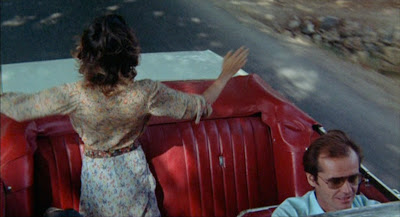
Maria Schneider and Jack Nicholson in The Passenger (dir, Michelangelo Antonioni, 1975).
Now, as a nineteen year old living in Rome, Katharine attends a screening of Antonioni’s The Passenger, and afterwards overhears scraps of a conversation: a man’s name and address. With only these fragmented “messages” to guide her she cuts all links to her former life and takes the train to Berlin where she tracks him down. He is beguiled by her youth and beauty and she stays with him for a while before taking up with other men, discarding them as they lose their usefulness. Her trajectory is mysterious and, rather like Jane Bowles’s Two Serious Ladies, Katherine makes something of a private religion out of her ecstatic quest, looking for signs to guide her next move among the city’s tribes of wealthy, criminal, and peripheral people. But these “experiments with coincidence” are belied by a larger design, suggested in fantasies about her father’s reaction to her disappearance, and in the way her longing for him is acted out in queasy relationships with older men who want to fuck or adopt her. What seemed like a bid for freedom looks increasingly like an act of revenge. Katherine leaves Berlin, travelling to a Russian mining settlement, a blasted, Tarkovskian wasteland near the North Pole, dark for much of the day. She is warned of danger, but stays, finding a job as a cleaner in an unvisited museum, moving into an abandoned flat. In this obscure, freezing, inhospitable place, she makes herself at home.
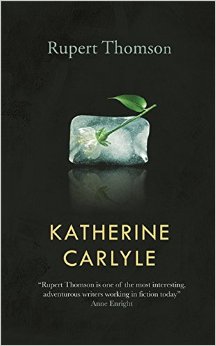
Both The Passenger, often alluded to in Katherine Carlyle, and Frankenstein, which supplies one of its epigraphs, provide background frames for Thomson. Like the Jack Nicholson character in The Passenger, Katherine’s father is a foreign correspondent, and her behavior – acting as if life were a game, playing at being someone else, treating others instrumentally – all resonate with Antonioni’s masterpiece about freedom’s romance, cruelty and difficult abstractness. Similarly, Shelley’s tale of hubristic science and its “hideous progeny”, of a monster abandoned by his maker, taking revenge and seeking the extremes of the world, finds its modern incarnation in Katherine. The collision of these narratives – one an escape from, the other a longing for, home – creates the mystery at the heart of Katherine Carlyle, and, as Thomson suggests, this is intensified by the lucidity of his writing, the exactness of his metaphors, the precise individuality given to even minor characters. As with Michael Ondaatje, whose work Thomson’s resembles, there is a palpable desire to foster and protect ambiguity. Unfortunately Katherine Carlyle loads the weight of its mystery onto one final sentence, a trick of sorts which realigns the story. Worse, in order to create this effect, Katherine is subjected to a nasty sexual assault, jolting her out of her visionary pursuit and returning her to her senses. Thomson clearly means to break the spell under which Katherine is living, but in some odd way, by shattering the suspense he chooses his novel over his character.
This review first appeared in the Spectator as ‘The Loneliness of Katherine Carlyle’ on 5.12.2015.

Jonathan Coe, Number 11. Viking – TLS
After a recent reading by shortlisted writers for the 2015 Goldsmiths Prize – a prize given for innovation in fiction – the first questioner from the audience asked the panel to comment on the relationship between formal experiment and subversive politics. Tom McCarthy shot back that one necessarily entails the other. Representations of the autonomous bourgeois self, claims of authenticity and originality – these are signs of realism’s bad faith. The innovative novel (sometimes referred to as experimental, postmodern or self-reflexive), by contrast, assumes that we are radically inauthentic: even the most private areas of our lives are commodified, and we speak or write under the influence of others, in an echo chamber of language. Such ideas, of course, have been around for a good while, but in the face of realism’s persistence, their expression in fiction still seems worthy of a gong. Perhaps if the Goldsmiths Prize had been established a few years earlier it would have featured in Number 11, Jonathan Coe’s sequel-of-sorts to his satire on Thatcherism, What A Carve Up! (1994). The function of prizes in capitalist culture is the subject of just one of many mini-essays and set pieces in Number 11, a dazzling tour de force with as much to say about Britain under austerity as the state of the contemporary novel.
In its conjectures, self-doubt and formal game-playing Number 11 is avowedly postmodern, yet it clings to realist ideas about common ground and the virtue of the ordinary. Similarly, it is nostalgic for the past while critical of our failure to move beyond it. To reflect this, the story begins in pastiche of the gothic (a genre concerned with the overhang of history), its gullible heroine, Rachel, trapped in a tower and terrorized by her brother’s joke. Rachel becomes connected to the Winshaws, the exemplary Thatcherite family from What A Carve Up!, and the novel goes on to examine how, in the aftermath of Blair and Cameron, the family’s belief in money has come to supersede all other values.
As the earlier novel reached its climax when Britain launched weapons against Saddam Hussein, so, here, the death of David Kelly haunts people like Rachel’s grandparents, making them mistrustful of government claims about the need for austerity. In this climate, and despite a massacre at the end of What A Carve Up!, killing many of the Winshaw family, those still standing remain insanely competitive. A memorial prize in their name turns, predictably, into an über-contest, pitting prize against prize in Britain and then – following the Man Booker – in America, ultimately consuming global awards such as the Nobel Prize. Giles Trending, a PR man, boasts that the prize’s “fundamental meaninglessness” is its “whole point”.

Jonathan Coe, 2013
The destruction of meaning is just one of Coe’s charges against the Winshaw’s rampant and indiscriminate money-making (across generations they move from selling arms to defusing landmines, both equally profitable), and there is concern throughout Number 11 about the impact of a financially obsessed culture on access to knowledge; on the credulity of those who do not read. So, for example, the Winshaw Prize is launched at the £187-million Library of Birmingham, funded by a council who soon cut its opening hours and close down “less prestigious” local branches.
Underscoring the prize’s ideology, Trending declares that it is intended as a “poke in the eye to all those sentimentalists who still believe that artistic creation is [a] haven from competition… some sort of socialist utopia in which different creative spirits work…in parallel and in sympathy.” To judge whether this is satirical exaggeration, dilated merely for comic effect, it’s worth considering how many in the literary world are currently talking about the market’s capture of the arts and its impact on the imagination. At the Goldsmiths Prize, for instance, another contestant, Max Porter, an editor at Granta Books, lamented that his first novel would be the last he ever wrote in that haven “outside the market”, free from contracts, sales or prizes.
In Number 11, this question of comedy’s effect exercises PC Pilbeam, a detective seated at table number eleven during the launch of the Winshaw Prize. He is known to his colleagues as Nate of the Station because of his belief that to solve crime, a policeman needs to understand contemporary ideas about the state of the nation. Faced with the murder of two comics his automatic thought is, “It was time to do some reading”. With bookcases filled with “history, politics, sociology, cultural theory, media studies, Marxist philosophy, semiotics and queer studies”, he undertakes research on comedy, noting Descartes’s argument that humour expresses superiority; Freud’s belief that jokes are shortcuts, their punchlines bringing together disparate material; Kundera’s feeling that satire is the lowest form of comedy, because it has a point; as well as the theories of the potential murderer who writes in a “particularly well-argued and particularly unhinged” blog that comedy is quietist, defusing political anger. In the echo chamber of Coe’s novel, all of these come back to haunt the reader.
Where What a Carve Up! traced lines of familial descent, the narrative in Number 11 – studded with references to social media and the web – spins out across Rachel’s network of family, friends and acquaintances. Her best friend’s mother, Val, a one-hit-wonder of the pop world who dreams of making a comeback, is lured onto a TV competition where celebrities are humiliated for the public to laugh at. Despite suffering from arachnophobia, she agrees to be trapped in a jungle full of insects, but her willingness to collude with the programme-makers counts for nothing: she has not understood that she is the fall guy. Vicious outpourings on Twitter turn Val into a pariah, and she falls into debt. Soon, too poor to heat her home, she is reduced to circling on Birmingham’s number 11 bus. As she consoles herself with the thought that her fellow passengers are “Ordinary people. Decent people”, she is confronted with an old woman hissing, “Why don’t you piss off back to the jungle where you belong?” – a line all the more disturbing for its possible racist double meaning.

Another more seductive dream, but one that also turns into a nightmare, is told to Rachel by her Oxford tutor, Laura. In a novel comprising many tales of the irrational, full of phobias, phantoms and manias, this one exerts a particular fascination. Its power derives in part from the jewel-like image of a winter garden under ice. But it also comes from Coe’s understanding of how the elusiveness of the past, and of stories (aporia), can lure readers to a never-ending quest for meaning until they “cross the border” into fixation. This one, about Laura’s husband, an expert in “paranoid fiction” who becomes obsessed with finding an obscure film glimpsed in childhood, seems to have originated in the pages of Coe’s 9th and 13th (2005), which relates his own passionate search for a lost piece of cinema. But the pull of aesthetics and memory is not the whole story here, there is also political critique. Angered by her husband’s retreat into the “blanketing safety” of a past he felt kinder, more paternalistic and less blighted by “choice”, Laura takes revenge by adapting his cultural ideas for the benefit of a think tank measuring “everything in monetary terms”. And she treats her son with a frostiness designed to stop him from ever romanticizing his childhood.
There are ways in which Coe’s novel resembles Kundera’s essayistic fiction, sharing an understanding of the novel tradition as one of rationalism springing from sceptical laughter. As a writer of the Left, Coe also harbours some of the same anxiety about stories put in service (a reaction to Stalinist thinking on art), rather than ones that multiply meaning. So he includes Kundera’s argument as one among many possible choices for the reader to consider – a measure to outflank and outwit the Czech writer. Similarly, while open enough to number Marx, Gramsci and Lukács in Pilbeam’s lexicon of necessary thinkers, Number 11 employs a very British vernacular, its anti-elitist intelligence forged by the lessons of those, like the detective, “set apart” in lifeless suburbs, or rotting in decimated places such as the ones on Birmingham’s ringroad, whose names toll out, “Perry Barr – Handsworth – Winson Green”, as Val trundles through them on the number 11 bus.
This belief in the ordinary (despite veins of bigotry and nastiness), and the messages of popular culture intelligently read, mean that when Coe shifts genre once again and the money-monsters finally crawl out from their lair, imperiling our heroine’s sanity, Rachel is able to recognize the plot others remain blind to and fight her way out of it. No longer the unsuspecting girl of an old-fashioned gothic novel, she is now the paranoid star of her own slasher movie. But for all Coe’s experiment, he retains some of that Lukácsian doubt about the free-play of the imagination. So while he dissolves the solidity of realism, breaking the borders of genre, he also tells us that off the page transcendence is not possible. In this world, “phantoms” are unseen migrants, Dracula’s descendants are financiers “draining the life” out of our cities, and breaking borders means madness – a sign that our obsession with money is making people lose their minds. Finally, Number 11, risking nostalgia, returns to Rachel’s grandparents, to their modest life now broken by austerity’s mean resources. And yet in their summer garden there is a tree where Rachel sits biting into its powdery, juicy plums – an image of bounty to share which refutes the Winshaw mantra of scarcity and competition. A last joke, collapsing disparate worlds and ambiguous enough to satisfy even Kundera, suggests that if the economic argument seems lost, our progress in social relations may yet have a bearing on the doctrine of money. When her gay best friend proposes they become a couple, Rachel quips back: “Dream on…this lady’s not for turning”.
This review appeared in the TLS on 27.11.2015 with the title, ‘A poke in the eye’.

“For Lesbos chose me above any on earth to sing the secret of its flowering maidens”. Baudelaire’s claim of anointment was just one of many hints and explanations – often self-contradicting – given by male, nineteenth century French writers as to why they placed lesbianism so prominently in their work. Kraftt-Ebbing had noted the tendency: “it is a remarkable fact that in fiction, lesbic love is frequently used as a leading theme, viz Diderot…Balzac…Feydeau…Belot…Rachilde.” In Gretchen Schultz’s ambitious cultural history Sapphic Fathers, she shows just how broadly the preoccupation ran: novelists, poets and scientific writers were all fascinated by the secret world of lesbians, or “tribades”, as they were often called. Schultz examines the relationship of these discourses, showing from her readings of symbolist, decadent and naturalist writers, and of popular and pornographic fiction, how literary texts informed scientific understanding of homosexuality. In a concluding chapter she also traces their influence upon readers of twentieth century lesbian pulp fiction – an audience, Schultz supposes, that earlier male writers “could never have imagined”. As studies of influence can be, this is a rather scattered work, and the confusion about its focus isn’t helped by a title alluding only to nineteenth century France while the jacket features American pop art from the 1950s. But if the book fails to cohere in a single convincing narrative, in its separate strands, Schultz shows herself to be a fine close reader and energetic literary detective.
Schultz begins with a discussion of the poetics of identification, looking at the depiction of lesbians in the poetry of Baudelaire and Verlaine. She argues that despite Baudelaire’s infamous loathing of women – so abominable in their service of nature – he found in the “barren” lesbian a more sympathetic subject, one that intrigued and inspired him. The original title of Fleurs du Mal (1851) was ‘Les Lesbiennes’. Here, Baudelaire envisages the descendants of Sappho as largely ahistorical figures, living in erotic limbo. His “femmes damnées” are, as the poet imagines himself to be, noble in the face of social exile. Baudelaire considers them “grand spirits disdainful of reality”; and it is in “their repudiation of materiality”, Schultz thinks, that their greatness lies. Both poets deploy lesbian speakers as a way of exploring more fluid identities: in Baudelaire’s work this means he can “flirt with femininity” while avoiding having to portray a male love object; in Verlaine, it is often the opposite case: lesbian desire becomes a cover for expressions of love between men. This intersubjectivity in their work, Schutz argues, is an important part of what makes their poetry so revolutionary. Verlaine’s ‘Ballade Sappho’ (1889), for instance, has a slippery narrator, “prince or princess”, who identifies with both the figure of the poet and the female lover of women. It is a poem, Schultz says, “startling…for the sapphicization of its male speaking subject.”
From a set of Matisse illustrations, 1944
If the symbolists discovered in gay women a potent image of the poet’s condition – at once alienated and alluring – male novelists in the latter half of the nineteenth century tended to represent lesbians as a bellwether for social and political ills. Among the naturalists, who claimed a scientific or objective basis for their fictions, fears about crime, prostitution, social instability and sexual contagion all coalesced in the figure of the lesbian. Among the decadent writers, she was often a vehicle for anti-clericalism (think of all those nuns corrupting their infatuated pupils). Lesbians also featured in much of the popular fiction of the time, and Schultz raises the question of the extent to which in portraying them, writers of the period were simply speculating on the public’s taste and out to make money. The success of Adolphe Belot’s wildly popular serial Mademoiselle Giraud, Ma Femme (1870) about a man who unwittingly marries a lesbian went through 45 editions in five years, infuriating Flaubert: “Public mentality seems to sink lower and lower. To what depths of stupidity will we descend?” Belot’s readership far outstripped even Zola’s – one of the few ‘serious’ writers of the time to achieve a large public for his work. Zola, however, was less hostile. His novel Thérèse Raquin (1867) had been inspired by an earlier Belot novel and in return he reviewed Mademoiselle Giraud, defending it against accusations of immorality. He claimed (as Baudelaire had of his own lesbian poems) that Belot was representing sapphism only to condemn it. When Zola came under attack for his novel Nana (1880), which depicted a sapphist courtesan laying waste to the men of Paris, he fended off accusations of sensationalism and depravity, arguing similarly that his purpose in writing was to shine a light on depravity.
Two final chapters consider the great extent to which early scientific and medical writing about lesbianism, absent of any actual data, was based on these literary representations. Schultz investigates particularly the work of Julian Chevalier, who wrote the first significant history of homosexuality in France, and who was alarmed about literature’s power to incite: “sapphism by literature”, he thought, was a contributing factor in the spread of “the vice”. It was precisely this idea of contagion and inexorable dissemination which Michel Foucault turned on its head in The History of Sexuality (1976) where he described “the shifts and reutilizations of identical formulas for contrary objects”, and which Schultz follows here in her closing argument about the lasting influence of French sapphic fathers on the readers of American pulp novels (Mademoiselle Lesbian, Appointment in Paris, The French Way). Even if the majority of nineteenth century representations of lesbians had “very little to do with the lives of the women they portrayed”, were voyeuristic, moralizing or abject, Schultz concludes, they still bequeathed to excluded minorities a heritage which placed them inside the culture, providing a store of knowledge, available, as Foucault noted, for their reuse.


These are my notes for an event at Autograph BP Gallery in Shoreditch, East London, 4.11.2015, marking Syd Shelton’s exhibition of photographs from the RAR movement. The other panel members were Syd and Paul Gilroy. We played three records each and then talked about why we’d picked what were not necessarily the best songs, but ones that said something particular about the times. The event was chaired by Mark Sealy, Autograph BP’s director.
- Winter of ‘79 — TRB (written in 1977)
I chose this because of the way it captures the apocalyptic imagination of the late 1970s and early 1980s in Britain – the sense of urgency and danger, of state violence and fascist threat, of the postwar settlement breaking apart. There were tanks in Belfast, bomb threats in London, and soon riots in cities up and down the country. Many of Robinson’s songs reflect the jittery feeling on the streets at the time. You can hear this especially in ‘Long Hot Summer’, which was inspired by the Stonewall riots, and in ‘Up Against the Wall’. This was the spirit of the time and there are similar warnings of imminent catastrophe in the Clash’s ‘London Calling’, the Ruts’s ‘Babylon’s Burning,’ and in the weird atmospherics of the Specials’s ‘Ghost Town’. It’s the sound of things falling apart, the sound of warning signals fired across a radio that no one in authority was listening to.
Tom was the first person who made me think about how you could build a network under the radar and turn it into something strong and effective – even when cultural gatekeepers like Melvyn Bragg and the South Bank Show told you that no one was interested in RAR and they were planning a programme on Eric Clapton instead. Something of a graphomaniac, he wrote long letters to his fans, connecting them to one another. I was then 17, working in Debenhams on Oxford Street and looking for people to share my anger with. He put me in touch with two Jewish schoolgirls from Camden Town who went by the names of Scruf and Scruff; Karen, a stylish secretary, the daughter of Czech immigrants; Alan, who was serving in the army in Northern Ireland, alienated from the other soldiers around him, and an Irish girl calling herself, Anna Gram, who lived on the estate behind my mum and dad’s house in Clapham. Anna approached me on the tube one day – my badges giving out a signal — demanding to know if I was that Irate Kate that Tom Robinson had written to her about.
Not long after I gave up the Debenhams job to became RAR’s first full time worker; making connections was an important part of what we did there, too. The people Tom put me in touch with and soon a bunch of other willing helpers – kids skiving off school, shop workers and secretaries bunking off work – would gather at RAR’s tiny office in Clerkenwell Close (this was before we were firebombed, and moved out to a shop front in Cable Street). In all-night letter-writing sessions, we sent out the message, linking together RAR supporters who had contacted us with stories about the racism they experienced in school or at work. They sent in their loose change and SAE’s in return for badges and dayglo stickers. A nation of kids horrified by the spectre of the National Front and bored out of their minds, living in nowhere towns and suburbs that closed down at 7pm, trying to discover the world out there by listening to John Peel late into the night or reading bits of James Baldwin with a torch under the covers.
We told them: here are the addresses of other music fans in your area, set up a RAR group, put on a gig, get out a fanzine, and challenge the local NF. We told them anyone could do it and wrote step-by-step Gig Guides showing them how. And in RAR’s magazine, Temporary Hoarding, The Mekons — stalwarts of Leeds RAR group, one of 80 or so in the UK — wrote an article explaining how to build your own PA, while The Au Pairs described how they recorded their first single by borrowing their mum and dad’s holiday money. The explosion of punk and reggae meant that there were groups all over the country hungry for gigs. And there was massive energy and frustration everywhere you turned, which RAR tapped into and transformed into action.
On stage, the TRB often dressed like the schoolkids they sang about – “sullen, unhealthy and mean” – and Tom had 302.0 stenciled on his shirt: the code for homosexuality in the World Health Organisation’s classification of diseases (something he’d been alerted to by Paul Furness, a key RAR activist, who worked in the Records Office of Leeds General Infirmary). One of the characteristics that marked Robinson out from many of his contemporaries was that along with his displays of insolence, he also understood, instinctively, the importance of bringing people together, of building alliances.
It was not enough to complain about discrimination against gays if you ignored what was happening to your “brothers in Brixton, backs to the wall”. Homophobia, racism and sexism – he made it clear these things were all part of the same problem, and we would sink or swim together – as David Widgery wrote: “No Us Without Them”. This is why Robinson was so important to RAR, which was about routing racism, but also a much broader cultural politics. He understood how to express and channel anger, but he was also hugely charismatic and convivial — something you can see in Syd’s great shot of him at the first RAR carnival in Victoria Park in 1978. Tom is facing the audience, back to the camera, his arms wide open, embracing the crowd.
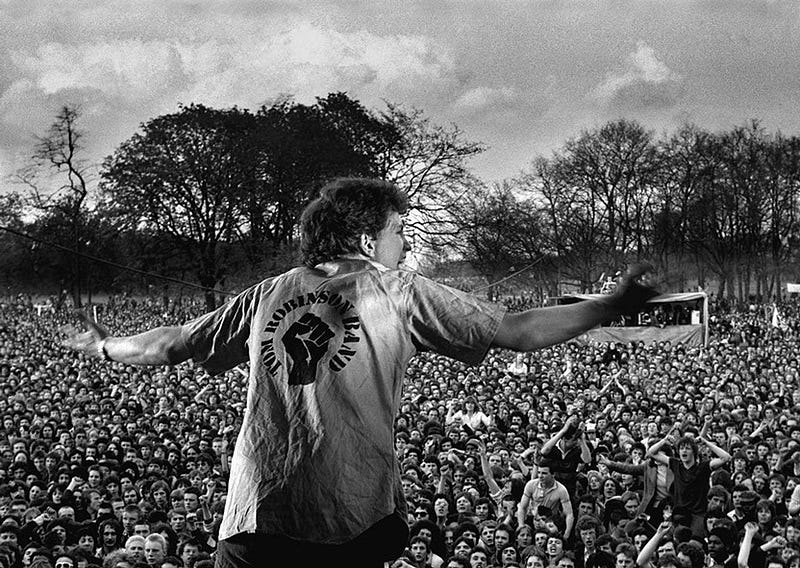
2. Oh Bondage Up Yours — X-Ray Spex (1978)
There were many women who started to appear in pop at this time, in particular the girl bands like the Slits and the Raincoats, or women who fronted groups such as the Au Pairs or the Selector. But many of these were tribal, slotting into the already established indie or ska scenes. Poly Styrene, though, couldn’t be pigeon-holed. Part Somali, part Scottish-Irish, she was like the advance party for the new self that was going to reinvent Britain. And her music was equally sui generis. I think she captured the spirit of the time like no one else
Poly got started, as many others did, after seeing a shambolic, end-of-the-pier Pistols gig, and deciding that anyone could do that. The basic Punk DNA — an egalitarian anyone can do it, and the more the merrier or rowdier. It’s in direct opposition to today’s sanitised X Factor competitions and commercialization, where the singer is a puppet and the winner takes all.
In ‘Oh Bondage’, Poly moves between two voices: the masochist “Bind me, Tie me”, and the refusenik “Up Yours!”. She begins by talking in an excruciatingly coy voice: “Some people say that little girls should be seen and not heard”, then yells “but I say, Oh Bondage, Up Yours”, and the music kicks in. It was like a declaration of war: women weren’t going to put up with it any longer. Poly was here to tell us she had something to say and she was going to be heard. But her sense of herself as a performer also says a lot about punk. She didn’t think of herself as a tortured artist writing about her own suffering, but as someone who was playing with ideas and words, or sending things up. So at the Victoria Park RAR carnival, she dressed in a tweedy twinset suit combined with brightly coloured headscarf and socks – as if in pastiche of Margaret Thatcher.
Punk is often tagged as angry and nihilistic, and there are endless arguments about its origins and purity – were you early enough on the scene, were you authentically British or singing in an American drawl? – but in fact, its main mode was either reportage of under-reported places and behaviours (another band who played for RAR, the Members, do this brilliantly in ‘Sound of the Suburbs’), or parody: mocking the idiocies of racism, sexism, homophobia. There was also a nice line in skewering capitalist alienation – the Clash did it in ‘Lost in the Supermarket’, and X-Ray Spex in songs like ‘Warrior in Woolworths’, or the sweetly melancholic, ‘GermFree Adolescents’.
And when Poly sang about ‘Identity’ she wasn’t talking about her own, but the idea of it as something manufactured: “Did you do it before you read about it?”, she mocks. There’s a sophistication here that much of pop lacks now and which many of the RAR bands, particularly those who played for RAR and RAS (Rock Against Sexism), also had: bands like the Gang of 4, the Mekons and the Au Pairs.
RAS was set up by Lucy Toothpaste (who was on the RAR organizing committee, along with Syd, Ruth Gregory, Red Saunders, Roger Huddle, David Widgery, Robert Galvin, John Dennis, Wayne Minter, and I) with the aim of challenging sexism in the music business. And that meant challenging the bands, too. In the Au Paris interview Lucy and I conducted for Temporary Hoarding (reproduced in Syd’s book), and in another we worked on with the Gang of 4, she’s particularly interested in power and aggression in pop – what it means, whether it’s necessary, how the musician-audience dynamic works, how a woman controls the stage.
If you look at the statement made recently by Grimes (“I don’t want to be infantilized because I refuse to be sexualized”) you can see that the problems RAS posed haven’t shifted that much, not least because Grimes still feels she has to answer that ‘man-hater’ tag which fierce women always get stuck with. Much of the anti-racism RAR was arguing for has become second nature in Britain today, but RAS’s demands have proved more elusive, perhaps because of the way feminism continually flares and then falls out of fashion, having to remake itself all over again.
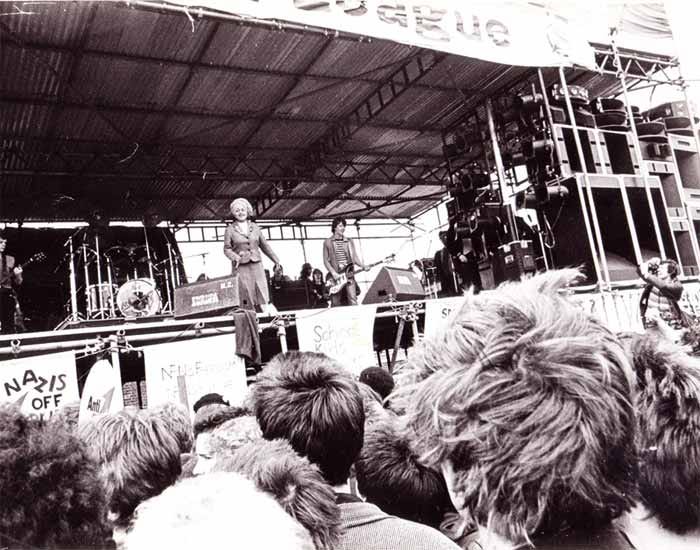
3. Sonny’s Lettah — Linton Kwesi Johnson (1979)
This is an example of the reportage record. It is news from the front line, conveying what it felt like to be an immigrant in the UK. RAR supporters had seen how thuggishly the police behaved at Wood Green, Lewisham, Southall, and at a succession of anti-NF demos, and these had been widely reported. But this LKJ song described something the TV and newspapers weren’t talking about: attacks on individual black people – the casual, everyday assaults and insults meted out on the streets and in the back of police vans. ‘Sonny’s Lettah’ is about SUS — the stop and search tactics the police started to deploy at this time under the cover of a nineteenth century law: the 1824 Vagrancy Act. It reveals a commonplace cycle of state violence, self-defence, then criminalization.
The singer, Sonny, finds his innocent brother, Jim, picked up by the police and roughly handled (“Jim start to wriggle and the police start to giggle”). Sonny responds angrily and the incident ends with Jim charged with SUS, and Sonny charged with murder. The whole thing is told in the form of a letter sent from Brixton Prison to the brothers’ mother back home in Caribbean. The song is also interesting because of the way it contrasts the respect and tenderness shown to Sonny’s mother with the brutality of the British police when someone challenges them. ‘Fight Dem Back’, LKJ sang in another song, and “We don’t rock against racism, we fight against it”.
The question of respect in the midst of disobedience and insurrection was something that the black community kept insisting on. Black people were not, as the police said, or as politicians or the press reported, aliens or savages, but people with cultures and histories that demanded respect. For many alienated white kids this was a new idea. If black people had a culture, what was white culture? What was whiteness? It made legible to them something that had previously been invisible. At the RAR Carnvial in Victoria Park the Clash sang a furious version of ‘White Riot’, their response to this realisation. But values of culture and respect injected something new into the punk spirit. The moment when black and white musicians came together at the end of a RAR gig was nearly always achieved with a reggae jam, something celebratory and uplifting. As the band who played more than any other RAR gigs, Misty in Roots sang: ‘People Unite’ — a sentiment unavailable in the disaffected vernacular of punk.

Sagan, Paris 1954 – TLS
“What on earth inspired you to write that?”, the parents of the eighteen-year-old Françoise Quoirez asked when she finally showed them the novel she had written the summer before. It was the Spring of 1954, and within weeks Bonjour Tristesse would be published by Julliard, becoming one of France’s greatest literary sensations. Quoirez changed her name, choosing the nom de plume Sagan (stealing it from Proust), and the novel in turn changed her life. But what’s perhaps most remarkable about her story is that despite the way in which others tried to fix her as a perpetual enfant terrible, Sagan remained true to herself. After she won the highly prestigious Prix des Critiques, François Mauriac declared, with the condescension shown to the young woman by many of France’s aged literary patriarchs, that she was a “charming little monster”. None of the above, Sagan replied, just an ordinary girl; and besides, she rebuked the critics trying to put her in her place, she wanted a life of “nightclubs, whisky and Ferraris…not cooking, knitting or making do”.
To mark the sixtieth anniversary of the publication of Bonjour Tristesse, Sagan’s son asked the novelist and journalist Anne Berest to write something in commemoration. The work that resulted, Sagan, Paris 1954, is, as Berest confides, “neither a biography, nor a journal, nor a novel.” At times she calls it a “diary” of the few short months it took for Sagan’s book to be published and to take off so spectacularly. The confiding tone is present throughout, though whose confidences are on offer is ambiguous as Berest inserts her own life – a recent separation from her husband, her desire to break from “boxed in” thinking – into the life of the teenage Sagan, then on the verge of success and contemplating the contours of a writing life. This staged intimacy between the author and her subject conveys, in a very French way, the thrill, and the presumption, of biographical writing: “I slip into the mindset of Françoise Sagan as if I were slipping on a pair of silk stockings”. It also dramatizes the biographer as a figure of uncanny power, a Frankenstein animating her creation: “I can wake Françoise up, I can get her to rub her eyes like a child, as she does in a photograph taken in Saint-Tropez in which she is wearing a check nightgown.”
Berest conveys the postwar atmosphere in which Sagan grew up with many sharp aperçus and an eye for sartorial detail. There is the strange interim feel of the 1950s when war ghosts inhabited every building, and, against this, the desire of the young to break free, to live wrecklessly, happily, knowing, as children of war, that “the real God is Chance”. Sagan’s closest friend, Florence, was the daughter of the writer and resistance fighter André Malraux and the two girls were voracious readers, swopping books “as others swopped taffeta frocks”. Berest also describes the masculinity of French literary culture. The fifteen judges of the Prix des Critiques who did so much to advance Sagan’s career were, except for one woman, male, elderly and august. Berest suggests they may have given the prize to such a “budding author” because its protagonist – the gamine, precocious seventeen year old Cécile – not only expresses admiration for older men, but raises the spectre of sexual relations with them.

Françoise Sagan
To help place her subject, Berest conjures other cultural figures of the time. So Sagan is watched from afar by Jean Cocteau, she passes Claude Lévi-Strauss on the street, spies Marguerite Duras asleep in a car, and runs into Pasolini in a restaurant. Some of this is imaginary and it leaves Berest worrying about the “strange form” her book is taking. But an interview with Florence Malraux lets her off the hook: literal truth is not important, what matters is she “write things that ring true”. There is a fine line here between deconstructing creative practice and constantly spotlighting oneself. Literary relationships and studies of influence are, of course, perfectly valid subjects, but the reciprocity Berest imagines between her and Sagan can seem both ersatz and self-justifying. By the end of her book she assures us “I have had the good fortune to become the object of a special affection on [Sagan’s] part…we spoke to each other almost every day.”
Perhaps this kind of fanciful communing (and Berest knows it is fanciful, constantly calling the legitimacy of her enterprise into question) can only be carried off when underpinned by strong insight. The problem is that for the most part she avoids giving a reading of Bonjour Tristesse, concentrating instead on the way in which Sagan has affected her life – a kind of enacted critical response which she translates into the self-reflecting prose of the book. But her actions cast doubt on the depth of her understanding. She visits a clairvoyant who declares that Sagan’s message to her is “Let yourself go”. So she makes a bid for freedom, taking a much younger man to a casino and having a one-night-stand with him. But when he refuses to visit Saint-Tropez with her, she feels the need to lecture him with life lessons (“At your age…”), just as in Bonjour Tristesse, the new lover of Cécile’s father uses her experience and moral certainty to belittle Cécile. Berest’s last book, How To Be a Parisian Wherever You Are: Love, Style and Bad Habits (2014), displays a similar confusion: advertising itself as free-thinking, it is full of rules on “how to be a woman”.
In Sagan, Paris 1954, Berest provides a creditable introduction to the young writer and the milieu from which she emerged, but her attempts to use Sagan as a model for her own liberation are less successful. She tells the young man that Sagan’s ultimate “message” is: “seek what is important, don’t seek to be important”. Her own advice – “the most charming thing of all is to be attractive without trying” – belongs to the impossible rules of French etiquette for women which encourage self-absorption and limit freedom – the very thing Sagan is at pains to decipher in Bonjour Tristesse. Ultimately it is Berest’s inability to let go of herself, to move beyond her own narcissism, that prevents her from really inhabiting Sagan’s bohemian “mindset”.

Just over a century after Virginia Woolf declared that “On or about December 1910, human character changed”, the American novelist, Hanya Yanagihara, has announced a new shift in consciousness. Jude, the lead character in her novel, A Little Life, is known to his friends as The Postman, “post-sexual, post-racial, post-identity, post-past”. The obscurity of his origins (left at birth in a garbage bin) and a childhood of horrific abuse mean he is determined to draw a veil over his past, making him the most mysterious of the four male New York friends at the heart of Yanagihara’s story. However his condition is only an extreme – and negative – version of the ambiguity that characterizes all the people around him, among whom identity is continually in flux and up for renegotiation. When one friend, Malcolm, declares that he is not black, and another, Willem, that he is not gay, it is not because they are ashamed of being either, but because they are insisting on a complexity these terms do not allow. The past still infects them (a third friend, JB, paints himself as Steppin Fetchit and ridicules Malcolm as an Uncle Tom), but in the main they have unparalleled liberty to create themselves as they wish, embodying a new kind of self, one with more freedom than ever before.
Some American critics have hailed A Little Life as a great gay novel, pointing to how its melodrama fits the tortured sensibility of much queer literature, and how its portrayal of isolation, fear and shame, but also of enduring friendship, reflects the experience of many gay men, particularly those who lived through the AIDS crisis. But gays are just the advance party for the culture that Yanagihara describes here, their networks of cooperation now the organizing principle of many urban lives in which traditional structures of support have collapsed or been jettisoned. Jude’s illness, a matter of non-specific painful “episodes” and a body riddled with sores, is deliberately not named as AIDS, in keeping with much else that is left vague or seeming implausible.
Like Karl Ové Knausgaard, who in equally vast novels has also tried to represent the new self, Yanagihara achieves great psychological realism through her reporting of the stifling repetitions of daily life, the sense of entrapment, in Jude’s case, exacerbated by his defensiveness and horror of intimacy. But at the same time, her story is so excessive it seems to levitate out of history, edging towards the mythic or incredible. As a child Jude meets cruelty everywhere; in adulthood, equally unlikely, nearly everyone shows him kindness and constant solicitousness, including the couple who materialise, as if in a fairy tale, wishing to adopt the thirty year old man. More than this, there are no dates or political events, women are almost entirely absent, and though in this enchanted place everyone becomes successful and travels the world, nothing external makes any impression upon their wealthy New York enclave.
As the novel proceeds the narrative becomes even narrower, focusing on Jude and his inability to thrive in this free world, to overcome his almost Victorian sense of being “ruined”. Soon he stops working in the District Attoney’s office and starts defending pharmaceutical and insurance companies. It is a move neither he nor his friends approve of, but the professional anonymity provides a safe-haven from his fear of exposure and temporary respite from the cutting he inflicts upon himself – the only control he can exert over his tortured body and emotions.
The interesting question about A Little Life is why Yanagihara makes the choice to so relentlessly pursue Jude, magnifying his pain and isolation, but also indulging the narcissism of his little life. One answer might be that it allows her to deepen an exploration of what adulthood means for this generation, largely unconstrained by spouse or children and vulnerable to accusations of immaturity. In the context of their radical individualism, Jude is a nightmare of unfreedom: a child who can’t grow up, sickened by his weakness and dependency. This condition is so shameful it transfers itself to everyone he comes into contact with, spreading guilt among the freedom-seekers like a contagion.
As her story unfolds, Yanagihara risks a good deal of vulgarity – relying on the secrecy of child abuse to create narrative tension, sensationalizing horror of the disabled body – but the payoff for her daring is that it yields complexity. If Jude is full of shame, it is induced by forces beyond his control. And he has resources of hope, continually trying again after every setback or failure. In this way, he epitomizes our struggle for autonomy, but also all the forces that militate against us. Ultimately Jude loses the battle, and Yanagihara’s greatest risk is that she suggests we see in his defeat an adult choice, a final act of sovereignty over his little life.
This article appeared in the Spectator as The Lonely Struggle of Jude the Obscure on 14.8.2015.

Like any art, the novel has always been in the business of self-justification. But perhaps because of its dependence on the book – a small object easily burned or confiscated – it has been particularly concerned by threats to its existence. To these, the novel has responded by parading its own importance, with self-exploration, bragging narrators, and unshockable worldliness, or by stories about machines and political systems intent on the book’s eradication, such as 1984 (1949) and Fahrenheit 451 (1953). In the twenty-first century, with the spread of smartphones and portable computers, and the rise of a small number of global corporations controlling them, a new literary genre is emerging. Still in its infancy, the internet novel is interesting as much for what it tells us about the precarious state of fiction in an era when, as Joshua Cohen observes, “they’re phasing out the ink stuff”, as for the myriad ways in which networked technology now permeates our lives. Recent examples include Dave Eggers’s The Circle (2013), about a company surveilling the whole of humanity, Thomas Pynchon’s investigation of the Deep Web in Bleeding Edge (2013), and Isabelle Allende’s consideration of online gaming in Ripper (2014). Now there is Cohen’s Book of Numbers, the most comprehensive of its ilk to date, giving us the history of the internet through the story of the largest tech company in the world, Tetration, (the name means “exponentiated by itself”).
Like Yossarian in Catch 22, who interprets war as an attack on him individually, Cohen takes the internet personally: after all, viability is what’s at stake here, too. Demonstrating just how personally, he names his principal character, a failed novelist, after himself, following Philip Roth’s ‘Philip Roth’ and Paul Auster’s ‘Paul Auster’. To underline his point and outclass the competition, he calls a second character by the same name. This ‘Joshua Cohen’ is Tetration’s founder, an affectless geek born in the 1960s, marked by a mix of influences peculiar to his time and place. His family have gone from shtetl to Stanford in three generations, and to their Judaic tradition have been added the Californian ingredients of start-up capitalism, second wave feminism, macrobiotic diets and Buddhist philosophy. Two further characters complete Cohen’s quartet (four is the important number in Book of Numbers): Moe, the Hindu programming genius behind Tetration, an illegal migrant with a suitcase-full of pseudonyms, who wants to develop the net’s “reversible” potential for “freecommerce” and giving back, and the company president, Kor Dienerowitz, the money guy who thinks he can exploit the freely-given work and socially produced information upon which the net is built.

Joshua Cohen
Cohen tracks the story from obscure beginnings, when early computer work was funded by universities and the military, to the development of machines, gadgets, programmes and apps, now so ubiquitous they “invent us”. This, of course, is the territory of the novel, which means that Book of Numbers is haunted by an ominous sense of exile and obsolescence, something magnified by Cohen’s claiming of the novel for Jewish culture, and by his hero’s preoccupation with the holocaust. At the same time, it is precisely this culture which enriches Book of Numbers, informing its scepticism about power (“never be a sucker”), tendency to digression and over-interpretation (“or else it’s vice versa”, “then again maybe not”), love of words, deployment of jokes, and most importantly, its sense of emanating from a long narrative tradition, being, at least in part, a story of the people of the book (“some of that is a Jew thing”). Specifically, Book of Numbers mimics the fourth book of the Torah, with its tale of the internet generation forever searching for “content that never contents”, in Cohen’s memorable phrase. Unlike the culture and heritage of the book, this content cannot be passed on because it is always provisional, never a final resting place.
By making the novel partisan in this way, Cohen sets up many serio-comic rivalries. His beleaguered novelist-hero is resentful not only of the net, but of the Muslim bombers who upstaged his novel the day after its publication on September 10, 2001; of a publishing industry now dealing in adaptations, properties, options, anything but books, which failed to support this epic work about his mother’s survival of the holocaust; and of all the bad writers in his life, including his Pulitzer-winning best friend, and his “x2b” wife, therapy-blogging their relationship. The most important rivalry, of course, lies between the two Cohens. Tetration’s CEO subjects his namesake to ignominy by employing him to ghostwrite his autobiography, meaning that although the novelist’s name will appear on the book no one will know he is the author. Furthermore, to underscore his authority, the tech boss demands that everyone call him Principal.
Despite his insistence, Principal doesn’t get the last word, or even the first. The story we are reading is not his, but the New York writer’s, a sprawling dairy containing family memoirs, extracts from Jewish websites, his friend’s journalism, his wife’s blogs and her lover’s emails, together with accounts of his new world adventures on the trail of Principal (in Palo Alto, Dubai, Abu Dhabi), and then through the old world (Germany, Austria) in search of the “forbidden” young “Arabess” he has fallen for. Encased in the middle of this record of his life are taped interviews with Principal, drafts of the ‘autobiography’ with acerbic comments and interpolations, and even sections of deleted material, scored through but still legible, as work in progress appears on a computer screen. It’s written as Beta programming is, with everything included and open to revision – historically a mark of the novel’s intellectual integrity, its lack of parochialism, but, here, also a way of revealing how the net’s immediacy and lack of mediation puts pressure on the novel, making its unfolding narratives seem archaic and slow by comparison.
By early 1996, they were set – they had everything but a name.
THIS IS JUST POINTLESS FUCK FUCK FUCK FUCK
FUCKQW
FU
Q=0138471E:A bv.ghhgty qp83ur j ;j “1aa0,2s9l38ddytvnm,.//
bhgddk(4f7j\^%5g6h{}
‘Cohen’ then, is implicated in the new technology and the businesses which deliver it (which writer today is not?) but these changes are still recent enough for him to feel cheated out of a literary legacy he believes himself heir to. He opens with an attention-grabbing salvo attacking the reader’s betrayal of the book with those sterile machines: “If you’re reading this on a screen, fuck off. I’ll only talk if I’m gripped with both hands”. In a monograph Cohen published in 2013, much indebted to Walter Benjamin and Susan Sontag, Attention! A (short) history, he notes the etymology of “attention”: “to grip…to grasp…to take with the hands or hold/mold with the fingers”. This is suggestive of the compact between the grasping reader and shaping writer, a relationship endangered by the keystroke’s “wordprocessing, textgenerating”, and the net’s stream of information, all of it alterable or deletable. Hence ‘Cohen’s’ assertion that while books are made of organic stuff – “hair and plant fibres, glue from boiled horsehooves” – his laptop threatens to stem his creativity and make him infertile, its “waveparticles… reaching my genitals and frying my sperm”.

For all that Cohen demonstrates the threats now facing the novelist in Book of Numbers, he also responds triumphantly to these post-literate times, reiterating the novel’s capacity to absorb new technologies and counter the ways in which they externalize and alienate. In Attention, Cohen argues that the vastness of the net is almost “unwordable”, but in Book of Numbers he re-humanizes its language. He does this with a brilliant facility for voice, conveying all “the lexicon of the prevailing Esperanto”, but primarily with “the unshakeable Jew belief in continuity, narrative, plot”, shaping a history which reminds us the net is not some external force acting upon us, but a product of our work and imagination. If there are times when his record of this tradition, and its successive generations of technological innovation, threatens to overwhelm the story, in the main, Cohen’s writing finds the poetry and pity of our times, and the progress of his characters, self-aware about even their delusions, keeps the reader gripped.
Yet it is in its fidelity to tradition that Book of Numbers poses its greatest challenge. Cohen’s narrator, the egotistical and embattled writer, is as intelligent, witty and provocative as any of his literary predecessors. But something has happened to the worldliness that made this figure such a knowing – and by the reader, trusted – guide. Cohen’s lament is not just for the passing of the book, but for the Jews, once cultural vanguards whose deracination made them exemplary chaperones (think of Leopold Bloom in Ulysses), now finding themselves overtaken: “All pens at the very end of their ink begin to write in Arabic.” When “Cohen” finally tracks down the Yemeni woman he has been pursuing, he notices the names outside her building, all written “in a script resembling my testing this pen, licking its tip then testing again”. But the test she presents is one he walks away from, and she remains only a notional figure (“it wasn’t you…it was a dream”), gestured to in shorthand, like the politics underpinning these cultural shifts: “Also, Israel.”; “(Palestinian Territories)”. Back in America, in a taxi riding home to his mother, ‘Cohen’ muses on how “it used to be”: how he would engage an Arab driver with his habitual Jewish talkiness, wanting to show “that I held by what that Berber slave playwright once wrote, nothing human was alien to me, or rattling, wanting to show respect by talking politics domestic and foreign.” But his worldliness deserts him, and once again “this moment, this intersection” seems beyond him. Unable to acknowledge how this has come to pass, yet wanting to retain a belief in the conviviality of his twinned traditions – the novel’s and the Jew’s – the writer comforts himself with the fantasy that maybe he has said something after all.
This review appeared as ‘The content that never contents’ in the TLS on 17.7.2015.

Per Olov Enquist, The Wandering Pine (translated by Deborah Bragan-Turner). MacLehose Press – TLS
“If only you could have understood, just once, how everything joined up.” Time and again, Per Olov Enquist addresses himself with this lament in the pages of his autobiographical novel, The Wandering Pine. The desire to make narrative sense out of the haphazard or mysterious is a common enough motive for life-writing. In Enquist’s case, the wish to understand “how could it turn out so badly?”, is charged with the suggestion that the “it” in question, is not only his life, but that of Swedish social democracy. Enquist is one of his country’s most eminent writers and as an award-winning novelist, playwright and journalist he has often been at the heart of its political and cultural debates. The Wandering Pine, rather like Arthur Miller’s autobiography, Timebends, is a fascinating portrait of intellectual life in the twentieth century. But whereas Miller portrayed himself with the monumentality of a Mount Rushmore carving, Enquist is ironic and self-condemning. (It’s hard to imagine the American writing of himself, “He experiences it all and understands nothing.”) Crucially, Enquist’s book advertises itself not as memoir but fiction, with the subtitle, “Life as a Novel”, and it plays out in the third, not the first person, dividing “Enquist” between the judging narrator and the hapless creature being written about. It’s a division that underscores the impossibility of things ever being “joined up”, and the novel’s stoicism in the face of this.
The idea that life should have order and coherence was embedded deep in Enquist’s childhood. Growing up in a small village, without father or siblings, he had an intense relationship with his mother, a protestant schoolteacher who taught the native values of honesty, fairness and cooperation with an iron rod. One painfully funny passage has the innocent boy inventing a crime he can admit to at the weekly confession she demands he perform. This fabrication is something like Enquist’s original sin, suggesting a connection between creativity and madness, an idea he pursues in stories about relatives locked up in attics for their inclination to writing or wandering. It suggests, too, how the dogmatic imposition of reason results in lies, guilt and absurdity, leading to a sense of hypocrisy from which Enquist – and Scandinavian social democracy – can never quite escape. “He finds it natural that he is good”, Enquist writes of his young self, but the constant emphasis on goodness causes him to daydream about how it would be if he were not. Corporal punishment is forbidden, yet he “hankers after a taste of it”. It is this paradox Enquist identifies between goodness and its discontents, which fuels so much contemporary Scandinavian literature, from Steig Larsson’s indictments of racism, misogyny and corporate greed, to Karl Ové Knausgaard’s complaints about homogeneity and infantilization.
The toughness of village life through long snowbound winters turns Enquist into an athlete, but when he arrives at university in Uppsala he discovers that intellectuals “are silent on the subject of sport” and his interest makes him seem an oddball in cultural circles. His sense of being an outsider persists, even as he advances to the heart of Swedish life – working as a cultural commissioner for the government, debating with Olof Palme – yet it is just this feeling of being peripheral that makes him such an exemplary Scandinavian. For a while, in the relaxed climate of the 1960s, his isolation and awkwardness fall away and he takes part in heady experiments in sex, drugs, politics and art. He writes a non-fiction book about the Baltic soldiers who were handed over to the Soviets by the Swedish authorities at the end of the war, which proves to be an unexpected, if controversial, success: in a country that prides itself on its reputation for decency, probing the murky past, he is told, is “inappropriate”.

Per Olov Enquist, 2013
Enquist’s work also gains a reputation – for iconoclasm and obliquity, making him ever more determined to get to the centre of things. Moving to Berlin, he is caught up in the Baader-Meinhof story. Yet even here, in the heat of history, he feels the “cancer” of his goodness makes it hard for him to “understand the grime of life” or the youthful disobedience he witnesses all around. Working at the Munich Olympics as a sports reporter, he stumbles into the event which marks a fundamental shift in global politics, though he fails to grasp this at the time. (No one does.) Then at home, the mood turns darker. The happy, open, permissive Swedes are troubled to find even they are not immune to the prevailing mood of conservativism: political debates no longer focus on the different futures proposed by communists, syndicalists or social democrats, but on crime and immigration, as people look for someone to blame for threats to the Swedish way of life.
At some point in all this Enquist starts drinking. His decline is intermittent and though he suffers from writer’s block, there are still periods of productivity, including a new career in the theatre which takes him to Broadway. Despite such successes, he senses he is increasingly in the grip of something destructive, even if he is unable to identify precisely what it is or “how it all went wrong”. Friends check him into rehab but, rationalist that he is, he finds it hard to accept the religiosity of Alcoholics Anonymous. On his second incarceration, this time in a clinic in Iceland, he bolts, fleeing shoeless into the glacial night. Finally, he finds more sympathetic treatment in Copenhagen, and begins an autobiographical novel, his own secular tale of “resurrection”. Enquist never drinks again. Why he started and why he has stopped are questions he cannot answer, but his recovery has something to do with finding his way back to the stories of his early life, to his mother’s powerful belief in goodness, and to his laptop’s “funny brownish-red light like a lamp in the darkness”.

Andrew O’Hagan’s The Illuminations is the third in a loose trilogy of state-of-the-nation novels. Rather like David Hare who in a trio of plays in the early 1990s, examined labour politics, the Church and the law, O’Hagan has explored the decline of the Left in Our Fathers (1999); religion, sexuality and nationality in Be Near Me (2006); and now in The Illuminations, the military, specifically Britain’s involvement in the so-called “humanitarian wars”. Unlike Hare, however, O’Hagan is not a polemical writer, and he shares the viewpoint of the those on the ground rather than the top brass. Each novel in this trilogy depicts inter-generational relationships, allowing him to scrutinize the present not simply on its own terms but in the often indicting light of the past. His fiction hovers between then and now, between lives understood through class and community, and the atomized selves we currently inhabit – but the animating morality of his work derives from a time before anyone suggested society might not exist. Older people inhabit his novels in their own right, but their presence also directs attention to lives routinely discounted or abandoned, pricking the conscience of the reader and making us reflect on our complicity in Britain’s “new-style social anomie”, in the “vast carelessness” O’Hagan once identified, which facilitated Fred and Rosemary West.
If the backward-looking portion of O’Hagan’s work is fuelled by his Scottish, working class origins, his reading of the present seems influenced by his second writing life, as a journalist. Joining the London Review of Books at a young age, (he was a protegé of Karl Miller, to whom The Illuminations is dedicated), and perhaps wishing to offset the sway of the past, he has specialized in exemplary subjects of the technology and celebrity age, writing about video games, fake internet personas, child Jihadis, surveillance and paedophillia. This fascination with the contemporary and voguish is also evident in his remaining books: The Missing (1995), written in the wake of the West murders; Personality (2003), about an anorexic child star, and The Life and Opinions of Maf the Dog, and his Friend Marilyn Monroe (2010), a sidelong view of America’s most famous woman, narrated by the pet Frank Sinatra once gave her.

Andrew O’Hagan
Now, in The Illuminations, O’Hagan examines the bond between an old woman struggling with the mysteries of her past, and a young man, harrowed by war in the fracturing present. Despite their different predicaments they recognize themselves in one another, and this recognition between them is a sustaining secret.
Living in sheltered accommodation in Scotland, Anne Quirk is declining into dementia even as the memories of her carefully guarded life flood back. Her grandson, Luke, is on the other side of the world in Afghanistan, leading a platoon of video-gaming, drug-fuelled young soldiers in a delivery of equipment to an electricity plant – a symbol of the war’s ostensibly civilizing purpose. At first their stories are held apart, told in chapters so different in character they seem not to have come from the same novel. But when Luke’s troupe is ambushed and in the mayhem a village decimated – “young boys lay in heaps”, women wailing – he returns home to Scotland. Here he finds consolation in the grandmother who taught him as a boy that the world’s chaos might be captured and illuminated through “artistic ordering”.
Anne was once a photographer, though her work has long since fallen from notice. Her way of lighting up ordinary moments taught Luke about the transcendent possibilities of art and offered him escape from a humdrum existence: “Anne had given him the world not as it was but as it might be.” That he gets to university only to choose an army life rather than an artist’s, seems perverse, but enlisting is his way of emulating a soldier father, killed in Northern Ireland, and the books he’s read have filled him with ideas of honourable service. Moreover, there is something of Anne’s creative instinct in his desire to “order the future”. Once in Afghanistan, though, this is revealed as a deformation of the artistic impulse, and Luke merely an “agent of fantasy”, ordering the world by policing it.
The revelation that art can be a passport out of a poor life recurs in O’Hagan’s work. Of the Scottish filmmaker, Bill Douglas’s journey from penury to artistry, he once wrote, “He must have realised that self-enlargement and self-invention were everything a boy from Newcraighall could hope for,” and his founding act as a novelist, in the first few pages of Our Fathers, was to pay tribute to a woman who marks out a boy, giving him books to help expand his life, rather than succumb to the mean one he is allotted: “My books kept me living, I was in love with what they knew.” In The Illuminations Luke is similarly anointed by Anne (“she made him unusual”), the distinction of art separating them from others, making them, as Anne’s surname suggests, quirky. As if to emphasize this difference, both characters have relationships with people trapped by the conformity grandmother and grandson evade. Anne’s next door neighbour, Maureen, is all bitter complaint at being left behind by her family, at having lived only a confined woman’s life; while Luke’s commander, Scullion, who, like him, has romantic ideas about the heroism of soldiering, cracks under the hypocrisy of too many wars which despite their humanitarian label, belie any notion of the good.
Some of The Illuminations’s strongest effects are achieved with the simple use of contrast. O’Hagan deploys it – as Anne does photographic contrast – to “not only…get at life, but to enhance it”. So Anne and Maureen, living in sheltered accommodation, talk in an equally sheltering language, in homely phrases (“a scarf’s like a friend, isn’t it?”) and familiar sayings (“everybody has their problems”, “you give them the best years of your life”); while the soldiers, actors on a global stage, “had their own language and said whatever they wanted” (“cocknoshers”, “drill-pig”, “fuck-o-nometry”). But this inventive talk is all diversion and bluff, the freedom it implies, an illusion. Their lives, too, are horribly inevitable: in both places people are stricken and die, the only difference is the suddenness with which it happens.
These contrasts also reveal some of the novel’s weaknesses. While Anne’s life is illustrative of the way in which women are often hidden from history – there is the clandestine affair with a married man, the interrupted and forgotten career – it is also plausibly idiosyncratic. Anne’s secret past sheds light on her guardedness, her feeling for mystery in art and for the special knowledge of “how to read a person” which she passes on to her grandson. By contrast, Luke’s familiar story of disillusionment with war and the difficulty of returning home, strains to achieve broader resonance. There are several voices in the novel lambasting the soldiers’ insularity (“You want to burn away the enemy and scorch their minds, without knowing what their mind is”), but O’Hagan is equally unilluminating about the Afghans, presenting only the blinkered view of Luke and his men. As a consequence, many passages fall into cliché: the single Afghan portrayed is a caricature ‘baddie’, one-eyed, “unadult” and treacherous, and the violence of the ambush scene aestheticized, as it might be in one of the video games the soldiers are continually hooked up to (“shattered pomegranates”, almonds “that seem to explode”, “rose petals on the road, “blood running into dust”).
Blackpool Illuminations
Once home, now believing the war to be predicated on a senseless idea (to “obliterate ignorance with firepower”), Luke argues with those Scots advocating independence, judging them also to be “agents of fantasy”, caught up in a regressive nationalism. Life is now technological and global, he proclaims, everyone has their dreams and no one has a monopoly on decency: “There’s no nation, Mum. There’s only people surfing the Net.” This new Google globalism, though, is as valueless to Luke as the flags and drums of the old nationalism. In the war he has suffered “a loss of make-believe” and once again it is to Anne that he turns to try and recover this, taking her on a journey back into history, to Blackpool where she had her affair, and to see the town’s illuminations.
Luke’s creative power revives as he makes believe Anne’s dementia is not a tragic decline, but a new journey they are embarking on together. In this way, he keeps faith with her and the transporting imagination she revealed to him as a boy. Yet there is something cramping in the way O’Hagan’s story turns back and in upon itself, looking for its resources in the already known (“A feeling of optimism fell from the deep past”); a limitation, too, in Luke’s private code of art which fails when confronted by the other or the new. It’s as if the larger questions are beyond the novel’s purview, and against a war, “dirty as fuck”, or a nation dismantling itself, art can only offer the reinstatement of humane behavior, of small, good, but quite intangible things, and of “artistic ordering”. That scarf – the reassuring friend – mentioned at the beginning of The Illuminations, reappears at the end. Luke takes Anne and a friend down to the beach, Anne’s scarf blows up into the air, “the girls laughing as it stretched up and a hand reached out for the sun.”
This review appeared in the TLS on 27.3.2015, titled ‘Order and Light’.

Sontag’s Distinction – TLS
“Susan is here – what a beauty she is! But I dislike so much about her, the way she sings girlish and off key, the way she dances, rhythmless and fake sexy…” In her 1957 diary, Harriet Sohmers recorded her ambivalence about the arrival of Susan Sontag in Paris. “She seems so naive. Is she honest?” They had met originally in 1949 in a San Francisco bookshop, beginning an affair while Sontag was still a teenager. Nearly a decade later, after Sontag had married and given birth to a son, the relationship resumed. Sontag was studying philosophy at the Sorbonne; Sohmers, the translator of Sade’s Justine, was working nights at the New York Herald Tribune. For Sontag, who spent much of her childhood living near the desert in Arizona, the international, bohemian scene she became part of in France was critical in the formation of her sensibility. Here she kept company with radicals, aesthetes and homosexuals, and spent her nights roaming from cafe to cafe, eager for the conversation this mix of people created. She was introduced to the revolutionary ideas of the nouveau roman and nouvelle vague and became a passionate cinema-goer, often seeing two or three films a day.
Sontag had studied in California, Chicago, Harvard and Oxford, but it was in Paris that she shook off her American parochialism, escaping the elitism of many of its postwar intellectuals. Giving free reign to her enthusiasm, she became a connoisseur of the kitsch, outré, obscure and avant-garde. At the same time she began to read experimental postwar French literature and, influenced by expatriate friends in Paris, those writers she took as her exemplars: Beckett, Borges, Kafka and Nabokov. In so doing she found the work of a lifetime: crusading against the distinctions that divide high from low culture, form from content, thought from feeling, ethics from aesthetics, or fantasy from judgement (distinctions she felt, which should only be employed “against themselves”); and making connections between literature, film, theatre, opera and art, in many of which she also practised. As she wrote in her diary in the first flush of her relationship with Sohmers, “everything matters” – a sentiment reinforced in the 1960s when her lover, Jasper Johns, told her the same thing.
Part of what drew her to Johns and his friend, John Cage, was that they shared not only her wide interests but also her feeling that in a time of capitalist excess these might be best expressed in an art of restraint, in what Sontag called an “aesthetic of silence”. Much as she admired this, though, her own writing grew from “restlessness and dissatisfaction”: she would not be quiet or sit still. Instead, she translated her lively curiosity into a very un-American devotion to the past (where she pointed out, so much of “everything” happened). She also championed those writers who grew outside capitalism’s domain: a relationship with Joseph Brodsky in the 1970s was influential in shaping her view of the romanticism of the American left when it came to communism, and in making her think more deeply about writing as part of global culture, leading to essays on ‘The Idea of Europe’ and ‘On Being Translated’, as well as eulogies to Marina Tsvetaeva, Danilo Kiš and Witold Gombrowicz. From this flowed a renewed concern for writers around the world battling against authoritarian regimes. In 1978-9, at the time Salman Rushdie was placed under a fatwa, she was chair of American PEN.
Now, a decade after her death in 2004, we have two new biographies. Daniel Schreiber’s presents a portrait of the intellectual-as-celebrity and is much concerned with image, reputation and Sontag’s response to fame (it was published first in 2009 under the title Geist und Glamour). Jerome Boyd Maunsell’s book is more centrally engaged with her work in the context of the life. While Schreiber regards Sontag with suspicion, is disposed to see any rethinking as evidence of dissembling, and claims to have “clarified… dishonesties”, Maunsell presents such changes of mind more judiciously as a facet of her intellectual mobility, a writer returning to and elaborating themes. Schreiber gives us a sense of how Sontag appeared to others, making use of interviews with friends and colleagues; Maunsell relies more on published material to inform his exegesis, including Leland Poague’s invaluable interview selection, 1995, and the two volumes of diaries edited by her son, David Rieff, 2009, 2013.
If their designs upon her life differ, for both biographers the bones of her story are the same. What Sontag called her “desert childhood”, lonely, isolated, and fatherless, left her with a world-hunger she was determined to satisfy. As she observed, something about her “eccentricity or the oddness of [her] upbringing” served her well: it meant she escaped the pressure other girls felt to limit their desire. As an adolescent, discovering a bunch of Modern Library paperbacks in a Hallmark card store, she read them voraciously. When the family moved to California she engineered a meeting with Thomas Mann. Still only sixteen, she enrolled on Chicago’s Great Books of the Western World course, the following year marrying Philip Rieff, a sociology lecturer – a hastily-begun relationship that unravelled slowly and painfully: “I lost a decade”, she said later. Once she made her way to Europe though, as well as living in England and France, she journeyed across Italy, Spain, Germany and Greece. “I haven’t been everywhere, but it’s on my list”, she quipped. Places she could eventually cross off included Morocco, where she paid court to the Bowleses; Cuba, Vietnam, China and Poland (later decried, Schreiber notes, as trips to the “Disneyland of revolution”); Israel, to film a documentary about the 1973 Arab-Israeli War; Bosnia, where she staged a production of Waiting for Godot during the siege of Sarejevo; and Japan, to which late in life she kept returning. As a young woman Sontag vowed: “I shall anticipate pleasure everywhere…I shall involve myself wholly”. But later diaries reveal she was not immune to the problem of female appetite. She was suspicious of her avidity, concerned her collecting and discarding of people was vampiric: “Gathering my treasure, I learn what they know…then take off.” Love affairs with men and women were not uncomplicated. The relationship with Sohmers was certainly turbulent, and Sontag was crushed when she read her diary. At the end of 1958 she moved back to America, divorced Rieff, and took her young son to New York to begin the life she had always envisaged for herself: that of freelance intellectual.

Susan Sontag and Harriet Sohmers, c. 1949
Sohmers’ assessment was to have a profound effect, leaving Sontag with an insecurity she found hard to dispel. Perhaps she sensed something in the casually devastating remarks that went beyond sexual gaucherie or a perceived failure to be hip, reflecting more broadly on her viability as a writer and thinker. In America, as if to repudiate Sohmer’s slur, Sontag challenged the old-guard intelligentsia by publishing provocative, epigrammatic criticism not only in Commentary and Partisan Review but, more fashionably and democratically, in Vogue and Mademoiselle. Sontag’s readers admired her intellectual rigour but also thrilled to the cutting-edge critique in her work, much of it concerned with desensitizing and cultural over-production. There were seminal essays and monographs on underground gay sensibility (‘Notes on Camp’, 1964), “the intellect’s revenge upon art” (‘Against Interpretation’, 1964), voyeurism, surveillance and the spread of imagery (On Photography, 1977; Regarding the Pain of Others, 2003), and the unthinking use of metaphor (‘On Style’, 1965; Illness as Metaphor, 1978; AIDS and its Metaphors, 1989). She soon became one of the country’s most fêted and public intellectuals, photographed by Cartier-Bresson, filmed by Andy Warhol, the subject of devotional artwork by Joseph Cornell. Yet the suggestion that she was “off key”, “naive”, not quite credible, lingered, if only in the conditional praise that habitually came her way. Typical of this genre was Jonathan Miller’s designation of Sontag as “the most intelligent woman in America”.
The American critic Vivian Gornick has argued that what she made of such ‘praise’, and her experience of the dubious distinction conferred upon her as a “remarkable exception”, should provide the organizing principle of any biography, helping us to better understand the position of the female intellectual in the twentieth century. Certainly the authoritative style of Sontag’s early writing, her lofty public manner and her reluctance to discuss her sexuality, all seem like strategies to deflect from her gender and help her assume the mantle of universality and exemplariness routinely accorded to great male writers. But, as Schreiber reports, it was a stance that left some feminists angered by her apparent lack of partisanship. In 1975 Adrienne Rich demanded in a letter to the New York Review of Books that she make clear her position on feminism. Sontag’s furious response was that of course she was a feminist, but this did not mean she would succumb to intellectual banality or bow to “infantile leftism”. The criticism continued, however: in 1994 Camille Paglia argued that Sontag’s “cool exile was a disaster for the American women’s movement.”
Her aloof style also reflected a distaste for the confessional. Any biographer has to labour under the particular difficulty Sontag presents as a subject, one with a deep-set antipathy to the idea of biography or to searching for underlying meaning – something that had its roots in her earliest intellectual discoveries. Her marriage was not entirely “lost”: she spent much of it co-writing a book with her husband on Freud (though in their divorce settlement she agreed not to be credited). Maunsell points out that an early chapter, ‘The Tactics of Interpretation’, anticipates Sontag’s later themes: “for Freud, nothing is ever allowed to just be what it is. ‘Slips of the tongue, pen, memory; mislaying of objects; fiddling or doodling…the most ordinary trivialities may become symptomatic, meaningful.’ One thing is always substituted for another by Freud…yet with how much accuracy?” Though Sontag played down the influence of the nouveau roman on her early experimental novels (The Benefactor, 1963; Death Kit, 1967) – and Maunsell, following this, places them rather intriguingly as works of American surrealism – it’s hard to imagine that her thinking about Freudian displacement was not consolidated when she read the French postwar writers, with their dislike of metaphor and its insinuation of ultimate meaning. She writes in ‘On Style’ that “metaphors mislead”, an idea that surfaces again and again. In a 1978 interview with Rolling Stone she observes, “what was perishable in a lot of writing was precisely its adornment…the style for eternity was an unadorned one.” Indeed, much of Sontag’s work forms a commentary on the tendency in modernity to excess, to critical duplication or recycling. “We live in a world of copies”, she protests, “the work is not allowed to remain itself”.

Sontag arrested at a Vietnam War protest, 1967
Sontag’s public manner may have been provocatively cool, but her style in criticism tended, as Maunsell notes, “to revelatory explication and ardent admiration”. Often referred to as the High Priestess or Dark Lady of American Letters, her ardour made her seem to some, girlish – another epithet frequently applied to her (Daniel Mendelsohn reviewing her Diaries, spoke of her “girlish effusions”; Stephen Koch interviewed in the New York Observer, thought her “very girlish”; Philip Lopate in Notes on Sontag (2005), describes her “great girlish squeal”); she herself worried that ardour could overwhelm its object. In an essay on Elias Canetti, she wrote that for “talented admirers…it is necessary to go beyond avidity to identify with something beyond achievement, beyond the gathering of power.” Her declared aim in writing, after all, was self-transcendence, and while “ardent admiration” could arouse the energies necessary for criticism, there was a danger that bold identification with a person or work might result in attention being directed back to the admirer’s taste or talent in admiring.
Perhaps all this accounts for Sontag’s fascination with the figure of the collector, someone who transforms admiration and appetite into discrimination and connoisseurship, yet remains caught – in Maunsell’s phrase – in “the pathos of avidity”. He is present in her first novel as the self-absorbed Hippolyte, collecting his dreams in order to better understand himself; and in her penultimate novel, The Volcano Lover, 1992, in the character based on William Hamilton. “Does he seem cold? Is he simply managing, managing brilliantly…He ferried himself past one vortex of melancholy after another by means of an astonishing spread of enthusiasms. He is interested in everything.” Women, Sontag suggests are not able to move past their own abjection in quite the same way. In the novel, Hamilton recalls a fable about a statue of a woman. A man ‘collects’ her, granting her a limited consciousness with the sense of smell. (“Impossible to imagine the fable with a woman scientist and…a statue of the beautiful Hippolytus”, Sontag observes.) For her, every odour is good, because every odour is better than none. All her pleasures, then, are tinged with loss: she cannot make the “luxurious distinction” between good and bad. “She wants, if only she knew how, to become a collector.”
Schreiber’s concentration on Sontag’s public persona goes some way to describing how the desert girl was able to translate her passionate will to knowledge into one of the most vital canons in America’s recent cultural history. He pays particular attention to her polemical interventions: her contention at the time of the Vietnam War that the white race had created nothing which could compensate for its violence; her chastising of the American left at a 1982 Solidarity rally for not realising that “communism was fascism with a human face”; and, in the aftermath of 9/11, her “bemoaning the absence of discussion worthy of a democracy”. This is balanced by a good deal of gossipy detail, such as Sontag, amused at the role-reversal, when Warren Beatty keeps her waiting for a date while he primps himself in the bathroom. Schreiber’s treatment of her work, though, gives too much leeway to its reception, quoting without challenge many barbed and negative reviews. And his suggestion that Sontag not only succumbed to her image, but was so self-deceived as to be incapable of distinguishing between the bad and the good in herself, seems particularly self-serving, justifying the role he too often falls into as biographer for the prosecution.
Maunsell, by contrast, presents a nuanced account of Sontag’s intellectual development. He traces her ever-present subjects, above all the duty of the writer to direct attention, while seeing that her books arose “out of self-correction” and self-contestation, the result of a continuing “readiness to immerse herself in contemporariness”. Indeed, the achievement of Maunsell’s biography is how intelligently he makes sense of Sontag’s responsiveness to the contemporary, and the currency this gave her work for over half a century – a period long enough for her to repeatedly modify arguments or reason on the contrary. She was an oppositional writer, and the opposition was frequently wielded against herself. Understanding this, Maunsell champions her “crucially misunderstood” early novels, judged as failures in realism rather than on their own terms as Duchamp-like “endlessly reconstructable puzzles”, designed to resist analysis. But he also writes persuasively about a lecture delivered not long before her death when she defended the novel form precisely for its “artful sense of completion”. “Now”, Maunsell observes, “it was not interpretation that was the main danger for her”, but “the untrammelled flow of information.”
In learning how to become a collector – one with the freedom to make new distinctions and then change her mind about them – Sontag had to develop a style of her own. As a young woman she relished the freedom and authority of impersonality in her writing, but over time it suited her less, the “freedom”, unable to accommodate what she wanted to say. It took her thirty years to find a way of speaking more directly, with “warmth and candour”, as Maunsell puts it, “to learn” as Sontag herself said in interview, “how to write a book I really like: The Volcano Lover”. The book she liked was the one in which finally she reflects on just what that earlier style suppressed: “I had to forget that I was a woman to accomplish the best of which I was capable. Or I would lie to myself about how complicated it is to be a woman. Thus do all women, including the author of this book.”
A slightly different version of this review appeared as ‘From desert girl to Dark Lady’ in the TLS on 23.1.2015.

It is the Spring of 1880 and a man walks through the countryside of southern Belgium, making his way to the French border. Shabbily dressed, with a knapsack on his back, he tramps long hours, stopping only to sleep at night among the haystacks, or sometimes, when his eye is caught by a light in the trees, to take out pencil and paper from his bag so that he might catch its impression. The drawings and a bundle of unsent letters to his brother are his only possessions, and as the rain falls he worries even these might wash away. When he calls at a bar for a cup of coffee, the owners are so concerned by the sight of his swollen feet they give him clean socks and patch his boots with cardboard. He repays them with the only thing he has to offer, one of his sketches; but being a keen student of art (in another life, he worked as a dealer in The Hague and London), he is ashamed of the rough marks he makes on paper.
As he walks on, an accusation keeps ringing in his ear: is he a changed man, as his brother suggested at their last meeting? The letters he carries, like the drawings, are attempts to overcome his eccentric appearance and show “all that is in my head, all that I have seen”. They contain descriptions of life in a small mining village in Borinage, where in the last nine months he has gone from evangelical missionary to unemployed idler, living in an abandoned hut. For his bourgeois family this decline into poverty and obscurity is a source of alarm, signaling their son’s failure to find a path in life, but for him, it represents something truer and more sacred than all the sermons he once preached: a communion with fellow humans condemned to live beneath “thick, dark coal smoke that covered the light of the sky”. From boyhood he has felt the need to draw. Now among people whose hardship is unwitnessed, suffering unknown, his evangelism finds new expression: he is compelled to portray what he sees in their sooty faces, their bent backs, and their miserable dwellings, so that the world might know it, too.
Vincent Van Gogh, Coalmine in The Borinage, 1879
The Season of Migration, Nellie Hermann’s novel about a pivotal moment in Vincent Van Gogh’s life, takes advantage of a gap in his correspondence to imagine what happened in Borinage, suggesting how his struggle there might have led to his decision to become an artist. She alternates chapters written in the third person describing the long walk to see his brother in Paris, with ones made up of letters spanning his time among the miners, which also reflect on the many failures of his earlier life. This double approach is like a narrative safe bet, yielding the authority of the omniscient narrator and the authenticity of the first person (it is only through an Author’s Note at the end of the book that we learn Van Gogh’s “I” is invented). The story is written in a straight-forward, realist manner, as if innocent of the rest of Van Gogh’s life. Hermann borrows a lot from his letters, going so far as to begin and end her book with versions of the letters he wrote before and after his period of silence. She is also indebted to many biographies and earlier fictional accounts: Irving Stone’s 1934 novel, Lust for Life is cited among the sources. But unlike much recent historical fiction, there are no nods to the reader about the fictitiousness of such an enterprise, and no acknowledgement of her pastiche. Rather, with a good deal of skillful technique, she sustains the illusion of being sunk in a life.
With Van Gogh for one’s subject the temptation of directness, of appearing to cut through the myth-making to help the reader experience him anew, must be particularly powerful. Yet despite Hermann’s wish to present him vividly alive and in formation as an artist, without the undertow of fate, there are elements in the story that hint at later paintings (those boots, for example). For the main, however, the valuable contribution made by The Season of Migration is to reimagine Van Gogh not as an isolated genius but as a social and historical man, horrified by the poverty of the Borinage miners and his impotency in the face of the death, maiming and disease the mine inflicts upon them. Inspired by his reading of Thomas à Kempis’s The Imitation of Christ (1418-27), he gives away his belongings and ventures into a solidarity of suffering. But during meetings at night, sketching a young women miner who has never been out of the village, he understands that what she wants from him is worldliness not asceticism. She craves his talk of foreign cities, of books and paintings, most of all she wants him to give her portraits of the many different people he has met.
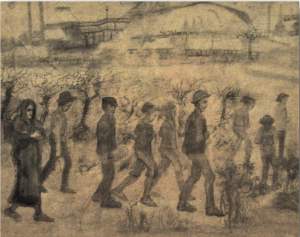
Vincent Van Gogh, Miners in the Snow, 1882
So while Van Gogh is represented here as the man of legend – religious, visionary, tormented – these characteristics are rooted in his experience, and it is primarily as a witness that he emerges from these pages, an artist forged in rage at what is done to people and the callous unknowing of those who refuse to see: “How do you represent horror?…In the aftermath of the mine explosion I saw a man’s face drip off him, his skin a kind of liquid that pulled from his eye, which stared up at me, unblinking and dead, like the eye of a fish. Have you ever seen anything like that Theo?…Has mother or father or Anna or Lies? Do you think the men of the evangelism committee have seen such things? God sees such things, Theo, God sets them in motion and then lets them live, those moments, those images – they live on the inside of those who see them. What have you seen? What lives in you?”
This review appeared in the TLS as ‘Walking to Paris’ on 28.1.2015.

Virago may not be the pioneering publishing house it once was, but it seems fitting that, today, Sarah Waters is one of the brightest stars in its firmament. Her career has been spent revisiting earlier moments in history to recover stories of women who have languished in obscurity or fallen into rumour, just as in the 1970s and 1980s Virago resurrected the careers of so many overlooked and under appreciated women writers. Her latest novel, The Paying Guests, owes a particular debt to one of their iconic green-spine paperbacks: F. Tennyson Jesse’s A Pin to See the Peepshow, originally published in 1934 and revived by Virago nearly half a century later. Jesse’s novel was itself an act of rescue, based on the life of Edith Thompson, unjustly hanged in 1928 after her young lover murdered her husband. (Letters she wrote, imagining her husband dead and out of the way, provided the only ‘evidence’ against her.) Waters has acknowledged A Pin to See the Peepshow as the inspiration for her new book, but in its immaculate period recreation one can feel the influence of many of the other writers Virago reclaimed from this time such as Rosamond Lehmann, Elizabeth Bowen and Rebecca West, all of whom wrote novels about ambitious yet thwarted women, still living in the gloom of Edwardian respectability and struggling to find the freedom glimpsed in the suffragette movement, in new opportunities for women during the war, or in varying shades of bohemia.

Following Waters’s last novel, The Little Stranger, a country house ghost story in which the dead of the Second World War continue to haunt those who survived, The Paying Guests is also about living in aftermath, about people imprisoned in a world the past will not relinquish. Set four years after the end of the Great War, this time in a middle class villa in South East London, it tells the story of the declassé Wrays, spinsterish Frances and her easily dismayed mother. Left alone and without wherewithal after the men in the family have died in the war or in its wake, the women are forced to let lodgers into their home. Much of the novel takes place in the Wrays’ faded house in Camberwell, a small oasis of gentility surrounded by London’s seedier territories, and disturbed from time to time by one of the indigent – battle-scarred men roaming the capital in search of work. Equally disturbing, and now inhabiting the Wrays home, are the paying guests, Lilian and Leonard Barber: she a working class, Langtryesque beauty, a creature of ostrich feathers and kimonos; he an ambitious clerk, a man, like Forster’s Leonard Bast, unable to contain his desires. More subversive than Bast’s yearning for the poetic, though, this Leonard wants material and sexual freedom and an end to the old order that holds him back.
Beyond the encroachment into her home, the indignities of sharing toilet and bath, of being caught in the hallway less than adequately dressed, of strange noises keeping her from sleep, it is a larger existential threat posed by her lodgers (“invaders”) that Frances feels so keenly, an assault on the edifice of respectability she has struggled to maintain. For as Waters slowly and expertly reveals, Frances is a fraud. Outwardly dutiful and unremarkable, her interior life veers between fantasies of rebellion and the dread of exposure, forever wondering “Will mother hear?”.
The dramatic turn of events for which Waters is known, contributing so much to her popularity, is meted out in more gradual revelations in The Paying Guests. The first ripple of shock comes when Frances declares she can take care of herself, and we realize she’s talking about masturbation. Then there’s something wrong with the way she attacks the skirting boards. The Wrays can no longer afford servants, but as Frances’s mother observes, the zeal with which her daughter takes to skivvying throws doubt upon her whole character. Her relationship with a friend, flat-sharing at the edge of Bloomsbury with another woman, is also dubious, seeming oddly charged and infused with envy. During late-night chats with Leonard, too, she finds it hard to conceal her irritated jealousy. The clerk’s aspiration galls her, the temerity of his longing for things others possess. And while Frances’s feelings carry the veneer of snobbery, the belief that people shouldn’t get above themselves, lurking beneath is the appalled recognition that she is just like him. Because it is Lilian, of course, that Frances is secretly courting, and who is the exhilarating object of her desire.

Sarah Waters
In Waters’s early Victorian novels, she found a way of placing lesbian underworlds at the heart of gothic and romance fiction, making palpable ideas that were only hinted at in the nineteenth century. Now, with her third work set in the twentieth century, she has demonstrated that this approach proves just as effective in war or crime stories. In The Paying Guests, the ‘crime’ of homosexuality is mirrored in the crime of murder, the suspicion of one feeds directly into the other, ratcheting up the suspense and compromising all judgment – just as the peace itself is compromised, being “the kind of safety that came after war…got by doing harm”. In such tainted circumstances, Waters asks, can happiness only be gained at the expense of others? The affair between Lilian and Frances is exacted at a terrible cost to those around them.
Perhaps the greatest revelation, though, of this, Waters’s sixth novel, is not how well the secrecy and paranoia of gay illegitimacy fits the enclosed world of genre fiction, but how sharply it brings into focus the struggle of everyday life: the effort to make oneself plausible battling the search for authenticity, the dread of being found out against the courage to pursue one’s desire – these are the things which Frances feels acutely, but they are also the experience of many others around her, trapped by class, beaten down by war. The hard lesson, then, of The Paying Guests is that Frances’s melodramatic sense of her predicament, her Nietzschean defiance which continually threatens to pierce the norm, is not unique or even particular to her kind of love. When put to the test, she is revealed not as special, but lacking the courage some others display. At the novel’s close, finally understanding this, Frances thinks now that she and Lilian must dare to love not because it is a thrilling, secret, distinguishing thing (the compensations of obscurity) but because it is a matter of “duty” to their fellow strugglers: because of them, they must “make [this] one small brave thing happen”.
This review appeared as ‘One Small Brave Thing’ in the TLS on 24.10.14.

If you look at any bestseller list today, you’re liable to find a How To… title. No longer just technical guidance books, these now proliferate in the fields of economics (John Lanchester, How To Speak Money), politics (Roger Scruton, How To Be a Conservative), feminism (Caitlin Moran, How To Build a Girl) and even literature (John Sutherland, How To Be Well Read) – all published in 2014 and aimed at audiences wanting to acquire know-how quickly. Ali Smith’s new novel, How To Be Both, is an odd addition to this collection, being anything but a quick fix: it’s a slow work in two parts that like oil and vinegar needs time to marinate in the mind. But it does attempt to do what its title suggests. In a career always concerned with writerly self-scrutiny, How To Be Both, is, to date, Smith’s most thorough exploration of the art of fiction, concerned particularly with the novel’s resilient dialectic: its capacity to inhabit opposites and create conversation between them. What others describe as the novel’s dialogism, Smith, in her informal style, calls its “friendliness”. Her breezy manner and bantering asides (“just saying”) might trick a reader into mistaking this for a lightweight work, but lightness turns out to be one side of many paradoxes examined here. Its twin is an intellectual seriousness that shows Smith has designs on her readers as profound in its implications as those held by Laurence Sterne or Italo Calvino.
Smith makes her approach through a story about art and artists that allows her – as in her earlier work, Girl Meets Boy (2007) – to reflect upon stories and writers. She gives us two artists: one long dead, the other so recently that the smell of her is still on her clothes, and while they are both dead they are also both alive, equipped with what Smith once called a book’s “present tense ability”. One is Francesco, a ghost now but previously an Italian Renaissance painter who, coming from so long ago and far away, has to struggle to break through, emerging in a stream of words, “twisting”, “falling upwards”, till she lands somehow (“ouch”, “ow”, “mercy”) in an art gallery in contemporary England. In front of her is the kind of perspectival mystery that she enjoys: the back of a boy’s head as he stands before a painting (“I like a good back”). Trying to collect herself, to work out who she has been and what she now is, Francesco feels uncontrollably drawn to the boy – George – and follows him home. He is too busy with his own life to notice, being haunted in a more prosaic way by the recent death of his mother, a modern-day renaissance figure who worked as a writer and Guerilla Girl-type artist inserting politics into art websites and art into political ones. Like the image of the painter looking at the boy looking at the painting, much of How To Be Both proceeds by mise-en-abyme: it is a great carry-on of characters, ideas and actions. George is not only haunted, but himself following a woman who, in turn, once tracked his mother.
As often transpires in Smith’s coiling fictions, even these various things are not all they seem: the boy George is otherwise known as Georgia, a handsome, androgynous girl; and Francesco is not only a ghost, but a woman whose life was spent masquerading as a man, the only way in the fifteenth century she could be apprenticed into the world of art. George, too, is an apprentice of sorts: having learned by her mother’s practise of questioning (“Does it matter?”). Now pursuing her mother’s stalker, George wonders what matters about her. Was her mother under surveillance by a government spy, as she claimed? Or was this paranoia, as her father thought? Perhaps the woman was an ardent fan? George listens to “Let’s Twist Again”, the song her mother liked so much, and wonders if, possibly, she was both.

It is George who is Francesco’s primary twin. Each of their stories begins as if in argument about the nature of the novel: Francesco’s in a cascade of acrobatic, poetic language; George’s with questions about the “moral conundrum” of art. When her mother asks George to imagine she is an artist trying to evaluate the worth of her work, the two stories come together and, like Alice, seem to pass through either side of the looking glass, their relation now a proliferating mystery for the reader to puzzle over. At least, this is how it will seem to half of Smith’s readers. For the book is being published in two versions, one with Francesco’s story first, one with George’s. The reader’s perception will vary depending upon which version the reader happens upon, which side of the story they enter first. It’s just one of the many ways in which Smith dramatizes how a book works: readings differ, comprehension varies (later George compares the amount her mother sees when looking at a painting with her own limited understanding). Another might be that there is freedom in a book: you can take or leave whatever you want from it. As George’s mother drily observes – in contrast to her own pedagogic art – “People like things not to be too meaningful”.
The ardent reader however, the one compelled to track down meanings, might uncover after further twists, how Smith plays upon literary erotics, enacting the way writers introduce something unfamiliar and unpredictable to their readers. When Francesco happens upon a foreign worker on the road and the two of them make love in a copse of trees, their hands, tongues, entering one another, he tells her his “infidel word” for her means “you who exceed expectations”. Or they may see that Francesco is more fictional than George – an imaginative proposition conjured from our scant information about the (male) artist Francesco del Cossa (1430-1477), whose frescoes George and her mother visit in Italy; and, for the same reason, more realistic, having this connection to a worldly figure beyond the text.
Smith encourages such noticing, inviting readers to peel back the layers in her story as art restorers once peeled back plaster to reveal Dell Cossa’s frescoes. She is scrupulous in her undertaking to present several possibilities at any given moment, signifying a desire to be open and democratic. And like everything in her mutable world, this recasts the initial proposition or the first impression. So: How To Be both is approachable, “friendly” to the reader in its convivial tone, in the way it embraces diversity and describes the manner of its staging. Yet precisely because of this demythologizing, Smith’s novel also holds itself aloft, drawing attention to its artfulness and the authority in its making.
Artful (2006) was the title of one of Smith’s earlier book, a work operating in the borderlands between fiction and non-fiction. Like How To Be Both, it has a ghost story and, through a series of lecture notes left by a dead lover, it meditates on how stories are always haunted and so, to a degree, paranoid; how they are indebted to the dead, even as they are written in death’s defiance. The linearity of narrative, its tolling of time, is what gives the novel its deathly cast, explaining why novelists from Sterne to Calvino tried to kick against the inevitable end and affirm life. Smith notes contemporary writers like José Saramago raging against the dead-hand of linearity, because it denies the rich experience of life, where multiple things happen simultaneously. And yet, she reminds us, “the novel is bound to be linear…even when it seems to or attempts to deny linearity.” Moreover, she points out in one ‘lecture’ (“You Must Remember This: why we have time and why time has us”), we should think twice about the abolition of time for this is what lends meaning to stories: sequence leads to consequence and therein lies morality. “Time means. Time will tell”, she writes, “It’s consequence, suspense, mortality. Morality.”
Knowing all this, Smith now takes the novel forward with a kind of categorical dodge or twist (in Artful she remarks how pleasing it is that, ultimately, the Artful Dodger in Oliver Twist seems to give both story and writer, the slip). Her novel’s alternative versions deny any absolute conclusion, shifting the balance of meaning from the end to the interplay between Francesco’s and George’s story (the way they enter one another). Each becomes more porous as ideas flow between them. In Francesco’s story, when her father dies she feels that the roof of her head might blow off, while in George’s, the psychological impact of her mother’s death seems to infect the family home, causing water to leak through the roof and mould to sprout on the wall. How To Be Both is full of images of decomposition, of walls and words breaking apart. For Smith, though, decay and death are not signs of literary exhaustion but the precondition for creation, like the damp surfaces needed to paint a fresco. One of the book’s epigraphs from Hannah Arendt reflects on this state: “what was once alive…‘suffers a sea-change’ and survives in new crystallized forms and shapes…as though they waited only for the pearl diver who will come down to them and bring them up into the world of the living.”
There are many pearls seeding Smith’s novel: ideas about originality (“what practice is really all about”), about taste and pleasure (constant references to the things her characters “like”), about how we value art (taking up the debate begun by David Foster Wallace and Zadie Smith on writing as a “gift”), about the fascination and barrenness of formalism (the woman tracking George’s mother seduces her with a book sealed in a glass box, which might or might not contain any words), and about the sacred or shamanistic properties of art: the element of magic or trickery that only a great artist in full control of her medium can perform, which results in transformation. However, the biggest sea-change for the novel is that the two equal parts of How To Be Both create continuity, (never-ending, they, too, carry on), allowing Smith to shrug off the irrevocable conclusion and slip morality back into the ongoing story. Here it becomes less a final judgment and more a matter of dialectics – made in the joyful, erotic back and forth of questioning and discovery. Like the saints in Francesco del Cossa’s paintings, Smith opens our eyes to many points of view and lifts us “twisting upwards”, spinning through the air with everything in play.

Francesco del Cossa, Santa Lucia, 1473-4.
A version of this review appeared as ‘Everything in Play‘ in the TLS on 19.9.2014.

TLS – 19.9.2014


Every Day is for the Thief, Teju Cole’s novella about a trainee psychiatrist and would-be writer returning to Lagos from America, was first published in Nigeria in 2007. Subsequently, his novel, Open City, about a psychiatrist and would-be writer who has travelled in the other direction, was published in the US and UK in 2011. Now Cole has extended his early novella into a novel and published it for the first time outside Nigeria. The back-and-forthness of this sequence is not untypical of Cole’s work which occupies a new ground of uncertainty opening up in twenty-first century writing, blending fiction, memoir, observation and conjecture. Every Day is for the Thief is presented as fiction but is interleaved with Cole’s photographs of Nigeria, heightening the sense of actuality, and pays homage to Michael Ondaatje’s memoir, Running in the Family, about his own journey home to Sri Lanka. As Ondaatje’s book opened with him leaving a snow-bound Toronto for a steamy Jaffna, so Cole’s closes with his narrator returning from the heat of Lagos to a New York where “snow is total.”
More tellingly, Cole steals an image conjured by Ondaatje of acrobats in formation walking through the stately doorways of his family home. For both writers, this is a figure of dislocation and disorientation – on return the houses seem not to have grown smaller, as one might expect with the passage of time, but bigger. The playfulness of the image is also in keeping with Ondaatje’s account of the charmed world his Sri Lankan family inhabited. For Cole’s narrator however – while Ondaatje remains talismanic (spotting another Ondaatje reader on a bus he is overjoyed with a sense of fellowship) – his own feelings about coming home veer more towards frustration and disillusionment. Even before reaching Nigeria he is embroiled in corruption, bribing the consulate to acquire his visa. Once in Lagos, at every turn, he is blocked by people demanding kickbacks, pay-offs and hand-outs. Everyone is involved from the police to the local street gangs (“area boys”), and paying up leaves him humiliated and complicit. Without recourse to external authority or law to make rational sense of life, the narrator finds many Nigerians succumbing to magic thinking – the remnants of ancient shamanism mixed with the revelations of a new Pentecostalism – inventing bizarre explanations for even the most commonplace event.

One of Teju Cole’s Nigerian portraits from Every Day is for the Thief.
This is the quagmire that Cole explores in Every Day is for the Thief. Just as the narrator’s movement is continually hampered, so the country as a whole is stagnating, unable to progress in any meaningful fashion or to become part of international culture, the “civilization” through which nations and people communicate and share ideas. Equally, Nigeria seems incapable of evaluating its own past. On a visit to the National Museum, hoping to discover more about the Benin figures he has seen in New York, London and Berlin, he finds a lamentable state of affairs: the country’s dictatorships lauded as “achievements”, many works of art plundered, and a recent museum director afraid to handle those still in his keeping, spooked by their fetishistic power.
All of this leaves the narrator bemoaning Nigeria’s lack of “order” and clinging ever more tightly to the values he has acquired in the west. Indeed, at times, he seems perilously close to a parody of the “oyinbo”, or white man as foreigners are called in Yoruba, claiming, ludicrously, that there is no music in Nigeria, by which he means there is very little Bach. Yet there is more at stake here. Cole’s narrator is dismayed by Nigeria’s endemic corruption for its own sake, but takes it so personally because it thwarts the kind of writer he is striving to become: one at liberty to saunter, observe and reflect upon the city, just as he is intellectually able to freely associate with the writers of the world whose ideas he would bring to bear upon Lagos. In this light, “civilization” is more than just a colonialist trope, it is an indication of freedom and modernity, a precondition for the literary detachment and cool rationality the narrator prizes. What’s impressive about Every Day is for the Thief is that Cole makes no attempt to abstract such sentiments from the narrator’s position of relative advantage (he, at least, is free to leave), nor from the way Nigeria – so replete with story yet so “hostile to the life of the mind” – exposes the tendentiousness of his humanism and the callousness of his aestheticism. Seeing a young thief set on fire in the market place, the narrator’s horror quickly gives way to a sideswipe at those American writers, such as Updike, condemned to eternal suburbia, while he, by comparison, has the drama of Lagos “where life hangs out”.

Teju Cole, 2013
After the narrator has returned to New York, there is a coda. He recalls a stroll through Lagos when he came closest to being the unrestricted flâneur: “People are hard at their work and I alone wander with no particular aim.” Losing his bearings, he finds the heart of the city: at its “meaningful centre”, an alley of coffin-makers. The place, he feels, has “a comforting sense that there is an order to things”, making him reluctant to return to the city’s normal bustle. So the novel closes in what seems like a dead-end: this street of coffins is everyone’s destination, rich and poor, beggar man, thief, and there can be no other magically revealed meaning. Except for this: having learned from Ondaatje, a master depicter of all forms of labour, Cole rounds off Every Day is for the Thief by showing that even in the most intractable circumstances there is pleasure in how things are made, dignity and order in work. Just as the carpenters have “borne witness” to the city in all its grief, so, too, has the writer.
This article appeared in the TLS on 23.7.2014 as “Humiliated and Complicit”.

Rachel Holmes’s (@Londonlitwit) biographies are The Secret Life of Dr James Barry, The Hottentot Venus: The Life of Saartjie Baartmann, and Eleanor Marx: A Life. With Josie Rourke and Chris Haydon, she is a commissioning editor of Sixty-Six Books: Twenty-First Century Writers Speak to the King James Bible, and co-editor with Lisa Appignanesi and Susie Orbach of Fifty Shades of Feminism. She is a a regular writer in residence at Palfest.
What drew you to Eleanor Marx?
RH: She drew me to her. I’ve done three biographies and it’s always been the same, they come up and tap me on the shoulder. When Eleanor came along I was 18 months into a biography of Conan Doyle and was very happily doing it. I was in South Africa with two very old political activist friends. We were talking about a number of subjects pertinent to our administration under Mbeki, particularly to do with feminism and internationalism. I was working in the Treatment Action Campaign for affordable treatment for HIV/AIDS, which was the main preoccupation of my life and internationalism was a integral to all the leaders of that movement, part of their political history. It was also very important to that campaign. We were talking about the support that was needed, discussing gender issues and what was happening after South Africa’s transformation in terms of the promises and expectations, tying to tackle the broad spectrum of patriarchy, violence against women, childcare, and opportunities for women in positions of power. We were thinking, okay, we’ve had this transition to democracy: where do we stand now? And somehow Eleanor’s name came up in conversation. She’s always been around in South Africa and she’s always remembered as an internationalist socialist figure. In England, she’s remembered by the left, but in South Africa she’s much more seen as yes, she’s an important political figure and we understand her role in internationalism and to a lesser degree, as a socialist feminist.
She’s remembered there perhaps because there’s still enough of a left for her to be remembered in?
RH: Yeah. I think that’s very true. It’s always interesting in different places when people ask you what you’re doing, and what it says about the culture whether they look at you blankly, or say, oh, how interesting! Of course, in South Africa people hearing the name Eleanor Marx say, yes, that’s right, there hasn’t been anything since Yvonne Kapp’s mighty biography of 1976/9. Yes it’s time for a new one. Whereas here [in the UK] people mostly say, who? The other place where people recognize Eleanor Marx’s name and importance is China. People there said, Oh yes.
My biography is part of an important continuity in the publishing industry because my publishing director at Bloomsbury is Alexandra Pringle, who , as a younger woman had been working with Carmen [Callil] and Ursula [Owen] and Lennie [Goodings] at Virago when they published Yvonne Kapp’s biography. To me there is a feminist story in the production. I’ve been helped very much, not only by Alexandra but Carmen, who has been an important intellectual influence on the book.
Was there something you wanted to say with the book at this particular moment?
RH: Yeah. I wanted to talk about Eleanor Marx in the twenty-first century in terms of two very specific things. Firstly, internationalism seems to me to be the only viable guarantee of the shared universal values of human rights that we possibly have. If we give up on that, we’re really in trouble. I’m a very engaged member of Liberty, the human rights campaigning organization. As the current director of Liberty, Shami Chakrabarti, put it much more eloquently than I can: capitalism is allowed to be international, banks are multinationals and corporate, there’s so much of the structure of internationalism in organizations that make the world work – God help us patriarchy is another internationalist movement that’s been going a long time. So there are the important principles of social equality and justice that came out of the international socialist movement. And secondly, there’s the question of where are we with feminism today? We can take stock of where we’ve come – thought I don’t want to use progressivist language – but in the first decade of the twenty-first century, the questions are: why are we still living with these problems, why have we seemed to slip back in some ways; what are the failures within feminism that account for the fact that we should have had more changes than we have? Also, and you’ve just touched on this, the feminist movement of the 1970s, like the anti-racist and anti-colonial movements, was taking place in the context where there was still an established, functional, viable left politics. That has now quite clearly collapsed. It seems to me that Eleanor was very interesting in the context of respect for her suffragette sisters, who were reformists. But there is a difference in feminism between the needs for a rights-based reform and a wholesale revolutionary feminist movement that says this is so endemic and so deep that the only way we can deal with our problems is to change the structure. Because the sexual division of labour within the family, in childcare and in the workplace, is something we are still dealing with. So I think she’s a very modern feminist, a century ahead of her time, but because she’s always looking at the macro picture, she’s also a sound economist. This economic analysis is something we are perhaps more familiar with from 1970s feminism than from a later form of feminist. So she’s an internationalist and the first modern British feminist in an internationalist context.
First? There was Wollstonecraft before her.
But Wollstonecraft does not have the political programme that Eleanor Marx has. Wollstonecraft applies an economic analysis only to the situation she knows, which is basically to the education of middle class women. I wouldn’t want to take anything away from her, but male histories of economics and politics and philosophy do not hesitate to distinguish between competing traditions. One of the reasons I wanted to write about Eleanor Marx was because of this tendency within feminism to flatten everything out, as if all versions of feminism are the same, and they are not. They are part of the same impulse, but there is such a wide range, different interests and different approaches that are cut across – they call it intersectionality now, don’t they? – by different traditions of class and race and geography, and different approaches to politics and economics. That’s one of the things we have to get a grip on and not be all fuzzy about. I hear people collapsing the idea of a feminist movement into the idea of women’s rights constantly, and they are not the same thing. Eleanor Marx stood up and said, I stand before you as someone who is interested in working women. By that she meant all women, not just those hitherto covered in the woman’s debate. I think that distinction is really important to us. For Eleanor of course, it’s regrettable that she could never find Mary Wollstonecraft – where would she have got her hands on Wollstonecraft’s writing?
It’s the whole Gilbert and Gubar scenario of how can we create ourselves when we’re constantly losing our predecessors?
RH: Exactly.
Kapp’s biography is one of the sacred texts of the left…
RH: …give me a holy cow and I’ll smash it!
Could you say something about the differences in your approach?
RH: That there should only have been two biographies – and the Tsuzuki is very good, it broke a lot of archival ground – but that there were only two up till now is ridiculous. I hope there will be more, taking different positions, as many as there are now of Marx and Engels. But there were only two previous biographies and I was so damn lucky I was able to stands on the shoulders of both of them. The first two biographies I wrote were from scratch where I was building the archive. This time I really wanted to do something where I was engaging with a figure about which something was already known. The other thing is: the Kapp was written in the time of the Soviet Union and it is written in a cold war environment. The 1970s are caught up in that relation to Stalinsim and post-Stalinism. So now we’re post cold war, the archives have opened up, there’s been an intellectual exchange, what might we find that is new?
Indeed, E.P. Thompson called Kapp an “indomitable loyal orthodox communist”. She writes from a highly partisan position.
RH: And I’m very partisan towards Eleanor Marx, but I am not a partisan communist.
And looking at her from a different moment also turns her into a different person.
RH: And the archive is different. It’s not complicated or theoretical. But the Marxist-Leninist Institute in Moscow have now been able to swap all the material with the International Institute for Historical Research in Amsterdam, and that changes the content. It mixes it up. Also Eleanor Marx was not a communist. If you look, particularly in her unionism when she stands up in 1889 and there’s one strike after another – it’s the dockworkers, the gasworkers, it’s Silvertown – and she stands up in Hyde Park in front of 100,000 people and says: you know what, we are exhausted, we want the 8 hour day and parliamentary reform and we want that to go through parliamentary representation. Listen to the language. This is the language of representative parliamentary democracy. It’s the birth of her engagement in the evolution of what became the Labour Party. This is something very different to a communist movement.
Why, then, in Sheila Rowbotham’s phrase, is she still “hidden from history”, still so little known? I’m sure there are an awful lot more people who are aware of Mary Wollstonecraft than are aware of Eleanor Marx. Wollstonecraft has been canonized.
RH: It’s a bourgeois thing.
Just that?
RH: Wollstonecraft comes on as a certain kind of romantic, democratic rebel. She is not caught up in the whole perception of Marxism and the democratic left, and the anxieties and threats of revolutionary socialism.
If you look at the appeal of Wollstonecraft and Marx today, at how their lives still resonate, what seems to catch the imagination of many women is the drama of confinement and the female pathologies it engenders: depression, anorexia, entrapment, isolation, suicide. I’m not trying to reduce their lives to this, but I wonder why their neuroses and problems are still so compelling to women.
RH: It’s so compelling because the majority of women in the world today are still living confined, constrained and entrapped lives under the rule of their fathers from whose hands they are passed on to husbands. You mention for example, eating disorders. Well we have eating disorders on a different scale now, they are a global industry. The constraint to diet, vagioplasty, the rise of FGM, all of the things you describe in terms of constraint – freedom of movement, freedom of choice, control of sexual reproduction, control of labour rights – are still for the majority of women around the world, the common experience. Those of us who have had the advantage through education or class to escape that to some degree are in a minority. Yet being middle class, having the freedom to go to university and get educated, are not going to release you from all these patterns, whether it relates to body image or masochistic relationships to men that behave inappropriately. I’m really interested in the point where democracy starts, but this is a very Victorian story and you have the quite gothic elements which are recognisable and make it feel so contemporary. Those constraints are still with us, even if in different forms. In many ways they are on the rise, particularly in illiberal interpretations of religions. A fundamentalist interpretation of Christianity and a modern invention of a fundamental interpretation of Islam are used as an excuse to suppress women. What’s relevant about Eleanor’s life is that hers is a secular, atheist family. Their secularism is central to their attitude towards the idea, if not the actualization, of a more progressive and equal situation for women. All of which feels very contemporary to me.

Rachel Holmes at the Tolpuddle Festival, July 2014.
Eleanor talks repeatedly about the need for frankness in sexual relations and about truth more broadly in society. These are important tenets in her life, attempting to blow open the bourgeois niceties and proprieties and to look at the actual relations between people. The tragedy is, she ends caught up in the hypocrisy of her family and her lover. Precisely the position she’s arguing against. It’s a nightmare where one of the things you are most passionate about exposing, ends up trapping you.
KW: Well that’s the contradiction. There is a quote from Marx, which is one of my favourite, though he’s not the first or the last to make it – it’s at the beginning of my biography – which is: “the family contains in microcosm all the oppressions and all the inequalities that will then play themselves out in the wider society”. We forget this at our peril. This goes back to the public and private platform of feminism. Many gains have been made in the public sphere, but in relationships, in the home, in the family, how much has changed? In relation to the hypocrisy, with reference to [Eleanor’s lover, Edward] Aveling, it’s a very interesting question. I don’t think what played out in the public sphere happened in the bedroom. I think the constraints and hypocrisies were about the public face and his conduct elsewhere. One of the things that compelled and impelled Eleanor was that they had a very free and enjoyable sexual relationship in the bedroom and the home. And there was no violence. Although there was violence visited on her in other ways because of his behavior, we have to remember that this is nineteenth century Victorian Britain. You’ve got [Havelock] Ellis and [Edward] Aveling, Olive [Schreiner] and Eleanor, none of whom are married, going on a double honeymoon which is basically a shagfest. They are very open about their physicality, about discussing their sexuality. They discuss how their brains work during their menstrual cycles. They discuss it with their men asking, do you ever feel different at different times of the month? Are we saying that women feel differently in relation to sex because of our reproduction? These are the questions that were asked in the 1970s by Shulasmith Firestone and radical feminism. So I think that in order to understand that contradiction and the hypocrisy, we must see that there was a physical freedom that they enjoyed together in the bedroom that would be a counterbalance to all the crap that was going on in the public domain.
With him she had the permissibility of appetite, which is so key for women.
RH: Yes, that’s a beautiful expression, I’m going to nick that.
That was [George Bernard] Shaw’s view of course, that the key to Eleanor and Aveling’s relationship was sex. But there’s something more perhaps, which I think Thompson implies in his review of the Kapp. His argument is that Eleanor has to take responsibility, too, for some of what Aveling got up to: Aveling bought the corsage, but she wore it.
RH: Why does everyone say that? She wore one corsage. Most of the corsages were worn by actresses.
But more interesting than the questions about the American trip – and whether money was nicked or not – along with possibly a happy sex life with Aveling, there is their joint repudiation of bourgeois morality. The sense that in bohemianism – you were describing those four unmarried people having a fake honeymoon – there were freedoms and a subversiveness that broke free of the corseted mind and the corseted body. The hotels and the corsages and the expensive tobacco Aveling brought her, his relish of the pleasures in life, these are all part of his bohemian individualism. He had a free and roaming appetite that she could see, admire and possibly want to claim for herself.
RH: And was in tension with her politics, with her da. She was trying to work out where does my feminism sit?
Where, then, do the whole politics sit?
RH: It is a really important aspect of Aveling’s personality. He is a very charming bohemian and she moves in and out of these circles. Also, they work together, they travel together. But there’s another aspect which seems clear to me: what do our mothers and grandmothers visit on us by bringing us up as little girls in households where we see we must stand by our man? That’s what Helene Demuth and Jenny Marx taught her.
And the Burns sisters to some extent, standing by Engels, if from a position of less power.
RH: Although they got much the better of it. They weren’t ground down by it. But this question returns me to something else: the role that we as women play, particularly as mothers of sons and wives of husbands. This system would not continue unless we collaborated with it and propagated it. There’s no doubt that Eleanor is brought up with this model. But bear in mind that Marx was calumniated, people saying, oh he’s getting all those millions of pounds from the international. She’d grown up with that all her life and knew it wasn’t true. So when she hears about Aveling, unfortunately she makes the wrong decision. The question then arises: if we are in trouble in our relationships in a gendered way, is this because we are repeating the behaviour demonstrated to us by our mothers? If part of that behaviour is, how do you escape? – the question becomes, where are her alternative models? Her mother was very keen for her to escape but she didn’t demonstrate to her how to do it.
There’s also the division between Victorian morals and the bohemianism that was spreading at this moment with, as you say, men like Ellis and Shaw, and women like her friend, Amy Levy. You can see all sorts of people struggling to live in new and different ways, but falling into the kinds of problems that didn’t really get articulated on the left until the 1960s. By then you finally get a critique of the bohemian world, and the different degrees of freedom it accorded to men and women. In Eleanor’s lifetime, there are vastly different reactions to two friends of Eleanor’s, [Edith] Nesbit/Bland and [Edith] Lanchester, and to the men they are involved with. For women trying to live in a more free and bohemian fashion there were great dangers of exposure, lack of protection and the possibility even of being incarcerated, as Lanchester was, for loving who she wanted. All of this Marx struggled with, and it’s this battle with convention in her private life, together with the war she waged on a public stage, that make her so modern.
RH: Feels a bit ‘Sixties and ‘Seventies.
But those things are there. You can trace them from Eleanor’s time through to the Parisian left bank of the Twenties, and they carry on among intellectuals and artists, particularly those intellectuals and artists who flirted with communism in one form or another. What’s interesting is that you can see her being entrapped in all this and yet being aware that there are other possibilities for women.
RH: It’s interesting that you mention Amy Levy in that she stands out from that group in being fairly openly lesbian.
Yes, that is what I was thinking about.
RH: And there’s a really important aspect in that. It’s not just a patriarchal refusenik position – though that is important because it re-positioned social relations between men and women. Schreiner found [Samuel] Cronwright and he was a good husband for Olive – look, he took her name. But that relationship between Eleanor and Olive, well let’s just say that there were many women who were in love with Eleanor…
In your book you say that May Morris hankered after her.
RH: Yes. We know the whole Lillian Faderman thing, Surpassing the Love of Men, and how we can’t know [about relations between women] because these things are not documented. Still, there are some interesting silences in the letters between them. But this is Engels’ question: in any revolution or social movement the question of free love will arise and how does it affect people differently? In some ways we are still struggling with that.
In terms of the broader group of women around Eleanor, there is the John Stokes book which looks at Constance Garnett, her sister Clementina Black, Edith Lees Ellis, May Morris, Amy, Olive, Dollie Radford, etc. Yet in your biography, although she’s one of the best-connected people of the late nineteenth century, she also seems such an isolated figure, no doubt because she’s carrying such a heavy mantle. There is one moment of camaraderie that stands out, when a group of women including Marx, Schreiner, Radford and Ellis stand together on the pavement outside the Novelty Theatre after watching the first public performance in Britain of A Doll’s House, feeling “restive and savage”, elated that they’ve witnessed something world-changing. How much do you feel she has a sense of herself connected to or supported by those female contemporaries?
RH: I think it’s how you read it. There’s a really important questions about how you write history – the writing of the public and the private life. It is perfectly acceptable still to write biographies of great male political figures and for there to be only four references in the index to the wife of thirty years, if even the names of his children. Two things about this interest me. One is, what kept Eleanor going? We focus on the tragedy of Aveling but that relationship with her women friends was important. They were in and out of each other’s houses. It’s like your relationship with your girls’ group that keeps you going. The other thing, and you have put your finger on it, is that there is a strong sense of isolation. It’s partly the Marx mantle, but also for me – and this is where it’s not patriarchal shadowing – is that she has that isolation of the political leader. I recognize it, because I have a couple of people in my life who are like this. They have a very intimate group of friends, but as radicals, outliers, leaders who are public speaking, moving from here to there, working in a collective and communal way with programmes and organizations, being much in demand, there is a sense that they are isolated as a result of their leadership position, of being the stand-out person who defines and leads and takes the risks.
And in that leadership isolation there is often an aspect of anointment.
RH: Yeah, that’s interesting,
You can read it in many different ways. You might be critical of the certainty which Eleanor and perhaps all of the daughters of Marx had. But then you need to recognize the determination necessary for any leader to enact something. When I think about the socialist leaders that I knew in the ‘Seventies and ‘Eighties, that sense of rightness about the direction in which they were going, often when they were totally wrong, it was usually men who had it. It’s much rarer for women to display that optimism of the will, that conviction of your own rightness as a primary motivating force.
RH: You refer to your own context. My point of view is from growing up in apartheid South Africa at the time of a real hardcore, racist, totalitarian regime. So I grew up with leaders, whether they were Nelson Mandela, imprisoned on the island and so isolated in so many ways: Winnie Mandela, Albertina Sisulu, Robert Sobukwe or Desmond Tutu. These were all people who had family around them, allies, but you have put your finger on it, it’s the unerring sense of rightness, the sense that “I am absolutely convinced that this is what is necessary to overthrow this form of slavery, this is absolutely critical for now” – and with it, there is a sense of isolation around the leader of people. I think it’s such an interesting aspect of Eleanor that tells us something about how compelling she was. I play this Russian roulette game with myself. The great hand of the biographer god comes down from the sky and says, I’m going to give you an hour with Eleanor Marx and you have a choice. You can have an hour watching her deliver one of her May day rally speeches in Hyde Park, with 150,000 other workers, or you can have an hour with her in the pub or in her house, with no stays on, drinking a bottle of something and chatting. Of course in writing the book, it’s the public and the private, but in the game, which one would you choose? Because both would equally fascinate.
You’re thinking about the purposes of biography, about how you can get people to engage with this person imaginatively, but also which aspects of her life you select in order to honour her as she was, as far as you can ascertain. The Kapp biography has the air of things being set in stone. What you’re describing could be imagined as a computer game. How do you draw people who know nothing of the history of the left, to the life of Eleanor Marx? How do you keep fidelity to that now largely unknown movement, while bringing this woman out in her own right, as someone who can speak to today? Is it her pioneering modernity that is the key thing which will engage people? It’s complicated to know how much of that we should try to take forward and what we should jettison as something we are projecting back onto her. You can do a disservice by pulling someone out of their context and trying to make them accessible. How much are you tailoring someone for now, how much are you pandering?
RH: Thinking about the Kapp, I loved it because it was so informative. But for any movement of our sort, to have a sacrosanct text tells me that we’re in trouble. It’s very much not in the spirit of Eleanor Marx. You question every text that you engage with. But part of what is so great about the Kapp, and what is different about it, is that she gives this whole context of social history which is not focused on Eleanor individually.
Yes, Thompson points out that Eleanor herself gets lost for a 150 pages while Engels takes over the story.
RH: Whereas in my book, she’s on every page.
The reason for things becoming sacred is the desire to defend what is constantly under attack or under threat of disappearance. Today there are the new forces pushing our feminism and internationalism. So perhaps you have to try to relate Eleanor to those new forces.
RH: To me, I am quite an old lefty. I did a speech for UN Women on the origins of International Women’s Day and I spoke about Clara Zetkin and Eleanor Marx and the Second International [in 1889]. That’s how my feminism works. It’s a direct political line from the two of them putting forward that motion demanding the establishment of an International Women’s Day, to when Zetkin says, we are going to take this forward [the first IWD on was held on 8.3 1911]. I think the intellectual and political histories are quite consistent.
I also wrote an article about the legacy of Eleanor Marx and Rachel Holmes’s new biography for Guernica: The Individual Complexity of Eleanor Marx.

Kamila Shamsie (@kamilashamsie) is a novelist: Burnt Shadows (2009) and A God in Every Stone (2014) are her most recent books. She was one of Granta’s Best of Young Novelists in 2013.
When did you first become aware of Eleanor Marx? Did you have some sense of her in Pakistan or America?
KS: No, I was unfamiliar with her before reading Rachel Holmes’s biography.
What, in particular, interests you about her?
KS: I was looking at the suffragette movement and getting disturbed by the fact that quite a lot of women who were involved in suffragette activity, and were very brave, were also terrible when it came to internationalism. Someone like Mrs Pankhurst, who we think of as the matriarch of the suffragette movement, was very gung-ho about war and empire once the First World War started. There was this real failure to connect the struggles of women for their rights with the struggles of people from other countries for their rights. I find it incredibly disturbing to have to encounter this – which of course you see in contemporary form with people who are very good on feminism in their own country, but then have an inability to see beyond the borders of where they live. One of the things that really appeals to me in Eleanor Marx is that ability to see how all these things are interconnected. If you’re a feminist, it’s not just about, “I am a woman and therefore I believe this”, you’re fighting against structural injustice, and you must fight against it wherever you see it, whether it’s in class terms, in gender terms or in the relation of countries to one another.
In your interview with Rachel Holmes in Guernica you talk about this. How that toxic strain in the women’s movement goes from its origins right up to the present, when, today, feminism is used as a means of supporting war in places like Iraq and Afghanistan.
KS: It comes from a very patronizing attitude and an inability to see that you’re supporting one form of inequality and injustice under the cover of another source of inequality and injustice: it just doesn’t make sense. That’s why figures like Eleanor Marx are important, and a generation later, someone who admired her, Sylvia Pankhurst. These women have proper joined-up thinking. If you’re engaged in fights against injustice, then it has to be in all its different forms and you can’t back one while trying to fight another. It’s a basic idea but it seems to be beyond the comprehension of a great many people.
It’s obviously a real danger in feminism and something that needs to be examined. Is there a part of Eleanor’s story that you find particularly instructive?
KS: For me, as a writer, one of the things that’s very appealing in her is that her deep love of politics was married to a deep love of literature. So often we think of the arts as something separate, or doing something quietly in the corner that no one’s paying attention to, and she was someone for whom Ibsen was central to the way she thought about the question of gender. She was involved in theatrical and literary endeavours and didn’t see that as separate, but understood this is all part of how you talk about the culture of a place. Ideas are disseminated through the form of culture.
She didn’t see this as a lesser form of politics.
KS: Yes, she didn’t see it as a luxury or indulgence. She didn’t think, “When I’ve sorted people’s rights with the Trade Unions, then there’ll be time to sit and read some Ibsen.” There was a way in which she tried to do it all, it was all interwoven for her.
Her efforts to help improve the literacy of some of the union organizers she worked with, was obviously related to this. She had a great love of literature and understood not just the functional need to be able to read and write, but the potential for liberation and joy in literature.
KS: Absolutely. I don’t think we can take cultural action out of the equation. Maybe culture had ceded too much ground. But this is very much worth thinking about today.
Well certainly historically, that’s what happened with the left. But with a new generation of activists, the arts seem to be one of the few areas of action they are happy to employ, sensing that it is less polluted. Especially on the hard left, there was a notion that culture was a supplementary thing in politics. But the new generation of activists – in Occupy, the Indignados and the Arab Uprisings – seem to feel that art is their only form of expression because they see traditional forms of politics as having become so corrupt.
KS: Well I hope they don’t see it as the only form. But I remember when the revolution was taking place in Libya, a Libyan friend of mine showed me a video of people in Benghazi all singing a song that had been written by a young man three days earlier. It had done the rounds, everyone knew it and they were all singing this revolutionary song. These are moments when you are reminded of the power certain forms of cultural expression can have.
Yes, and street art has been important in Egypt and in Turkey. From Gezi Park, some of the most arresting images are photographs of a protest where people stood and read books in the face of armed troops.

If you think about Eleanor Marx as a character she seems to display the whole range of female pathology: anorexia, depression, entrapment and suicide. This Victorian drama of female confinement still exerts an incredible pull on women’s imagination today. I wonder why you think that might be? It seems as if we’ve not come very far.
KS: Yes, so much of that is still current: suicide, depression, getting stuck with the wrong partner, the one who will leave you for someone else. It’s much more likely to be a man doing that to a woman than the other way around. These circumstances have at their root the fact that we live, and have lived as we look back through history, in a deeply patriarchal world. All these things you’re talking about – and I don’t mean to imply that men don’t suffer from depression too, obviously not – but there are very particular ways in which so much of this comes out of being in a very patriarchal world where you are living with injustice of one kind or another every day. And there are expectations and norms that surround you which, if you’re a woman of intelligence, as Eleanor is, you can see them. It’s one thing to see them, but if you understand this and still can’t entirely fight your way out of it, that makes it even more intolerable – it’s too much, patriarchy is that deep.
And yet in the west a lot of what Eleanor was fighting for, women have now achieved: an 8 hour day, access to education and the professions, the vote, freely available contraception. These are quite fundamental things in terms of women’s ability to control their own lives. And yet we still seem to be locked in the same Victorian psychodrama.
KS: I think what’s happened is that there have been accommodations within patriarchy, rather than the overthrowing of it. If you look at a parallel in terms of empire: in the early days of empire, what the colonized were asking for were more rights within empire. That’s where feminism is today, and has been in most of its forms: “Give us rights, give us equal access to education.” Yes, you can get in the professions, but how many women are in those professions, how many women are on the boards of companies, how many women earn as much as men. It hasn’t changed. You get so far, and you think therefore that you’re no longer within this structure of patriarchy, then you hit a point beyond which you can’t go, and realize, “Oh, I’m still there.” To continue with the analogy, there’s a difference in saying, “We want more rights within the empire”, and saying, “The empire has to go”. Until you get to that point, regardless of how much you achieve – and even though contraception, education, equal pay, rights enshrined in law are fantastically important – things won’t really change. We’re at a very early stage. People talk about late feminism and feminism having won pretty much everything it needed to but we’re actually within the very early stages, because we’re still saying “Give us rights within the existing structure.”
Another way of looking at this is that a lot of those problems that Eleanor experienced among working class people, during her involvement in the dock strike, the Bryant and May matchgirls strike, and in Silvertown, have just been exported. There is still child labour, still higher rates of female illiteracy, just not over in the East End or in Manchester on our own back door.
KS: And yet some of those things are still at our back door. Just yesterday in the papers I read about how the gap between rich and poor is now wider than it’s ever been.
Yes, Piketty’s data.
KS: Although certain things have changed, that fundamental economic inequality has got worse.
In the Guernica discussion you quote Sayantani DasGupta on the ways in which feminism has been used as an imperial tool. Given this, you’re speculating about the possibility of international cooperation between women who have very different levels of power and resources. Particularly when some women begin from a ‘West is Best’ assumption. You end up with a question: is the relationship between first and third world women one of sisterhood or imperialism?
KS: My answer is of course, you can have, and have had sisterhood across nations, but the first belief that has to go is that feminism is a western export. As long as women believe that feminism is a western export, that it belongs to this part of the world, which understands it better and has an obligation to take it somewhere else, things will never change, because if you’re the one exporting, then there’s a kind of control that you have.
That’s a precise repetition of the colonial model, isn’t it?
KS: Yes, it’s very much the colonial model. Whereas my grandmother was a member of parliament in India in the 1930s so I’m hysterical with laughter when people tell me this. She was corresponding with feminists in Turkey about how to get women more engaged in politics because the idea that these things went together made perfect sense to her. So the idea that feminism is something the West is taking elsewhere is totally ludicrous to me. You need to begin with a starting position that wherever you are from you have to know that other people understand their own countries better than you do, they understand the structure of power they are living under better than you do. So the questions becomes is there some kind of support they need from you – which very often there will be because you do need cooperation across borders because politically countries are so entwined, there may well be times when someone in Afghanistan will say to someone in the UK, this is what you can usefully do at your end.
There was a young white woman who once asked Malcolm X what she could do to support the struggle for black civil rights in America, and he said, “Nothing”. He was discounting the possibility of solidarity until white people had examined their own situation. Perhaps this is what feminists in the west have to do: look much more carefully at the international dimension of their own lives.
KS: Yes, it isn’t only a matter of what you can do elsewhere, but look at your own political situation. What is your country doing in relation to other countries of the world? How is that creating situations that allows certain things to happen? If your country is propping up dictators, as it has been, maybe you should look to the effect that has on everything, including the position of women. Yes, that first look should be not so much going to another place and feeling like a fairy godmother who has landed from heaven, but looking from within and seeing how you are. How is your nation reacting with these other nations, and is there a detrimental effect being caused that has a knock-on effect on the women elsewhere? Look at that first.
The election results in India today indicate we are witnessing the rise of nationalism, there and also across the world, combined with an increase in politics of personality cult – which historically is often how nationalism is fomented. Eleanor Marx was critical of the British left and trade union movement for its tendency to parochialism and sometimes xenophobia. Do you think this is still the case?
KS: The position you have to find is the one where you are not being parochial, where you are being an internationalist in your outlook. But I’d make a distinction between an internationalist and an interventionist. Eleanor going to America to talk to trade unionists there, I don’t think of her as being an interloper. She was invited to work with local trade unions: she goes there, she speaks, there’s enough commonality, she’s dealing with people who are already in there doing the work. She never pretends she can parachute in with answers. It’s more a question of: how can we enact solidarity?
Solidarity and curiosity. She’s interested in how these people are faring, how they are organizing, how their struggle compares with others – which is the opposite of the interventionist mode, where people are blinkered and often simply not interested enough in how other people live.
KS: And I keep coming back to this. We talk of nationalism, but within those nationalisms people are always dealing with other countries. So when you look at how your country deals with other countries that becomes a form of internationalism. I need to consider not only what’s happening in my back yard, but what we’re doing in everyone else’s back yard. Particularly when you come from a country with a democratically elected government, you have a responsibility to look at what the government you voted in is doing elsewhere.

Shami Chakrabarti, a barrister, is the director of the British civil liberties organisation, Liberty and was an adviser to the Leveson Inquiry. She is Chancellor of Oxford Brookes University and writes regularly for the British and overseas press.
Tell me when you first heard of Eleanor Marx?
SC: I have a vague recollection of Karl Marx having a youngest daughter but never got to grips with her personality and contribution. I think this is quite an important moment.
Why?
SC: Since the last general election there’s an unspoken feminist concern. There were women of all parties saying, “Why are there no women speaking here?” There was the banking collapse and the left asking, “Where are we?” Rachel Homes’s book comes along at an opportune moment because the void hasn’t been filled. It’s easy to grapple with these things with no sense of history. I don’t think that Eleanor Marx has had her due. Not just in terms of here’s a great woman who hasn’t been appropriately honoured, I mean in terms of learning what there is to be done from her contribution.
What does she mean to you?
SC: Rachel might not be grateful for me saying this but her great genius is that she’s a historian who writes like a novelist. You read it and think, “Oh my God, what’s going to happen next?” You think you’re reading a great novel that’s about to be turned into a TV mini series, but it all happened and it’s all been very diligently researched. It’s historically true but gripping in terms of drama and humanity. We love that she’s Karl Marx’s younger daughter, we love her pluck, we love her spark, we are moved by her tragic romantic choices – it’s the stuff of great drama but also great politics. The book rehabilitates a brilliant woman who didn’t have her due in history and was so much more than Marx’s youngest daughter or secretary. She had so much to say in her own right. Even more important is the narrative.
My career has been about being a grim and worthy lawyer and political campaigner, but I always thought that it would be stories that shaped the narrative, the campaigns and the agendas. This book proves my point. I believe more people will be moved politically, women in particular, by reading Eleanor’s story, than by reading a thousand Comment pieces from me about how our rights and freedoms are important, and how internationalism is important, how feminism is important. You just have to tell a story. And this is a story that is gripping and romantic, devastating and uplifting, tragic but also historically true, which is what’s so fantastic about it.
It’s interesting what you’re saying about biographical narrative being what grips and moves us now.
SC: We’re storytelling creatures. It’s Aesop’s Fables and fairy tales. This is how we listen and how we learn. And the great political campaigners are those doing storytelling. In the modern world everything goes into silos: we have fact and we have fiction, politics and the arts, it all gets compartmentalized, but actually we are a bunch of relatively basic creatures who want to sit around the camp fire with a drum listening to stories. It’s not about facts, but progress and our values. The beauty of something like this is that you’re reading it and you don’t really care if it’s true or not. Eleanor Marx is a big figure in history and yet a forgotten figure in history. A lot of people reading the book don’t really know if it’s true or not.
Why do you think she’s so little known?
SC: Because she’s a woman!
But it’s more specific. There are a lot of women lost to history who haven’t had their due, but even in the feminist movement Eleanor Marx has been neglected. Why do you think that is?
SC: Because even in the feminist movement she suffers from being Karl Marx’s daughter. We should all be ashamed of that on the left and right of politics. Karl Marx is this celebrated and demonized figure, and the feminist movement has its own ambivalence about its place on the left. There’s a whole conversation here. If feminists are just left-wing, then they are not going to [let anyone] overshadow Karl Marx. If feminists are capable of being right of centre as well, then they are not going to go to Karl Marx’s daughter. So there’s every reason for not celebrating Eleanor Marx and yet there’s every reason for so doing. It’s a classic example of: woman is anonymous.
The idea of men and women working together in intellectual comradeship was at the heart of what Eleanor Marx believed, yet she was ensnared in the sexual hypocrisy of the men she loved most, in the lies that Marx, Engels and Aveling told about their sex lives. Where do you think we are today on this: can men and women work together or should women liberate themselves?
SC: I think that it’s embarrassing that we’re not further forward, if I’m honest.
In terms of women’s equality or in terms of women and men being able to work together?
SC: Both. You can’t work together confidently and appropriately together with men if you haven’t got your own confidence and your own equality further advanced. You can’t work together from the position of victimhood. I’m a human rights campaigner, I believe in human rights for human beings. I believe that we’re all in this together, but structures and power as they are, we will not do justice to the human rights movement, let alone the feminist movement, if women are not further organized and further advanced.
Another way that Eleanor Marx looked at this was to say, “it’s not the woman question, it’s the sex question.” It’s not just something women have to deal with, men have to look at themselves, too.
SC: I think she’s so visionary. This is why it’s so great. It’s a human problem, not, “We are a bunch of victims, give us our rights.” It’s a much bigger, more visionary feel, which is about looking at the world and the human race and the structures of power and how men and women are equally enslaved by patriarchy. Eleanor Marx is saying this 150 years ago, and I’m trying to grapple with its now, and so are you.
She’s more revolutionary…
SC: …she’s more revolutionary than her father. That’s the truth. This is why you’re right to ask, why is she not more famous on the left and on the right? Because the structures that make Karl Marx either a genius or a devil are the patriarchal structures that affect both left and right, and they are not capable of recognizing his daughter.
You were suggesting that right wing women may have something to learn from Eleanor Marx – which I’m sure they do – but they’re not going to agree with the basic revolutionary proposition…
SC: …yes, but left wing women have something to learn, too. So many left wing women will not talk to Tory MPs or whatever. If they don’t know what needs to be done, then my heart breaks; if women cannot unite across party parameters even now, then we’re screwed, aren’t we?

There are some women who I’ve been talking to, the novelist, Kamila Shamsie, for instance, who’ve looked to the early suffragette movement, and seen that at the point of the First World War many women abandoned the question of women’s rights and turned into supporters of empire. The feminist movement has been appropriated at different times and women have failed to connect the struggle for feminist rights with the struggles of other people elsewhere. Kamila related this to more recent times when the question of women’s rights has been used as part of the justification for war in Afghanistan and Iraq. Your point that we should all talk to one another is right, but you also have to address these political divisions.
SC: Yes. Here’s my thesis for what it’s worth. Proposition no 1: gender injustice is probably the biggest injustice in the world. I don’t run a feminist organization, I run a human rights organization called Liberty, as you know. But now in my mid-forties, I look at the world and I look at the balance sheet, and my view is that in Britain and all around the world, gender injustice is the biggest injustice. It’s like an apartheid that isn’t limited to one country, or one continent, or one era, it’s an injustice that goes back thousands of years and is spread all over the world. My second proposition is that we as women are not dealing with this – understandably – because we live in families and communities and all those structures, and we compromise with them. It’s the injustice of the bedroom, and the living room and all the rest of it. I’m not suggesting that feminist solidarity is the be all and end all, and that we shouldn’t be concerned about other kinds of injustice. But I am suggesting that if we cross this barrier more often, I think we could have better conversations about all sorts of other things. They invade countries on the back of feminism and the constitutions that come out of it are not remotely feminist. This will not change until women themselves say, I love my husband and my son and my father and my community and my country, but there is this big injustice in the world. Men, too, because they have daughters and sisters and so on. In my view, this is the greatest injustice in the world and it’s taken me my whole adult life to get to this point. But it’s an injustice which crosses class, national and political boundaries. It’s gone on for so long that changing it just a little would have a huge impact on everything else: on nationalism, equality, peace and sustainability. It’s such an entrenched issue, let’s mix it up a little and see what happens.
I agree. However you do have this problem of women in the west who use the idea of female solidarity as a reason for invading countries or to evangelize what they believe are their superior political beliefs.
SC: Then we need the other voices. If they are the only people talking in the room, that’s our fault.
So the answer is greater representation and greater internationalism? We have to open up the room?
SC: Yes, because I am an internationalist. Not everybody is, including some people on the left. It’s a big question. I’m a human rights person and not someone who believes in right for freeborn English people, the ties that bind and all that. Because the ultimate ties that bind are those of humanity. Gender issues are the keys to the kingdom: every man that’s ever abused a woman, or put down a woman, this man has a mother, sister, daughter, wife, yet he’s done it anyway. This is the system and women have not been best at facing up to that. We have responsibilities too. I have a son and no daughters and I know the awesome responsibility that flows from that. So there we have it. Eleanor Marx, as great a thinker as her father, better organizer than her father, an internationalist, a trade unionist, a feminist visionary and forgotten until this particular book.
We have to be careful. There have been two other biographies, and there are cultural historians like Sheila Rowbotham and Elaine Showalter who have written about her and promoted her life.
SC: But I think Rachel has done us all a favour in that she’s written something that isn’t grim and worthy, she’s written a rip-roaring biography. Forgive me, I’m a scratchy campaigner, I gave up legal practice in order to attempt to be an activist and a campaigner.
Can you say something about what internationalism means practically in an organization like Liberty?
SC: There is a choice. The Conservative Party are saying we should scrap the Human Rights Convention, but we mustn’t worry because there will be a British Bill of Rights which will protect British people – and given the way things are going in Scotland, maybe only English people. So you can have a nationalist answer. Look at the US with Guantanamo Bay, and they get away with that in the name of protecting Americans. Everyone will protect their own nationals only. Then there are [the cases of] Snowden and Guantanamo Bay, which demonstrate the way governments cooperate with one another in a dirty trade in our own people’s rights and freedoms. If we choose the nationalist route where we protect only our own, and other people’s nationals will be interned without trial, will be extraordinarily rendered, will be intruded upon à la Snowden, then we basically have a world in which nobody is protected. This is an interconnected world, there is global cooperation between governments and there is the internet. Internationalism is more important today than ever because of the shrinking nature of the planet. It’s very simple: do you want to be a foreigner nearly everywhere in the world or do you want to be a human being everywhere? Choose between English rights and human rights. I’m telling you if you choose English rights, then you choose citizen’s privileges which can be revoked in a heartbeat or traded away by your government because you are choosing a privilege that is given to you by the government of the day.
So what do we have to do to strengthen these international human rights? Are international bodies, which often seem so distant from our lives, the only answer?
SC: We have to organize from the bottom up. International bodies are not always doing their best by us, but what we have to do in our countries is to make sure that our governments don’t walk away from the table. We have people right now in Britain saying, let’s scrap the European Convention on Human Rights and let’s pull out of the Human Rights Act. That’s on the table and it needs to be resisted.
How do we build from the bottom up?
SC: People just need to understand what they have to lose. They need to know what’s in the European Convention and in the Human Rights Act and why we ended up with these things, what happened in the holocaust, what happened in the Blitz, why we have the European Convention, the Declaration of Human Rights, why nationalism is not going to do the trick for ordinary people. Powerful interests cooperate all over the world: governments, multi-national corporations, organized criminals for heavens sake! Powerful people understand the need to cooperate and ordinary people need to cooperate too.
But how do they do that? Through the internet? Through community organizations?
SC: Partly. We haven’t got much by way of an international legal framework but we do have the Universal Declaration, the ECHR. Isn’t it interesting that the only people campaigning to dismantle these things are the most powerful organizations in the world: mega news corporations, governments. Nationalism is being promoted by powerful interests at the expense of the vulnerable. Eleanor Marx was right about lots of things but she was most right in her internationalism. The truly visionary contribution of Eleanor Marx was internationalism.

Conversations about Eleanor Marx: Paul Mason
Paul Mason (@paulmasonnews) is the Economics Editor of Channel 4 News. His books are Live Working, Die Fighting: How the Working Class Went Global, Meltdown: The End of the Age of Greed, Why It’s Kicking Off Everywhere: The New Global Revolutions, and a novel, Rare Earth.
When did you first hear about Eleanor Marx and why does she matter to you?
PM: When I first got involved with politics in the early ‘Eighties there was no really good humanist biography of Marx himself so a lot of us read Yvonne Kapp’s life of Eleanor Marx, especially the first volume, as a way of educating ourselves in the social context of Marx, Engels, their circle, and early social democracy in Britain. The one thing you came away with from that biography was the understanding that Eleanor was the link between the Marx of Marx, and the Marxism of the early labour movement. She was a physical link. She goes and lectures in America, she gets involved in the dock strike and the matchgirls strike, and had some authority in the labour movement at that time.
So what are your thoughts about what you’ve been able to glean of Rachel Holmes‘s new biography?
PM: Let me say this first. One thing about Eleanor Marx is that her internationalism was a working class internationalism and her feminism was a working class feminism. Whether you agree with those things or not, that’s what she stood for. What that means, translated into today’s terms is that people working on that World Cup venue in Qatar, under very bad conditions, have more in common with workers in Britain, than they do with their own bosses. Or, an example from Eleanor’s time, were the Irish workers in the docks. English and Irish and Jewish workers in the East End were set against each other. Proletarian internationalism meant they had more in common with each other than they had with the bosses of their own communities. We have to understand that that’s what internationalism meant. It wasn’t a vague desire for world peace and harmony. It was the understanding that all workers in the world are the enemies of all the rich. It’s there, too, in her feminism. I think the new biography captures that very well. It understands that what she said is that middle class women are right to fight against their middle class men, but working class women should fight alongside ‘their’ men, because they have a common enemy.
When you talk to activists and protesters around the world now, do you feel that people understand Eleanor’s version of internationalism?
PM: I think, obviously, except in a few places, the days when internationalism simply meant working class cross-border fraternity are in the past. But one legacy of socialists like Eleanor Marx is to understand, as she did, as indeed Marx did, that class struggle is not all about economics: it’s about gender oppression, national oppression, racism. You find in all these lectures she’s doing as she goes around in the USA after the Haymarket massacre, around Britain, talking about women – when you get to 1888/9 and the matchgirls strike, the Great Unrest of British trade unionism, she’s understanding, as are her Fabian colleagues, that the key issues are social. So it’s women’s oppression in the workplace, anti-Irish racism, anti-Jewish racism,she’s attuned to all that. So much of Marxism in the twentieth century became a caricature which reduced itself to economics. The Marxism of Marx, and of Eleanor Marx who was the first authentic Marxist in the world, because she learnt it at source, was much more rounded.
You interviewed her father a while back in the New Statesman, trying to get him to explain the current state of the global economy. If you were to interview Eleanor tomorrow what questions would you ask in order to get her to throw light on how we’re living now?
PM: I would say, “Eleanor Marx you lived through a period when the left transformed from being tiny groups of mainly artists to mass parties in the space of ten years: what did it feel like and how did you do it?” Because I think that would be the most relevant question. Although I think that it’s great that we have a new biography, with a new exploration of the source material, that there’s more source in there than there was in Yvonne Kapp.
My sense is that what’s important about Holmes’s book is not so much that there’s a terrific amount of new material, but that there’s a new interpretation.
PM: She does go to the odd personal detail, it’s good that we’ve got that. But one of my criticisms of it is, is that I don’t think it tells us enough about the labour movement that Eleanor Marx was part of. At times, it’s almost as if you could just put the words Vanessa Bell or Virginia Woolf in there – ie it’s all about a woman and her circle: men who like her, men who don’t like her, people she gets on with, people she meets – that’s all very good, but Eleanor Marx met tens of thousands of people because she was an orator and an activist. I do think we slightly miss the Eleanor Marx of the relentless meeting. It’s fair enough to say she had this meeting schedule in America, but if we don’t know what happened in each of the meetings – and obviously we don’t have reports of all of them – but what I want to know is when she goes to Boston, what is the ethnic make-up of the crowd likely to have been? What newspapers was it advertised in? There’s a lot more to be written, in other words, about Eleanor Marx the political activist. We’ve got well-documented lives of some political activists, like Emma Goldman, because they wrote more, and they survived. The interest for me as a labour historian is situating her in the middle of this amazing changing international labour movement. And sometimes [in the new biography] episodes from that movement simply pop up. She does this speech on the anniversary of the Paris Commune about 15 years later, and it is pointed out that she’s the only one who talks about women – that’s great because the social and gender revolution that went on in the Commune is the real revolution – but I want to know, how did she know? Who were her friends? Which of the anarchists and Marxists that had been returned from exile did she talk to in London? Because of the census, we know where nearly every one of them lived. So we could maybe track down: how many streets away from Eleanor and Edward Aveling did Louise Michel live?
Well, I guess with the Kapp and the Holmes, you’re getting the biography for the time you’re living in.
PM: Kapp’s biography is influenced by the orthodox Marxist, ie Stalinist-dominated labour movement and it tells that story.
And this tells the story of an individual and a pioneering modernist.
PM: This tells the story of an individual, a free-thinking woman who wanted to be an actress, and that element of it will appeal to people involved in Occupy. And when Holmes starts talking about Ibsen, it’s one of the best bits of it I think. To have understood Ibsen in his time and to have said, “I don’t understand why people can’t get Ibsen, there are no happy endings.” To say that shortly after the first performance of an Ibsen play was quite insightful. And we get that from this new biography.

Can we explore the idea of her as a pioneering modernist, pushing at the doors of bohemia? She had that formative experience in France in her teens during the Commune and you can see her drawn to those freedoms that working class women had – expressed by women taking control in the Commune, or the Burns sisters wandering around without corsets and drinking in the afternoon. But she’s still trapped by a Victorian bourgeois conformity that’s so terrified of women not being respectable. So Beatrice Potter/Webb calls Eleanor a woman beyond the pale and she in turn says the same thing about Louise Michel. I think there is more to say not just about the details of who was where, but about Eleanor’s trap: how women were caught by the hypocrisy of Victorian morality but also, crucially, by the double standards of bohemia.
PM: The picture painted of her of as a bohemian actress-manqué is an accurate one, and one that we can understand better now we understand history as the lives of individuals and not classes and their representatives: that’s good. But in the end, the whole Social Democratic Federation, the early left in the 1880s and 90s was engaged in doing one thing. And that one thing was breaking out of bohemia and into the massive working class movement that it then helped to create. That is what we’ll remember them for, even the slight idiots like [Henry] Hyndman and Aveling himself. That’s what we’ll remember that they did.
But it’s not so much Hyndman. The bigger problem is people who weren’t “idiots”, like Morris and others, who left behind the whole question of their creativity when they moved towards building a working class movement.
PM: It’s hard for us to know, but they may have felt that that was their contribution. We now can see creativity and activism as going alongside each other because you can create in the morning and do activity in the evening, as it were. But they were faced with a choice: are we utopians dreaming of a better future in a mini-utopian bohemia? Or do we wanna’ go to the East End and get jobs in factories, as Beatrice Potter/Webb did, or address mass meetings and actually change something. Having made that transition then what is there left of bohemia? I don’t think the book ever gets to the bottom of what Eleanor’s unhappiness was. I don’t think it ever explains to us why, having been this vibrant, amazing person, she then becomes a stunted person – apart from her relationship with Aveling.
I disagree. I think there’s quite a good description of the problem for women of the political and public versus the private realm. Eleanor was brought up partly psychologically as a boy and she seems to have had most success in the public sphere. But in the personal, she has the whole panoply of female pathology: anorexia, depression, entrapment, suicide attempts and a father and lover who lied to her. That’s not an unrecognizable story, it fits into a still all-too familiar narrative of many women’s lives. Indeed, many of the women I’ve talked to relate strongly to her struggle to work effectively in the public realm against just such a background of personal disaster.
PM: Yup, that’s right. That’s the part Kapp doesn’t quite get. I should say, as a woman activist and a political figure in her own right, it’s still a mystery why what we came to see as classic Freudian pathologies overtake her and maybe it is because the [people in the] labour movement had to make a choice.
Like Wollstoncraft and other women before her, one of the things Eleanor said repeatedly was that what she wanted most between men and women was frankness.
PM: Yes she does.
But despite this she became entrapped in the sexual dissembling of her father and her lover, covering the tracks of their affairs. I suppose one of the questions to ask is: do you think we’ve achieved anything like the kind of frankness that she was looking for?
PM: Well I think that if you were to draw a graph of frankness or sexual freedom against the labour movement, it was higher then than it was for much of the twentieth century because once Stalinism and bureaucratic social democracy took over in the mid-twentieth century, effectively, Presbyterian morality took over.
Which only proves the ubiquity of patriarchy: women move from being chastened by Victorian morality – which is why Marx had to lie about his infidelity – to a labour movement morality that also contains and controls women.
PM: Yes, if she’d lived twenty years later, her class was the exact class that did benefit from the great liberalization of the progressive era. Doesn’t Ellen Terry talk about her at one point? People like Ellen Terry straddle that era, she was already living an amazing, free life.
And there are others around Eleanor, such as Olive Schriener and Amy Levy (though Levy also kills herself), who you can see trying to live that life. But for most of them it doesn’t work out so well as it did by the 1920s.
PM: If we think about what her relevance is today, she’s one of many women who have thrown themselves against the constraints of both a political life and a personal life. What I think we have to respect in her life is that she saw the political life as more important. She saw it as important to go down to the East End and make up her differences with Annie Besant, who was a bit cranky, in order that those [working] women would have a life. They knew all too well, as did Beatrice Potter/Webb, that what those women’s lives were in reality was very, very oppressed. In terms of their family life, in terms of what we would now call child abuse. All of that Webb writes about a lot, though much of it she could never publish, so she writes it in her diary. Webb actually got a job in the factory with the young women. They’re saying: what we can do with the working class is to free them economically and we can have women’s liberation written into the programme of social democracy. Because Bebel wrote his pamphlet, ‘Woman and Socialism’, before Marx-Aveling wrote ‘The Woman Question’. It’s something I always want to remind feminists about now: you can take any quote from either Bebel or Marx-Aveling on women and in terms of the ability to choose your own partner, the ability to live your own life, etc, they are way in advance of most of the practice of the twentieth century labour movement. But again and again and again they fought for those freedoms in the labour movement. What they were absolutely doing was subordinating their own lives to the achievement of programmatic progress for the working class. Because they were surrounded by real bohemians who did the opposite – by actresses, activists, painters, who did live simply to try to create their own personal mini-utopia. It must have been that they understood that there was a choice and they took the choice to sacrifice themselves.
But the problem with that model of self-sacrifice is that it’s one particularly required of women. There may be lip-service to equality, but women’s personal stories are hidden or lost, and the actual lives of the women involved are discounted. The sacrifice, in Eleanor’s case meant that although she had success as a public speaker and union organizer, she also spent much of her time doing the drudgery and the backroom work that’s needed to organize, which men rarely do and which goes unacknowledged. It’s hard to heroise women for their self-sacrifice.
PM: Yeah, exactly. All I meant by respecting it, is you’ve got to biographically respect it, rather than project your own obsessions. All biographies project the obsessions of their writers upon their subjects. But we’re not going to march around upholding any of the women of that generation as the pioneers of liberation. The ones who really begin to do it are the women ten or fifteen years later. I’m thinking now of somebody like Elizabeth Gurley Flynn, who comes from the same basic socialist background, she wasn’t working class but was steeped in the New York working class tradition, and they then have more tools. There’s something about the world they are living in that gives them more tools. It’s like what Stefan Zweig writes about in The World of Yesterday: beards disappear, crinolines disappear…
…corsets disappear…
PM: Well Eleanor had already given up the corset and was noted for that. By 1903 [5 years after Eleanor’s death] we’re talking about an unacknowledged revolution going on in people’s lifestyles. But the 1880s are, I think, a period in which everybody in the world who calls themselves socialist is basically entranced by the sudden possibility of a mass labour movement. You can see it coming: [in America] Haymarket, and the Knights of Labour, the French anarcho-syndicalists, the British dock and matchgirls strike. You can see it happening. You can see it unfolding. It must be like opening a Christmas present. That must have obsessed them to the point where everything is posed around the question of: what are we going to do to make this happen? So, for example, when Eleanor’s going to America, post-Haymarket, I don’t think she thinking, “Ah, it’s all doom and gloom, there’s a massive reaction”. They’re thinking, “Shit, we’re two or three years away from this all blowing up”. As, actually, the very far-sighted activists I was speaking to in advance of the Arab Spring, would say, “We’re not far away from a massive blow-up”: they could see that. Therefore, with hindsight, you have to read these lives in a particular way, according to the history as it unfolded before them.
Previously, I interviewed Paul Mason in 2009. It appeared in two parts: Part 1 was published by the British Journalism Review as Neutral Voice, Soul Brother; Part Two, Downturns and Uprisings, is on Nothing is Lost. My review of his third book, Why It’s Kicking Off Everywhere: The New Global Revolutions, was published by Red Pepper as History in the Making.

Zackie Achmat (@ZackieAchmat) is a South African LGBT and HIV/AIDS activist and filmmaker. He is a founder of Treatment Action Campaign and co-director of the social justice organisation, Ndifuna Ukwazi (Dare to Know).
When did you first hear of Eleanor Marx?
ZA: That would be in about 1977, I was fifteen and a friend of mine who was an activist and understood feminism showed me a whole range of books on Marx, which included the story of Eleanor. She always said that Eleanor was written out of history. Then, I think it was in the early ‘Eighties when Yvonne Kapp’s biographies were published, my friend Jack Lewis got a copy of those.
Were you living in South Africa at this time?
ZA: Yes. And most of this literature was banned. You weren’t allowed to have them so you’d store them away so that the police couldn’t find them.
Did these books get passed around between friends?
ZA: Between activists and friends.
Can you say a bit about what Eleanor Marx means to you? Is there a particular part of her story that seems instructive?
ZA: The first and most important thing is the terrible personal tragedy she suffered at the hands of that dreadful man Edward Aveling, which left an enormous gap in political activism for a generation because Eleanor Marx embodied an intellectual and activist leadership in both the labour movement and the socialist organizations of the time, and in the small, but growing women’s movement.
When you talk to activists and protesters in South Africa today, what sense do you have of how much history matters to them? What can a historical figure like Eleanor Marx offer them?
ZA: The interesting thing is that today, in South Africa, at the place where I work we teach a course on Politics, Women, and Society, and the tragedy of post-apartheid South Africa, but also the post-Thatcher world, is that the central intellectual and moral capital that the socialist movement had – its ability to disseminate history, politics, ideas, and a means of organizing – is lost to everyone. In South Africa today, most people, particularly young people who come to university, don’t even know about the major struggle of the Pass Laws in 1913. A year after the ANC was founded, women were particularly active, and there was no support from the men for them, so the struggle never gained as much prominence until the 1970s and 80s when women’s history in South Africa came to be seriously written. So in that sense, in terms of creating an internationalist vision and practice, most young people don’t know the name Marx. If they’ve heard about it, it’s only in a passing way, but no one reads the Communist Manifesto, and no one knows about the suffragettes or the early struggles of the labour movement. And it’s so important because at the time Eleanor Marx was living there was a major crisis of unemployment, of hunger, of bad sanitation and bad housing, and all these struggles we are still involved in today. To give people a long historical view, it’s absolutely vital that we recover that history.
So you’re saying there’s an important connection between the nineteenth century struggles that Eleanor was involved in and the problems faced in South Africa today?
ZA: As far as the question of worker’s right, we have some of the best labour laws for those who are unionized. But the majority of workers aren’t unionized. So, whether it be farmworkers, or casualised labour, or domestic workers, or those in the service industries, there are phenomenal lessons that could be learned about cooperative work. There’s a crisis today, especially for young workers, and the types of knowledge that helped build the labour and socialist movement, and helped build a feminist understanding of society, could all teach valuable lessons. For this reason, I think Rachel’s book will be an enormous hit among young people who are looking for this knowledge. It’s not because people don’t want to know these things. The minute you start speaking, the demand for knowledge far exceeds our ability to supply it.
I understand what you’re saying about the cultural capital of the left having waned and the fear of this knowledge being lost, but there is a lot of information now on the internet. It may not be presented from the left, but it is accessible.
ZA: And even a phenomenal amount of Marx online. I don’t know if there’s an Eleanor Marx digital archive; I hope Rachel will follow that up as a project. But documents of the left, from anarchism to Marxism, are on the net. People, though, don’t have the basic knowledge of what to look for. They’re searching for Justin Bieber not August Bebel.
And they don’t have the context to understand the material they find.
ZA: Exactly. It’s not a lack of information, it’s a lack of knowledge.
Olive Schreiner was one of Eleanor’s closest friends, perhaps her closest. Can you say something about the relationship between them, and the legacy of Schreiner in South Africa today?
ZA: The most important part of Olive Schreiner’s life is that she was one of the people who stood up to Cecil John Rhodes. She was a lifelong friend also of Jan Smuts. Neither of them embodied most of the things Schreiner stood for. Smuts might have embodied her internationalism, but he did so from a very imperialist perspective rather than from a working class perspective. Olive Schreiner campaigned for votes for women, she was also one of the women who had the greatest influence in Cape Town politics. She tutored a woman who became one of the first women lawyers in South Africa, a city councillor, and a major campaigner against apartheid and pre-apartheid for workers’ rights. So in that sense, there’s a whole range of history that we can recover linking Eleanor Marx with Olive Schreiner, then on right through to a generation of today’s young activists.
It’s important, you’re saying, to make these connections so that younger activists can see that they stand at the end of a line of people, that they are not out there on their own.
ZA: The critical thing for young activists, whether you’re in Egypt, whether you’re in Ukraine, in Chile, in the East End of London, or in Zimbabwe, is that the questions of internationalism, of where our history of struggle comes from has never been more urgent. Today’s young people have freedom that we never had: we never had access to the internet, we had to type everything, we had to search for books, import them. These days we have the ability to access knowledge with ebooks, books that are available on the internet that are out of copyright, rare books still in copyright but no one wants to reprint them. These can all be made accessible to people. I learned a great thing decades ago when I picked up an article. I was with Rachel Holmes at the queer conference in Toronto when I picked up an article on Bayard Rustin, who was one of the greatest activist in the United States and was the chief organizer of the march on Washington. The reason none of us knew him is because he was queer. There was a struggle over his sexuality in the movement. The FBI had him arrested for indecency and so on and that’s why he was written out of history. Now there are two biographies. He spent an enormous time in jail for refusing to serve in the Second World War. He got out, and became one of the greatest labour organizers as well as organizers of sit-ins across the United States, long before Martin Luther King. He was regarded as King’s mentor. Having knowledge of people like Rustin and Eleanor Marx, their intellectual labour as well as their organizing work, should enable young South Africans today to take control of their own lives. But unfortunately we have lost much of the knowledge of that global moral left.

Zackie Achmat and Nelson Mandela, 2002.
In Rachel’s biography she describes Eleanor giving a speech but managing to do it without appearing strident or bossy or putting off men. Women still face the problem of being belittled or denigrated when they speak publicly or act powerfully. I wonder if you could assess the situation for South Africa women activists today? How much of a leadership role do you think they are playing?
ZA: I think women played a fantastic leadership role in the anti-apartheid struggle. But the problem of the patriarchal values and practices remains one of our most serious problems, both in organizations and in the wider society. Today women have immense freedom, freedoms that they never had: almost 50% of households in South Africa are headed now by women. This gives them much greater freedom over their reproductive choices, and, if they have an income, over how to spend it. At the same time you have enormous and powerful institutional survivals in both formal and radical politics. It remains a constant struggle. In classes at Ndifuna Ukwazi I’ve witnessed older women who’ve spent decades working at community level, and working to raise their family, being laughed at by young men because they can’t speak English properly. They have a greater knowledge than any young man would ever have. It’s not because those young people are naturally bad human beings, they’re good human beings, but they’ve been raised having a class attitude and a masculinist attitude. Whether it’s public speaking, or speaking privately in a meeting, there is a constant need to assist any vulnerable group. Today in South Africa the most vulnerable group is black women and girls, but the most marginal and demonized group is black young men.
Demonised by the media?
ZA: Demonised by all of us. If you see a group of young black men walking toward you, you will assume that they are criminals. That is true for black people, and particularly white people, then it’s reinforced by the media and society. Because the question of labour market absorption – which is a fancy phrase for mass unemployment – the failure to create employment through the capitalist system, is a huge problem. So the demonization and the criminalization of young black men in South Africa is phenomenal. What those young men do is to retreat into a mythical idea that they have power and this reinforces the problem. So the question is how one bridges the enormous divide between women and men, based on class. And that is what’s vital about Eleanor: connecting the struggle of women for freedom to the struggle of all people for social equality and dignity.
Which links to my next question. One of the problems that her life throws up is the difficulty of people with different levels of power trying to work together across classes and sexes, and obviously in South Africa this would include races. Engels loathed what he saw as bourgeois feminists who only wanted to reform the system.
ZA: And he had a terrible xenophobic attitude toward the Irish.
Even though he lived with and loved two Irish women. What’s the situation like in South Africa between women of different classes and races working together? Are there such organisations?
ZA: I think that’s one of the most difficult questions: the struggle of working class women to assert themselves in any context, whether it is with middle class women, or middle class men, or both. It is particularly reinforced by race and language and status. For instance, if a woman from say Khayelitsha or Manenburg entered a meeting with a government official, whether they are black or a woman, and people speak English, they are likely to feel silenced and not up to speaking. Yet, if they were to speak in their own language, they would be not only far more eloquent, but far more knowledgeable. The cross-class/race organizing is very limited. And even in organizations that I work in, it’s a constant struggle because we have to remind white children or young people that this might be the first time they’ve met a black working class person, outside the context of meeting a domestic worker or gardener. And there’s an equality that you have to assert. You come from a position of superiority and there’s a duty of humility on you. I’m a strong reinforcer of that! On the other hand I try to break the ice when sitting in a meeting by saying to someone who’s black working class, and there are a lot of white people sitting in the room, “Now don’t be afraid of speaking to white people.” People have that fear on both sides, but particularly for vulnerable people, there’s an enormous fear of power, whether it’s the power of education or the power of wealth. If you’re a very confident white woman with a really good understanding of socialism, you could so undermine a group of black working class men if you do not understand how to engage in a non-patronizing way on the basis of equality. Because power is always embodied through presence, and the problem with the presence of power is very significant. Put it another way. I was in jail by the age of fifteen under apartheid and I was jailed by white men. If I looked at every white man as a jailer, any white man in my presence could represent that fear. So if I had to struggle against it, just think how much more a black working class woman who lived through the Pass Laws and was arrested by white police, must feel when she looks at a white man, any white man. You look at them with fear of that time, and so you have to overcome that fear. Similarly, a white person raised to see black people as a source of danger, looking at a sort of smart young black human being who gets up and speaks confidently, will either act with paternalism or fear. So in working organizations what Eleanor Marx showed is a complete socialist irritability with bourgeois feminism on the one hand and socialist patriarchy on the other. It’s her ability to acknowledge those two things that made such an enormous contribution. And I think that’s why I can’t say enough about why Rachel’s book is so important.
The fact that Eleanor Marx went out and practiced what she believed: her relationships with those women that she met in the East End of London was so important.
ZA: With dockworkers, seamstresses, laundry workers: she showed an ability to engage with working class women on the basis of equality.
And to defuse her own advantages in front of them in order not to be threatening.
ZA: Exactly.
I’ve been talking to other people about the idea that solidarity and internationalism can be a kind of evangelism or meddling. A bit like the way in which some working class people in the 1880s reported that the middle class women coming into the East End to establish settlements or homes for ‘fallen women’ were meddling do-gooders. Kamila Shamsie compared the imperial affiliations of some of suffragettes to the contemporary use of feminism as an excuse for war in Iraq and Afghanistan. These are the failures to connect which we’ve been talking about that socialist feminists of the ‘Seventies criticized and which, today, intersectional feminists rail against. How “joined-up” do you think politics is in South Africa today? How does internationalism work in South Africa at the moment?
ZA: I think we’ve had some great examples of it working and continuing to work in recent history with the subject of HIV.For instance, the most important achievement of the Treatment Action Campaign, apart from defeating government denialism, was to put an enormous check on corporate power, particularly the pharmaceutical industry.
Was this something that happened in part as a result of internationalist pressure?
ZA: It could never have happened without the defeat of drug companies. The thousand-fold reduction in prices could not have happened if the poorest of women with little or no education, without knowledge of international property law and science, were not connected to advocating activists around the world in Europe, in North America, particularly in Brazil, in Asia, Thailand, India, and throughout Africa. If we weren’t linked none of this could have happened. And that’s where the internet was so helpful to us in organizing such a phenomenal protest. I remember, I think it was 2003, when we were having a defiance campaign in 140 cities across the world, because people were dying in South Africa. In most of these protests people took 600 pairs of shoes to put up outside South African consulates and embassies and the drug companies. This linked people and put an enormous pressure on the international pharmaceutical manufacturers and associations. In Paris they blockaded the factory of a pharmaceutical manufacturer and shut it down for a day. But then there was the support that Clinton and Gore gave to the drug companies. So when Clinton started speaking in New York he was followed all over with a placard saying, “All greed kills” and people chanting about access to anti-viral medication. Those sorts of struggles linked us directly to the world. Then we worked with North American activists with knowledge of science and medicine, and British activists like Polly Clayden, who loves Sylvia Pankhurst. Working with people like that helped us win, and helped us put two million people on treatment in South Africa.
Are there any drawbacks to working internationally?
ZA: Our campaigning represented the best side of internationalism. The difficult side is what I call managing imperialism. I remember going to a conference where we needed to raise money for the global fund on AIDS and one of the international NGOs came up to me as I arrived in Paris and put a speech in my hand and said, “Here’s what you have to say”. And I looked up and said, “Fuck off!” That’s traditionally, I believe, how organizations like Oxfam behave.
So what you’re saying is that individual support internationally seems to work with a better understanding of these problems of power, whereas institutional internationalism that takes place through big organizations, charities and NGOs, tends to retain more imperialist elements in their relationships?
ZA: Yes exactly. It’s not intentional and a lot of it has to do with working class activists from poorer countries, whether it be in Greece or Malawi or South Africa, not asserting our presence. Can you imagine if a South African NGO did a human rights report on Guantanamo Bay, on what is happening in Iran, in Israel, in Afghanistan, in Nigeria, in the jails, in the streets, how women are treated? That could have a much more important status than a report by Human Rights Watch. Not because the HRW people are bad, or because HRW is bad, but because of the colonial and imperial history of the United States and Europe. It’s not just the imperialism on their side; it’s the lack of imagination from our side. To create such reports of course takes money and organization. But also, as you say, you need to be able to see yourself in that role of acting and speaking out against injustice not just in your own country but globally – having an internationalist mind rather than a nationalist mind. And this work shouldn’t just be left to the imperialists.

Sheila Rowbotham is a Fellow of the Royal Society of the Arts and was, until recently, Professor of Gender and Labour History at Manchester University. She has written many books including Beyond the Fragments: Feminism and the Making of Socialism, Edward Carpenter: A Life of Love and Liberty and Dreamers of a New Day: Women Who Invented the Twentieth Century, about which I interviewed her in 2011. She also wrote the Introduction to The Daughters of Karl Marx: Family Correspondence, 1866-1898.
When did you first hear of Eleanor Marx?
SR: I certainly came across her when I was doing Women, Resistance and Revolution which I began in 1979. What I think is relevant to people now is the fact that she connected the emancipation of women to really significant economic changes. She was always arguing that women’s emancipation was connected to the redistribution of wealth, access to resources and the importance of ending low pay and challenging values that were based on competition and profit. She connected the emancipation of women to changes which, to her, were connected to socialism. These are still important issues, whether people use the term socialism or not, the inequalities and problems that women face globally are still there. I think often global movements of women in poor countries have not been presented in feminist terms, they’ve been presented in terms of access to resources like water, forests and land. Eleanor would have completely understood these struggles if she’d have been conscious of them, but she was thinking more of the inequalities in Britain.
This seems to link to what today is called intersectional feminism.
SR: But that’s exactly what the left version of feminism in the ‘Seventies was saying. We didn’t use the term intersectionality, we just took it for granted that you had to see those connections. Women’s liberation, in its inception, was very much influenced by the American New Left, which was also about making those connections. The American movement sprang from people who went down to the South who were concerned about issues of race and inequality there. It was later reframed in terms of a getting-women-up-through-the system-approach to feminism. But the early people initiating women’s liberation groups came from those activists in the New Left around civil rights.
It got entangled in the concerns of middle class women, something which Engels was concerned about from early on.
SR: Yes. Marx and Engels and Eleanor following from them, were I think far too dismissive about what they called bourgeois feminism. They dismissed the different aspects of that kind of feminism. One of the things that was important about that kind of feminism was that it asserted individual expression, which was quite denied in the Marxist tradition that Eleanor was part of. The feeling was that your personal desire for expression was less important than dedication to a cause – and that was pretty understandable given the circumstances that people had to struggle with in those times, and also, later on in Russia, because it seemed terribly indulgent to talk about personal expression. But that element, which had also been part of socialism, got suppressed. The point about Eleanor is that she raised issues through her own life about how you would live as a woman with sexual freedom but also with respect as a human being. That dilemma is there for women still, regardless of class or wealth.
The division between the public and the private life is so important.
SR: What I’m saying is that in the Marxist tradition of the 1880s, the personal was not seen as so important as loyalty to a wider cause, to building a party or organization. One of the significant things that came from 1960s feminism was that they did assert individualism. What has transpired, in matter of fact, is that this individualism is the only thing that’s left: the much more associative, collective connection to other human beings has been pushed aside. In the present context, I think probably that the things Eleanor talked about – how you combine economic and social justice with individual freedom – have got a new life today, explaining why people are reacting with interest to the new book. That’s good.
This follows from renewed interest in Marxist economics after the Crash of 2008?
SR: Whether it’s Marxist ideas or not, it’s the awareness that emphasis simply on individual competition can have very destructive consequences for so many people and the environment. This awareness has been forced on people through all these decades since the 1980s.
Kapp wrote: “She went her own way, without fuss, feminism or false constraint.” While Holmes has her as the matriarch of socialist feminism, and regards her feminism as key to her development of her father’s ideas. Can you say something about these two different points of view?
SR: Kapp’s coming from an older communist woman’s suspicion of feminism. I think it’s always a dilemma, whether you say people in the past were feminists who wouldn’t consider themselves to be feminist because they saw feminism as something different. In the late nineteenth century, the women’s movement had a different meaning from feminism. Feminism was seen as women who were hostile to men, who thought women were superior to men, because of their superior inner moral values. This kind of feminism would have been something Eleanor wouldn’t have liked because she wanted men and women in the working class to be combined in union struggles. She wouldn’t have had the idea that you needed separate structures. In fact the Gas Workers were very advanced in accepting women because a lot of unions didn’t allow women to join. Men were worried about competition from lower paid women. The Gas Workers Union innovated by not only having women members, but by having male workers who were often higher paid subsidizing lower paid women in the union struggles. They were also pioneering of equality and the struggle for equal pay for women. I’m sure that comes from the influence of Eleanor Marx.
You’re saying that the socialist distaste for feminists in the late nineteenth century was a reaction to their essentialist ideas about the superiority of women – ideas that came from the Victorian bourgeois belief in the virtue of women?
SR: It’s only in the late 1890s that they start to call themselves feminists. The meaning of feminism came to be women who distinguished themselves from the main women’s movement of the time in suffrage campaigns and so on, and they were arguing that women were a superior breed and sometimes used eugenic arguments. Socialist feminism in the recognizably modern form developed in the 1920s with somebody like Dora Russell. For that reason, the question of who the mothers of socialist feminism are, is very loose. You could claim somebody like Alexandra Kollantai, who certainly wouldn’t consider herself a feminist, but was very similar to Eleanor Marx in looking at sexual freedom and also at class inequality and social and economic changes. There’s a tradition of women within a Marxist tradition who did really face a lot issues not only about class inequality but also sexuality. In Germany, particularly, there were some women, not so much the Clara Zetkin lot, but the women who were within the more revisionist wing of the German party who were very much aware of the personal forms of oppression of women and they talked about them as well. They get dismissed by the Bolsheviks because they were seen as reformists.

You’re talking about socialists and feminists at different historical moments which makes it seem like an encompassing movement, but one of the striking things about Eleanor’s story is that although she was a fantastically well-connected woman, and met thousands of people in her lifetime, she also seems to have felt isolated.
SR: Most of her friends inclined toward the more Fabian reformist approach to change. One of the people that Yvonne Kapp really loathed was her friend Olive Schreiner. That was one of the reasons that made Ruth First write a biography of Olive Schreiner, because, as a South African woman, she was interested in Schreiner and wondered why Kapp was so hostile. Schreiner is very mystical, her writing is quite emotional, she expressed things in an almost psychological way. And of course she did have a relationship with Havelock Ellis. It’s interesting that there’s an aspect of Eleanor that related to that. But it didn’t come out in what she wrote.
It surfaced perhaps in her acting and creativity. Part of the problem with Eleanor is that she didn’t leave a large written legacy. Maybe this is one reason she’s been so ‘hidden from history’. If she’d published more she would have had a surer historical footing. Clearly, though, her Ibsenism and her interest in the theatre and creativity is one of the reasons people are responding to the book now. This all seems very modern. She appears in the Rachel Holmes book as a pioneering modernist.
SR: Yes and John Stokes’ book (2002) emphasized her interest in the art and in the theatre. Lynn Pickett calls her a socialist feminist intellectual and quite a few of the writers use this phrase.
There’s an idealising in the communist movement of men and women working together in intellectual comradeship. This was at the heart of what Eleanor believed and went against the bourgeois, separatist feminism you’ve talked about. It was a key factor in her relationship with Aveling – that they worked so collaboratively is perhaps one of the clues as to why it endured.
SR: In bourgeois feminism there are the women who are interested in suffrage and social reform and in America did work after the 1900s with working class women. There aims were to try to improve capitalism. The Marxists were opposed to that, thinking it too reformist. Then there’s this other strand which goes into the WSPU which is more like what we would define as separatism.
Then it becomes imperialist too. At the point of the First World War they abandon the suffragette claim to wave the flags of war.
SR: Yes, many suffrage organizations divide on that. The people who are arguing for reform and change in the 1890s were the Fabians, so she was isolated from those women. Ordinary women never had enough money so it was difficult to organize them and to sustain regular union payments. Yet there were advantages to women being in their own union because it enabled them to talk and take a more leading role. In a mixed union there was a tendency for the men to take a dominant role in the leadership, even where there was a commitment to equality. Therefore, often, women’s issues and complaints were pushed under the carpet.
But in Eleanor’s own life, this question of working together and loyalty to men, meant that she became ensnared in the sexual hypocrisy of the men she loved most. She said repeatedly that greater frankness and truth were what was wanted in relations between men and women. This seems to me one of the central tragedies of her life: the thing she wanted most, openness and frankness between men and women, perhaps being influenced very much by Ibsen in this, was the thing she was lest able to attain in her own life.
SR: But frankness is a theme that runs right through all of the radical free-love arguments. Wollstonecraft really wanted frankness, as did many of the eighteenth century women novelists. The thing that came from the free-love tradition of the late nineteenth century was that they wanted relationships to be such that you could actually have friendships with men. The struggle that not all relationships between men and women should be seen as sexual was really important. Among the Marx group they did have the idea that men and women could have friendship. It may seem normal now but in some societies still it’s actually very difficult for men and women to have friendships and for it not to be seen as sexual. They got to that because they were advanced intellectuals, but, at the same time, there were problems: if Marx had admitted openly his relationship with Helene Demuth that would have been really humiliating for Jenny. And Jenny, he knew had been already indescribably humiliated by living with a revolutionary who was so poor, having to go and beg for money to give to Marx – that must have been a terrible thing for both of them. His desire to protect and conceal her, is not that he suddenly becomes a bourgeois hypocrite, it’s recognizing the reality of how society views things, how unsympathetic they would be to the life of a Jewish revolutionary exile. If you read the biography of Jenny, Marx is concerned. He puts his cause before everything and everybody, including his own physical health.
Equally important for Eleanor is the concern for the legacy of her father’s work, not wanting this to be destroyed by the idea that people would then say Marx was an adulterer and a liar, and so attempt to invalidate what he’d written. That’s what I meant about the hypocrisy that she’s ensnared in.
SR: There’s a strong belief on the left that you don’t wash your dirty linen in public. People who’d lived through McCarthy, for instance, knew what it was like to be attacked. I would sum it up in the fact that Eleanor Marx connects feminism to wider economic and social change, in terms of changing the distribution of wealth and inequality in society as a whole. And she raises through her own life the dilemma of women who want to act in the world and who also want to live free personal lives. This is still so relevant because the contradictions are still very much with us if in a different context but the questions remain the same: how women balance having children and living a free sexual life, while also working for broader social change.
Ah, I’ve just found that quote from Engels talking about bourgeois women: “The drivel of the swell-mob ladies”.
SR: Both Marx and Engels used this awfully blokey language in their letters, they attack men in the same way. Engels was pretty hopeless about trying to understand that kind of feminism as a political movement. He just didn’t see it as a political movement.
In terms of Eleanor’s article, ‘The Woman Question’, how far do you think she departs from Engels and [August] Bebel?
SR: It is very different from her later 1890s stuff. The real argument that comes up between the left and feminists in America and Britain is over protective legislation. The feminists believed in individual equality, and hated the idea of regulation – partly because their politics are liberal-radical which hates any intervention from the state; whereas Marxist, socialists and some liberals by the 1890s, were arguing for some kind of state intervention. So there’s a hidden division going on which is about a borader politics and not just about your attitude to feminism. The American and British women feel that if you have protective legislation it will be used against women to justify not having equal pay. That is a really difficult question. Some women tried to resolve it by arguing that you had to look at every specific situation to see whether it was in the interests of women, rather than having a blanket thing. The problem is that policy tends to be a blanket thing, covering everybody.
The idea that Eleanor, or anyone else, could solve these more intractable and specific dilemmas about what positions to take, is ridiculous.
SR: Yes. I think the way to approach it is not that anybody is totally right or wrong on those issues, but that we need to look at the warnings they made.
And to look at the way different people pushed their interest in the debate and the different attempts to work out solutions.
SR: I do think it’s interesting to see how questions that are often seen to be about women are about wider politics, that’s why you always need to look at the wider politics in the context of the specific time. It wasn’t that the middle class women ignored the working class, although they were probably quite condescending towards them, it was that often these radical liberal women, were often also personally linked into the social milieu of their liberal employers, some of whom felt they were philanthropic and advanced. But the question of protection or intervention on behalf of women remains complicated: recently it is also true that there was a revolutionary movement of women in Afghanistan demanding intervention.

Bee Rowlatt (@BeeRowlatt) is a writer and journalist. With May Witwit she wrote Talking about Jane Austen In Baghdad, which was published by Penguin in 2010.
Had you encountered Eleanor Marx before you heard of her from Rachel Holmes?
BR: I didn’t know about her before, and it comes as no surprise because there are so many great women in history whose lives have yet to be told. So I’m appalled that I didn’t know before, but I only came to her via Rachel.
Do you think of yourself as a feminist?
BR: Absolutely.
It’s remarkable that even among feminists she’s not well-known. Given what you’ve read of Rachel’s biography, do you have some idea of what Eleanor Marx might mean to you? Is there a particular part of her story that you find moving or instructive?
BR: There absolutely is. I find myself bewitched by her as a figure. Her story has got its claws deep into my mind. There’s a part I found profoundly moving. I think it speaks to women now very persuasively. It’s when she striking out as an independent young woman, shortly after she runs away to Brighton to be an independent creature, her dad gets very ill. Karl Marx gets extremely ill and she has this episode where she feels the tug of being the carer, of someone who will be good and gentle and patient, be supportive and enabling of others, when really she just wants to rush off and live her own life. I find this absolutely moving. She says, “We must each of us, after all, live our own lives. And much and hard as I try I could not shut out my desire to try something”. She’s like these incredible visionary women, such as Mary Wollstoncraft or Emily Bronte, that were haunted by the possibilities of life, that thought there were things out there that they could do, that they must do, and yet she feels herself fighting to resist the trap into which women can slip in a traditional mothering role, caring and supporting your husband or partner. In this case she’s alarmed by the possibility of having to look after her dad, and there are problems with the children of her sisters, who themselves are ill. It’s a crux in her life – and she’s still very young – when she has to choose which path to take. But she doesn’t want to accept that caring role.
Yes, it’s a key moment in her life. And it’s interesting that you’re saying this still relates to women today. When Eleanor Marx set off so boldly to Brighton, there was very little that women of her class and time could do, just teaching and governessing.
BR: Exactly. The other moment in the book that I felt was important is when Rachel says: “She knew exactly the female feat of acting in a supporting role in family and personal life.” It’s about how the New Woman is trying to forge a new way of living without being the Victorian idea of the angelic, eternally good and dutiful daughter. That really struck home with me and very much resonates today.
You think it still resonates when so many of the barriers that were in Eleanor Marx’s way no longer exist. There are so many more possibilities for women, so the fear of striking out should be much less. Yet you think that the emotional ties of family are still as restraining as they were then. Is that right?
BR: They can be. It’s an important point. Women still sacrifice themselves more than men in an emotional sense. Eleanor Marx addresses this self-sacrificial tendency of women which can still be the case.
It’s easier to understand this figure of the self-sacrificer, with all the female pathology she displays – anorexia, hysteria, isolation, depression, entrapment, attempts at suicide – in a Victorian context. Yet you’re saying the idea of the self-sacrificing women still grips our imagination. Why does it loom so large for us given that we have so much more freedom?
BR: Well people still have to pay the rent. There are still financial imperatives [that trap us]. I think it’s an age-old question. The old multi-tasking that women do. I’ve got four kids and I work as well, so I feel that I’m constantly striving and failing in many areas. I can’t answer why, I don’t know why.
When you say that you’re failing in many areas, that is a line we hear often. I don’t mean to doubt you, but do you not also exult in your achievements?
BR: Occasionally, I suppose. But there is a constant sense of just about getting away with it, and only just. We’re ranging from the book and I don’t want to carp on about myself, I’ve got no complaints. But there is this sense that if I wasn’t divided and carved in this way, how much more incredible focus I’d be able to bring to bear. The way that Eleanor Marx goes out and campaigns with the laser-like focus she dedicates to her activism and to her literary efforts is something that I really envy, even though she had all the privations and terrible physical suffering, I found her focus absolutely inspirational.
I agree. Eleanor Marx’s focus seems to be something largely inherited from her family background – her absolute conviction and certainty in what she’s doing that enables her to move forward in such a powerful way. Yet today the idea of female leadership is still something we struggle with. We had a woman in male drag as Prime Minister for a while, but we’ve never come to terms with women and power.
BR: We are still having to be told by that lean-in woman [Faceobook’s Chief Operating Officer, Sheryl Sandberg] that it’s ok to be in charge, ok to be bossy – though we’re also told we shouldn’t say bossy – that we should be leading, we should be confident. Eleanor Marx would have just gone, “What? You’re kidding! Really? Is this still happening in 2014?” I’m sure she would have been disappointed.
And there’s the ever-accumulating meta-narrative on all this. A discussion of the way we do things too often displaces the fundamental questions of inequality Eleanor Marx was addressing.
BR: I found so much of Rachel’s book incredibly relevant, very refreshing, sharp and poignant. Utterly important to today in terms of social inequality, social exclusion – all of these things persist. And in the personal domain, the politics of the couple, the politics of the family, these are all enthralling. I’m finding it heartbreaking because I know Eleanor Marx is going to die and I feel so emotionally invested.

I believe you’re working on a book about Mary Wollstonecraft.
BR: Yes. So I identify strongly with spending time in the towering company of a great woman who is dead.
Can you say a little about the relationship between the two women?
BR: What I love and find particularly compelling about Mary Wollstonecraft, which is also true of Eleanor Marx, is that there are contradictions between her politics and her personal life. Arguing for equality between the sexes, why on earth would she shack up with such a disgraceful man [Edward Aveling]? Mary Wollstonecraft, similarly, had a really dodgy boyfriend, another absolute cad [the American journalist and adventurer, Gilbert Imlay]. I think that introduces a level of complexity and vulnerability that humanizes the subject. I don’t think it in any way detracts from her political legacy. It makes these figures so much more humanly approachable.
They both lived unconventional lives, both lived with men out of wedlock and both, at certain moments, tried to kill themselves.
BR: I really struggle with this, it makes me deeply, deeply uncomfortable writing about Wollstonecraft’s suicide attempts , more than any other of what could be deemed the mistakes that she makes. Rachel says that it was a logical and rational reaction to the limited opportunities they faced in life, that there was no other way out. But I dispute that. I find it really problematic.
It’s one of the difficulties of historical research – our lack of knowledge about what happened and why. But we’re not being called to judge, are we? We’re being called to try to understand.
BR: No. I wouldn’t want to be called to judge or to comment on the rights or wrongs of her attempted suicide. But I find it problematic.
I don’t find it problemmatic, I find it tragic.
BR: To lose someone so great, who could have gone on to do so much. Wollstonecraft was only 38 when she died, admittedly not by suicide [as a result of childbirth]. But had both these women lived until they were 72, what might they have achieved?
It tells you so much about their isolation. Even though Eleanor Marx and Mary Wollstonecraft were very well-connected figures – a suicide attempt is surely the greatest act of loneliness and despair.
BR: The other thing that they share is self-education. Wollstonecraft taught herself and Marx was home-educated by the greatest thinker of the nineteenth century. Like the truly original thinkers – William Shakespeare, William Blake – they developed outside of the mainstream, and outside traditional educational methods. It’s part of their genius (though I hesitate to use the word because it can so rarely can it be applied). They developed their own minds out of the mainstream.
That’s surely right. Their autodidacticism accounts for some of their genius, and for their particular fierceness.
BR: A fierceness and a visionary sense, meaning you can then look from a different perspective. But there’s also perhaps loneliness, which feeds into what you’ve observed about their feelings of isolation.
You wrote in your contribution to Fifty Shades of Feminism that Wollstonecraft was ahead of her time, “We’re still lagging in her dust trail”, you said. Rachel says something similar about Marx in her biography. Do you have any thoughts about why we’ve been so slow in forging ahead with their project of liberation?
BR: It’s no coincidence that both women, despite their limited finance, were very well-travelled for their time and their gender. They both travelled widely, taking it upon themselves to learn other languages. They were committed internationalists, committed to humanity, to men and women on a global scale, which is quite rare. Most people don’t poke their nose out of their own metaphorical village. Yet they were thinking globally, at a time before that was fashionable.
But why, since these two “world-class trouble-makers” – and given that there is greater information about the world – have we made so little progress?
BR: Oh my God! Now you’re asking! To be honest I don’t know. It makes me sad. If you think of Eleanor Marx’s struggle for an 8 hour day, people today little realize we only have a weekend and bank holidays because of an organized labour rights movement. There has been progress. There is such a thing as maternity leave, to a greater or lesser extent, but it exists as a concept which it didn’t then. We have to also admire what progress there’s been.
Yes of course you’re right. On contraception, on the 8 hour day. But I suppose I was wondering why we don’t have more of these brilliant, flashing daggers of womanhood, given that so much of what they fought for has come into being.
BR: It’s an interesting question, and an adjunct to it concerns Caroline Criado-Perez, I don’t know if you follow her on Twitter? But social media, with all its wonderful enabling and access and interconnectivity, has also brought around a new threat to women. I think it was Germaine Greer who said in Kirsty Walk’s show about sexism [‘Blurred Lines’], that there’s been a renewed anti-feminist backlash, a new silencing of women. So you say, where are the sassy, upstanding women? Well I give you the campaigner Caroline Criado-Perez and when she stands up, people abuse her, threaten to rape her on a daily, almost hourly basis. That’s one thing that Mary Wollstonecraft and Eleanor Marx did not have to put up with.
Not in such a publicly defaming way.
BR: It’s not just defaming, it’s like terrorism, it’s violence. And I’m sure many other women will not speak out because they’d prefer not to have rape threats. That’s how online silencing works.
I was just looking at her Twitter page and was appalled to see how much time she was hiving to spend knocking down these idiots.
BR: Yes. It’s horrifying that she has to waste so much of her time on them. Time she could be using in much more productive ways.
In Rachel’s book she comments that we’ve lost a lot of men from the feminist movement. Where are the equivalents today of Eleanor Marx’s friends, men like Havelock Ellis and George Bernard Shaw, or male writers like Ibsen who spent so much time thinking about the nature and ramifications of sexual inequality. Do you agree with this or have any thoughts on why men are not more involved?
BR: I don’t think that men aren’t involved, to be honest.
Do you, then, think men have become more feminist since Eleanor Marx’s time?
BR: I know a lot of men who are good-thinking feminists. This current fourth wave, as they call it, has inspired a lot of men to think about women’s position in society, about the difficulties women face balancing family and work, for example, or the more terrifying things like online rape threats, rape jokes. I feel there are men who are just as horrified by these things as I am.
Perhaps what Rachel was thinking about was those men of Eleanor’s time were also looking at their own position in society. So feminism became, as Eleanor argues it should, not just the women’s, but the gender question. There was a period in the ‘Sixties and ‘Seventies when there was a revival of men’s groups, much mocked for their non-aggression and open-toed sandals. Of course I agree with you, and I’m sure Rachel would say that there are many men who are feminists, but there doesn’t seem to be a wave of men…
BR: …analyzing their own situation. Perhaps not. But then movements are always very split. Even today’s has its own internal divisions. There may not be a movement of men as such, but that’s not the same as saying men aren’t feminist. I wouldn’t slag men off to be honest. I wouldn’t say, “Come on men, be more feminist!” as a blanket statement, because everyone should be, regardless of gender.
When I was a young woman in the late ‘Seventies and early ‘Eighties, there was so much anger towards men and quite a lot of anti-male attitudes and behavior. I look at my nephews now, who are in their twenties, and they are gorgeous and feminist and I feel so proud. They have a completely different attitude to the men I knew as a young woman – even those in the socialist movement who were supposed to be concerned with equality. A lot has changed certainly for younger men, many of whom have been brought up by working, feminist mothers.
BR: Yes. I would hope that this generation of feminism is more inclusive, that it doesn’t alienate men, with those, “All men are rapists” slogans. I hope that it just doesn’t set up those boundaries between us.
For Eleanor Marx the idea of men and women working together was at the heart of what she believed. Yet she herself was ensnared in the sexual hypocrisy of the men she loved most, in the lies told by Marx, Engels and Aveling about their own sex lives. Today, should women be liberating themselves, as Eleanor Marx once also suggested, or should we be working together with men?
BR: I think women should absolutely be working together with men. I think that as a cohesive movement, the best possible way is to be as inclusive as possible. That’s only my personal take and not proscriptive in any way.
And anyway, it’s a false dichotomy, because clearly women can do things together at one time and with men at another.
BR: Yes. But as a political movement concerned with socio-economic problems, you want men on board. You want everyone on board if you’re trying to deal with economic inequality. I’m sure that’s what Eleanor meant.


Eleanor and Karl Marx, c. 1872.
“In 1888, Eleanor Marx wrote to her only surviving sibling, Laura, describing her efforts to organize the poor in London’s East End. She was haunted by the squalid scenes she encountered there, the degradation of the human spirit. In her early thirties and already a tireless activist, Eleanor was an organizer, speaker, and translator at conferences held by the international socialist movement and a founding member of Britain’s early social democratic parties. The suffering she witnessed in the East End spurred her to help forge a new movement of unskilled workers, one powerful enough to liberate the millions condemned to lives of wretchedness. As a key figure in New Unionism, she advocated the eight-hour day and rallied gas, chemical, and shop workers, dockers, and matchgirls in strikes that changed the industrial landscape of the country.”
Here’s a link to my article, prompted by Rachel Holmes’s new biography about the continuing relevance of Eleanor Marx’s life, work and ideas. It was published in Guernica on 25.7.2014 as The Individual Complexity of Eleanor Marx. The full interviews I conducted with historians, novelists, journalists and activists as research for this article are also published on Nothing Is Lost: they are with Zackie Achmat, Shami Chakrabarti, Paul Mason, Bee Rowlatt and Kamila Shamsie. There is also a long interview with Rachel Holmes, the author of a new biography about Eleanor Marx.
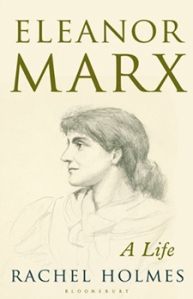

Mina Loy, Insel. Melville House – TLS
“Wishing to get on terms with an acknowledged surrealist, we took him to a café…” so Mrs Jones, the narrator of Mina Loy’s neglected modernist novel, explains her first encounter with Insel, the tramp artist. In the watering holes of 1930s Paris, at the Lutetia Hotel and the Dôme café, they develop a relationship of mutual “parasitism”: she feeds and sometimes houses the derelict painter, he tolerates her plans to improve his life or write his biography. “Don’t over do it”, he suggests, but over-doing it is precisely what Mrs Jones has in mind. As her theories about this “will-o’-the-wisp” man become more intricate, Insel himself becomes less and less substantial, an abstract collection of rags and bones. She understands that the poverty of many artists means they may become, like Insel, con men, preying upon “the hospitalities of modest little women”. But his destitution fascinates her and she treats it seriously, finding in his unworldliness a parallel to her own artistic struggle to renounce the forms of a masculine universe.

More dangerously, and typical of a long line of bohemians fascinated by life in the gutter, she is tempted by his negative credo: “One must die”, with its promise of self-eradicating bliss. As the unlikely friends sit in yet “another stray café”, the modern city flickers before their eyes – car lights, hoardings, electric signs – but little intrudes on Mrs Jones’s passionate contemplation. Before the world recedes entirely, however, and Insel draws her into self-annihilation, a striking clock snaps her back into the here and now, and makes her put up a fight.
Insel, Loy’s only novel, was written in the mid-1930s and inspired by her relationship with the German surrealist painter Richard Oelze. It remained unpublished until 1991 and now gets a second outing from Melville House with a new ending unearthed from the archives suggesting morphine addiction as a key to Insel’s behavior. This is an intriguing addition, but waylaying, as the novel’s interest lies not in his unfeasible ‘character’, but in Mrs Jones’s fervent analysis of what he means to her. She alone perceives Insel’s “intrinsic quality” as someone “too surrealistic for the surrealists”, and the novel represents her battle to be “let…in on” the occult mystery of the “rays” he transmits, to “get at” his tantalizing “aura” (Insel is so ethereal, he is no longer capable of actually painting), to claim for herself his quasi-metaphysical powers of vision.
As we have suspected all along, the odd couple’s “uncanny intimacy” turns out to be a more one-sided affair: Insel’s irreality may be seductive but it is also comically enfeebling. His ineptitude and dependency do not make him much of a sparring partner and Mrs Jones appears increasingly to be boxing with a phantom (“I must have always known he had never the slightest idea of what I was talking about”), her target is not the man, but an image of a patriarchal and disengaged avant-garde that has let “present actuality…go hang”. Mrs Jones’s final victory then is wrested from within herself. Rejecting once and for all Insel’s charismatic “death’s-head” (the novel’s original title), she declares, rather, “One must be ripe”. Taking leave of the unearthly vagrant, with a renewed determination for her own art, she turns back to life.

Salman Rushdie once observed that migration was the “most common experience of the twentieth century”, but this, in the main, involved movement from one country to another. In the twenty-first century it looks as if more and more of us will have peripatetic lives. Ineluctably, despite pockets of resistance, we are becoming more mobile and mixed. Jamal Mahjoub is one of a new group of writers who personify this condition. His interests, tastes and understanding of power are all influenced by being part of the diaspora. But unlike his father who was exiled from his home in Sudan, Mahjoub is of a generation of willing travellers, nomads constantly in search of new chances and other ways of thinking or being.
Of English and Sudanese descent, Mahjoub has, so far, lived in London, Liverpool, Khartoum, South Wales, Sheffield, Aarhus, Cairo and Barcelona. His wandering has given birth to a prolific body of work: seven books of literary fiction under his own name, and three crime novels as “Parker Bilal”, the latest of which, The Ghost Runner, has just been published. This pseudonym, made from the names of his grandfathers – a Nubian boatman on the Nile, and a German refugee in England who anglicised his name – celebrates his disparate inheritance. But there are dilemmas raised by such diversity. During his recent visit to London, I asked Mahjoub if anyone ever questioned his authenticity or right to speak? “That’s exactly the position a writer like myself is in. Because you don’t have a people behind you and are not speaking from within an established voice – whether that is national or literary – you question: what tradition do I belong to? I don’t think many people would include me as a British writer. Do you include me as a Sudanese writer? Well no, not really, because I don’t write in Arabic.”

Jamal Mahjoub, 2014
Many of his novels explore this conundrum, often through loosely autobiographical stories, though he is not interested in himself so much as the way in which someone like him, roaming through Africa and Europe, makes sense of the world, and brings new meaning to it. “Books, to my mind, are, by definition, about other people: I don’t write specifically to know about me, I certainly don’t write to justify me. I write about things that fascinate me about the world, to understand other people and perspectives.” When he tells me that he’s currently reading Karl Ove Knausgård in Danish (he lived in Denmark for a decade), I wonder what he makes of this writer who became a global literary sensation with a six-volume study of himself? “It’s very Scandinavian. What strikes you about Scandinavia is that it makes people independent from an early age. Your rights as an individual mean that you can afford an apartment for yourself, you get subsidy from the state. You have a right to vote, but many people don’t exercise that right. There’s a lot of cynicism and a huge amount of self-absorption. They have all these tremendous opportunities and yet it’s all geared to making things more comfortable for the individual, not about changing the world or caring for others.”
When I ask him if a novel can change the world, his answer is both sceptical and passionate: “No, I don’t think so. I do believe, though, that at some point culture can change things. A lot of the popular sentiment for black South Africa was encouraged by Paul Simon’s album, Graceland, even though it was criticized at the time [for breaking the boycott of Apartheid goods]. People listened to that record who had never listened to African musicians before and that changed their perception. It had a huge influence. Do we really change the world? No. But I think we have to try.”
The variety of Mahjoub’s writing makes him hard to categorize. All of it, though, is characterized by intellectual restlessness, and much concerns the tension between modernity and tradition. The first three novels comprise a trilogy about Sudan. He looks at the late twentieth century nation, divided between desert people and city-dwellers trying to become part of the contemporary world; then the pan-African period through the eyes of an exile in postwar France; and finally, Sudan’s failed struggle for independence at the end of the nineteenth century. The Carrier draws on Mahjoub’s training as a geologist and shifts back and forth between the present day and the Enlightenment, between Algeria, Spain and Denmark. Nubian Indigo is about the raising of the Aswan Dam in the 1960s and its impact on the ancient people and culture it displaced. Then there are two novels about mixed-race families: Travelling with Djinns, in which a father and son take a road trip (“Europe is my dark continent, and I am searching for the heart of it”), and The Drift Latitudes, tracing one family through the twentieth century, by way of a German U-boat, a Liverpool jazz club, and a garden in Sudan.

Perhaps another reason for Mahjoub’s abundant output is his sense that the complex subjects he’s addressing are likely to be met with bias, and finding the voice in which to express them is mired with difficulty – so you have to keep making the attempt from new angles. In Travelling with Djinns, the main character is attacked on all sides for misrepresenting Sudan. In his own life, Mahjoub has had similar experiences: “Because my first novel about Khartoum is quite critical, the people who liked it were old communist friends of my father and radical political activists who had spent time in prison: they thought it should have been more critical. Many of the middle class, comfortable Sudanese, though, wanted a more complimentary portrait. But, for me, at that age, the purpose of writing was to change the world, to make people aware of what had happened, because I felt, strongly, that Sudan had become this wasted opportunity. There were so many things that could have gone right that had gone wrong, and blaming the British and the colonial era was just not enough anymore.”
If there were those among his acquaintances who disapproved of his books, literary critics have been united in their praise. But, as often happens with writers who can’t be packaged in easily marketable categories, Mahjoub’s publishers failed to propel him into the limelight. So he has opened a second strand in his career. With the Parker Bilal series, his aim is to write detective novels for half the year and earn enough to finance the “Jamal” books he concentrates on the rest of the time – which is not to say that writing crime fiction is a compromise. He’s been a fan of the genre since childhood, finding Sherlock Holmes’s estrangement, or Conan Doyle’s mysteries, more hospitable than much literary fiction: “Writers such as Ian McEwan or Martin Amis”, he wrote recently, “describe worlds that were keenly defined as places where someone like myself simply would not fit in.” Unsurprisingly, then, his own detective, Makana, is also a precarious figure, having fled from hard-line Islamists in Sudan only to encounter another round of bullies and tyrants in Egypt.

Jamal Mahjoub and other Palestine Literary Festival writers at Bethlehem’s ‘Apartheid Wall’, 2008
“Ever since I’d first gone to Cairo [after his family were exiled there in 1989], I had wanted to write about this fascinating place, a vast city full of amazing history and a modernity which is completely skewed. It felt then like Paris just before the revolution: you had tremendous poverty on the streets and this wealthy class who were almost hermetically sealed off.” Into this world, Mahjoub brings Makana, a man, like Cairo itself, poised between the old and the new: “He is modern in his outlook, not fazed by women taking part in society and being able to move around freely. But he’s also old-fashioned in his chivalry, duty and dedication to the truth.” It is Makana’s liminal status as an exile that makes him such an adept navigator of the city, able to fade into the background because nobody pays attention to an African migrant. But when someone is needed to investigate a problem, being an outsider makes him highly employable: the system in Egypt is so corrupt that no one trusts the authorities.
Alongside the Makana series (seven more are planned, running as far as the revolution in 2011), Mahjoub is working on a novel about England in the 1980s. He wants to explore the alienation he felt as a young man, newly arrived in the country, mixed with the heady excitement of a culture that, briefly, seemed to embrace everyone: in the music of Two-Tone and Rock Against Racism, the books of Stuart Hall and Paul Gilroy, and in films such as Hanif Kureishi’s My Beautiful Launderette. This moment of solidarity ended, he feels, with the fatwa against Rushdie: the umbrella community was shattered as the global divide between East and West came to dominate even parochial politics.
Mahjoub is also writing a non-fiction book about Sudan, which he hopes will encapsulate many of his earlier themes in a Sebaldian mix of memory, reflection and philosophy: “It’s a form that I like: creative non-fiction that allows the imagination in.” His expectations for this new work may not be as world-changing as those he cherished for his first novel, but he continues to have faith that his writing can extend our understanding: “It is the presence of your voice which changes the balance of the way people see the world. Without you being there, the cultural horizon that people have will be less. It will be Martin Amis.”
This is the original version an an article that appeared on Al Jazeera’s website on 23.5.2014 as ‘Jamal Mahjoub: novelist, nomad and not Martin Amis‘.

This is perhaps the perfect moment for a new biography of Colette – the provincial girl who arrived as an ingénue in fin de siècle Paris, wrote a handful of sensational best-sellers under her husband’s name, kissed her lesbian lover on stage at the Moulin Rouge, worked the halls in semi-nude revue shows, only to emerge as a respected cultural doyenne: theatre critic, literary editor of Le Matin, author of fifty novels, and the first French woman to be honoured with a state funeral. Colette’s triumphant, picaresque life, her glorious refusal to be hemmed in by society or to recognize her place in it, make her an ideal role-model for today’s self-fascinated young, equally disposed to role-playing and self-mythology.

Colette in Rêve d’Égypte at the Moulin Rouge, 1907.
In her new biography, however, Jane Gilmour is more interested in what Colette means to her personally than in exploring how the writer’s life and work anticipate any modern self-preoccupation. As with Rebecca Mead’s recent book, My Life in Middlemarch, Gilmour is not content with a portrait of her subject alone, she has to put herself into the story. So she pursues her heroine (“she was like a confidante, a friend”), eating where the gourmande ate, sleeping where the free-lover slept in a variety of country houses, castles and hotels in Paris, Brittany and Provence. The result is a literary travelogue that conveys Colette’s talent for the good life, and gives a serviceable introduction to her work. But after several conventional biographies and Julia Kristeva’s eulogy to Colette’s linguistic “genius” (2004), Gilmour misses the opportunity for a truly ‘personal’ reading: one that engages with the challenges still presented by a woman whose self-regard was so immense, and pursuit of her own interests so steadfast, that she never entertained the idea of women as the second sex. What Gilmour does with this instead is to frown in disapproval: “There have been times when I have not particularly liked the Colette that has revealed herself to me over the course of this journey.”
Colette’s France is generously padded with contemporary portraits, handwritten letters, theatre posters, and photographs by Gilmour of pretty French scenes, all designed in a découpage style. The flower border running along the bottom of every page is a nod to the “earth mother”, Colette’s most nostalgic and quite possibly fraudulent persona, given the neglect of her daughter and affair with a teenage stepson. However, the book’s appealing displays cannot disguise its lack of original analysis. Colette’s was “a particularly feminine sensibility”, Gilmour asserts, “her narcissism dominates”. Well, quite. But without an examination of what this narcissism meant, how it permeated her work and made her so indomitable, Colette is reduced to a collection of traits, susceptible to judgments about her likeability.

Helen Oyeyemi is becoming one of our most adept demythologizers, constantly teasing out the loose ends of old stories to see what room there may be for new interpretations. Her previous novel, Mr Fox, concerns an author who is persuaded by his imaginary muse to invent variations on the Bluebeard tales that are his stock in trade. The muse hopes they can reach a deeper understanding of the violence in his work, thereby altering its deadly dynamic. Before Mr Fox, Oyeyemi published contemporary treatments of the ghost story, in The Icarus Girl, and the haunted house story, in White is for Witching. As her career progresses, she is developing into the kind of writer A.S. Byatt described in Possession, one whose strong readings of stories seem “wholly new”, while appearing to have been “always there”. In her latest book this is even more strikingly apparent. Boy, Snow, Bird reimagines ‘Snow White’, that tale of mothers and mirrors, and sets it in America at the birth of the civil rights movement. As old as the story is, and as often as it has been reworked, Oyeyemi finds meanings that we have failed to notice, even when they were staring us in the face.
Many of the characters in Boy, Snow, Bird show what is often called inhuman cruelty to one another, but Oyeyemi assigns the traditional evil of the Grimm Brothers’ story to the mirror, and not, finally, to any of them. The mirror’s insidious question, “Who is the fairest of them all?”, lies behind everything that happens in this novel where people are obsessed with surface appearance and no one looks the way they feel. As in Angela Carter’s refashioned tales in which monsters are, as the critic Lorna Sage saw, “marinated in being” (that wolf-man eating a young girl is also an image of famine), so here the mirror retains its shaman power, while being unmistakably, a product of poisonous human relations. Oyeyemi reinvigorates her narratives – the fairy tale, and the ugliness of racism in postwar America – by concentrating on those elements that have the potential to change our view of the story, particularly the enigma of origins. As it transpires in two shocking revelations, no one in Boy, Snow, Bird is who or what they seem.
The book is structured in three parts and begins with Boy – a girl of whitest hair and blackest eyes, but also just a “jumpy kid” with a hardboiled attitude – describing her wretched, motherless life with her father in New York. He is a rat catcher, as terrifying as any Hamelin piper or demon to come out of the ancient German forests, but whose sinister cast is more suggestive of the mean streets of twentieth century America. After he ties Boy up in the basement and assaults her with his rats, she flees, taking a bus to the end of the line in Flax Hill, Massachusetts, where she finds lodging in an all-women boarding house (a nod to Little Women, the first story Oyeyemi rewrote as an adolescent). She starts dating a widower, Arturo Whitman, who, like many of the townspeople, is a craftsman. One night on a back street, outside a brambled house wreathed in the “the smell of baking chocolate-chip cookies”, she catches a glimpse of his beautiful daughter, Snow. Something about the child and this set-up seems staged, a falseness all the more disturbing for being eerily familiar.
Oyeyemi – a reader of Jack Zipes and Marina Warner – manages expertly to insert her fairy tale into a modern landscape. Flax Hill has some of Hitchcock’s small town uneasiness and its craftsmen, a medieval quality that is part worker drone, part wizard (Arturo makes Boy strange jewelry in the shape of snakes and chains); one woman is described as “corpselike” until a man comes along to awaken her “vivacity”. There are dissident elements, too, people not slumbering in the past but living ahead of their time, and seeming oddball because of it. Boy forms friendships with the independent woman running the bookshop who allows black kids to bunk off school and read her books without paying for them. And there is Mia, a journalist, writing an idiosyncratic article (“wacky”, Boy calls it) about the secret life of blondes.

Helen Oyeyemi, 2014
Boy’s sympathies are with these outliers and “imposters”, but she marries Arturo because of the stability he offers, becoming step-mother to Snow. Arturo’s mother, Olivia, is enchanted by the strangely alluring child, but Boy remains distrustful, finding her words empty, her daintiness menacing. When Boy’s own child, Bird, is born “coloured”, these suspicions are confirmed: the Whitmans are exposed as liars, passing for white, and the fair Snow, a product of their “calculated breeding”. Boy’s reaction is cruel and to type: she rejects her stepdaughter, sending her to live with Arturo’s darker sister, who, as a child, was herself sent away from home in order to preserve the family myth of whiteness.
During a recent talk at a London bookshop, Oyeyemi said she revised Boy, Snow, Bird after watching Django Unchained, Quentin Tarantino’s film set in the run-up to the American Civil War. She did not say what prompted the alterations, but in the film, the man who buys Django out of slavery tells him the legend of Siegfried, and hails him as just such a hero. The story helps Django to see himself in a new light and encourages him in his quest for freedom. In the same way, in Boy, Snow, Bird old stories are constantly shared, tested and reinvented in an effort to shape the present: Boy collaborates with Mia on her blondes article, adding a fable about a serpentine woman who will not yield to any man’s image of her – the baleful snake from her bracelet becoming now a sign of strength; while Snow doubts the probability of Cinderella’s subservience to her step-mother.
Yet this is also a novel about stories that should not be disseminated. In this, it shares ground with Carter’s novel Shadow Dance (1965), in which she introduces another manipulative, vacuous girl, worshipped by all for her white beauty. In an act of sheer authorial rage, Carter crucifies her, attempting to kill off this undying nightmare of the feminine ‘ideal’. The fate Oyeyemi deals to Snow is not lethal, but she is sent away to her aunt for re-education, and held at bay in the story – her white heat too incinerating for those she comes into contact with. Boy’s daughter Bird takes over the narration after Snow leaves Flax Hill, and the sisters exchange letters, although the younger girl remains uncertain if Snow is “phony”. Unlike Carter’s blonde, who is clueless about her meaning, Snow senses the poison within her and is spooked by it. Her dawning understanding of what she represents is one of the few signs of progress that we have made in the fifty years that separates the two novels – though Oyeyemi still makes a point of not allowing Snow her turn to narrate, leaving Boy to play out the story.
In the final section Mia tracks down Boy’s mother, whose life turns out to have been the cruellest of all, and the women are brought together in a bid to rescue her. In the last sentence Boy says of her mother-in-law, Olivia, “I told her to wait there, and that we’d be back for her”, demonstrating her control over Olivia’s deforming story, but also making a narrative promise that there can be a way out of the myth she has constructed, that no one need be left behind in its rotten plot. Except, perhaps, for the troubling Snow. The ending is ambiguous and doubt remains over whether she will be released from her quarantine – as if Oyeyemi were acknowledging that some characters cannot be made over and there are, after all, limits to the power of demythologizing.
This review appeared in the TLS on 21.3.2014 as ‘Whitest Hair and Blackest Eyes’.

As awards go, the Oscars are still the supreme insiders’ trophy, voted for by previous winners, which perhaps explains why the same people are favoured time and again. Not that this dampens the American Academy’s sense of its own importance. “Dear Meryl, Congratulations!” they wrote recently to Ms Streep, notifying her of her eighteenth nomination, “An Oscar nomination is a recognition reserved for individuals who have reached the highest level of artistic achievement in the film world.” Millions of dollars are spent presenting Academy voters with films “For Your Consideration,” trying to persuade them that they are indeed watching “the highest level of achievement in the film world.” Those voted for respond with appropriate humility: “I am absolutely blown away by this incredible nomination,” Jared Leto, another of the 2014 nominees, tweeted on receiving his Academy letter: Leo DiCaprio and Matthew McConaughey made similar noises, while Steve Coogan warned against saying anything that might offend the voters. But there are demurring voices, those more appalled than awed by the money lavished, the parochial understanding of what “the film world” comprises, and the mood of self-congratulation. In contrast to the craven fawning that pretty much defines a modern career, we should remember that actors have not always been so obedient. As the Oscars approach, the life, and sensibility, of Luise Rainer – who, at the age of 104, is probably the oldest survivor of “classical” Hollywood – is also worthy of our consideration.
Famed for her watering eyes (she was known as “the Viennese teardrop”), and cheek bones remarkable even by Hollywood’s standards where actresses once extracted their back molars to achieve the right look, she was an extraordinarily well-connected figure who brushed up against many of the great lives of the twentieth century. As a German Jew in Thirties Hollywood she took the long view, rejecting attempts to pigeon-hole her in the kind of parts her boss at MGM felt best suited his women stars. When she baulked at these, demanding strong roles, such as Madame Curie or Nora in The Doll’s House, Louis B. Mayer threatened to prevent her from acting in film ever again. She was not cowed by his bullying, though, coolly predicting she would outlast him: “You are now 60 and I am 20,” she told the astonished Mayer, “When I am 40, the age of a successful actress, you will be dead and I will live!”
These defiant words pretty much ended her career in Hollywood. Yet only a few years earlier she had become the first actor to win consecutive Oscars for two portraits of female nobility, which, nevertheless, demonstrated her versatility. The first, in 1936, was as a spurned common-law wife in The Great Ziefeld (it was a lachrymose scene on the telephone that earned her that teardrop nickname, taking her into America’s sentimental heart); in the second, a year later, she starred as a stoical Chinese peasant in Irving Thalberg’s last production, an adaptation of Pearl S. Buck’s The Good Earth. This performance is often dismissed now as “yellow-face” acting, but Rainer was admired in her day for being so affecting by critics as discerning as Graham Greene and James Agee. Despite such critical encouragement, Mayer refused to widen her repertoire and under his controlling eye the studio continued to marry her off in film: twice in 1938 – in The Toy Wife, and then in The Great Waltz, when she was cast as Mrs Johann Strauss. So at the peak of her career, despairing of this dramatic straitjacketing, Rainer decided to give it all up (there was a brief return for Hostages in 1943, but basically it was over).

Luise Rainer, 1935
Her renunciation still haunts the public imagination. In Truman Capote’s Breakfast at Tiffany’s, a Hollywood agent remarks, “When you walk out on a thing like that, you don’t walk back. Ask Luise Rainer. And Rainer was a star.” Rainer herself thought that Hollywood’s exaltation of her had been disastrous: “Nothing worse could have happened to me”. However, she was more in control of the script of her life than this implies. Like that of another Hollywood refusenik, Louise Brooks, her existence post-Hollywood was routinely discounted as mere afterlife or posthumous failure. But in 1950, the year she finally reached “the age of a successful actress”, Rainer appeared in precisely the kind of serious role she had envisaged for herself, playing Nina in a BBC production of The Seagull. The setting was perhaps less grand, but glamour had never interested her (one of her Oscars was used as a doorstop before she gave it away to a removal man).
Rainer had, after all, begun her career as a stage actress in Ibsen, Shakespeare and Pirandello; in Berlin she joined Max Reinhardt’s legendary theatre company. His expressionist style, and the support of an ensemble, suited Rainer and her career flourished. In February 1933, however, she witnessed the burning of the Reichstag; not long after, she left for Hollywood. So it is perhaps no surprise that once in America Rainer gravitated to the politically radical Group Theatre. Here she met and fell in love with the Clifford Odets, who was then basking in the success of his play, Waiting for Lefty. Their marriage, though, was too tempestuous to survive, Odets too divided: “He wanted me to be his little wife and a great actress at the same time.” After his affair with fellow Group actress, Frances Farmer, Rainer left him. Odets records in his diary that he was bereft, “sluggish among the alligators, lost in the Everglades.” As it transpired, he turned out to be a rather different kind of beast: not an alligator, but a stool-pigeon. Like Elia Kazan, Lee J. Cobb and several other Group Theatre associates, he testified before the House Un-American Activities Committee, “naming names” of fellow communists (he had been a Party member briefly in the mid-Thirties), and the shame of it left him a broken man.
Through all this Rainer was buoyed up by an extraordinary group of friends: Albert Einstein, George Gershwin, Anais Nin, Frank Lloyd Wright, Arthur Stieglitz, Erich Maria Remarque, all paid her court, as well as directors like Jean Renoir and William Wyler. Despite this sterling cast she was dissatisfied with her life; Hollywood seemed very narrow to her: “I couldn’t bear this total concentration on oneself, oneself, oneself. I wanted to go all over the world, to learn by seeing and experiencing things.” So she found her way to Salka Viertel’s salon in Santa Monica. Viertel, a scriptwriter and Greta Garbo’s lover, was no doubt amused by the gamine girl who the studio proposed as the great star’s replacement. They seemed to have little in common but perhaps Mayer saw something in Rainer’s fragile, up-tilted face, some of the same ability to reflect cinema’s ambition to immortality and transcendence. This, of course, was all just a matter of good lighting, a trick of the trade, as Marlene Dietrich understood so well, and acting was a craft like any other. Rainer, schooled by Reinhardt and The Group, was of the same materialist persuasion, wary of Hollywood’s vanity and pomp. Making a film, she thought, was like having a baby: “You labour, and then you have it. And then it grows up and it grows away from you. But to be proud of giving birth to a baby? No, every cow can do that.”

Clifford Odets and Luise Rainer, 1937
Nearly all of Germany’s intellectual elite, escaping from fascism, eventually washed up at Viertel’s beachfront bungalow: Feuchtwanger, Schoenberg, and the Mann brothers entertained American film stars here, while Gene Kelly’s young wife, the actress Betsy Blair, walked barefoot in the sand, earnestly explaining the meaning of socialism to Bertholt Brecht. Surely the most brilliant and incongruous talent to turn up on the back lot, Brecht felt he was prostituting himself at the Hollywood bazaar: “Every morning, to earn my bread/I go to the market, where lies are bought.” Rainer had helped to get him out of Germany and Brecht repaid her with a new draft of The Caucasian Chalk Circle, written especially for her. But the play wasn’t finished to her satisfaction, and other writers turned down requests to work on it: Isherwood was too busy, Auden felt it would have to be “completely remodelled.” And Rainer couldn’t bear to be near Brecht: “He reminded me of a spider, there was something crawling about him, he was immensely conceited,” she judged the great man, “Politically, I couldn’t even talk to him.”
She got along better with Eleanor Roosevelt for whom she undertook war work, travelling to entertain troops in Africa and Italy. On one trip her talent for encountering interesting people led her to bunk up with Ernest Hemingway’s girlfriend, the journalist Martha Gelhorn. During the war years she returned to the stage acting in Erwin Piscator’s production of Saint Joan, and debuting on Broadway in J.M. Barrie’s A Kiss for Cinderella. But afterwards she decamped to Europe, marrying a publisher, Robert Knittel, whom she lived with in Geneva and London. Knittel became Solzhentisyn’s publisher and when the Russian stayed with them at their flat in Eaton Square (where once Vivien Leigh had entertained), Rainer found him, like Brecht, an insufferable egotist.
Her appearances became more intermittent, but she still cropped up from time to time. J.B. Priestley cast her in his 1957 television play, named after Buster Keaton, The Stone Faces. In it, she played opposite Ralph Richardson as a film star hiding out in a Mexican hotel trying to avoid the press: “I’ve had the idea at the back of my mind for several years, but never wrote it before because of the difficulty of casting the central character,” Priestley told the Radio Times. “Then at a party I happened to run into Luise Rainer, a very fine actress who had been a great film star in her time – and the difficulty was solved.” Three years later it was Federico Fellini’s turn: he offered Rainer a role in La Dolce Vita. But, characteristically, she asked for rewrites to the script that Fellini was unable to accommodate. Instead, what followed were odd appearances in TV soaps like Combat! and Love Boat. Finally in 1997, there was a last, vindicating appearance in a film of Dostoevsky’s The Gambler, starring opposite Michael Gambon.
During a celebration of her centenary in 2010 Rainer held court at the National Theatre in London. Dressed in trousers, silver skull cap, and painted eyebrows arched to the heavens, she was effortlessly elegant, still resembling the young figure the audience saw in clips from her films. Watching her again in The Great Ziegfeld, as she sighed “I’m too tired to go anywhere, to do anything,” it was apparent that there is nothing in today’s cinema resembling the enervation that actresses of this period went in for, nor the gusts of gaiety which often followed. Even with the weight of the world on her shoulders (“The Vienna of my childhood was one of starvation, poverty and revolution”), she was determined to cast off gloom, “to be-be-be-be-be-be-be-be zholly!”, as she sings in Ziegfeld. This style, and stylishness, went out of fashion with the advent of Brando and naturalism (he was Oscar nominated four times in a row between 1951-4, such was his dominance), and to many critics now Rainer’s acting seems highly affected. But her manner, lofty one minute, impish the next – like, Brando’s or any of Hollywood’s greatest actors’ – was enlightening, because it gave the audience ideas about different ways of inhabiting the world.
Along the way Rainer was persuaded to sell her papers to Boston University, something she came to regret. Their loss deprived us, quite possibly – given the wit and intelligence she displays in several documentaries about Hollywood’s golden age – of a book to rank alongside Viertel’s The Kindness of Strangers (1969), Brooks’s Lulu in Hollywood (1982), or Blair’s The Memory of All That (2003). But there has been a lot more to Rainer’s life than acting: as she boasted, “I always lived more than I worked.” Perhaps it is this attitude that accounts for her longevity, and her avoidance of the madness that beset Frances Farmer, Vivien Leigh and countless others. In recent years, when actors in Hollywood increasingly conform to type and seek to ingratiate themselves – even if that means becoming creatures of botox and plastic surgery – her sense of taste and proportion seems not only a saving grace, but instructive: “I can’t watch the Oscars,” she once said, “Everybody thanking their mother, their father, their grandparents, their nurse – it’s crazy, horrible.”
A different version of this article appeared on the Al Jazeera article website: “As awards near, Oscar refusenik Luise Rainer stands out for her defiance“.

The new VIDA count of gender parity in book reviewing revealed today that the while the situation at many small literary magazines and journals – and at the prestigious Paris Review – has improved, nothing much has changed at the New York Review of Books or the London Review of Books. In both magazines in 2013, female reviewers comprised roughly a quarter of male, and books by women were reviewed only a third as often as books by men. This, despite the fact that the latest report on the subject confirms women read more. Radio 4’s Open Book recently featured a segment on women’s writing and reviewing, discussing the outcry – lead by Kathryn Heyman – at the LRB’s poor showing in the VIDA index, and looking at the Twitter campaign, #ReadWomen2014, begun by Joanna Walsh (@Badaude), which draws attention to the continued neglect of women writers. The LRB were unable to appear on Open Book but sent a letter to the programme to explain their position. Although their letter has not been published (despite many requests), thanks to Viv Groskop, who transcribed it, we know what the LRB thinks the problem is: “Women find it difficult to do their jobs, look after their children, cook dinner and write pieces.” “Men”, on the other hand: “are not so frightened of asserting themselves. And they’re not so anxious to please.” How else to read this other than as provocation? Rather than taking the opportunity to reflect upon why in the twenty first century, a magazine like the LRB – devoted to literature and politics – features so few women, they react as if they are under attack and come out fighting: “Counting is a feminist weapon”, they assert. But the implication is that it’s a blunt one, which those incapable of literary nuance resort to in order to make their argument. While women may be weapon-wielding in the eyes of the LRB, they are, at the same time, poorly armed when it comes to the job of criticism: “They often prefer not to write critically about other women.” Finally the LRB insist that there are more pressing matters for women to worry about: “the pay gap… rape conviction rates and a thousand things that are more important than the proportion of women who write book reviews.” What’s perhaps most galling about the LRB response, though, is that it makes no reference to women’s writing itself, and appears to be speaking into a critical void – arguing that few women are good enough for the LRB pages because women are still so “newly arrived in the country”. It is this remark that concerns me the most. At a stroke, it denies the history of women’s literary criticism, which, above all else, has concerned itself with the problem of creating tradition in a hostile “country”, one that continually insists women writers are orphaned outsiders, without precedence. Despite this, and against those who try to ignore, traduce or patronize women as biologically unsuitable to write (mistaking a pen for a penis), a women’s canon has been built. Neglected authors from across the centuries have been brought back into the light and entered into conversation, helping young women writers to see that others before them have battled with feelings of outlandishness and isolation, and in the process to understand why these are at the core of so much writing by women. Perhaps the best response to this latest dismissal is to remind ourselves of some of the most important works in this tradition. As #ReadWomen2014 suggests, we all need to extend our familiarity with women writers, but we should ensure that there is among our reading those works of criticism and theory that have sought to contextualize, illuminate, reflect upon and celebrate the history of women’s writing.
When an interviewer at the Paris Review suggested to Jonathan Lethem that compared to other writers they both knew he didn’t “seem to care much about politics”, the author responded with admirable forbearance: “Can you possibly understand? It’s personal. It’s there in my work”. Politics, after all, runs in Lethem’s blood. His formative years were spent accompanying his parents on demonstrations, and he was sent by them, as a matter of principle, to schools in poor neighbourhoods: “My life was a demonstration”. Some of what he felt about this upbringing is reflected in his loosely autobiographical novel, The Fortress of Solitude (2003). Set initially in the 1970s in pre-gentrified Brooklyn, it is the story of a child of white bohemian parents, whose mother absconds, leaving him a rather defenceless oddity among the area’s black and Puerto Rican kids, the target of relentless bullying. But as he grows up the boy develops intense friendships, and there are cross-cultural alliances to negotiate, puzzling questions of authenticity to unravel. By adulthood, he has indeed learnt some of the hard lessons of class and race in America – the kind of understanding his privately educated university friends are signally deprived of – but these are gained at a cost, and there is a vague but animating resentment in the novel towards the people and politics that required his emblematic suffering.
In Lethem’s new novel, Dissident Gardens, this theme of political instrumentalism is developed in a critique of the American Left, exploring the path from the New Deal to the Occupy movement through the lives of two intertwined families. In the past his fiction (eight novels, one novella and three collections of stories) has often been presented from the view of the outsider or freak, living in the shadow of giants, and in Dissident Gardens this rather paranoid perspective prevails once again, as successive generations try to survive and make sense of their stronger predecessors. (Lethem was prompted to write this novel by his curiosity about his grandmother’s mid-century radicalism and the legacy of her formidable personality on those who followed in her wake.) This double view allows Lethem to have fun with the drama of revolutionary politics while remaining wary of its self-intoxications, to argue for the Left’s sometimes overlooked role in the American story while considering its many illusions and failures. In this, the novel is reminiscent of the fiction of Christina Stead – a writer Lethem admires, and one of the few to have understood the charisma of the communist movement, while treating it unromantically. Lethem’s suspicion of power also expresses something of the uncertain moment out of which Dissident Gardens is written, when many are trying once again to find a way of connecting to a movement defaced by authoritarianism, whose idealism, as he writes memorably here, “floated free of history, like smoke”.
The novel opens with a scene of high drama, introducing the domineering figure of Rose Zimmer, “the Red Queen” and a “hammer of a personality” – a second generation Russian Jew now stirring up the residents of Sunnyside Gardens, Queens. One evening in the autumn of 1955, a grotesque “living room trial” at her home (a scene surely modelled on the dinner party trial in Stead’s I’m Dying Laughing) leads to Rose’s expulsion from the Communist Party: her crime: “fucking black cops”, or at least one in particular. The night ends with her head in the oven – an equally monstrous piece of theatre designed to mortify her daughter, Miriam, whom she has just discovered trying to lose her virginity. Rose’s fall from grace with an organization that has long since abandoned dialectic for dictatorship abounds with irony, for its tyranny so perfectly embodies her own: “She wanted to free the world but she enslaved any motherfucker she got in her clutches”, is the scathing verdict of her lover’s son, Cicero Lookins, whom Rose helps to educate. The knowledge Cicero acquires at her side is bitter-tasting: seeing the indignation and disgust their companionship arouses, and Rose’s revelling in it, he gains an inkling of his involuntary “brazenness”. Like the boy in The Fortress of Solitude, he is enlightened as he is exploited as a symbol.
Rose’s desire to emancipate people is genuine but it also gratifies her need for power. She patrols the streets as a community activist, “spying, gossiping, interrogating”, and after her husband (a German Jew) is dispatched by the Party to the GDR, her controversial choice of lover is a man in uniform, a married, Eisenhower-voting black cop. Though ironic and intelligent, Rose treats those around her with “punitive ferocity” – testimony to the “European chains [that] could never be shrugged off”; she remains contemptuous of America’s sunny fable, of its citizens’ endless attempts to build utopia and levitate out of history. The Party’s own need to exercise control is shown in its outraged response to Rose’s adultery. Her expulsion reflects hypocritical sexual and social attitudes – a horror of non-conformity quite at odds with the lives of its more free-thinking members and fellow travellers. This is just the first of many failures to see the world as it is that Lethem identifies: it is not communism that is the future, but the dreaded bohemianism. Rose’s fall presages the Party’s own, “the night communism died”, after Khrushchev made public the crimes of Stalin. Cut adrift, she lingers on in increasing isolation, incapable of the sociability her daughter, Miriam, now a commune-inhabiting hippie, excels at. However, traces of the mother’s presumption also infect the child: when Miriam, a veteran of innumerable causes, applies to join the Freedom Riders, thinking, “Who better to go and transform Mississippi?”, she is astonished to find herself turned down for the part. A black assessor coolly informs her that though he doesn’t doubt her “nerves of steel”, what’s wanted from white people now is the ability to listen and be led, to understand that it is their turn to sit at the back of the bus.
In his second collection of essays, The Ecstasy of Influence (2011), Lethem wrote something of a manifesto for twenty-first-century writers: forged in the broad spectrum of culture, understanding as much from Coltrane as from Calvino that art is promiscuous, and seeing influence not as evidence of weakness but a source of ecstatic communion. It is precisely because he is at home in the vast “Ocean of Story” (Stead) – borrowing here, quoting there, learning everywhere – that Lethem has thought so hard about authenticity and appropriation, about who has the right to tell a story. Most of his fiction alights on this question. In Dissident Gardens, it is played out notably in a discussion of folk music, or rather of the “Pseudo-Folk” that James Agee railed against. Miriam marries an Irish singer, Tommy Goghan, and encourages him to set to music the stories of New York’s Bowery bums. But his efforts coincide with Dylan’s electrification – so dismaying to many on the Left who revered folk and blues as the music of the people (poor, rural, black). The new sound takes hold and Tommy’s acoustic album ends up in the remainder bins.

Jonathan Lethem at Occupy Wall Street, 2011.
Lethem once said in interview that “the people I come from . . . name who they are and how they feel” through books, music and art; as a writer, he has a very modern sense of the power of cultural identification and the misery of cultural awkwardness. Tommy’s failure to transform himself from a phoney crooner into a defining American voice, capable of speaking about the times in the way that Dylan did; to become viable and hip in the way that Norman Mailer (to whom Lethem tips his hat in Dissident Gardens) describes in “The White Negro” – is partly bad luck, but also a result of the Left making a fetish of authenticity and, once again, misreading the moment. A decade later, Miriam and he, having deposited their young son, Sergius, in a Quaker school, end up in Nicaragua, still singing the old tunes, still failing to understand what is going on around them: this time with fatal consequences.
So it is the adult Sergius who comes in search of the story, driving to Maine to find Cicero, now a Professor of Critical Theory, in the hope that he can supply information about the family that abandoned him. One of the novel’s inspired set pieces sees the 300-pound Cicero take the feeble Sergius for a dip in the Atlantic. They bob among the waves, a part of the same story but oceans apart: Sergius, the very symbol of the Quaker lamb, the son sacrificed to his family’s beliefs; and Cicero, the brilliant, satanic outcast, now wielding his “brazenness” against an audience of flinching students. Sergius, of course, cannot understand the older man’s cruelty, nor is he capable of deciphering his name, Lookins: black and gay, doomed to minstrelsy, from the side of the story that never really got a look-in. Between Cicero’s dry academic theorizing and Sergius’s incomprehension they represent what remains of a once-vital movement.
There are other ways of viewing this story of course, but Lethem’s suggestion that the Left was fatally drawn to the structures of power it sought to dismantle is hard to refute. In her dotage Rose engages in a fantasy affair with the notoriously reactionary TV character, Archie Bunker, finding an odd solace in his company – her dream seeming now no more fantastic than the ideology by which she and so many others lived. But this is not to say that Lethem’s is a work of apostasy. Rather, it is a reckoning that pays the compliment of taking these defiant people as seriously as they took themselves – believers, yes, but in all their haphazard human contingency. It is a novel long overdue.
Finally, unable to discover in the past a consoling or usable solidarity, Sergius drifts into the arms of a young woman from an Occupy camp. Her sloppy talk is the opposite of Cicero’s devastating oratory or Miriam’s precocious erudition, but she grasps innately the defining new idea in politics: it is not something organized on high and done to others, but what you do yourself – “you big dummy . . . it’s whatever you are right now”. The book ends in a manner Lethem is fond of, with a character taken to some “crucial indefinite space” – a blank page where there’s room for new ideas. This time a minor airport brings the isolated, unsuspecting Sergius up against the power of the state. A confusion of meaning over the words “fellow traveller” fires up the story once again. The defiant heart beats on.
This review appeared as ‘It’s all politics’, in Times Literary Supplement, 15.1.2014.

Dave Eggers, The Circle. Knopf – TLS
There’s a moment in Alex Keshishian’s documentary, Madonna: Truth or Dare (1991), when Madonna’s lover, Warren Beatty, asks why she’s allowing herself to be filmed in conversation with her doctor. “Why stop here?”, she replies. “Yes,” Beatty laughs, aghast, “why would you say anything off camera? She doesn’t want to live off camera!” The exchange was funny because it revealed a generational gulf between the stars: Beatty wanted to live his ‘real’ life away from the lights, while Madonna was conducting an experiment to see how much of hers she could live in the open. At the heart of their disagreement were differing attitudes to privacy and shame, which twenty years ago seemed relevant only to those in the public eye. Today they are of concern to us all. Dave Eggers’s explores this shift in his new novel, The Circle, set in a near-future America, divided between “openness” evangelicals living online in a state of permanent transmission and exhibition, and a minority of appalled refuseniks, clinging to their reticence and anonymity.
Eggers’s thirteenth book, which begins as a satire on social networking but develops into something more like a full-blown dystopia, tells again that familiar story of an American nobody, Mae, who claws her way to the heart of power. That power now reside in The Circle, a monolithic internet company which has control of 90% of the world’s information searches. The company’s rapid success has come from unifying all the net’s business and social functions into one account, and adding an application called SeaChange: tiny cameras allowing users access to even the most far-flung or secret parts of the world and, in turn, for them to share with everyone in it, all that they are seeing and doing. The effect is to dissolve the barriers between the user, the net and the world into one seamless experience, TruYou – a new self that, as Eggers’s alarm bell of a novel suggests, is easy to harness and manipulate.
This is the second recent critique of the internet from a leader of America’s current literary scene, arriving shortly after Jonathan Franzen’s The Karl Kraus Project, in which the author laments our addiction to the “new infernal machine”. Both writers are just old enough to have a sense of how this technology is changing us and what we’re losing as a result. Theirs are rearguard actions, inescapably nostalgic and resistant to the net’s possibility for expanding the humanity they fear is being eroded. Such a conservative impulse does not mean, however, that The Circle is anything less than compelling, full of psychological insight and, above all, important.

When Mae arrives at the campus where The Circle is based, she thinks she has landed in heaven. It seems the opposite of her last job at a utilities company in a brutalist, functional building. Here among the glassy cathedrals and rolling lawns work has become a creative activity, with the best minds of her generation sharing ideas among the amphitheatres, gymnasiums and dormitories. By night, there are firework parties, during the day “musicians, comedians, writers” stroll through halls named Renaissance or Old West: nothing is bound by history and everyone’s voice can be heard. The Circle is so inclusive it precludes the need for opposition: even “alternative comedians” have been co-opted and, glad of the exposure, they – like all the artists and entertainers – work for free: “Oh god, we don’t pay them”.
The openness is illusory, however: behind the unified operating system lie unchallenged dogma and Orwellian slogans; and behind this, a shadowy elite controlling a commercial machine. As Milan Kundera saw, totalitarian systems begin with “the dream of paradise, the age-old dream of a world where everybody would live in harmony, united by a single common will and faith, without secrets from one another”, but they move quickly into compulsion, because to make them work everyone has to get on board. Whenever Mae is less than fully cooperative, falling prey to shame, obfuscation and lying, she is subject to corrective lessons that are both upbeat and coercive – “Sound good?”, “Incredible, right?”. Made to feel guilty, she consents to becoming fully “transparent” and is filmed even during a doctor’s examination in adherence with the company line that all human experience produces “teachable moments”, that exposure increases civility (in the dark, people will do bad things).
When Mae introduces SeeChange into her parent’s home, though, they sabotage the filming, unwilling to turn her father’s illness into an object of study. An old lover is equally resistant, and his desperate attempt to elude The Circle’s net results in an increasingly bizarre and frantic episode in which Mae chases him down with drone cameras. At the end of the novel, the creator of The Circle (an obvious avatar for Eggers), horrified at what has transpired from his playful ideas, diagnoses the problem: “infocommunism…paired with ruthless capitalistic ambition”, the anxiety of uncertainty turned into an absolute insistence on seeing and knowing all. In the face of this, he proposes “The Rights of Humans in a Digital Age” – primarily the right to anonymity, and the assertion that “Not every human activity can be measured”. And it is in this manifesto spirit that the novel can best be read.
What’s interesting about The Circle, is that it comes from a writer who understands the value of the “infernal machine”, having established a successful literary website. His skepticism, then, has deeper roots. These concern the easy gratification of networking, and the neediness it instills, eroding what’s left of America’s rugged individualism. More important, is the fear that the enlightened “solvable future” insisted upon at The Circle, endangers fiction. Eggers makes a competing demand: the right to turn out the lights. Because it is here in the dark, he thinks, confronting what is unknown in the world and in ourselves, that we are impelled to do what The Circle persuades Mae is wrong: “to make up all kinds of stories”.
This review appeared as ‘Infernal Desiring Machines’ in the TLS on 29.11.2013. Shortly after its publication, 500 writers from 82 countries – including Dave Eggers – published a petition calling for an International Bill of Digital Rights.

Reading Anakana Schofield’s anarchic debut novel, Malarky, I was reminded of the underrated mid-century writer, Jane Bowles. Her comedies are full of people whose ideas of propriety are at odds with one another, having flummoxing, cross-purpose conversations. Much of her unsettling humour is born of female paradox: women may be the conservative bearers of culture passing on standards between generations, but they are also “natural outlaws”, disrupting patriarchal rule with their non-sense and malarkey. In the hands of skilled writers, like Bowles and Schofield, the tension between these two positions can lead to a good deal of hilarity, with characters who appear to conform to acceptable norms also pursuing undercover lives of heroic eccentricity and dubious, self-invented meaning.
Malarky’s central character, is just such an unlikely rebel, a band of one whose mundane existence and “foolproof predictability” give her the perfect cover. Known to her family and friends as “Our Woman”, she is an Everywoman of sorts, a farmer’s widow in her sixties who has spent her life looking after her husband and son while trying to keep the peace between them. But her commonplace character is not of the kind that novelists have tended to heroize or universalize, as a person who can stand for us all. Rather, her ordinariness is so obscuring that on the rare occasion someone like Our Woman makes it into fiction, she is relegated to the background – a familiar piece of furniture, there just to help us get our bearings.
Much of Malarky’s subversiveness follows from giving pride of place to such an overlooked figure, and the discovery that her meanings are not as ready-made as we might expect, so we must struggle to make sense of them. Schofield’s writing reflects this difficulty: perspectives shift, sentences fragment, time slips back and forth. But rather than aestheticizing Our Woman’s experience and distancing the reader, there is a companionability in this that is perhaps the novel’s finest achievement. Schofield’s humane intelligence and her attunement to Ireland’s demotic shine through every page of Malarky, bringing Our Woman vividly to life and rendering her apparently demented pursuit intelligible: as she flounders, so do we; her search for meaning becomes our own.

Anakana Schofield, 2013
As with many women, it is not until a rather late stage in the game that Our Woman comes to understand that the house she lives in is a fiction, that her husband and son have conducted affairs she is not party to and cannot fathom – the older with a pop-sock wearing floozy, “Red the Twit”, the younger with a succession of dull men. But on making this discovery, rather than abandoning herself to “weeping and wailing”, she decides to try for herself a little of their game. Fittingly enough, for a novel set in rural Ireland, she embarks upon her quest in a spirit of perverse religiosity. With Eveish determination, Our Woman sets out to reunite herself with the men who have excluded her, to become their equal in understanding and experience.
Her first attempt at acquiring their carnal knowledge takes place in a hotel with a rather crumpled travelling salesman (“this fella needed attention the way birds need nests”) – a masculine correlative for her husband’s bit on the side. Then, following the death of her son in Iraq, she picks up a Syrian man whose youth and background, in some incalculable manner, edge her closer to the boy she is grieving for. What she wants from this man is to see how it feels – the pushing and shoving, the interlocked hips, all “the malarky” she “cannot name”, but has seen her son get up to with other lads, down among the farm’s bramble and briar.
They are a mismatched couple, she and the Syrian, but their love-making is erotic precisely because of the awkwardness with which they grope towards one another. Schofield is funny about the translation of desire into mechanical movement – about who wants to put what bit where and why, and the tact required to negotiate these transactions. He, naturally enough, has his own interests to pursue, involving “strange questions” about the nature of the cervix and the difficulties of conception. But like much else in the story, the reason for his inquiries remains comically elusive.
Some reviewers have suggested that such gaps and obliquities weaken the novel, but Schofield is a brave and purposeful writer. She trusts the reader to understand, as Our Woman does, that meaning is often tantalizingly reticent, the most important things are variously conceived of, and we have to fumble our way to common ground. In Malarky’s final, summarizing words: “It’s beautiful when it all make sense, so it is. Occasionally, it makes sense, just for a moment.”
This review first appeared in the Camden New Journal on 07.11.13.

“I came because of the rushes . . . . Everyone says there’s more gold in a camp than there is in the ground. I thought I’d be a camp follower.” With these words, Anna Wetherell, standing alone on a dock in New Zealand, explains herself to an approaching stranger. “I’ve just come to start over.” She has made her crossing on the Fortunate Wind and met a boy also hoping to make his fortune by prospecting in the glittering ground around Hokitika. The two of them watch as an albatross circles overhead: a lucky omen, the boy tells her. This is the beginning of Anna’s story, but we are more than three-quarters of the way through Eleanor Catton’s new novel,The Luminaries, when we learn of these events, seeing afresh a woman who has until now been known as “the whore”, and a boy who has indeed become the town’s richest man before disappearing without trace.

Eleanor Catton

As the horror of history repeating itself unfolds in Egypt – the young abandoning the early improvisations of Tahrir Square for the certainties of another military leader – I have been reading two remarkable novels by Parker Bilal (a pseudonym for the writer, Jamal Mahjoub) that seem to predict these events, and help to make sense of them.
At the height of the Arab Spring in 2011, when it appeared that a new generation had done away with the old tyrants once and for all, a warning voice sounded out on Twitter. Getting rid of the dictator was not enough, wrote the journalist Hossam el-Hamalawy, what the Egyptian people needed was to eliminate “the Mubarak in our heads”. It is this idea that Bilal explores in the Makana Mysteries, a series of novels about a Sudanese detective living in Cairo. The first of these, The Golden Scales, appeared in 2012, the second, Dogstar Rising, has recently been published by Bloomsbury. Although Mubarak himself is rarely mentioned, Bilal’s tales bulge with his imitators: gangsters, businessmen, fanatics and bullies, all of them tyrants, all powerful obstacles to individual freedom. The books are set in the decade or so leading up to the revolution, providing the reader with a chance to reflect on the conditions that laid its ground while giving the stories historical propulsion: out of the chaos of the city, with all its secrets and entanglements, many are struggling to break free. But as Bilal’s exiled detective knows from experience – and as history is demonstrating once again – the tyrant is tricky to eject: he keeps reappearing in different guises.
In a wealthy part of the city, in sight of the pyramids, one of Makana’s employers lays claim to the mystique of the pharaohs, surrounding his swimming pool with life-size statues of himself. Hanafi is a businessman who owns the city’s favourite football team, and in The Golden Scales he recruits the detective to search for a missing player. Like his boss, the absent footballer is beguiled by the power of images, and dreams of becoming a movie star. Like his boss, he too was once an orphan in the slums. Fifty thousand homeless kids live on the streets of Cairo, but Egypt’s media transfixes people with its rags to riches legends, “keeping the country asleep”. Few seem able to break the trance: only the odd café pariah who shouts, “Lies all of it. Stories to cheer us up while we rot down here like rats”, or Makana’s friends, sceptical journalists and academics, wondering: “Who is going to wake us up?”.

Cairo street art depicting fans killed in the city’s football riots, 2012.
Behind the saga of the missing footballer lies an ancient feud between Hanafi and Bulatt, an old adversary. Once a childhood friend, Bulatt re-emerges as an Islamist demagogue linked to a shadowy network of politicians, bankers and foreign businessmen. What Bilal enacts in these novels – against Egypt’s pervasive “fantasy world of fairy tales and deceit” – is a form of iconoclasm: his are spell-breaking fictions. Aligning forces routinely posed as opposites, he exposes both the business modernizer and the religious traditionalist as vain and jealous men, hiding their petty rivalry behind the masks of power.
There’s a similar theme of opportunism in Dogstar Rising, where politicians manipulate sectarian attacks on the Coptic Christian minority for their own ends. When Makana’s journalist friend writes about this, he is asked to drop it, because “No editor in his right mind would publish a story claiming that State Security are trying to stir up anti-Christian feeling in order to take people’s minds off the economy, right?”
Makana himself brings something new to the detective canon, recasting many of its characteristic tropes. His wise-cracking is a sharp as any detective’s in Chandler or Hammett (“There was something about him that was hard and cheap. It made you want to count your fingers after shaking hands”) but it stems from a more literal world-weariness. Having watched Sudan fall into religious authoritarianism and seen his family destroyed by it, Makana has arrived in another country where the pattern seems to be repeating itself. Similarly, Conan Doyle’s figure of the detective as supreme rationalist in a superstitious world takes on more urgent meaning when he operates in places where women are raped for wearing the wrong clothes, academics murdered for teaching Darwinism, journalists imprisoned for reporting stories and detectives forbidden from investigating these crimes.
In Sudan, Makana, the policeman, was made into an outlaw. Now in Egypt, his life as an exile is precarious: even his riverboat home on the banks of the Nile is constantly in danger of sinking. But whatever setbacks Makana encounters – and however recidivist Egyptians seem right now – Bilal suggests that the tide of history is turning. It is precisely Makana’s place on the margins, and the ironic cast of mind it generates, that make him the perfect twenty-first century detective, capable of unravelling our most intricate plots and seeing behind our tricky guises. Any producer worth their salt should rush to pick up these novels and film them immediately.
Parker Bilal is an alias for the novelist Jamal Mahjoub. This article appeared in the Camden New Journal as ‘Swirls in the Tide of History’ and online as ‘Dogstar Rising: A Makana Mystery; The Golden Scales: A Makana Mystery, by Parker Bilal’ on 22.8.2013.


Nazimova in Salomé, 1923
“A completely new culture and social climate were being created, international in spirit and more urgent than almost any novel. I knew it was more important to see T-Men and White Heat than listen to F.R. Leavis lecturing on Virginia Woolf .” —J. G. Ballard
The reasons that so many twentieth-century writers, everyone from Vladimir Nabokov to Angela Carter, turned to film as a metaphor for modernity were manifold, but part of the attraction was the internationalist milieu in which Hollywood evolved, one that helped the city become an important focus for radical idealism and then for the reaction against it. In the Silent era, skills were translatable: neither mother tongue nor accent were of concern when it came to joining a film’s cast or crew. So as Hollywood’s success and purchasing power grew, actors and directors were fetched from across the globe and by the early ’20s, Hollywood was cosmopolitan enough to have earned the name “Hollywood Babylon.”
A link to my essay on politics in Hollywood which appeared in Guernica on August 21st 2013.

Brecht at the HUAC hearings, 30.10.1947

A Man in Love, the second volume of Karl Ove Knausgaard’s autobiographical novel series, My Struggle, continues his remarkable exploration of the modern self. The first volume, A Death in the Family, 2009, created a publicity storm with its uncensored portraits of family and friends, many of them members of Scandinavia’s literary elite. Noted for its candour, it was widely read and acclaimed in Norway, and has been similarly praised in translation. In this volume, Knausgaard opens up part of the earlier story, looping in and out of memory. We learn how he left his wife and country, moved next door to Sweden, fell in love and started a family, all the while struggling to carve out space to think and write. This tension, provoking endless complaint in Knausgaard, might seem to be an updated version of Cyril Connolly oppressed by the pram in the hall, but it signifies a larger shift in the relation between the individual and the world and how we think about what it means to be free.
The series has been compared to that of Proust. A Man in Love, though, is not so much a poetic remembrance as a confessional recounting. Knausgaard seems laceratingly frank, but as with all confessions we are aware of narrative being spun, an alibi sought out. The effort is to scrutinize and explain himself fully, to convey, as the last words of his novel say, “how it felt”. He describes his day-to-day movements in exhaustive detail, sinking the reader into a family routine that veers from the banality of getting things done to the hallowed ritual of caring for others.
As before, there are forthright appraisals of people, some dismissive, others lit with imaginative sympathy. Always strong, because each is a testament to his freedom, Knausgaard’s judgements are open to alteration in the light of later understanding: sometimes he discovers he has misread someone (often the case among his ultra-competitive literary set). With Geir, his best friend and intellectual sparring partner, his determination to exercise this freedom sees him discussing the possibility that as a young teacher he had sex with a thirteen-year-old pupil. The conversation is provisional, though, couched in misgivings about the reliability of memory or the certainty of any conviction. There is further doubt about the credibility of his thinking, he tells Geir, because the education his generation received trained them to think only in the abstract, critically comparing schools of thought, but excluding concrete reality in which “all independence is rooted, including independent thought”.
What emerges from this is not the kind of self-reflexive novel we might expect, where doubt is indicated in textual game-playing. Here, Knausgaard wants to reinstate the supremacy of the self over all else, including the text, so his language is unobtrusively prosaic and he seems always to be reaching for immediacy. He speaks of wanting “to go to the essence”, lay himself bare – in all his guises and circumspection, even the mysterious and “stupid” parts, impossible to conceptualize – and to meet the reader “at eye-level”. In the creature glaring back at us what we see is something new: as no other writer has quite managed, Knausgaard captures our modern self-preoccupation, which is both liberating – a limitless realm of internal exploration – and at the same time caging. He grapples continually with how to be open to the world while defending himself against its onslaught.

Karl Ove Knausgaard
Much of the novel has Knausgaard enduring life as an emasculated house-husband, despairing of the boredom parenting forces upon him, resentful of being kept from the self-absorption of writing by his needy children and neurotic wife. (His moment of greatest humiliation comes, when in a playgroup with his daughter, he is handed a rattle to shake.) Yet he is full of agonized tenderness for his daughter, watching her straining to connect or impose her will, to discover – and defy – the “rules of the game” by which life is mediated and arranged. These are Knausgaard’s own struggles, too, and part of his fascinated love for his child derives from the way her storminess and maladroitness mirror his own. There is comedy in this, of course: it is impossible to divide Knausgaard the fitful bully, whiner and narcissist from Knausgaard the fearless self-interrogator, meditating on the grand existential questions. Only teenagers now read Dostoevsky, he observes ruefully.
Unlike the older writers he admires, he cannot refrain from the publicity sideshow, submitting to a parade of interviews, lectures and seminars. Every appearance brings a new sense of capitulation. It’s a fight he wages elsewhere in life when he finds himself parroting something he doesn’t believe or making “agreement noises” as the social situation demands. The target of much of his anger at the unseemly and “feminized” position this places him in is Sweden’s social democratic system, bent, according to Knausgaard, on enforcing equality and levelled to the point where everything becomes interchangeable and indiscriminate. He mounts a comedy of exacerbation out of the problems of “house rules” and cooperation – in the nursery where he is forced to have an opinion on which sausages the children should eat, or when war breaks out with a noisy neighbour. But generally his sense of self is so imperious that he finds only tedium and coercion in the idea of getting along together: “relationships [are] there to eradicate individuality, to fetter freedom.”
When Milan Kundera argued that the novel “did more for freedom of mind than…noisy protest” or collective action, he was arguing for its pre-eminence in the struggle for liberation. In Knausgaard’s book the instinct for collaboration is so debased, the self now so defended that the quest for freedom has itself become a form of entrapment. While complaining about homogenization he seems blind to the different lives all around him (there are endless swipes at multicultural conformism); while arguing that “getting things to run smoothly…is the antithesis of art’s essence…which is based on restricting or being restricted”, he rages against the “sameness spreading through the world, making everything smaller”. The novel’s sole obligation is to search for something different, he argues, but (perfectly in tune with the times) he is in danger of restricting the source of that difference to himself.
This review appeared in the TLS as ‘Rattling the bars’ on 14.6.2013.

“Metaphor is the lifeblood of fiction” Angela Carter once said, and in her late fiction, when she wrote more often about people who were at home in the world, she was fond of domesticating metaphors. In her first novel, Viola Di Grado’s shows a similar taste for the homely (“the river’s surface rippled and thickened like the skin that forms on milk when you warm it too much”), but it is Carter’s early novels about alienation in provincial bohemia that 70% Acrylic, 30% Wool most resembles. For Di Grado’s narrator, Camelia Mega, a young woman in Leeds on the verge of independence, the pull of home proves irresistible – even when it becomes unheimlich. After the death of her father and his lover in a car crash, Camelia’s mother, Livia, stops speaking, washing, and soon, even dressing. She wanders like a revenant through her run-down house, which rots with “dust and spiders and castles of mold, participating gleefully in her death, like Bluebeard’s secret room.”
Camelia returns to this home where, in an eternal winter, time seems to have stopped: my Year Zero, she thinks. However, this is not to be a tale of wiping the slate clean, for though she is the epitome of the modern heroine – economically independent, sexually free, technologically hip and multilingual – Camelia is somehow not equipped to create her own story. For all her contemporary wit (“It’s so ugly, Christopher Road is, that it qualifies as proof of God’s nonexistence”) she is confined in a nineteenth-century parody, still trapped with a madwoman in the attic and a mocking parrot who looks at the windows “not like a bird but like a woman in a Victorian novel”. Attempting to coax her mother out of the front door, Camelia buys her a camera. Livia responds by taking photographs of holes in the floor, in the curtains, in her underwear. What they signify Camelia can only surmise. The ditch her father died in? Her mother’s wish to die?
As in all good Gothic writing, Di Grado invests what is ostensibly straightforward with uncertainty. Is Camelia’s impatience also generational, a frustration with mothers who seem trapped by their biology? Perhaps. Yet she frets over her own lack of beauty and is horrified by Livia’s decline from a feminine ideal (once “radiant and untouchable like utopia”) to coarse animality (“my mother ate her scaloppini the way tigers eat in documentaries”). Conversation of a kind resumes with Camelia interpreting Livia’s looks: “Don’t use that tone of gaze with me!”. But her mother is now so decomposed a figure that she’s become “a landing pad for every kind of bug”, so these are dubious exchanges, full of ambiguity about who holds power. Soon the women are competitors in martyrdom as Camelia develops her own “verbal anorexia” and thinks about sleeping forever.

Viola Di Grado
Di Grado has the proper anger of a young author – she was twenty-three when she penned this winner of the Campiello First Novel Prize – and her black comedy, pungent metaphors and controlled ambiguity announce the arrival of a considerable talent. Her self-consciousness is more than literary, however; it also reflects a quality now ingrained in the young, developed by Google, YouTube and all the other disseminating channels mentioned in 70% Acrylic, 30% Wool. Everyone narrates themselves, and Camelia, the child of Italian immigrants, a student of Chinese, living in an area full of ethnic takeaways and street kids pushing drugs, is peculiarly alert to language – its problems of translation and intelligibility. As a child, sensing in her parent’s marriage the affairs that threaten her world-view, she wonders – as only children and totalitarians do – why one story is not enough, and is horrified when her father insists “stories are everywhere”. In adulthood she remains vulnerable: “All it takes is a passerby’s glance and next thing you know you’re imprisoned in somebody else’s story”.
Having grown up in a place where the sun was never brighter than the “colour of a raw chicken thigh”, built with “an eye to saving money on materials and aesthetics”, Camelia cultivates her estrangement by hanging out in cemeteries, decapitating flowers, and re-watching the same Icelandic movie. She thinks, precociously, “I am the erotic dream of windows in a former working class town”. When she finds a pile of defective garments in a “dumpster” she takes to wearing them. (Except for such occasional Americanisms, which stand out in a novel set in Leeds, Michael Reynolds’ translation sounds note-perfect.) These strange clothes, like a bread trail in a fairy story, lead her to Wen, who Camelia takes lessons from, becoming fascinated by Chinese ideograms. Wen’s unwillingness to sleep with her results in a fraught affair with his brother. But despite his reserve it is Wen who opens up this traditional drama of confinement: through Camelia’s struggle to understand him and the different rules that govern Chinese, she may learn to see herself in a new light. The novel closes, however, with a Hitchcockian twist, Camelia mocking readers who hoped for a sentimental ending. Yet behind her narrator’s bravado Di Grado leaves a window open to further questions. The most interesting of these are whether the house of ‘women’s fiction’ has itself become a prison – and, if so, whether young writers have the will and imagination to break out of it.
This review appeared as ‘Doing Time’ in the TLS on 29.3.2013.

Kevin Powers, The Yellow Birds – TLS
“The war tried to kill us in the spring…While we slept the war rubbed its thousand ribs against the ground in prayer…While we ate, the war fasted, fed by its own deprivation… It tried to kill us every day.” This semi-autobiographical first novel by Kevin Powers, about a soldier during the Iraq war, opens impressively, picturing the immense force that the Americans believe themselves to be up against, a force that is insatiable, irrational and utterly indifferent to them as individuals: “The war would take whatever it could get. It didn’t care about objectives or boundaries, whether you were loved by many or not at all…the war came to me in my dreams and showed me its sole purpose: to go on, only to go on.”
With this rhetorical flourish Powers sets out his stall. He also establishes the novel’s battlefield between an impersonal war machine – connected metonymically to the enemy but largely abstracted from those on either side responsible for the war’s organization – and a lone soldier, John Bartle, who struggles with his personal “obligation to remember correctly”. Bartle’s recording duty is complicated by his need to challenge the bill of goods he’s been sold (“I’d been trained to think war was the great unifier…Bullshit. War is the great maker of solipsists”), by self-suspicion (“I felt like a self-caricature…falsely strong”), by the untrustworthiness of memory and language (“there was a sharp distinction between what was remembered, what was told, and what was true”); and by his fear that finding patterns, in war or in narrative, brings only false consolation (“It seems absurd now that we saw each death as an affirmation of our life”).
Bartle has joined the army for all the usual reasons: to get out of town, to find adventure, to test himself. His story is told retrospectively, as he looks back on a less articulate and more deceived self. The narrative is non-chronological, moving back and forth between his training in New Jersey in 2003; battle skirmishes in the Iraqi province of Nineveh in 2004; a moment when he goes AWOL the following year in Germany (in a cathedral among effigies of bloodied, martyred saints, and in a bar where the violence continues and a soldier beats a woman); and his release from the army and return home to a difficult reunion with his mother.
The final section, set in 2009, yields answers to the questions raised near the novel’s outset about Bartle’s responsibility for the death of his friend and fighting partner, Murphy. There is a further mystery about the role played by their gung-ho leader in the war, Sergeant Sterling, with whom Bartle has an ambivalent relationship: this is the man whose professional vigilance gives the young soldiers their best chance of staying alive, but he is also the one who rallies them to action and keeps them killing.
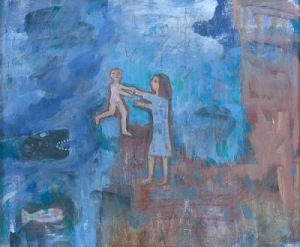
Albert Herbert, ‘Jonah Arrives at Nineveh, 2004’.
Traditionally, the novel has often viewed war through the eyes of a complicit individual, a pawn in the wider game. It is from this perspective that The Yellow Birds derives much of its emotional power and testimonial authenticity – qualities that have won laurels in the form of the Guardian First Book Prize and perhaps overexcited praise from writers as diverse as Tom Wolfe, Colm Tóibín and William Dalrymple. But it is also Bartle’s tunnelled vision, his admitted solipsism, which sets the novel’s limits.
Unlike, for instance, Kurt Vonnegut’s Slaughterhouse Five (1961), which reveals something of war’s extreme dehumanization through a science fiction foil – and whose catchphrase for quietism, “So it goes”, is quoted here – The Yellow Birds has no counterpoint. Death, mutilation, castration, body bombs and all the other brutalities Bartle witnesses or is party to, are contrasted with his lyrical and existential musings. But the individualism these signal seem as much a part of the problem as an answer to it. Bartle’s quest in the book, “to discover what it was I was guilty of”, and his scrupulous self-interrogation sits uneasily in a novel which so persistently evades the larger question of responsibility for the war.
A version of this review appeared in the TLS on 18.01.2013.

The Index to Julian Barnes’s new collection of essays strikes a playful note, a whimsy meant to undercut any danger of pomposity in his writing, by drawing attention to it. For instance, his repeated instruction about the many matters that “should serve as a warning to aspirant novelists”, becomes, in the Index, a knowing wink to his own pedantry (all five entries under “young writers” begin “should”). Similarly, there are judgements indexed in the manner of a teacher’s withering report: “Peter Ackroyd: fails to impress”, “Truman Capote: always promising”.
The job of a critic, however, as Barnes himself has said, is not to diminish but to explain and celebrate. And in the main that’s what he does, writing about people whose work he admires, making a case for the patronized, unfashionable or, to the English, possibly unknown (“our insular fault for not translating enough”).
Barnes’s Francophilia is well-advertised and, as one might expect, his criticism divides between England, France and America, with some canny interplays, so there is ‘Kipling’s France’ as well as ‘France’s Kipling’, (Ford Madox) ‘Ford on Provence’, an essay on English translations of Madame Bovary, and an Introduction to Edith Wharton’s The Reef, considering its Racinian qualities.
The essays on Chamfort, the “complicated, divided” moralist and maxim writer, Prosper Mérimée, taxonomist and preserver of buildings (necessitated by the Revolution’s annexing of them), the “aesthete-anarchist” Félix Fénéon and his fait divers newspaper columns, and Michel Houellebecq’s increasingly dubious “literary insolence”, together comprise a solid primer on modern French history, culture and taste.

Paul Signac, ‘Against the Enamel of a Background Rhythmic with Beats and Angles, Tones and Colours, Portrait of Félix Fénéon in 1890’
Among English-language writers he extols Penelope Fitzgerald’s quietness in delivering complexity (against “male diminishment” and her own self-disguise as a “harmless jam-making grandmother”), the modernity of Arthur Hugh Clough in representing unpoetical times (against Matthew Arnold’s reading of his poetry as “not natural”), and late Updike (“undervalued, and at times insultingly reviewed”).
What he admires perhaps most in these “professional observers of human beings” is their penetration of the ordinary. And it is on the matter of professionalism or generic competency that his attacks turn: replaying the debate about Orwell’s fictionalizing of his journalism, questioning Houellebecq’s representation of Islam on the grounds of narrative credibility (“a clever man who is a less than clever novelist”), and finding against Joyce Carol Oates’s account of her bereavement for “breach of narrative promise”. Her deception is of an entirely different order to the “benign wrong-footingness” he so admires in Fitzgerald.
One of Barnes’s favourite coinages is “Frenchly”, but it is the Englishness of his interests and tone of which one is continually aware. His recurrent themes are summed up in that didactic Index: “cowardice: more interesting than courage”, “failure: more interesting than success”, “kindness: its paradoxicality”.
This review appeared in the TLS on 10.11.12.

Zadie Smith, NW. Hamish Hamilton – TLS
“My writing desk is covered in open novels”, Zadie Smith tells us in her 2009 collection of essays, Changing My Mind. She is the kind of writer who does not jealously guard her originality, understanding that central to what she puts out is what she notices and takes in. Like Christina Stead generating writing out of her Ocean of Story, or Salman Rushdie held afloat on his Sea of Story, Smith seeks out influence, “read[ing] lines to swim in a certain sensibility, to strike a particular note, to encourage rigour when I’m too sentimental, to bring verbal ease when I’m syntactically uptight.” It’s a credo that places her in E.M. Forster’s convivial “echo chamber”, where writers freely associate, exchanging literary ways of being, even as it bears the trace of having come from somewhere, of having prior allegiance and inflection: that uptight tells us her writing is not placeless or ‘atopic’.
Complexity of this kind proliferates in Smith’s latest novel, NW, in which she returns to her roots in the London postcode where she grew up, and where her debut, White Teeth (2000), was set. Though by no means autobiographical, NW has the intensity of the personal, enacting Smith’s own journey from a council estate to university and ‘professional’ life, asking what happens to a person on such a journey, and to the people and community left behind? Half a century ago writers like Raymond Williams and Richard Hoggart considered the same question in terms of class, but ours has become a more elaborate culture since then and Smith reflects this intricacy in the mixed people she represents and in the way her novel is told.
In NW’s “multiverse” self-suspicion is intense, irony inescapable, and interaction highly self-conscious (“Frank’s default mode with Leah is a sort of self-parody. Leah thwarts him by faking innocence”). Competitive claims leave the reader, along with the characters, working to ascertain: is this interesting, important, honest, true? Such indeterminacy makes similar demands of readers to those that the city itself makes, requiring flexibility, nuance and a willingness to experiment. Smith, now on her fourth novel and coming into maturity as a writer, is, as she announces on the first page, ready to “Take her liberty”, confident enough to be demanding (“Reader: keep up!”), and writing with a new, improvized looseness. There are signs everywhere of her learning and reading, but this time she has freed herself of the supports she hitherto relied on, most evidently in On Beauty, and is making her own way. This then, is a riskily open book, exhibiting all the novel’s defiant possibilities; a freedom that stands in instructive contrast to NW’s trapped inhabitants.
Smith’s five characters grew up on Caldwell, a Willesden council estate. As adults now in their mid-thirties none have strayed far, though the lives they lead are worlds apart. The novel, set principally in the present, pivoting on the Carnival weekend, also delves back over thirty years. It examines the respective fates of best friends Natalie and Leah, as well as Felix, and more peripherally Nathan and Shar, beginning when Shar unexpectedly turns up again in Leah’s life. Shar has become an addict, leading a rough street life, conning, begging and living in a squat. Hers is a world in which nothing and no one can be helped: about her beating and rape she is quietist, telling Leah, “Aint your fault. Is what it is.” The distance between the women’s lives is so great they puzzle one another. Shar is unfamiliar with Leah’s show of concern and she struggles to place it; to her, Leah seems “someone absurd…maybe a slacker, a lady of leisure”. In turn, Shar’s sudden re-emergence disconcerts Leah, making her reflect on her own existence, under-stretched in work with community groups and resisting the inexorable path to motherhood. When a young black man is stabbed close to her home, the question of who thrives in London and who is destroyed by it begins to plague her. Finally, she says to Natalie: “I just don’t understand…Why that girl and not us. Why that poor bastard on Albert Road. It doesn’t make sense to me.”
Though dealing in such inescapably political material – and unlike many recent London novelists at last waking up to the others in ‘our’ midst, characterizing newcomers by their cultural difference and economic function (all those Sikh shop keepers, Polish builders and Brazilian au pairs) – Smith writes from the inside, allowing her characters modernism’s full range of techniques to explore their interiority. Which is a relief – and the more so, because despite her profound pessimism about the emerging twenty-first century self (we are an uneasy, imperious and defended bunch) her ability to say this is who we are, without “prettification”, feels liberating and encouraging. “The effort to name” either the world or ourselves, however, is not straightforward: it all but defeats Natalie. For her, life brings no helpful epiphanies, only rare moments of “clarity” that are difficult to retain. She understands what she has had to overcome to become a barrister and good, conforming bourgeois, but is less comprehending of the rigidity such will to power has enforced in her. Nor does she recognize how it has divided her from family and old friends who regard her now either as a role model or a traitor. (“Can’t go home, can’t leave home: a subject close to my heart”, Smith wrote in an elegy to her own father.)
Leah’s climb has been less emphatic: she still lives in a council flat in sight of Caldwell and is married to Michel, a French-Algerian whose immigrant eyes tell him that “not everyone can be invited to the party. Not this century”, so you’d better look out for yourself. The two women hold the novel’s centre of attention; indeed, NW is one of the strongest dissections of female friendship since Doris Lessing’s The Golden Notebook, a novel that broke ground in 1962, and with which NW bears comparison – in its determination to face the present without illusion, in its discussion of apostasy, and in the way it apportions a fragmenting world.
The novel is written in five segments. Leah’s, called ‘Visitation’ (after Shar’s disturbing appearance), is dealt out in chapters, reflecting Leah’s more ‘old-fashioned’ concerns: she disagrees with her husband’s self-help philosophy, and looks for an “objective” way of understanding herself, of reaching out to others, even as she resists the idea that women are inherently full of “empathy”. Smith reproduces this effort in the novel’s narrative perspective, shifting from subjectivity to objectivity, from calling her Leah to Leah Hanwell, to Mrs Hanwell, to “the woman”, in a manner reminiscent of the nouvelle vague, and with much the same purpose: to step outside the interiority so pleasurably conveyed in the novel’s fluid opening pages, and locate a cooler, more detached point of view.
Natalie’s more contemporary character (anxiety-ridden, self-deluding) is delineated in modern style with briefer notes. These have allusive titles suggesting a mind-map of our disseminated consciousness: Buñuel and Godard jostle with Amy Winehouse and Nirvana; Salt-N-Pepa’s “Push it” follows on from the Nabokovian “Speak, radio”; a section about a vibrator takes its name from an Updike novel. Natalie herself is an inveterate note-taker and reader of signs, treating the world “anthropologically”, a form of objectivity different to Leah’s because it is self-absolving, denying her own bias in the equation. She shares this myopia with her privileged husband: in an argument each believe “their own interpretation to be objectively considered and in no way the product of their contrasting upbringings.”
For Smith, an inability to recognize one’s own contingency is one of the great modern sins. A lecture on Barack Obama (2008) saw her admiring the novelistic facility on display in his memoir, Dreams From My Father, and evident in his ability to speak to America’s different constituencies, without betraying himself. It is a gift she sees deriving from the President’s mixed-race, “double-voice” inheritance, one she hopes will enable him to tell various truths, devoid of contradiction but with “proper human harmony”.
In NW, Natalie’s apostasy echoes Lessing’s mid-century abandonment of the (communist) dream of human harmony in favour of the “small personal voice”; now, hers is the abandonment of the jostling place she came from in favour of a self-preserving one-sidedness. Though not, of course, forsaking that hard-won personal voice, Smith questions the solipsism into which its elevation has led us. The novel opens in didactic tableau: Leah, lying in a hammock, is attracted by a line she hears on the radio and thinks she should make a note of it: “I am the sole author of the dictionary that defines me”. But as Leah’s fist unfurls and her pencil drops, the spell of these incantatory, self-enclosing words is broken, and the idea of a private language jettisoned (Smith’s essays show her reading Wittgenstein); she “Takes her liberty”, never having written the sentence down.

Zadie Smith, 3.6.2012
The narrative perspective shifts again: in segments divided by place, rather than the women’s numerical depth, two male characters move geographically across the city. Felix, pulling his life together after a druggy period, visits Caldwell, where his jobless father still lives. A gift of a book of photographs of 1970s estate life, prompts the older man to reminisce about how rebellious and intrepid his generation of West Indians were in their youth (“style without money, without any means whatsoever”). For Felix there is the realisation that Black Power was not just “self-serving exaggeration”, there was once real community here. But the memories also bring pain, because something in the anarchic looseness of his parents’ life (“This was the heatwave. We just took off the door!”) and in the growing freedom of women, led his mother to abandon the family. She has become a perpetual absconder, prey to the superstition and paranoia often bred in exclusion, while his stay-at-home father now lives enveloped in weed fumes. Throughout the novel, Smith makes a point of refusing nostalgia, but she shows with great subtlety how his history feeds into the man Felix has become, suggesting that the desire for a more disciplined and orthodox life comes in reaction to the failed hopes of a previous generation.
It is a passage that also casts light on the emotional attachment to home ground of all Smith’s characters, their defensive allegiance to a particular manor (an important difference here between John Lanchester’s overview in Capital and Smith’s slicing through NW). This loyalty has the remnants of solidarity in it, but now exerts almost totalitarian power, where claims of territorial authenticity (“You can’t really chat to me. I’m Hackney, so.”) and a distorted code of ethics about who has the right to speak (“Why you tryna make it your business? Who you calling blud?”) rapidly decline into violence.
Felix’s subsequent journey from NW into the West End has its title in brackets, “(W1)”, as if Soho were a place of more dubious reality. It’s a joke of course, because to Felix, the well-to-do people he meets there – Tom, a rich kid in “brand consolidation”, and Annie, junkie descendant of an earl – do live in a kind of fairyland, protected from the life and death reality that awaits him on his return to NW. Growing weary of Annie’s privileged bohemianism, her lofty denial of the constraints in his life, Felix asks her, “Why you always going on about shit that ain’t even real?” His section is titled ‘Guest’ and, like Natalie, he feels humiliated at being addressed on other people’s terms, at finding himself always on other people’s turf.
In Lessing’s novel, a breakdown of the old order leads to a newly unified reality (the Golden Notebook itself), but in NW there can be no decomposing of the world through the text. Natalie’s break out – she seeks sex with strangers via the internet, then takes a drug-fuelled walk with Nathan round the old Caldwell haunts – is a temporary affair; she quickly returns to business as usual. If there is a unifying idea in Smith’s compendious novel it is that of ‘the gift’, a notion emerging from anthropology, which the Situationists championed, about things (goods, ideas, talents) we have and give to one another freely, without commodification. In another essay from Changing My Mind, Smith discusses the gift’s importance in art, and particularly to David Foster Wallace, a writer she greatly admired: she shares the idea in NW, making it the bedrock of Natalie’s conflicted ‘personality’.
At a young age Natalie finds her intelligence and drive praised in a way that troubles her. These are accidents, unearned gifts, she thinks, and this discrepant account by others leads her into a reflexive trap. In the mirror she sees only a charlatan, someone “making it up as she goes along”. By adulthood, her autodidact reading in headstrong outcasts (James Baldwin, Jane Eyre and Jesus Christ), leaves her feeling put together wrongly, a kind of intellectual patchwork doll. What she seeks is tradition, a place where she can be learned without the stigma of eccentricity. But when she finally achieves success – when she is no longer a ‘Guest’ in life but takes her place as ‘Host’ (the name of her segment) – she finds that with entitlement she is locked into stifling conformity.
It is a characterization which at first seems highly specific to Natalie. But through these ideas the novel also reflects on Leah’s problem about who succeeds and who fails, proposing that talent, intelligence and aptitude have a lot to do with it, but that these are reward in themselves, not markers of moral probity making the possessor a more deserving person. In NW’s recursive world there is no easy way out from the defended self, and Natalie’s eventual reply to Leah – a politician’s sanctimony about just deserts – is in the worst bad faith. But Smith’s great gift for seeing people in their entirety means she will not simply consign Natalie to self-betrayal. The novel closes with another visitation, this one in the guise of an idea: in some ingenious manner that depends on Natalie’s gifts of detection and her double-voice she improvizes a way forward, “making it up as she goes along”. In this moment she becomes, however fleetingly, the person her strength makes her capable of being – not a host, presiding over others, but a potential saviour. Even in this solution, though, Smith’s book remains open, with enough ambiguity and mystery to leave room for doubt. To the end she demands of her reader (as Foster Wallace did in a short story of his own): “So, decide.”
This is an extended version of a review that appeared in the TLS, as ‘No Easy Way Out‘, on 14.9.2012.

José Pierre, editor, Investigating Sex: Surrealist Discussions 1928-32 – Camden New Journal
That the surrealists in their unbridling of the imagination and the subconscious challenged conventional ways of thinking – or preferably not thinking – about sex, will come as no surprise. Less well known is that with the subversions of their art, poetry, drama and fiction, they also undertook scientific research. Their unique method, combining investigation with collective experience, was derided as unscientific, but as they weren’t aiming to impress the establishment this didn’t trouble them. What they wanted was to produce a body of counter-knowledge about neglected aspects of everyday life, and to create an archive of the kinds of human experience usually obscured by propriety, censorship or fear.
With this in mind, in October 1924, André Breton, the movement’s founder and principle theorist, together with a group of friends, set up the Bureau of Surrealist Research on the Rue de Grenelle in Paris, inviting the public to drop by with stories of chance and coincidence or ideas about how life might be different. From here they also produced their journal, La Révolution Surréaliste, publishing in 1928 the first of twelve inquiries into the meaning and practice of sex – a subject then so taboo it could land a speaker or writer in jail. Their recherches took the form of group discussions which proceeded by means of testimony, disagreement and interrogation (Breton was a trained psychoanalyst). As JoAnn Wypijewski notes in her Introduction to Investigating Sex, there was “no unity of desire” among the participants, “even on the small matters.”
Taking part in these extraordinary conversations were many of France’s intellectual and artistic elite: Breton, Louis Aragon, Antonin Artaud, Paul Éluard, Yves Tanguy, Raymond Queneau, Jacques Prévert, as well as migrants drawn to the modern scene in Paris such as Man Ray and Max Ernst. Over the four years between 1928 and 1932 the “small matters” they discussed, placing them on record, included undressing, masturbation, fetishism, homosexuality, voyeurism, prostitution, bestiality, procreation, sodomy, fantasy, shame, first time, third parties, cunnilingus, fellatio, coquetry, libertinism, masochism, sadism, mutualism (or lack of it), orgasm (detecting and faking), revulsion, joy and etiquette, as well as more esoteric activities such as coming in a woman’s ear or licking her eyeballs. Seven sessions took place before anyone thought to ask a woman for her side of the story.
Despite Breton’s best and sometimes bullying efforts to keep the sessions on track, the discussions continually unravelled, collapsing under the weight of prejudice and illogic or veering off into the absurd. It is the dramatist Artaud who observes that the effort to speak openly about sex inevitably involves ostentation – and, he might also have added, in the effort to classify something so unruly and inexhaustible, hilarity. Yet the surrealists’ unlikely inquiries point the way to the twentieth century’s major social science projects on sexuality: both Kinsey and Hite shared their question and answer methodology, though they attempted to structure their research and make it professionally neutral, stripped of the bias and embarrassment so evident here. The surrealists, by contrast, had no covering context of credibility: they revealed themselves to one another out in the open and through interaction, and it is this that makes these records so fascinating, so three-dimensionally human.

Max Ernst, Man Shall Know Nothing of This, 1923
If the surrealist contribution to science has often been neglected in favour of their aesthetic, so, too, Freud’s influence on the movement is more often proclaimed than that of Marx. But more than a quarter of the forty participants in these discussions were at one time or another members of the PCF, the French communist party, and the larger matter the surrealists were investigating, about love’s potential to abate alienation, however temporarily, was informed as much by ideas about human liberation that were coursing through Europe in the decade after the Russian Revolution, as by the new Viennese science.
Not that the relationship was untroubled: in her Afterword, Dawn Ades writes that the PCF regarded the surrealists’ courting of the erotic as “indistinguishable from pornography”. Breton’s aim was to keep a balance between Marx and Freud while defending the surrealists’ right to extend the dialectic to the exploration of consciousness (“How can one accept…that the dialectical method can only be validly applied to the solution of social problems?” he demands of more “narrow-minded revolutionaries”). Certainly Marx’s influence can be felt in the surrealists’ disagreements over whether desire must be reciprocal, and whether love can yield to some kind of materialist proof or is better considered as incarnate mystery.
For all the vanity and prejudice on display in these conversations, what remains most striking is the courage of the participants, their fearless desire to uncover and destigmatise. Despite our openness today – from feminism’s abstract theorising to the internet’s graphic revelations – it’s inconceivable that a comparable bunch of writers, artists and journalists, without the veil of anonymity, would sit down and talk so frankly together about sexual inclination. As a later surrealist Inquiry into Erotic Representation noted, people are increasingly willing to discuss the “position of partners’ bodies during the act of love”, but are still largely “silent over the positions of their minds”.
This review appeared in the Camden New Journal, Islington Tribune and West End Extra on 13.09.2012.

At twenty-two Gwendoline Riley published her debut novel, Cold Water: it earned her a Betty Trask Award, the admiration of many critics, and a devoted following among the hip. Hers was a knowing voice, catching the glamour of unmoored youth while also mapping the disaffections her generation laid claim to. Born in 1979, she was one of the first to show us something of how Thatcher’s children viewed the world – and to suggest what positions they might adopt in the face of it.
A decade and three novels later not a lot has changed for the latest in Riley’s line of semi-autobiographical heroines. Aislinn is another Lancashire lass with an American get-out clause (winding up this time in Indianapolis), but now, reaching thirty, there’s an after-the-party feel, and a sense that this inveterate reader and hard-up writer is beginning to grapple with the problem of adult viability. Rather than learning how to settle down and act naturally, though, she begins to see that the literary persona she has assembled – so provocative to her parents – puts her beyond the pale. Her lofty ideas and drifting life offend the common-sense world; conceding to it, Aislinn thinks, would “illegitimatise” her.
So she lights out for America, to the bland un-confronting middle of it, where away from the maelstrom of family life (a menacing father, a thwarted mother) she can be “Peaceful again. Able to think”. Here, in nice transatlantic irony, Aislinn learns that the American she’s been hankering after for the last decade, never quite managing to pin him down, is now in Manchester. During their last encounter she was enraged by his gamesmanship (pathetically easy to “read”), by his failure to recognise her hard-won authority (“I’m a writer. I am. You’re insulting me”). Her gall and fury, her stubborn refusal to present the right face, sabotage her of course, and the boy walks away. In the next passage, she and a bar drunk swap stories about their mothers’ lost loves, who also fail to connect, then meet terrible ends. What Riley suggests in these scenes is the risk in being unaligned, of living unconventionally without fixing relationships and ready-made opinions.
That habitual world is the one Aislinn has forged herself in opposition to. It’s one in which male solidarity and power (her father is from a tribal band of brothers; a revered uncle once sat on Sheffield Trades Council) creates men who think themselves entitled to control women and children, to hit and humiliate them, and sons who grow up in their father’s image, perpetuating “the line”.

Gwendoline Riley
Among her gallery of friends, all living somehow by the book (the playwright, the poet, the bookshop assistant), the only lines are literary. They gloss life with everyone from Shakespeare to Philip Roth, under-scoring their sense of doubt. Without loyalty or ideology, their relationships take on the hue of power plays – everyone starts to look like a camp follower or a cast-off. Aislinn jettisons friends who become credulous or show bad form, yet admits to her own “heroic fixations” (northern escape artist Morrissey is a predictable choice).
For all their schooled antipathy, however, these aren’t committed bohemians: that would require belief in an alternative. Indeed, Riley is as sceptical about bohemia as the writers she’s been compared to (Jean Rhys, Elizabeth Smart, Marguerite Duras), sharing their awareness that, for women at least, demi-monde living – even a suburban affectation of it – can be just as lonely and diminishing: owning a poster of Baudelaire and quoting Beerbohn doesn’t stop her mother’s second husband from being, like the more traditional first one, a self-obsessed bully.
Other critics have called Riley an existentialist (“Camus in hotpants”, HP Tinker quipped) and there is a strong sense in Opposed Positions of the world-as-trap – for the mother who cannot escape a life of boredom and put-downs, consoling herself with the idea she is “indomitable”, and for the daughter who, refusing such delusion, can make a life only in draft, gestural and disconnected. Being so trapped produces a certain eeriness, which explains Riley’s toying with the gothic. Aislinn imagines herself a “savage ghost” and fears the bitterness of earlier generations will inhabit her; she cannot “outpace these shadows”. She is also suspicious of self-mythology, of attempts at drawing herself out and into narrative. Thinking of the boy who got away, she essays, “We were like children, maybe. (Were we?) Two children fallen in love. Or – I don’t know what to call it.”
It is a scrupulous performance, but in her vigilance (an ingrained sense she must not, as Aislinn’s father keeps taunting, pose or get above herself) Riley is in danger of self-entrapment. Perhaps she has gone as far as she can in this setting and needs to encounter a wider world. She may find there is more room for manoeuvre out there, and a greater range of positions that can be struck.
This review appeared as ‘Life in Draft’ in the TLS on 01.05.2012.

Late-night viewers of Film4 in Britain may, if they are lucky, stumble across one of the channel’s rare showings of Bill Douglas’s 1987 film, Comrades. It tells the story of six Devon men who became known as the Tolpuddle Martyrs when they were transported to Australia in 1834 as punishment for organising one of the world’s first trade unions. The film was only Douglas’s second major piece of work for the cinema; it was also his last. Yet together with the trilogy of autobiographical films he made in the Seventies about growing up in a deprived Scottish mining village, this “poor man’s epic”, eight difficult years in the making, constitutes one of the most important, and overlooked, canons in British filmmaking.
The reasons for his neglect were obvious to Douglas, and to those around him who recognised his rare talent and tried, against the odds, to foster it. Mamoun Hassan, who helped produce the Trilogy (My Childhood, 1972; My Ain Folk, 1973; My Way Home, 1978), also offered Douglas teaching at the National Film School when finance for his projects was unforthcoming. He recalls being told by Lindsay Anderson, an early admirer and encourager of Douglas’s work: “Remember, Mamoun, the English are philistines.” Douglas himself warned his friend, the novelist and essayist Andrew O’Hagan, that talent needed protecting but there was no system in Britain to properly nurture it. “He was a complete victim”, O’Hagan thought, of the “cultural intolerance in the British film industry of the non-commercial.”
At times this “intolerance” amounted to more than a refusal to fund Douglas’s work (when he died of cancer in 1991 he left several finished but unrealised scripts, including a life of the motion picture pioneer, Eadweard Muybridge, and an adaptation of James Hogg’s Confessions of a Justified Sinner). He was often the target of establishment disapproval, his films deemed “hopelessly slow” (Barry Norman) and unfashionable. Nor did they fit comfortably into the categories of British storytelling, in which, conventionally, the working class or dispossessed are portrayed in a realist vein. The New York Times film critic, Vincent Canby, found Comrades, “elaborately misconceived”. Even Sheila Rowbotham, the socialist historian, while applauding the film’s effort, criticised him for a style she considered immodest for its subject: “The flaws of Comrades derive from the grandeur of Douglas’s cinematic ambition.”
As a child, Douglas spent as much time as he could at the cinema. Too poor to pay for a ticket he’d barter his way in with empty jam jars. His love of film stemmed from a desire to escape the meagre world he inhabited where “it always seemed to be raining or grey…my heart would sink to despairing depths. I hated reality.” Illegitimate and orphaned (his mother became mentally ill after contracting puerperal fever, his father absconded), life was so austere that even after National Service provided an escape route from Newcraighall, Douglas remained “obsessed” by his beginning and the uneasy distinction he believed it conferred upon him. Which is why when he came to make his first fully-fledged film he decided to face the bitterness of the place and its people. The Trilogy, in its depiction of cruelty and indifference to children, has something of George Orwell’s “power of facing unpleasant facts”, though without ever succumbing to didacticism – perhaps because its view is that of an insider.
For the same reason, the three films have a degree of inwardness, seeming organic rather than shaped by the demands of character or plot. They are constructed as memory poems, assemblies of moments, feelings and atmospheres that leave the viewer in the same position as the children they are watching: struggling to understand the behaviour of inscrutable and alarming adults. Douglas’s scripts were similarly unorthodox, written without shot direction and reading more like works of pared back prose. The first of these was initially titled Jamie, so as to disguise its autobiographical nature, but when Douglas sent it to Lindsay Anderson, he was advised to take a leaf out of Gorky’s book. My Childhood is set in 1945 and was filmed in the same windblown village not far from Edinburgh where Douglas grew up. Its portrayal of two brothers, Jamie and Tommy, scavenging for coal, without a coat even in the iciest of Scottish winters, sears itself onto the mind. No one witnessing Stephen Archibald, the boy who plays Jamie, could forget his harrowed face.
The ‘performance’ Douglas was able to elicit from Archibald (the word seems perverse applied to something that looks so natural) owes a debt to Joan Littlewood for whom he worked as an actor and unofficial assistant at the Theatre Workshop in Stratford East. From her came the instruction most often heard on his set: “Don’t overact!” He also learned the value of seeking out that “something different” a non-professional brings to a project, to cast for look rather than experience. Archibald and his friend, Hughie Restorick, so authentic as the brothers, he found at a bus stop when they tried to cadge a cigarette.
The Trilogy films show life from the brothers’ point of view, from which men are absent or distant. The boys have a father apiece but these put in only rare appearances: Jamie’s doles out a sixpence, Tommy’s turns up one day with a caged bird. Equally remote, though more monumental, are the soot-faced miners seen rising and descending in the coal shafts. Despite their massed power, there is no sense of the boys finding protection in their wake; the men are merely a part of the landscape in the way that slag heaps, steam trains and turnip fields are.
With their mother in an asylum, the boys are shunted between orphanages and grandmothers – archetypal figures these, one silent and shawled in a rocking chair, the other, a terrorising witch who puts mouse-traps in the apple bowl. Jamie has little in the way of companionship: a cat, a washing line, these are his playthings. His main source of affection comes from an outsider, Helmut, one of the German prisoners of war still working on the land. The two of them read together and horse around, and for brief moments Jamie’s tense features relax into laughter. His look of anguish when Helmut is driven away in a lorry is dreadful.
After a period of destitution in Edinburgh, the army flings Jamie half way across the world to the Egyptian desert, and the friendship of a man who draws him out, brushing aside his sullenness in the face of the Pyramids (“Enthuse! You’re looking at one of the seven wonders of the world!”), showing him how to fillet a kipper (“It’s easy once you know how to get through all the rubbish”) and demanding that he think for himself. When Jamie says he’d like to be a painter, or even a filmmaker, he finds encouragement, not the tongue-lashing he faced in Newcraighall for shirking “honest work” and getting above himself. This unusual friend, who has piles of books by his bed and pin-ups of Kafka and Gorky, helps him see that through the possibilities of art he might achieve a life less alienated, might find – as the title of this part of the Trilogy suggests – a way home. (This was the destination, O’Hagan felt, Douglas had been dreaming of since he was a lad sketching horses on his granny’s doorstep: “He must have realised that self-enlargement and self-invention were everything a boy from Newcraighall could hope for.”)

I came across the Trilogy in the early Eighties when I projected the films at the Ritzy Cinema in Brixton in South London. Even in a picture house then screening the full cinematic repertoire, they stood out as astonishing and singular works. As British films they were particularly remarkable, aspiring to verisimilitude but ingrained with a strong poetic sensibility. Douglas shot them in colour then re-mastered in black and white, a mark of his intention to use any means he could to intensify the effect of ‘the real’. Later he wanted the two halves of Comrades to be shot in different ratios: narrow for the English countryside and in Cinemascope for the Australian outback (an innovation that proved too expensive to accommodate).
Such ideas meant that Douglas’s films have a rhythm and look all of their own. What shaped his distinct way of seeing? You can sense the influence of Hardy and Hogarth in his view of the British; the ‘naturalness’ of Bresson and the Italian neo-realists are answered in Douglas’s stripped back landscapes and economic performances; and he has some of the subversive lyricism of Buñuel, Genet and Cocteau (a sadistic guard in Comrades traces a flower across a beaten convict’s face). But the greatest stimulus to his imagination seems always to have been the starkness of his early years, creating a taste for simplicity and stillness. Equally a part of that ‘taste’, however, was that its expression be restrained (something Rowbotham fails to register). For all the arresting sights, his audience is never made to feel they are being held merely to admire. He is unafraid to show beauty in even the most marginal life, the resonating power that objects and shapes acquire in a room uncluttered by poverty (the latched door, a chunk of bread about to be shared, hands raised to a fire). But the sparse imagery and reserved figures are always consonant with their context.
Indeed one sequence in My Childhood seems to be a commentary on the dangers of aestheticism. Tommy swipes a bunch of dead flowers from the graveyard. We see them drooping in a cup on a bare kitchen table, looking like a painting, but there is no time to bask in their compositional beauty. Immediately, Jamie comes clattering in and throws the flowers on the floor (this is wrenching, shocking even, for the viewer). He fills the cup with hot water and lets it spill out across the table. Taking the emptied cup to his granny, who is half-asleep in her chair, he places the warmed receptacle in her hands and closes her fingers around it.
It was in sequences like these, Douglas felt, that one could discern the language of cinema – something he tried to explain to his students, though he found it difficult to put into words (and perhaps like many artists he was wary of picking apart the almost instinctual sense guiding him). In an interview of 1978, he says that what distinguishes film from the other arts is the way it places figures in a landscape. Film, uniquely, is about the observation of people in their environment. This is the basis of his materialist poetics in which speech is often reserved or withheld and we understand instead through expression, gesture and, more mysteriously, the way human beings reveal themselves through their surroundings. For Douglas, habitat is vitally telling.
Rare television interviews show him as handsome and with an unforced charm. His voice had a soft Scottish lilt; he was engaging, but also watchful. There is one moment, though, where the guard drops. Talking about the strain of filmmaking on a tiny budget, he interrupts himself and says, “It’s not exactly working down the mines.” Another man might have made the point with greater irony but he seems simply to be reminding himself of something he knows, experientially, to be true. (Douglas is surely the only director in the history of British film to have worked down a mine.) If there is no great expectation the interviewer, or for that matter the audience, will catch the full weight of his words, it’s because he knows there aren’t many who’ve straddled both worlds.
Perhaps this makes too much of an off-hand remark. But it seems revelatory of something fundamental in Douglas’s temperament: a sense of apartness that was both the making and undoing of him as a filmmaker – feeding his absolute determination to realise his conception of every film, and his refusal to compromise, to bow to the ‘reality’ of budgets, producers and bottom lines. This earned him a reputation for difficulty, often understood as naivety, an accusation that came at him from both left and right and was furthered by readings of the films in which his liking for simplicity was misinterpreted as a lack of sophistication.
There was perhaps a degree of unworldliness about him, but I’d suggest it was willed, indicative of an unromantic sense that those with few possessions might be more capable of sharing. It’s an idea that seems at odds with the meanness of his childhood. But what the Trilogy reveals is that it is not being poor that is so devastating, it is being placeless. Loathed for their illegitimacy, the brothers live as pariahs, alongside but permanently cast out from a family and community that will not care for them.
By contrast, in Comrades, the spirit of fraternity seems to rise from the land itself. As much as the new ideas arriving by book and pamphlet that the literate lay preachers are able to read, it is a way of life the Martyrs act to defend. The threat comes from the machines appearing in the fields, devaluing their labour and causing the landlord to lower their wages (by the time they banded together, taking the ‘illegal oath’ for which they were transported, the wages in Tolpuddle had been reduced three times from 10 to 6 shillings). These are pre-industrial workers, still tied to the rhythm, beauty and lore of the land. In the opening sequence a man scurries across the chalk outline of the Cerne Abbas giant. The club in the giant’s hand is mirrored in the tools used by the farm labourers to smash the threshers.
What we witness in Comrades is the moment industrialisation came to the English countryside, the moment of Fall. Before this, a labourer smiles at his sweetheart, saying, “We are the most beautiful people in the whole world”. Eden is not idealised, however (a man breaks his back over a field of stones, a woman demands of her lover, are we “too poor to breed?”) but there is a proposition here about different ways of being and living. This is best understood in the figure of George Loveless, (in a performance by Robert Soans that should have won greater acclaim) the Martyrs’ leader, a ploughman and self-educated preacher. His guilessness, gladness in nature and cheerful greeting of man – “Welcome lad”, he beams at a newcomer to the barn where his Methodist congregation meet to sing rousingly, to praise and pray – and his uncomplicated morality, all these are not just individual traits, they are virtues made possible by community and solidarity. A member of his congregation reminds everyone, “it is worth bearing in mind, a grief shared is a smaller grief”; a mother tells her daughter, who is distraught after cheating a boy out of a halfpenny, “It’s quite simple really. We only have to love one another to know what we must do.”
Despite Douglas’s turbulence (he could be emotional when the day did not realize what he had in mind), the crew warmed to him, understanding this was uncommon work, and it mattered. When the budget overran during the complicated second half of the shoot – tracking the Martyrs on separate journeys across Australia– and it looked as if production might be halted, the actors banded together, offering to work for free. Alongside the then unknown actors playing the Martyrs, were the aristocracy of British theatre cast in the roles of the powerful or well-known: Vanessa Redgrave, Robert Stephens, James Fox and Michael Hordern. The Carry On star Barbara Windsor was also cast for her tangy Englishness, but Douglas had to fight for her against uncomprehending producers at Channel 4. Don’t worry, Douglas told them, brushing the problem aside: “There is always more money”. This might seem naive but having existed for the first half of his life with so very little money, Douglas refused to fetishize it, to grant it power over the man of art – O’Hagan saw – he had struggled long and hard to become.
Comrades was made in the heat of Margaret Thatcher’s counter-revolution against the unions, a time when, for some, there was indeed money in abundance. Shooting took place in 1984 and 1985 – the year the miners were defeated in Britain. The film was finally released in 1987, as Margaret Thatcher announced triumphantly to the Tory Party conference, “There is no such thing as society”, and Wall Street, with its mantra “Greed is good”, was a box office success. Those inclined to this sort of thing argued, as one might expect, that Douglas was out of touch. With hindsight, he looks anything but. The Trilogy now appears to be not only a record of one of postwar Britain’s most marginal communities, but anticipates, in its fracture and defeat, the future of the industrial working class. And Comrades, looks timely: a challenge to the Thatchers and Gekkos who dogmatically insisted not only history but morality was on their side. (“Greed is good” may have began as an ironic slogan but it quickly became – until market collapse proved otherwise – unchallengeable creed).
The film is prophetic, too, in the way it combines what Douglas called “the longed-for transformations of society” that the Martyrs were fighting for, with “the magical transformations of optics.” As a child his interest in cinema lay in its ability to transport him, bringing relief from the ‘reality’ he found so oppressive. In the cinema scene in My Ain Folk, the film being screened is Lassie Come Home. As an adult, Douglas’s taste for the taciturn led him to silent movies: at film school he made a short called Charlie Chaplin’s London. From here he was drawn further back to the pre-history of cinema, to the optical trickery and visual machinery that photography and cinema grew out of.

Douglas and Peter Jewell – the encouraging friend he portrayed in My Way Home – shared their lives, living in a small London flat for 30 years. Douglas was not gay, as many supposed, but the two men “relied on each other” and, as Jewell put it, “honed each other to our liking.” Jewell continued to support Douglas in his filmmaking, and together they built the finest collection of pre-cinema artefacts and memorabilia in the country. These are now lodged in the Bill Douglas Centre for the History of Cinema and Popular Culture at Exeter University.
Many of their discoveries made their way into Comrades (a few contraptions stem from the latter half of the nineteenth century so there is some cheerful anachronism). The actor Alex North, who previously worked with John McGrath’s radical 7:84 theatre company, plays a Lanternist, walking from village to village, carrying magic in the box on his back. In a herculean performance North also appears in 13 other guises as various kinds of showman: purveyor of the Raree Show, Diorama, Thaumotrope, Chromatrope, Camera Obscura and Kineograph flick book, as well as playing a silhouettist and shadow puppeteer. Besides these, the film includes hymns, folk songs, banner-making, hornpipe dancing (a sprightly Michael Clark), as well as varieties of child and adult play – all the storytelling forms and spirit-lifting activities of a largely illiterate community.
The broad range of arts on display are a part of the tale not simply because they tickled Douglas’s fancy, as some critics supposed, nor even as narrative device (though they are this too) but because they show working men and women as more than victims or martyrs, as self-reflecting people, with a denser, more intricate reality. (“The lives of these men”, Douglas thought, “was every bit as vivid as the men in coaches driving by.”) When Loveless’s wife, babe in arms, burns his books for the trouble they have brought into her home, praying, “Dear God, teach him not to think”, we understand the futility of her action. The tide cannot be held back because, as Douglas has revealed, even in rural communities itinerants would arrive bringing fresh delights and new ideas: “At the Lantern show you pay for the entertainment, but all the news is free!”
This reflexiveness also works at the level of the film itself, a commentary on the process of production and the way we tell stories. In other words, Douglas understood the disingenuous innocence of realism and opted in his work for less concealing forms. Nearly three decades after Jean-Luc Godard turned the camera on itself, such ideas were hardly novel in terms of world cinema, but they still seemed bemusing, even affronting, to many Anglo-American critics and audiences. And because film culture in Britain was so timid, Douglas’s inventiveness caused endless problems. Ismail Merchant who was the original producer on Comrades, finally left the project when he was unable to persuade his director to shoot the journey from England to Australia with a real ship. He couldn’t understand why Douglas wanted to use the cheap and contemporary device of a Grand Moving Panorama – a painted backdrop propelled by rollers. (There was one at the opera house in Covent Garden in 1832, illustrating the sea-going adventures of Puss in Boots.)
Douglas wasn’t interested in documentary realism, he stuck to his guns and employed Jim Clancey to paint a recreation of the voyage, which tells, with great charm, how the story is to unfold in another place – one so strange to the Tolpuddle men it is almost of a different dimension. Douglas trusted his taste in the matter of music, too, bringing on board Hans Werner Henze who composed a resolutely modernist score, played on only a small number of instruments, but perfectly evocative and apt in its spare sound.
Comrades ends with a Grand Finale marking the return of the Martyrs to England. There was a gala welcoming them back at the Royal Coburg Theatre in London (now the Old Vic), organised by Robert Owen and the Grand National Consolidated Trades Union who had rallied protestors up and down the country on behalf of their exiled comrades, demanding and finally gaining their release. For a film concerned with ideas of artistic as well as material transformation, it makes a fittingly theatrical denouement. Over the closing credits, we are presented with a series of painted lantern slides that describe the Martyrs’ fate: five emigrated to Canada and lived full lives; one remained in Tolpuddle, ending his days in the Dorchester workhouse.
There was a similarly bad end for the boy who’d given such an extraordinary performance in the Trilogy. Stephen Archibald also failed to break decisively with the place he had come from. His background was just as bleak as Douglas’s, but like many of a later generation, he turned for his escape not to art or learning (he was virtually illiterate) but to drugs. Douglas had a part in mind for him in Comrades, and was keen to offer him this way out. However by the time the money was finally in place, Archibald was in jail for possession of heroin. Douglas tried to gain his release but failed, and filming went ahead without him. He died in 1998, at the age of 38.
When it comes to Douglas, it’s hard not to feel what a lost opportunity he represents for British, and in particular Scottish, filmmaking. It’s a terrible indictment that he said towards the end of his life, “I don’t want anything more to do with the film industry. It’s deadly.” If he’d been allowed to develop, given more opportunities, who knows what lasting impact he might have had? As it is, Douglas’s contemporaries remain divided by class and aesthetic (Loach and Leigh versus Jarman and Greenaway) and I don’t think it’s overstating the case to say that this division arrested – still arrests – British culture. With his feel for authenticity and great love of showmanship Douglas might have been the man to break down old barriers. There is a legacy, of course: his influence can be felt in Terence Davies’ films about working class life in Liverpool, and on a new generation of directors such as Lynne Ramsey and Andrea Arnold whose films have some of his raw poetry. Yet Douglas’s early exclusion from the scene and death at only 56 means there is forever a piece of the jigsaw missing.
Such regret does not diminish the achievement. At the end of the Trilogy, Jamie returns to Newcraighall. The camera pans around the deserted room in which he once lived. Douglas cuts unexpectedly to an outside view, revealing what the young man has learned: the world is larger than the place that once confined him. He may remember it now, and contemplate its meaning, but he is no longer constrained by the past. The final glorious image of an orchard in blossom tells us he is free – he has reached that fruitful place of the imagination. When people complained to Douglas that there were no happy endings to his films, he would smile and correct them: “I am the happy ending.”
This is a version of an article that appeared in Cineaste in the summer 2012 issue.

Tim Lott, Under the Same Stars – TLS
“A good traveller has no fixed plans and is not intent on arriving”, Lao Tzu thought. By which measure the two middle-aged brothers in Tim Lott’s sixth novel begin as very bad travellers indeed. Carson, the Americanised older sibling – implacably upbeat, wedded to comfort, a creature of “mindless satisfaction” – has mapped out their American road trip in a way that leaves nothing to chance, while the neurotic Salinger, a Londoner loathing all things American, agrees to the journey only because he is fixed on getting to the root of his depression, and plans to needle Carson into admitting responsibility for it. His affront at being in the dark, at the “sensation of not knowing” what makes him downcast, worsens when he discovers among his mother’s possessions a fading Polaroid of a battered child.
The purpose of the brothers’ trip is to find their father. Out of their lives for some thirty years, Henry named his sons after the American poets of sadness and absence, then, in an act of unalloyed selfishness, deserted them for the country he felt could best aggrandise his loneliness. Having repeated the rejection by following in his fathers’ footsteps, Carson now hopes the brothers can become reacquainted, bridging the Atlantic-sized gap in their relationship. But beyond the usual sibling rivalry and sniping, the memory contest over how things really were (“You must remember”), Salinger’s rage is so strong that it requires a more commensurate target. So Lott performs a sleight of hand: Carson’s character – religious, reactionary, repressed – is melded with America’s.
The country’s failures, noted by Salinger at every turn in the road (the superdome where Katrina victims were left to rot, the Louisiana State Penitentiary putting prisoners on display in rodeo spectacles, the grassy knoll in Dallas where a man sells his memories as part of “disaster tourism”), all these signs of cruelty and abandonment reverberate with Salinger’s sense of familial betrayal. It’s a strategy that lends the novel a continuous edge of ambiguity, one that exists alongside the polarising differences between Salinger and Carson, England and America, and prevents them from descending into cliché.

New Orleans Superdome after Hurricane Katrina, 3.8.2005
Lott has made no secret of the fact that his contemporary Cain and Abel story (riffing off Steinbeck) is a personal one. A road trip with his brother produced 150,000 words of a memoir – a form he used for his first book about his mother’s suicide. Inevitably, critics have wondered about the work that might have been. But Lott’s choice has allowed him to replace the memoir’s constraining sincerity with the irony of the novel.
Under the Same Stars invokes the fight with religion and certainty that Milan Kundera and others argue is the form’s essential trait. Salinger’s scepticism, his disgust at Carson’s religio-Darwinian ideas (Katrina was “nature’s test of commitment”, “the weak moved on”), his refusal of its mangled justice (“revenge is a kind of grace”) and absolving belief (after killing a dog he hits on the road Carson explains this was God’s will) reveals the great gulf between the brothers. But it also opens up the novel’s conversation, creating a robust dialogism in which their at-odds sense of the world is tested one against the other.
There is debate, too, about how art works and what it can do. Salinger is an artist, not a grand one – he is most successful at greeting cards – but aware of his shortcomings and thinking about the search for “arête” or quality, and the artist’s fear of being cowardly or unoriginal. En route he sketches his brother, and Carson finding himself well-captured, repeats the old accusation that Salinger is “stealing [his] soul”, that his work rests on exploitation. Lott rejects this, pointing out that we all “edit ourselves” and suggesting that what art or writing does in response is to scrutinize what’s visible (“the slight blueness of Carson’s stubble, the tiny nick on his cheek”), and to wonder what candour might look like (“He tried to imagine the expression that Carson would wear if he was unguarded”). “Think of it as me giving you back your soul” Salinger tells Carson, meaning that art’s presumption is not theft but restoration, and that what this novel is doing is returning his brother in full, putting back what “self-censoring” has omitted.
Courageously, Lott gives full reign to the idea of writing as retribution or consolation: the revelation of who the bashed kid in the photograph is plays dangerously close to both notions, but these, too, are cast aside as falsely simplifying. Salinger’s father, his brother and their adopted country are all shown to be more complex, though perhaps no less tyrannous, and he finally understands there will be no expiation or solving answer: he must travel through the flux as best he can. “Damage was nothing to be ashamed of. Everybody had it. Artists were there to share it.”
This review appeared in the TLS as ‘Country Man’ on 27.04.2012.

Mr Lanchester edges in out of the Clapham sunshine, unostentatious in old grey t-shirt and trainers. He’s friendly, chatting about having a sense of London only through the tube map (South East London is unknown territory), though there’s a note of reserve, too – a certain shying away, as if the world was turned up a bit too loudly. It’s a manner at odds with the brasher characters in his new novel, Capital, in whose lives conspicuous consumption is so powerful and defining an idea that even the houses they inhabit have become “imperious, with needs of their own”, demanding to be fed by a parade of delivery vans, pampered with make-overs and extensions, constantly worked on and attended to.
Despite chastising himself for laziness (in his memoir, Family Romance), Lanchester has had an impressively productive career. “I always felt I needed to have a day job if I wanted to write books”, he says, and off the back of an editing post at the London Review of Books he’s managed four quite distinctive, critically-lauded novels; Whoops!, a myth-busting account of why things went so disastrously wrong in the economic collapse of 2008; and the memoir, which delicately unpicks a whopping family secret. In yet another career as a journalist he’s written about gaming and technology, and he’s interested in how the net is making us all more porous and multifaceted. The variety of his writing seems in tune with this, and though he thinks it’s not something you can plan for, some of it has cross-fertilised: his debut fiction, The Debt to Pleasure, about a murdering gourmand, was cooked up out of his work as a restaurant critic, while Whoops! came out of the financial research he conducted for his latest novel.
Capital, one of a recent clutch of books about the demographic changes to London that have so transfigured and enlivened the city over the past decade, has a cast of Zimbabweans, Senegalese, Pakistanis, Hungarians and Poles, as well as the odd native Londoner. Less usually, Lanchester’s novel registers how growing inequality warps relations, segregating rich and poor and making people blind to the lives of others.

London Citizens, 2012
Much of this unseeing, of course, is one-sided. If, like Lanchester’s characters, you’re a nanny, a shop assistant, a builder or a parking attendant you have a pretty good idea of how the other half lives: it’s the rich who are heedless. This is something Lanchester first registered as a student in the early Eighties: “The thing about Oxford that radicalised me was I was quite shocked by the extent that I saw proper, oblivious privilege at close hand. These were people my age who wanted to smash the state, smash the miners, smash the unions, sell off the NHS.”
It was a much more politicised era, he thinks, with the miners’ strike, the riots and “punk, which was against the idea that your self-definition should come through labels, and was deliberately distressed and ugly and messy”. He still feels a measure of punk’s abrasive disgust at “the degree to which we’re now invited to invest our feeling in owning bits of stuff by Louis Vuitton.” But Thatcher’s counter-revolution meant that everyone started to understand themselves in this way: now consumerism, Lanchester says, is “a central preoccupation of the culture”. In Capital although it’s the banker’s family who have the greatest difficulty coping with change – unable to grasp that their well-padded lives are threatened, that thirty quid cab rides and round-the-clock nannying are a thing of the past – it’s striking that everyone in the novel is oblivious to the impending economic crash.
In his memoir Lanchester notes that what people don’t know is often what they choose not to know. Perhaps we’ve lived through an era of collective unknowing, succumbing, he says, to “a whole variety of different techniques that try to normalise these things, as if that’s just the way the economy works. But this is not the reality principle, it’s a distorted capture of the system, and it seems to me we’re being sold a pup. There are other versions of capitalism, including the one we had ourselves, until ten minutes ago, that function fine.” When I ask him about the problem inherent in our current version, of making a system as fantastically complex as today’s globalised markets democratically accountable, he scoffs: “The analogy would be that cars have got so powerful and so fast that we need to get rid of the rules of the road.” The problem is one of economic illiteracy: “de-skilling among the public is so fundamental that people no longer feel entitled to have views about the banks.”
What’s his hunch about the direction Britain will take? “Our economy will be flat probably for two decades with not much growth and a decreasing importance on the global stage. But that doesn’t mean we have decreasing importance in our own lives.” The model for us might be Japan: “What you see there is a great variety of different forms of self-expression and people deciding what they’re interested in, making up their own versions of themselves. It’s a much more diverse, creative place.” This idea of everyone making it up as they go along, finding their own connections and constructing their own meaning is something that’s echoed in Capital. The experiences of people on Lanchester’s London street are widely different (from banquets and performance art to detention and torture) but they are all given equal billing and presented on the same plane: “It’s up to the reader to decide what’s shocking and what’s not, who they like and who they don’t, and what the tensions in it are.” There’s a democratic impulse here and an understanding that the grand narratives which made sense of life for us have irrevocably broken down. Now, he says, “we just have a tremendous cacophony”.
A version of this article appeared as ‘Life in a lower-case capital’ in the Camden New Journal, Islington Tribune and West End Extra on 5.4.2012.

Will Eaves, This is Paradise – TLS
After two novels much lauded for their acuity and quiet wit (Oversight, a gay coming of age debut, and Nothing to be Afraid Of, about actors working on the theatrical fringe), Will Eaves brings to the surface a subject lurking in these earlier books: the exploration of Englishness and “the Eden of normality” built after the war out of the sacrifice, stoicism and solidarity of preceding generations.
The particular England in question is middle – dead centre one might say, because as with his previous works, This is Paradise takes the long view, ingraining now with earlier thens, lending even his most up to date England a quality of overhang or afterlife. The sense of belatedness is reflected in the narrative structure – a story of two halves concerning the suggestively-named Allden family, a minor-middle class bunch who start out in Bath in the Seventies and then regroup in the present day a few miles down the road in a nursing home where Emily, the family’s now amnesiac mother, has been taken to be looked after by the professionals, and to die.
In the interim, time has worked its reverse magic and the four children in adulthood seem less vivid and more aimless than their younger selves, though three lead averagely successful lives (Benjamin, the youngest son, imagines his mother rising from her deathbed and exclaiming: “I’ve got one of each, haven’t I? One married, a single parent, a homosexual and a black sheep”). The location of the nursing home in which they come together again, in a wasted mining village, an infernally “bleak outpost”, reinforces the idea of drift, as if Eaves is registering the once steadfastly middle class now sliding to the periphery. It’s a falling off, however, accompanied by persistence, a mundanely heroic muddling through by which the family cope with their mother’s deterioration, and continue, as they have always done, to tread gingerly around Clive – the difficult, brilliant son whose adult life has turned out to be one of “catastrophic independence”.
Clive’s predicament is at the heart of the story – the trap in which he exists and the way, in turn, it entraps the entire family: this is the novel’s quarry and plot. Born with a heart defect and crippled in leg “clamps” as a child, Clive is his mother’s most beloved, and the family’s most adversarial member – the Allden’s very own rebel angel. His difference and ferocity cow his siblings, provoke petty one-upmanship in his father, Don, and leave unchecked the taunting “endearments” he aims at Emily (“beastie”, “witch”, “hideous crone”). The family “conceal themselves from him”, fearful of his brutal honesty, repulsed by his pedantry, pride and self-neglect (all “coming at you in waves”, too overwhelming and disproportionate for dailiness or rubbing along); and so, lied to, Clive’s “need to establish the truth”, his radar for hypocrisy, becomes ever keener.
Outside the family he also arouses mistrust – “The gap between his abilities and his deficiencies made people suspicious…How could he read Milton and stumble over four times four?” – further undermining him. Wondering at his abnormality, he seeks models of power (Wagner, von Clausewitz). But Benjamin, who is obscurely aligned with Clive through the subtle ostracism of his own homosexuality, guesses that his brother believes himself emotionally crippled not because of the way he is spurned, but as the result of some inherent flaw, “Some evil, welling up inside” – which is how conformism works its discipline.
Around this hellishness ordinary family life proceeds. As in his earlier novels Eaves writes with great insight about human interaction: the countless ways in which we read and try to come to terms with one another’s meanings and performances (the “charades” Clive is so quick to identify); the abiding sense that the more familiar we are, the more life becomes a comedy of cross-purposes. There is too the rough justice of families: Don’s paternal solipsism, which makes him incapable of entertaining other people’s difference (a very God-like quality), is admired for its truthfulness, while Emily’s perceptiveness is resented, her attempts to engage with her children often seen as intrusive and manipulative. He is excellent too on those things common to all family life – the effort to forge collective well-being and the exasperation caused by dissent or non-cooperation: on holiday in France, infuriated by Clive’s violent outburst over a category dispute (whether their holiday home is infested with hornets, bees or wasps) Don shouts at his squabbling offspring, “We didn’t have…this when we were growing up…You’ve no conception. This is paradise.”

William Blake, ‘Satan Arousing the Rebel Angels’, Paradise Lost Illustrated, 1808
In the novel’s second half, there is a shift in tone: the Alldens in facing Emily’s disintegration are exposed to their own mortality; Clive returns to his miserable Hastings flat and then walks out into the night sea. But the outcome is not what we expect. The novel retracts and an ending is contrived, one circumventing the question George Orwell put to writers, and which Eaves discussed in a recent TLS Freelance column: “What am I trying to say?” In the final pages there are several nudges about not trying to pin meaning down: an elaborate doodle by Clive, an “extraordinary envisioning” adorned with lines from (an unattributed) Paradise Lost, displays great intricacy but bears “no single sense”; Benjamin tries, unsuccessfully, “to make a pattern of unrelated things…And the lesson was that you shouldn’t go looking for significance”; while in the novel’s final paragraph Don, thinks “He would be sorry…Or not sorry. What did it matter?”
The question lingers of quite what Eaves intends by his Miltonic frame. He reads Satan as a psychological not political figure, and Clive’s perversity, given no outlet or ambition beyond his family, finally succumbs to domestication, the bonfire in his mind “relaid in a swept-clean hearth”. When Don holds Clive’s newly framed drawing up to the window, the world and the picture meld together and “the Devil” seems to disappear into the light. A coda reprises a moment from the opening pages concerning Miss Voy, a clairvoyant. It all makes an oddly consoling finale – about the power of art to recast, elucidate and dispel fear – for a work so indebted to Milton’s satanic adversary.
This review appeared as ‘One of Each’ in the TLS on 17.02.2011.

I was wondering what Jessica Riches – public school educated, Lib Dem voting – was doing in the middle of Paul Mason’s new book on the global revolutions of 2011. In the company of turbulent figures like Musa Zekry, a Cairo rubbish recycler who joins the protestors at Tahrir Square “to make a revolution and get freedom”, and Len-len, an unemployed mother trapped in a rural Philippino shack, but dreaming of escaping to the city to become a “lady security guard”, Riches, with her taste in chick-lit and talk of dinner parties, seems a little unpromising, historically speaking.
Then it struck me that she shares some of the qualities of a strange, culturally un-imprinted figure in Angela Carter’s first novel, Shadow Dance (1966). Having somehow escaped the clutches of history, Emily is invulnerable to myth, in control of her biology, adaptable and pragmatic. Riches may not be quite so original, but as a child of the technological revolution who “tweets in her dreams”, and who deploys her digital self (@littlemisswilde) in the services of the Occupy movement, she is, like Emily, a harbinger – one of the figures in Why it’s Kicking Off that Mason is trying to identify, not unambitiously, as “a new type of human being”.
In the January round-ups few critics will fail to register 2011’s historic nature, but Mason, I’d wager, will be the only mainstream figure who’ll go so far as to propose – as Virginia Woolf once did of human character in 1910 – that in this year human consciousness altered. He calls himself a “technological determinist” and argues that just as body shape changed during the industrial revolution, so the way we relate now, as “networked individuals” with socialised cognition, will change the map of our minds. The key point about the internet is that it is an ever-expanding learning loop, feeding back information about how things might be otherwise and already are elsewhere; its strongest meme is that being linked, we are powerful, because “a network can usually defeat a hierarchy”.
It was this knowledge, Mason argues – the fruit of “info-capitalism” – that created a tipping point in 2011 bringing people onto the streets in greater numbers than ever before. Those in the Middle East, unable any longer to put up with what Auden called “the elderly rubbish dictators talk”, came to topple tyrants; while westerners disappointed of their expectations (“the graduate with no future”, the worker losing her pension), challenged the ‘market is king’ orthodoxy that was destroying livelihoods and corroding democracies.
His account of this collapse in deference is engaging and informative – particularly fine is the opening chapter on how globalisation destroyed the micro-economy that, with great ingenuity, Zekry and other workers created out of Cairo’s rubbish, depriving them of a living and leaving them no option but to join the uprising. It is a story that distils a larger argument, though one not immediately apparent to the reader because the full audacity of Why it’s Kicking Off takes a while to reveal itself. Mason’s title promises answers to why 2011 was such a momentous year, but the narrative he comes up with does much more, suggesting that events now unfolding demand a revised reading of history, one from which we might – just possibly – find a new way into the future.
Yet what he’s writing, he insists, is journalism, albeit today’s opened-out journalism, still rooted in street-level reporting and the detail of individual lives, but invigorated and made increasingly speculative by the pressure of information (he draws on voices from social media, internet psychology, modernist art, radical manifestos, political and economic theory, labour history, sociology and urban planning, as well as re-working his own tweets, blogs, Newsnight reports and earlier books). Like the ‘netizens’ he describes, Mason is intellectually promiscuous, chopping between different ways of considering the world, but in a voice so conversational it goes some way to masking the designs he has on us.
As well as reportage from Egypt, Britain, Greece, America and the Philippines, there’s a briefing, updated from his 2009 book, Meltdown: The End of the Age of Greed, on the decisions that brought capitalism to the brink, characterisation of the new activists (non-ideological, “without loyalty”, highly individualised), debate about why the year’s revolutionary uprisings were unforeseen (dogmatism on the right, defeatism on the left), analysis of how today’s ‘horizontalist’ movement is succeeding where earlier democratic movements faltered (a congruence of popular mood and technological means, making radicalism fashionable and potent again), and a range of historical and cultural parallels to mull over, many where economic decline and technological innovation also spurred revolt (Europe in 1848, the Paris Commune, modernism and the belle époque, syndicalism and the Great Unrest, the counter-culture of 1968).
In order to understand these connections between past and present, though, Mason thinks it necessary to reconsider the narrative of workers’ history and, with this, the left’s idea of what it should be doing now. The attempt of ordinary people to wrest control of their lives and communities, he believes, is not the dominant story of trade unionism and class struggle, but (as syndicalists once claimed) something more pioneering of modernity, more autonomous, imaginative, and less straitlaced.
It’s an argument he was already making in 2007 in Live Working or Die Fighting: How the Working Class Went Global, before Lehman Brothers collapsed and before the current wave of uprisings, and which now, in their wake, seems vindicated. What we see in today’s protests and occupations – resourcefulness, improvisation, knowledge-and-pleasure-seeking, the euphoria of annexing spaces or simply of taking part – can be seen throughout history in waves of creative revolt and experiments in living. This is what Mason is thinking of when he tweets: “I will never tire of the minutae of minute by minute conquest and reconquest of #Tahrir by the people, a year after it started…”
Unlike “the actual history of organised labour”, these intermittent raids on freedom were invested with what Karl Marx, in his early, humanist phase argued for: not proletarian power, but the desire for “the liberation of individual human beings” in which people would “express their freedom through communal interaction”, so becoming a “species-being”. Because capitalism atomised and alienated workers Marx thought this could only be achieved after its rout. But Mason suggests that new technology poses the possibility we can achieve species-being – connected and expressive as we now are – inside capitalism.
Such an idea raises questions about the ground the left is fighting on: if we no longer need to wait for the revolution to end time and start it up again, we can begin to change things here and now – precisely what Mason thinks his “new type of human being” is already doing. What they have grasped is that capitalism’s most advanced form may not be run-for-profit corporations like Microsoft or Toyota, but a “semi-communal form of capitalism exemplified by open-source software and based on collaboration, management-free enterprise, profit-free projects, open-access information.”
It’s a wildly iconoclastic thought that turns capitalism into a machine of emancipation rather than enslavement, driven by curiosity and cooperation rather than greed. The prospect it holds out of accelerated learning and problem-solving makes our current ‘free-market’ system look archaic and superstitiously restrictive. More than this, for the left it allows reconciliation with a re-modelled capitalism without the spectre of apostasy, without losing faith with the history and tradition of workers’ liberation.
For these reasons the book ends not in one of 2011’s hotspots, with the dancers and drum-beaters facing down power, but in a Manila slum where the future is beginning to take shape. With great inventiveness, in cramped and shit-smelling conditions, inhabitants here have created something “orderly, solidaristic” and entrepreneurial. Making his way in a warren of tunnels Mason finds a store, an internet cafe (“the unmistakable whizz and pop of something digital”), and a DIY police force, all run by graduates in business admin, engineering and political science. He sees satellite dishes and solar panels, and thousands of people living hugger-mugger without too much in the way of crime or prostitution or drugs.

Paul Mason, Estero de San Miguel in Manila, August, 2011
He talks to urban planners who explain how much we have to learn from slum-dwellers – how those who are managing such low-impact, highly-educated, technologically connected lives, look like a good model for our future on an overcrowded planet with limited resources. It is by no means a starry-eyed response, however: as in the opening chapter, Mason’s narrative emphasises the complexity of slum politics while keeping his eye trained on individuals like Len-len, who – barely able to feed her children, unable to pay for the course that might change her life – has no control over the global system she is part of.
A book as propositional as Why it’s Kicking Off (“The lesson is this”, “Exhibit one”, “I propose a different reading”) means to provoke argument. My reservations concerned the paradoxical way in which his new human beings, for all their “elevated individualism”, are presented as so improbably alike, largely undifferentiated by religion or sex, all jeans-wearing, looking “just like you” – as if homogeneity were a necessary pre-condition for their modernity. There is too, and perhaps for the same reasons, a disregard of the extent to which multinational corporations and power elites have already infiltrated the net (a Saudi prince owns 5% of Twitter) and to which governments are increasingly using it as a tool of repression. One of Angela Carter’s last prophecies, made not long before she died in 1992, was that surveillance would become a major political issue in the 21st century.
In early reviews some critics have raised questions about Mason’s infatuation with the power of new technology and his belief in its potential for liberation. These doubts perhaps stem from the perspective of the west. For those already living in relative prosperity and freedom the changes may not be so great. But this book begins and ends in the slums of the third world – where one billion of the world’s population live, and where soon many more will follow. For these people the revolution in technology and the possibility of sharing out globalisation’s dividends more equitably, of putting info-capitalism’s knowledge-power into their hands, will be utterly transformative. It’s not hard to hear those locked out from modernity, still only permitted “accidental glimpses of human freedom”, clamouring at the door: this week newspapers carry the story of rioting outside an Apple shop in China, where frustrated customers were unable to get their hands on the latest iphone; while on the radio, a Nigerian man declares, “We have the will and resources to look after ourselves, just bring us the technology”
This article first appeared on Red Pepper on 22.1.2012 as History in the Making. I interviewed Mason in 2009 (Soul Brother, Neutral Voice and Downturns and Uprisings), and in 2014 as part of a series of Conversations About Eleanor Marx.

Christa Wolf, who died yesterday, was a German writer of rare purity and sensitivity who grew up under nazism and became an adult under communism. Her work records the impact of these ideologies on individual lives. She was as one critic put it, “a writer of scrupulous ‘touchstone’ honesty”, and it is the pursuit and uncovering of truth, under the most beleaguered circumstances, that defines her.
When in 1992, it was revealed she had been used by the Stasi from 1959-1962 as an inoffizielle Mitarbeiterin (informal collaborator) the ensuing attacks on her integrity nearly brought her writing to a halt: “I have the feeling”, she said at this time, “that a bush is growing in my throat”. That she provided no information of value to the Stasi, was soon dropped for “reticence”, and was herself the subject of surveillance for thirty years, did not mitigate the ferocity of the attacks from “the stone-throwing West Germans”, as her translator, Michael Hoffman, called them.
It was argued that the writer who had done most to articulate “the difficulty of saying I” was herself little more than a state poet, a mouthpiece for the regime. Her refusal to simply exonerate herself was read as a sign of guilt, rather than for what it was: a continuation of her life’s work of intense self-interrogation and reflection, in which one must “execute the verdict oneself” – as she wrote in her most important work, Nachdenken über Christa T. (The Quest for Christa T., 1968) – rather than succumb to the demagogue’s version of events.
Born in 1929 in Landsberg an der Warthe in Brandenburg to a grocer and his wife, who were protestant, middle class, pro-Nazi, Christa was a member of the Bund Deutscher Mädel, the female counterpart of the Hitler Youth. She was ten years old when she watched the SS march through her town as they advanced on Poland, and sixteen, in 1945, when her family ran from the invading Russian army.
This moment of ‘liberation’ recurs in her fiction, in Kindheitsmuster (Patterns of Childhood, 1976), in which she tries to reconnect East Germans to a past from which they believe themselves acquitted; and in ‘Blickwechsel‘, a story from 1970, (translated as ‘Exchanging Glances’ in 1992), where a family snatch their belongings and flee westward toward the Oder-Neisse border. As flames rage in the night sky, the youngest daughter laughs uncontrollably at the spectacle of her resolutely bourgeois family, sellers of sour pickle and malt coffee, literally going to hell in a handcart.
Wolf’s family didn’t make it to the border, and when the dust settled and the maps were redrawn, Landsberg, the town of her birth, became Gorzów Wielkopolski in Poland; Mecklenburg, where her family landed, was now part of a newly-minted nation, the German Democratic Republic. She was finishing high school before she began to understand the full extent of “what happened back then”. Against this, the new republic offered another faith. Marxism, she believed, was the polar opposite of what happened in fascist Germany: “At all costs I didn’t want anything that could be like the past…That was the source of [my generation’s] commitment and…why we clung to it so long” – something critics in the West have often failed to grasp.
In 1949, as the GDR came into being, Wolf joined the state communist party (SED). She studied literature at Jena and Leipzig universities, was involved in the Bitterfeld movement of worker-writers, and spent three years as a research assistant in the East German Writers’ Union. Here she met “comrades who had come out of the concentration camps, out of prison, back from exile, impressive people”. Her generation’s guilty conscience about what happened to these men and women was another reason for commitment to their cause.
Her first book, Moskauer Novelle (Moscow Novella, 1961), was well received in the east but never translated in the west. A novel influenced by her Bitterfeld work, Der geteilte Himmel (The Divided Heaven), followed two years later. It won the Heinrich Mann Prize, bringing her international recognition. But in 1965 she spoke at the Eleventh Plenum of the SED Central Committee and began a long process of disenchantment with actually existing socialism, which, she felt, “wasn’t moving in the right direction.” A pattern emerged: disillusion, followed by withdrawal and contemplation, from which she would surface with a vindicating work: “Each time…I’d moved a bit further along the road to myself.”
Out of the “deep depression” she suffered after the Eleventh Plenum she wrote Nachdenken über Christa T. To read it now is to encounter an indisputable feminist classic: in its assault on patriarchal authority and in its fragmented sensibility, the novel pursues the difficult “attempt to be oneself”, for which she was accused in the GDR of being “individualistic”. The book was banned, then published only in a limited edition. Rather than the image of perfectibility that socialist writers were encouraged to present, Wolf set out in Christa T. to imagine the life of an outsider, but she does this from inside socialism, reinventing the heroic mould, or questioning at least whether a life like this – marginal, hesitant, obscure – might not also be of value, full of “latent possibility”; might be, in fact, what socialists looked for in art: the exemplary.
She continued to produce innovative work, countering crude Zhdanovite prescriptions with her notion of subjective authenticity – an author should not hide behind her characters but include intertextual commentary. While her position as a “loyal dissident” was not easy, it was undeniably a source of strength. It is as a writer from inside the socialist project – however distorted the GDR version of this was – that she seems so interesting, casting new light on questions of philosophy, genre, form, delivering insights on the writer’s ‘inner censor’, and in the process making much western writing seem too easily conformist.
Her success meant that she was allowed to travel and teach abroad, and in the Seventies she made friendships with other women writers, consolidating her interest in feminism. A study trip to Greece brought an oddly late epiphany about the extent of her sex’s marginalisation: “I…had a real shock when I realised that in the past two thousand years women really have not been able to exert any public influence.” The work that resulted from her forays into Greek myth in novels such as Kassandra (1983) and Medea (1996), was instantly recognisable to friends in the west like Margaret Atwood, who wrote Medea’s Introduction, observing that “the heroes are really like devils, and the victims are the most important”.
Following a further experience of defeat over the enforced exile of the singer-poet Wolf Biermann from the GDR in 1976, she continued her work of re-evaluating literary tradition from a specifically German context. In this she found inspiration in debates between Georg Lukács and Anna Seghers about the meaning of Romanticism. In Kein Ort. Nirgends (No Place on Earth, 1979), she imagines a meeting between two writers, Heinrich von Kleist and the poet Karoline von Günderrode, both of whom killed themselves in the early 1800s, as a way of examining the German tendency to alienation, malady and self-destruction. Again, the exploration takes on greater force for being cast from inside a society whose ideology dismissed despair as a luxury.
A later work Leibhaftig (In the Flesh, 2002), draws on her experience of illness as the dream of socialism unravelled. In 1988 as Wolf finished writing Sommerstück (Summer Play), her appendix had burst, leaving her with peritonitis. The following year she resigned from the Party. Five months later she gave a speech at the Berlin Wall, then collapsed with a heart attack shortly before it came down. A few weeks later she wrote the final wording for the Für unser Land (For Our Country) petition, which argued against reunification and was signed by 1.1 million people, (“we were thinking about preserving an entirely different country”), but history’s doors were banging shut and the moment of possibility quickly passed.

Christa Wolf, Berlin, c.1975
In recent years, as Germany has come to feel more at ease with reunification, less bedevilled by the ghosts of history, Wolf has been recognised, alongside Günter Grass, as the nation’s most important postwar writer. She received the 2002 German Book award at the Leipzig Book Fair, and won the 2010 Thomas Mann Prize for her last novel, Stadt der Engel oder The Overcoat of Dr. Freud (City of Angels or The Overcoat of Dr. Freud) based on a period of research she undertook in Los Angeles at the time of the 1992 Stasi revelations. This was a work ten years in the making and critics hailed it as her final reckoning, a courageous act of remembrance and leave-taking, a proof, Die Welt argued, “of the ordering mind’s triumph over the chaos of emotion”.
Wolf ended her life in her beloved Berlin, doubly exiled in her own country and shorn of her faith, left only with Was bleibt (What Remains) – the title of her account of being under surveillance by the Stasi; written in 1979, it aroused considerable controversy when published in 1990. Like her friend, the American writer Grace Paley, she came to believe that change would never again be born from an ideology, but progress might occur through shifts and pushes made at ground level from grassroots associations. And for such projects she remained engaged, believing in the importance of activism and hope.
Her 1987 book Störfall: Nachrichten eines Tages (Accident: A Day’s News) about the Chernobyl disaster reflects some of this, with its concerns about technological advance and ecological decline, in the face of which she poses “the significance of daily structure”, the reiteration of human scale. Still, the loss of the comradeship and self-realization socialism had promised was hard to recover from; as was the possibility she refused with customary honesty to dispel entirely: that one may have done wrong in its name. And with all this was her abiding sense of “the abyss that yawns before us”, the fear of a future with no countering vision, a world with nothing but the military-industrial complex to guide our dreams.
“A post is vacant”, Wolf wrote, when her friend and sparring partner the Swiss playwright and novelist Max Frisch died in 1991. It’s taken from the Heine poem, ‘Enfant Perdu’, whose first line runs, “Verlorner Posten in dem Freiheitskriege ” (Vacated positions in the war of freedom). Asked later about her choice of encomium she replied, “No one talks like that any more. I think these ‘posts’ no longer exist. The times and people’s objectives have changed.” The times have indeed changed, and the terms of our struggle for freedom with them, but the need for voices like Wolf’s that remain fully human and compassionate even under the strongest pressure and provocation, is greater than ever.
Versions of this article appeared on the Guardian website as Christa Wolf Obituary on 1.12.2011 and in the newspaper on 6.12.2011.

November is going to be a critical month in the Kingdom of Bahrain. Today three officers of the Gulf Air union will appear in court on unspecified charges concerning “national security”. In a fortnight a group of sports journalists and athletes that includes the country’s top-scoring footballer, A’ala Hubail, are to be tried for “illegal assembly and inciting hatred against the regime”, and on November 28, the doctors arrested at the Salmaniya Medical Complex, already tried in a military court, will, after international outcry, have their appeal heard in a civilian court.
In the middle of this period, on November 23, the Bahrain Independent Commission of Inquiry (BICI) – set up by King Hamad bin Isa Al-Khalifa and chaired by the international jurist, M. Cherif Bassiouni – will produce its report into whether or not there were human rights violations during the spring uprisings.
A lot rides on this report. The fate of hundreds of protestors already imprisoned or still going through the courts may depend upon it. And for the Bahraini state – where financial services have overtaken oil as the nation’s prime business – at stake is its credibility on the world stage and ability to do business in the international market. In America, after objections from a handful of senators, Hilary Clinton has decided to delay a $53 million arms sale to Bahrain until the BICI’s findings are announced; while complaints raised by international trade unions and the European Parliament about the mistreatment of workers have put the US-Bahrain Free Trade Agreement in jeopardy.
Since the uprising began on February 14, the Al-Khalifa Sunni ruling elite – governing a nation that is 70% Shia, and where the King’s uncle, with a forty year incumbency, is the world’s longest-serving Prime Minister – have proved themselves expert at combining antique methods of control with modern ones: not only the use of foreign troops, martial law, military courts and torture, but ‘soft’ power attacks on civil society. To date, nearly 3000 workers have been dismissed, television and social media are being used to name and shame ‘traitors’, and American and British PR and intelligence gathering firms such as Potomac Square Group and Olton Ltd have been employed to ensure that the government’s story is the one the world is listening to.
The stories they are trying to suppress are those being told by Faisal Hayyat, one of the sports journalists being tried, or Habib Alnabbool, the Chairman of the Gulf Air union, also on trial. “I was tortured by the Bahraini army and by security men connected to the Ministry of the Interior”, said Hayyat. “They tied my hands from behind, blindfolded and beat me with pipe, cable and their military boots.” Alnabbool also claims that after his arrest he was handed over to the Ministry of Interior, where, he says, “I was interrogated, humiliated, blindfolded and forced to sign documents I wasn’t allowed to read”.
Hayyat is one of more than sixty journalists who have been arrested. “There is no real journalism, no room for expressing opinions”, he says. When Al-Wasat, Bahrain’s main opposition paper, was closed down for a day its editor-in-chief, Mansoor Al-Jamri, was forced to resign; he was reinstated four months later but in October he and three colleagues were fined 1000 Bahraini Dinars ($US2650) for “publishing news that defamed the image of Bahrain abroad”. Alnabbool also feels that rights guaranteed him under the constitution to speak publicly about his area of work have come under attack. He was warned by Gulf Air’s CEO, Samer Majali, not to talk to Al Jazeera or to other press. Alnabbool is part of the largest group of victimised workers in Bahrain where twelve companies (Gulf Air, Alba, Batelco, and nine others) have been responsible for 919 dismissals.

Gulf Air over Bahrain
All these companies are related to Bahrain’s sovereign wealth fund, the Mumtalakat Holding Company, which has substantial shares in each of them. This is important because it appears to link the victims of torture to the royal family. “Mumtalakat companies sacked workers”, Alnabbool said, “and then passed their names to the military prosecution”. Mumtalakat is presided over by the Crown Prince, Salman bin Hamad Al-Khalifa. He appoints the board whose members include one of four Deputy Prime Ministers, Khalid bin Abdulla Al-Khalifa, the Minister of Finance, the Minister of Cabinet Affairs, the Minister of Works, and Gulf Air’s Chairman, Talal Al Zain.
“During the implementation of the ‘national safety’ [martial law] by the army”, said Alnabbool, “it was not safe to go into work. Samer Majali sent an email to all his employees, stating that workers who stayed away because they feared for their own or their family’s safety, would not be penalised.” Despite this, the blanket grounds given for dismissal in the Mumtalakat companies was “non-attendance”. At Gulf Air there were 230 dismissals and Majali sent an email to his remaining staff inviting them to inform on fellow workers. “This email was used by some to settle personal issues”, Alnabbool said.
Since then, union executives have been prevented from entering their office in the Gulf Air premises, and holding meetings with their members. The International Trades Union Confederation say that 59 union leaders have been fired, and two unions have been dismantled altogether: in March Bahrain Petroleum (Bapco), where 293 workers were dismissed, dissolved its company union, and in April the Bahrain Teachers Association was closed down, and its president and vice-president arrested.

Faisal Hayyat, targeted by Bahrain television for his participation in a Freedom for Journalists rally, 2011
Alongside these attacks on trade unionists, public vilification has continued. There are many websites such as Bahrain Online and Bahrain Arabia on which photographs of workers on demonstrations have been posted, their faces circled and names identified. One site, Awakened Giant, has 131 photographs identifying Gulf Air pilots, engineers, ground staff and cabin crew. “The government have closed down opposition sites”, Alnabbool says, “but continues to allow these people to target workers, to list their names and addresses, to call them traitors and conspirators. It’s fear and fear only that they’re spreading, and it sets people against one other.”
After international pressure the King, the Prime Minister and the Crown Prince have all made announcements that sacked workers should be returned to work, but these announcements are perhaps for western ears: the Mumtalakat companies have been slow to respond. At Gulf Air, where all of the dismissed workers are Shias, only 136 staff have been reinstated. Of these, however, 79 have not been returned to their former posts but are now required to spend their working hours cramped into a room 7 by 21 metres with only 30 chairs between them, an environment Alnabbool describes as “totally disgusting”, pointing out also that they are finger-printed on their way in and out and checked regularly throughout the day. “It’s possible these companies are using the political situation in Bahrain to restructure”, says Jane Kinninmont, Senior Research Fellow at Chatham House. “Some have been riddled with corruption and Gulf Air is losing money.”
Foreign businesses operating in Bahrain like DHL have also been caught up in the political situation. Shukri Hassan, president of the Bahrain DHL union and eight of his colleagues have been charged with “violating national security”, though their case has been temporarily suspended without reason being given. And senior staff at RSCI Bahrain, the prestigious training college run by the Royal College of Surgeons in Ireland, where twenty medical staff have been arrested and imprisoned, asked three students to swear a loyalty oath to the Bahraini royal family. The RCSI in Dublin have since apologised for this, calling it “unacceptable”.
There are some in Bahrain who believe the King set up the BICI in order to give himself a weapon with which to fight more conservative elements in the Al-Khalifa family. If so, he may find that he gets more than he bargained for. Should Bassiouni’s report reveal even a fraction of the human rights violation protestors claim have taken place, the country’s reputation as one of the most forward-looking of the Gulf states will be tarnished, and conducting twenty-first century business while presiding over an archaic political system that breaches human rights, as well as ILO and OECD guidelines, will become more difficult.
The Al-Khalifas are already spinning the BICI report. On Sunday the Crown Prince said that after last year’s cancellation, Bahrain was now “safe” to stage next year’s Grand Prix, and that the BICI report would allow the country to “move on”. He made no mention of the 27 workers who were sacked at the International Circuit, where the Grand Prix has its home, nor of the allegations that some of these were tortured after arrest. Mumtalakat have a financial interest in the Grand Prix because it owns 42% shares in the McLaren company, and because, as the Crown Prince said on Sunday, the “race is what ties Bahrain to the world”.
The protestors share one thing in common with the Crown Prince: they also want to “move on”, but their idea of progress and modernity is not the same as the Al Khalifas’. “We want a civil state”, Faisal Hayyat says, “not a backward country where we are subjected to the armed forces and security police.”
This article appeared on 14.11.2011 as Latest Bahrain Trials Begin Tomorrow on the ITF website, on Counterfire as Bahrain: western-backed police state puts trade unionists on trial, and on the Gulf Air Trade Union website as Latest Bahrain Trials Begin Tomorrow. On 15.11.2011 it was picked up on the Bahrain Centre for Human Rights website as Latest Trials Begin Tuesday and on The Bahrain Justice and Development Movement site, where it appeared as Bahrain Trials and the BICI.

Irène Némirovsky, The Wine of Solitude (translated by Sandra Smith). Chatto &Windus – TLS
The resurrection of Irène Némirovsky’s writing over the last decade has been the cause of much pleasure, argument and anguish. Suite française, the unfinished novel about the French reaction to German invasion – interrupted when she was taken to Auschwitz and killed in 1942 – will remain the pinnacle of her achievement, a tantalising indicator of what might have been. But The Wine of Solitude, first published in 1935 as Le Vin de solitude, and appearing now in Sandra Smith’s fluent translation, is the book that holds the key to her oeuvre.
The novel begins with a swirl of yellow dust, a pale sunset, a gas-lit town. From this impressionist haze emerge the Karols – a family at war. Eight year old Hélène nurses thoughts of revenge against a mother whose fairy-tale looks (“snow-white skin…claw-like nails”) arouse feelings of revulsion in her. Bella, the scornful mother, dreaming of Paris and the arms of some anonymous lover, longs to escape from her provincial, Ukrainian family: from her husband, a banker who dreams only of money, and from her parents, the fading, aristocratic Safranovs, dependent now on their “peasant” of a son-in-law, “the little Jew who came out of nowhere”.
Sickened by her family, Hélène loves only her reserved French governess who dispenses nothing but the most practical advice: “Hélène, don’t read while putting on your socks. One thing at a time.” Yet even she is marked by “the stain of desire”, a story in her past (to do with “’love’, ‘kisses’, ‘fiancé’” and throwing herself in the Seine) that Hélène instinctively recoils from, stamping her feet and singing at the top of her voice in an attempt to banish the fate she senses lies in wait for her as a woman. What she likes best, what feeds her turbulent imagination, is to write in the pool of light at her bedside table, or to hear Mademoiselle sing the Marseillaise while she plays Napoleonic games with toy soldiers, “in a dream of bloodshed, of glory”.
The figure of the rebellious daughter is common enough in literature, but it is rare to find one as affronted and intelligent as Hélène. She stands shoulder to shoulder with Louisa in Christina Stead’s novel of 1940, The Man Who Loved Children, not just in her desire for revenge on an adult world that denies and humiliates her, but in her Nietzschean resourcefulness, transforming what material she has available – her repudiation and alienation – and making from it the steel in her back, the will to create herself: “if no one really cares about me I’m going to have to love myself”, she vows. It’s an idea Némirovsky returned to the year before her death in a poem she dedicated to herself, also titled ‘The Wine of Solitude’: “To lift such a heavy weight/ Sisyphus, you will need all your courage.”
Némirovsky wrote several versions of the daughter story including The Ball (1930), which Ian McEwan found “perfectly controlled”, and Jezebel (1936), a more melodramatic affair about matricide, but The Wine of Solitude is her most autobiographical fiction. Her identification with Hélène produces some complex narrative strategies that throw doubt on the teller’s memory and reliability, as Sartre was to in Nausea three years later. At one point Hélène is projected into adulthood: “The truth is that I came to understand gradually and now I’ve convinced myself I saw everything in a flash.” But the child rises up against this rewriting, thinking it further evidence of the bad faith between generations in which children (denied seriousness and the use of grown up language) feign ineptitude, and both adults and children see one another obscurely, as “insubstantial ghosts”.

Irène Némirovsky with her mother, Anna, 1918
When the Karols move to St Petersburg, Hélène’s illicitly scribbled words, “The husband, the wife and…the lover”, force the drama, leading to the death of Mademoiselle Rose. As revolution comes to the city the father stuffs dollars into sofas and under carpets, and Bella’s jewellery is sewn inside her clothing. The family leave for Finland, and it is here, in “air like ice-cold wine”, that Hélène has her first love affair and realises she can exact retribution by seducing Bella’s lover. The flirtation brings her “wild, proud pleasure”, demonstrating her power as a woman but also yielding a childhood freedom she has never before experienced – kisses happen on exhilarating sleigh rides, amidst shouting children and in the “rough and tumble” of snow play.
The affair ends when White Russians seize the town and the Karols are exiled to Bella’s beloved Paris. Here Hélène finally lets go of her obsession, as neither of her parents have been able to, realising “my desire for revenge isn’t strong enough to risk my own happiness.” But the damage is done, Bella is now the abandoned one, reduced to paying for lovers, and when her husband dies she is left searching for a fortune that no longer exists. Without saying goodbye, Hélène slips out onto the Champs-Élysées, shedding her past like an unwanted skin.
After much argument about the treatment of Jews in Irène Némirovsky’s writing, and claims from Gabriel Josipovici that Suite française was too highly praised, the republication of so many of her novels now allows us to consider her career in full. The Wine of Solitude is part of an analysis of Jewish life that begins in the caricatures of David Golder (1929) and culminates in the passionate illumination of The Dogs and the Wolves (1940). It places her among modernist contemporaries such as Stead and Jean Rhys who also wrote about estrangement and the modern diaspora, about women who “lived on the sidelines”, and the savagery of family life. Most importantly it lays claim to Némirovsky as one of literature’s great defenders and vindicators of children.
This review appeared in the TLS as ‘Bon Courage, Sisyphus’ on 10.11.2011.

Daljit Nagra is king of the exclamation mark! There are dozens of them electrifying the pages of his new poetry collection, Tippoo Sultan’s Incredible White Man Eating Tiger Toy Machine!!!. A handful come coupled with question marks, as if in second-thought or double-take, others are italicised for added oomph. “I think of the exclamation almost as a punchbag or a dumb-bell”, Nagra tells me when we meet at the offices of Faber and Faber – the home of Eliot, Auden, Larkin, Hughes, and now his publisher too.
The figure of the tiger savaging a sepoy is perfect for Nagra’s pouncing poetry – in turn seductive and assaulting – and in this sly self-portrait he prises from its jaws ideas about the legacy of empire, but also about will, bravado, opportunism and parodic style. The seriously funny image of the poet clawing at his mirror, “overcome by the camps of history!”, sets the tone for the collection, a hot-blooded, coolly wrought affair in which indignation is balanced with a knowing playfulness about what the poet is up to: “You’re awfully scary once in your stripes!”
Such self-mockery, of course, could be self-defeating. But Nagra’s hybridity (he’s English born of Punjabi parents) means, I’d guess, that he’s always bound to see the other side – even of himself. One of the triumphs of this book is that it sustains such doubleness and complexity while raising a smile or packing a wallop. As the punchbag imagery suggests, the debate Nagra is rehearsing about his part in “Empire’s quid pro quo” isn’t academic. Like Yossarian in Catch 22 he refuses to regard himself as a cog in the machine and takes history personally, so the struggle is keenly felt: “To some degree it always feels out of control in my head” he admits. Once on the page, however, this volatile material is quite deliberately plotted: Nagra’s lines, as he says in his dedication, are “tamed”, his lovers and fighters all stage-managed.
There are some quiet moments (a pair of tender sonnets updating Shakespeare; a dissolving stanza musing on origins), but in the main the poems are rowdy or highly expressive – an aesthetic response to the equanimity of the English canon. Sitting in Faber’s offices, surrounded by glass cases full of handwritten manuscripts, Nagra observes, “Canon is quite a physical, scary word, isn’t it? And I don’t believe that can really apply anymore, there are so many different constituencies.” Which doesn’t mean the greats can be ignored; you have to work your way through them, trusting – as he says at the Bloomsbury Festival a few days later – “one’s personality is strong enough to make something of me, from them”. He particularly admires Eliot’s “spiritually-directed voice, that high rhetoric” which seems close to his own play with rhetorical surfaces; while Larkin’s interest in domestic arrangements strikes a chord (“growing up as an Indian in Britain you’re dealing with marriage as a major issue”) and his “plain-speaking, ordinary subject matter” is inspiring.
Plain and direct English – beloved of teachers and journalists – is for some, though, not readily available: “It’s fine if you’re a clear, cogent speaker, if you’ve learned the rules and studied well. But straightforward English in the Larkin or Orwellian sense is not easy for everyone. Especially for some of my speakers, it’s very hard, so I want to explain all that.” It’s another trick he pulls off: masking, ‘lying’ and browning up to prevent himself from being pinned down or written off, yet producing poetry that is spiritedly partisan. We’re left in no doubt that he sides not with the kings whose heads are “cluttered with golden age bumph”, but the “groundlings” and the “turncoat” class betrayers.

Daljit Nagra, 2010
His father was a factory worker and shopkeeper, and Nagra has a nice line in workers’ romance (‘Confessions of a Coolie Woman, Part 1’; ‘Raju T’Wonder Dog’). At home there were no books, and his schoolmates, a bunch of “exceptionally bright kids who were always playing around with words” but who, like Nagra, left after CSEs, were aware that their way of talking was never heard on the telly, never mind getting a look in from the poets. It was the desire to capture these voices that spurred him to writing.
Their expressions still enliven his performance (“She’s that fit!”), but it’s the way he infiltrates English with Indian accents and cadence that makes Nagra’s language so pleasurable and subversive: “When I think of English, OED words, the sort that Eliot and Larkin used, I’m always looking for a point of spring off from them, for an Indianness or Indian music in them.” This is also what arms his writing. For instance, ‘This Be the Pukka Verse’ is chock-a-block with Indianised words, its stanzas bulging with empire’s “shafted…goodies”. Such fullness rebukes Larkin’s English tightness, as if to say, Well, where did all that shafting get you, you miserable old bugger!
Above all, though, it’s Shakespeare who runs through Tippoo, and in a final pièce de résistance, ‘A Black History of the English-Speaking Peoples’ (indebted to Auden’s ‘Spain’), Nagra considers the Bard’s part in empire-making, the canon’s “bleached yarns”, and the extent to which faith in this literary inheritance implicates or travesties him. His voice, he knows, is inevitably “phoney” in this pale company, but authenticity isn’t what he’s working towards. Rather he hopes that “through puppetry and hypocrisy” what rings true is his “gung-ho fury”. I, for one, say, long may he “reign Bolshie!”.
Daljit Nagra has been shortlisted for the 2011 T. S. Eliot prize. The winner will be announced on 16 January 2012. This article appeared in the West End Extra, in Camden New Journal as ‘Awful Scary in Your Stripes’, and in the Islington Tribune on 27.10.2011.

“The form of capitalism we are living under today is defective and it’s wrecking everything generations have achieved. If it goes on for three more decades we will be unrecognisable. Something must happen, but what?”
This was Tariq Ali, speaking on Saturday at the Conway Hall where he was giving the Hazlitt Society’s annual memorial lecture. The firebrand of the Sixties who once quipped “tabloid hysteria made my name”, has, at 67, become one of England’s grandest, though still most public intellectuals – usually to be found debating in town halls or bookshops, on Newsnight or Al Jazeera. He used the occasion to ask the question now on many people’s minds: as bankers and politicians frogmarch us into financial catastrophe, and armed police are turned on angry, rioting citizens, ‘Is Capitalism a Threat to Democracy?’
Ali was a canny choice for the lecture and not only because his question is the right one to be asking at this time. He has much in common with William Hazlitt, the early nineteenth century writer of “embattled and paradoxical” essays who was also something of an outsider, neither Whig nor Tory but a restless man with strong convictions and various talents. Like Ali, he lived by his wits, without sinecure, and the radical tradition he laid claim to – “the good old cause” he called it, meaning the dream of a democratic republic and the ongoing struggle against superstition and unthinking convention – is one the two men share.
In an introductory talk, Paul Hamilton, professor of English at Queen Mary University, delineated this tradition, rooted in the Glorious Revolution and the subversive writing of John Milton, revived again with the hopes of the French Revolution and the Romantic poets, but squashed by its failures and the European settlement after the fall of Napoleon when Europe was reconstructed under monarchies, leaving its people, Hazlitt thought, “like wretches in a slave ship”.

William Hazlitt, c.1805
As Hazlitt looked to history to explain the spirit of his age, so Ali argued that in order to understand the crisis now engulfing us we must consider the ideological battles that brought us here. He began by attacking the received view that capitalism and democracy are inextricably linked, reminding us that democracy is not a by-product of the economic system but something that was hard-fought for in a struggle from below. It took three revolutions, the English, the French and the Russian before universal suffrage was achieved. Prior to this, as Hazlitt observed, monarchs ruled regardless of the people’s will, with only the “authority of the skies”.
After the Russian revolution, with the rise of the trade union movement and labour and socialist parties in Europe, the elite were compelled to permit “all reforms possible” within the system for fear of revolution spreading. From 1919 to the 1970s an unprecedented series of democratic advances ensured a higher standard of living for the bulk of working people. Health and education systems were largely subsidised by the state and this social contract staved off the threat of revolt.
But in the 1980s and 90s a counter-revolution took place. The orthodoxy became: “only the discipline of the market is acceptable”; so the market was allowed to run its course largely unhampered by regulation. Privatisation took place in America and in most of Europe regardless of what people wanted. In Britain, for instance, the transfer of the railways into private hands was opposed by 75% of the population.
After the collapse of the Soviet Union in 1989, Wall Street declared that capitalism had won the war of ideas: there was no need for further social reform, resistance now was negligible. By the time of the Iraq war, disregard of the people had become “nearly universal”. Despite some of the largest mass gatherings on record, with millions protesting in London, New York, Rome and Madrid, war went ahead anyway. The effect of this was to create an overwhelming sense of demoralisation and alienation from the political process. For a long time bitterness and cynicism was internalised in a ‘nothing we can do’ attitude.

Tariq Ali, 2011
When the banking system collapsed in 2008 and it was bailed out to the tune of millions of dollars globally, there was little organised opposition. Democracy was so whittled-down that all parties agreed on the same course of action. “Today”, Ali observes wryly, “Labour behaves as if it too were in the coalition.”
The scenario painted by Ali might seem like one of powerlessness and defeat but his was not a counsel of despair. Who, after all, had predicted the Arab Uprisings? “The battle for democracy is still being fought. It’s like Europe in 1848. The desire of people to control and determine their lives, politically, socially, economically does not go away as long as enormous inequalities of wealth remain.”
Like Hazlitt who believed that even in a time of lost dreams and political failure there was always a “constantly available radical tradition” to be reached into and written out of, Ali argues, “We must fight with our pens, as Hazlitt did for causes he believed in, and as Shelley did. The Dissenting tradition has to be kept alive in different ways. The banner of democracy will have to be taken up once again, not because of fetishism, but because it’s the only way to bring about lasting change.”
A version of this article appeared on 22.9.2011 in Camden New Journal, Islington Tribune and West End Extra. It was also published on the CNJ website as ‘Tariq Ali at Hazlitt Society Annual Lecture in Conway Hall on September 17‘, and on 26.9.2011 on the Counterfire website, as ‘Capitalism and Democracy – Tariq Ali at the Hazlitt Society’, on Tariq Ali‘s website.

It’s hardly surprising that as politicians rely increasingly on intermediaries – thinktanks, pollsters and spin doctors – alienation from the political mainstream grows and people look elsewhere for ideas about how to organise themselves. In Britain, there’s the unorthodox campaigning of UK Uncut, the revived student movement, the growth of local activism and international solidarity groups, flashmobs and even the riots (all empowered by social media). A mass opposition movement has yet to emerge – indeed, it may no longer be the goal – but against the background of economic meltdown and global uprisings something is stirring.
If you’ve been wondering whose ideas are swimming around in the heads of these people (whether they know it or not) you might dip into The Beach Beneath the Street, McKenzie Wark’s new history of the Situationist International, that band of avant-garde artists, manifesto-writers, drifters and plagiarists whose example helped ignite the last global revolt of youth in 1968. The Situationists emerged from the historical ambiguities of postwar Europe, when mass death, collaboration and deracination were quickly paved over with advertising, popular music and shiny white goods. Many of the disenchanted gravitated to Paris’s bohemian quarter, to the cafés and clubs of St Germain. Here Guy Debord, a student from the provinces, began hanging out with “delinquents”, street kids getting by as prostitutes or thieves.
What interested Debord was not so much the individuals he met as how their way of living at the edge of things might present a challenge to the enveloping commodification of life. In The Society of the Spectacle, 1967, a thesis influenced by Marx and partly appropriated from Hegel, he describes “the decline of being into having” under capitalism, and how its media obscures the fact that all relations are now relations of property. ‘Never Work!’, Debord proclaimed, daubing the idea over the walls of Paris.


Brilliant at coining slogans – ‘Divided we stand’, ‘Remember, you are sleeping for the boss’, ‘The beach beneath the street’ – the Situationist provocation was to unthinking acceptance of life as capitalism ordained it, particularly the division of time and space into functional portions for work, leisure and sleep. The challenge was to construct ‘situations’, tenuous and fluid, that imagined things otherwise, that broke the hold of “mindless form” by amplifying the potential of messy, contradictory everyday life. This had to be done without directly opposing – because to oppose is to legitimise – and while circumventing as far as possible capitalism’s great propensity for “recuperating” any opposition. A further instruction was: “Be at war with the world, but lightly”.
The not inconsiderable difficulty of the task was no doubt part of the attraction. A strong emphasis was placed on strategy, tactics and game-playing; much Situationist discourse was couched in the language of war (there was Debord’s board-game, Le Jeu de la Guerre, created with Alice Becker-Ho; and Michelle Bernstein’s novels about emotional gamesmanship); and throughout its fifteen year existence there were countless estrangements, splits and expulsions. Before Debord called time, though, in 1972, out of all this fighting the Situationists came up with some valuable and long-lasting ideas. A principle one is the ‘turn’: wrong turns taken in history that might usefully be revisited (Wark’s book can be seen in this spirit); or détournement, a turn against an already existing work – call it recycling or defiguring with intent, a way of interrupting the seamless flow of the Spectacle, that adds to the conversation while also subverting it. Asger Jorn, the Danish “spontaneous-abstract” painter, was most commercially successful at this, achieving international acclaim in the late 1950s.
His success meant Jorn could be a provider of ‘the gift’ – something anthropologists have long studied, but of interest to Situationists because of its potential to disrupt commodity relations. From the sale of his paintings Jorn funded the International. He also donated a gallery at Silkeborg, housing his work together with that of other leading modernists, which he obtained by swapping. It is the only collection in the world ever built in this way.
Today, Situationist thinking on the gift, cultural sharing and copyright influences debates about intellectual property and creative commons; their notion of the dérive – “calculated drifting” – runs into the ambulatory musings of Iain Sinclair, Peter Ackroyd and Will Self; their preoccupation with art and technology (“industrial art”) was echoed in recent Google-led discussions; their defacing of adverts has inspired groups like Adbusters; and their analysis of rioting (Debord wrote about Watts) as a logical response to the Spectacle, has been much referred to of late. “Our ideas are on everyone’s mind” the Situationists boasted in the 1960s, and half a century later they are once again.
Perhaps the keenest Situationist insight concerns the sense of futility and boredom in modern urban living, dispossessed by the Spectacle and blinded by its images to the world in itself, it can often feel as if, as Blur once sang, ‘Modern life is rubbish’. But in an alienated, all too knowing world absent of God, Art and Revolution, Wark’s book dares us to keep our spirits up, asking us to think about how to maintain creative resistance, how to keep fidelity with some detournéed idea of the Marxist and Situationist past, and, following their goal of ideas in action, how best to practise our passionate “solidarity without faith”.
A version of this article appeared in the Camden New Journal on 16.9.2011.

Sheila Rowbotham’s most recent book, Dreamers of a New Day: Women Who Invented the Twentieth Century (Verso, £10.99) looks at that period bridging the nineteenth and twentieth centuries which saw such a burst of energetic campaigning, when middle and upper class women, for so long cloistered as angels in the house, broke free and started tramping round the streets of London and Chicago. The working women and men they met there – and sometimes lived alongside in settlements – and the sweatshop conditions of many of the poorest, transformed these early activists who ranged from feminists to socialists, anarchists to imperialists, eugenicists, social purity campaigners and philanthropic reformers, and gave birth to an explosion of ideas about the meaning and organisation of everyday life. Some of the most radical thinking came from working class women.
Rowbotham lives in Bristol in what was once a Victorian bank, converted now into multiple flats. It’s the kind of housing project that might have been the dream-child of Octavia Hill, an early advocate of affordable housing and co-founder of the National Trust, or one of the many other social reformers she discusses in her book – though instead of shared kitchens and laundries as they imagined, the communal spaces here are a sports shop and coffee bar that gestures vaguely to the building’s history with tinted photographs of nineteenth century labourers.
Dreamers seeks to redress this treatment of the past, whether it’s ignored or made ephemeral, by presenting vivid sketches of the pioneers who played such an important part in bringing our world into being. Indeed, one of the most striking things about this history of reformers and revolutionaries is how contemporary they feel, how resonant the cries of these early moderns and how many of the questions and hypocrisies that troubled them, spurring them to action, are still on our minds.
After this book, when you next read on Twitter about the struggle of low-paid workers in the London Living Wage Campaign, or forced virginity testing of women protestors in Tahrir Square, or underage sweatshop workers in Shenzhen, or the risks faced by girls in getting an education in Kabul and by women trying to enter the professions in Riyadh, you’ll remember the passion and conviction that Rowbotham’s dreamers brought to fighting identical battles a century before.
KW: Can you could say something about the connections between women in your book, Dreamers of a New Day, and today’s activists?
SR: Ha! Well I think the origins of the book were in my work at the GLC in the 80s [as a researcher in the Industry and Employment Department]. I’d been trying to democratise some of the social and economic plans that were being developed there [as part of the London Industrial Strategy]. We were trying to find alternatives to the monetarist, neo-liberal, Thatcherite policies, either out of what workers and people in the community knew about how things could be done differently, or building on what they had already put into practice.
KW: You mean ideas such as the GLC’s contract compliance programme?
SR: Yes, contract compliance, and trying to make sure people had fair wages. Of course, we then discovered these ideas had a history with people like Clementina Black [an equal pay and suffrage campaigner]. So I became interested in some of the issues discussed in Dreamers partly through what I was doing in my own life. After the GLC I went to work in a UN institute in the early 90s [WIDER: The World Institute for Development Economics Research], and there, with what I’d learned at the GLC, I tried to introduce the notion that poor women would have ideas about their economic needs. This was seen as very strange even though there were a range of quite radical economic research policies at the institute – the idea that someone who wasn’t at Oxford or Harvard would have anything useful to contribute was thought odd at that time. Later on it was taken up.
KW: I think we still have quite a limited view of what constitutes expertise. But certainly a recurring question in Dreamers, particularly in terms of the settlements, is: who has knowledge and of what kind is it?
SR: Well there was a difficulty in the settlements because there was always tension between what the upper-middle class social reformer women, and indeed the socialist women, thought would be good for working class women, and what working women themselves wanted. That’s why I became so interested in the Women’s Co-op Guild because although there were upper class women in it, it was remarkably good at getting the voices of working women out into the public arena – and what they say is really interesting. Then I found in American labour history that although there was never such an organisation, there were examples of women’s groups at a local level. For instance, in Seattle, there was women’s co-operative action.
KW: It’s been argued that because a welfare state wasn’t developed in America local organisation is more robust than in Britain. American community groups, it is said, are more independent and have better ties with people in their neighbourhoods. In some areas church groups are particularly active.
SR: Yes. But the groups I’m talking about were secular groups and linked to the labour movement. Since then, unfortunately, the extreme Right has backed church groups as an alternative to state welfare in America. And although it’s good to have people’s self-activity, there’s a problem if you have something that comes with a particular message.
KW: The encounter you describe in Dreamers between the middle class women of the West End and working class East End women is an extraordinary moment in history, I think.
SR: Yes. Some of those middle class women – there’s one I like very much, Isabella Ford [a novelist and activist from Leeds] – are really changed by experiencing contact with working class women, and sensitive to recognising that upper middle class women shouldn’t impose their ideas.
KW: Even Eleanor Marx was affected. Yvonne Kapp in her biography argues that Marx’s experience of the women’s strike at Silvertown in the East End was transformative.
SR: I think some of those American women, too, were affected by their engagement. So I would never put all middle class women in one bag. They had such a resolve to make these changes. One of the things that’s happened in Britain has been this move to the right, a move towards thinking people should only be concerned about their own interests – although individualism is incredibly important for women.
KW: And perhaps a part of the legacy of these pioneers? You could say that the feminisation of our culture and strengthening of the individual in it comes about as a result of the arguments they made.
SR: No, I don’t think it came from women. It came from a particular moment in American capitalism when American values and that kind of short-term capitalism became predominant. It’s different from the individualism of somebody who is seeking…
KW: …emancipatory individualism?
SR: Yes, the emancipatory individualism of the subordinate, which I think is really important. It’s also been part not only of the women’s movement but of movements around race and class where there is always that aim of self-realisation and self-assertion, because that’s what’s being denied these groups by the powerful. But this is different from saying, I’m only concerned about myself and my own self-interest.
KW: Do you think any of today’s groups or individuals are of the same kind as your earlier activists?
SR: I included quite a few anarchist women in the book: I’ve always been interested in the history of anarchism. In the absence of any convincing socialism, I think from the mid-1990s anarchistic influences took over.
KW: But it’s a particular version of anarchism – today’s aren’t the bomb-lobbing kind!
SR: No, today in the main it’s non-violent direct action.
KW: They have, though, the same suspicion of hierarchies, scepticism about the state, and interest in connecting outside systems of power.
SR: I was affected by similar ideas in the Campaign for Nuclear Disarmament in the early 60s. But I couldn’t in my own mind have an attitude that was completely anti-state particularly because of women’s issues: women have always needed social provision from other parts of society because they tend to be the people looking after the young and the old. I was surprised when I was writing Dreamers how strong the notion of individual liberation was, combined with a desire for some kind of social connection to others. These ideas kept coming through in all the individual parts of the book. [Dreamers is organised thematically, addressing subjects such as sex, work, consumerism and ‘how to be’.]
KW: And by social connection you mean the encounter – the reaching out to other kinds of people, the idea of learning from this experience and the question of how mutual that learning might be?
SR: Yes. But also ideas about how society and not simply the individual parent is responsible for children. That is such a basic and important idea which we accept now insofar as we have free education for children, but it was eroded by the Thatcherite belief that there should be no input from the state – family allowance, child benefit, these are the last remnants of it.
KW: In the past couple of months we’ve seen the Slutwalks and the publication of Caitlin Moran’s book, How to be a Woman. I wonder if you have any thoughts about these? Some of the things Moran has said in interviews are quite close to the arguments the women in Dreamers make. She says it’s important for women to talk continually about their experience of sex. There’s an almost identical quotation in your book.
SR: That’s really interesting. When the women’s movement began [in the 60s], we thought we’d invented everything. Then as we started to dig into history we were surprised. In the same way, I was surprised when I was writing Dreamers how modern many of the ideas were. And audiences have been, too. There’s a particular quotation in 1914 from the anthropologist, Elsie Clews Parsons, about taking on lots of different identities: “This morning perhaps I feel like a male; let me act like one. This afternoon I may feel like a female; let me act like one. At midday or at midnight I may feel sexless…It is such a confounded bore to have to act one part endlessly.” The audience really gasp at that moment, astonished at how contemporary-sounding it is.
KW: If you look at novels and plays of the period, though, it isn’t so unusual to find people talking about multiple identities. Perhaps one of the things that separates this dynamic moment at the end of the nineteenth century from what’s gone before is the extent to which politics begins to open out and take on a broader range of influences. For instance, if you think about what Eleanor Marx is reading and working on – alongside her involvement with the SDF [Social Democratic Federation], the Socialist League and the Silvertown strikers – she’s translating Ibsen and Flaubert. This brings a pressure to bear upon more orthodox politics, particularly concerning attitudes to women, and it’s a pressure that can be witnessed in individual lives.
SR: But the mix of individualism and some sense of social obligation to others is there earlier still in Mary Wollstonecraft.
KW: Yes, but she stands out – one hundred years in advance of the women we’re discussing. You mention the Men and Women’s Club [a talking shop established by Karl Pearson in London in 1885 to address relations between the sexes] where they were all Shelleyans and Wollstonecraft informs their Shelleyanism, so there is a connection there. In fact, Olive Schreiner wanted to reconnect Wollstonecraft with a new generation and began writing an Introduction to The Vindication of the Rights of Women in the 1880s, but never finished it.
SR: And then Mary Wollstonecraft influences women like Margaret Mead and Ruth Benedict [anthropologists]. It’s funny how it goes on. Her influence is fascinating.
KW: She’s the most important figure in the history of British feminism, I think. In a column for The Times, though, Moran lumped Wollstonecraft together with worthy feminists she was supposed to admire, but said that she preferred women like Jilly Copper and Courtney Love. In fact all of her idols were from the postwar era. It seems a shame – and a mark perhaps of their conservatism – that younger women are uninterested in anyone different from them. Moran boasts: “All these amazing birds from history are wasted on me”. Despite this, you’ve spoken optimistically about the way feminism keeps coming back. With Moran and the Slutwalks there seems to be a revival of interest, even if it doesn’t arrive as one might expect. As you say in the book, often ideas return in surprising forms.
SR: Yes it is different, but recognisable.
KW: The Moran book seems very much a creature of our time – it’s first-person, confessional, talks matter-of-factly about periods and masturbation. In Dreamers you discuss how turn-of-the-century women struggled to find a language in which they could articulate feelings and ideas about sex, how they looked to male ‘sexologists’ – Edward Carpenter, Havelock Ellis, and even Freud for help. They were trying to find a credible means of expressing the personal and lending it authority. We seem, in the West at least, to have arrived at the world they imagined where everyone can speak freely and without shame and have their words given credence. Indeed, personal testimony sometimes seems to be the only authentic discourse. Do you think this is what the women in your book wanted, or has something else happened along the way? Are we now in danger of being too self-regarding, of living in what Christopher Lasch calls, the ‘culture of narcissism’?
SR: Again, what you’re talking about is very much from American culture in the 60s – that celebration of the individual voice. And it was important in Women’s Liberation to release that voice but, on the other hand, it gets stuck if you only have the individual voice because people can say, Well, yeah, that’s your opinion but it doesn’t really relate to anybody else. So it’s the problem of how that individual voice can connect to something wider.
KW: But isn’t it more than just American individualism? The people you are talking about are very interested in self-expression. In Paul Mason’s book, Live Working or Die Fighting [2007], which covers some of the same ground as yours, he describes a group called the Stockport Society for the Promotion of Human Happiness.
SR: How great!
KW: They were a self-education organisation designed to liberate people from ignorance and drudgery. Its members worked ten hour shifts and still they come down deadbeat at the end of the day to acquire knowledge, expand their horizons, extend their sense of self.
SR: But that’s also the self in relation to others, isn’t it?
KW: It is of course, because they wouldn’t have dreamed of an atomised, individualised society like the one we have.
SR: I think that’s the key. The fact that socialism lost the language of talking about how human beings could relate differently, whereas that kind of socialism was very familiar in the late nineteenth century. It’s part of my fascination with the period – they have a language for talking about how humans can relate to one another. One of the things that became difficult from the 1980s was any discussion of how human beings could connect. Relationships were always discussed in the language of negative fear. There is this pessimistic conservative outlook that says, You are likely as an individual to be attacked and assailed; or, If you send your children to the nursery school they are going to be violated by sex maniacs. There was such difficulty having any discussion of the fact that humans could live together in a more positive and convivial way.
KW: And that climate of negative fear does seem largely to be imported from American culture, though the British tabloids have played their part in fostering it, too.

Sheila Rowbotham, 2012
SR: The way we conduct our everyday encounters can be made so miserable. I was on a train, squashed in with this most bumptious and boastful young man who was drinking solidly through his lagers with his companions. It was not only that he made some occasional joke against women, it was that for two hours he spoke with hatred and hostility about his girlfriend. At the point when he was starting to get into homophobia I thought, if he says anymore I’m gonna’ say something. But I was sitting there squashed: what could I do? I often combat people on mobile phones in the quiet coach but this was difficult: he wasn’t actually doing anything to me, he was just expressing opinions that I found so horrible. And I was trapped.
KW: It’s another of the lines of discussion in your book, the conversations women were having about how to make the best of the space we share – these are the beginnings of contemporary debates about how the city is organised, about how to design and occupy urban space.
SR: It has significantly changed. I remember when I was younger being on trains and the person next to you would talk to you. You would have some sense that the person next to you was a human being.
KW: That you were travelling along together? It’s partly to do with technology – the ipad or the laptop enclose us even in public spaces. Where I live in Camden you get guys coming down in their cars at night. They park on the street, roll down their windows and play thumping music, oblivious to the fact that there are other people living around.
SR: Yeah, I don’t mind that, I got used to it in Hackney. Though my house was on the corner and sometimes at one in the morning my bedroom would fill with noise.
KW: But what you say in the book is important – the need for the expansion of the realm of the individual, increasing every person’s potential and choice while at the same time being able to do this in relation to others. Clearly there’s always a tension, even if only between people who want to play loud music and those who want to sleep! But this is the ongoing argument between ourselves and others. You discuss in Dreamers the debates over city versus country living, or the arts and crafters who had in mind a kinder, pre-industrial communitarianism as against those who believed in the power of technology to transform and ease life, or those who found in the anonymity of the city a freedom impossible in the country, one that allowed bohemian living, unshackling you from your parents’ disapproval or your neighbour’s prying eyes.
SR: Yes I think in America in the 1920s a few of those modern women were very keen on that individual freedom. I feel a real split myself, because I know I’m a mixture, I don’t ever feel I’m one or the other. I’m really interested in them both actually. Something that affected my consciousness in the 60s was this classification of women: either you were into sex and therefore you were a chick, or you were a prude, frigid, a dried-up academic, which meant you might get taken seriously but no one would fancy you. Those two stereotypes were things I remember feeling really rebellious about.
KW: Another of the classifications in Dreamers that struck me as being almost as strong as your divisions between revolutionaries and reformers is the divide between the earnest and the ironic. In an earlier interview you talked about the earnestness of your Methodist past which was challenged by some of your teachers. One history teacher tried to repress your enthusiasm by controlling you with a slightly sarcastic personality. I recognise that. My university tutor was Lorna Sage [the literary critic who wrote a memoir, Bad Blood, and several collections of essays on women’s writing]. She was in a line of female academics and writers from the 30s on, who wanted to distance themselves as women – intellectually, at least – from the earnest, emotional or bodily side of life. Actually, you can see it as early as Virginia Woolf in relation to some of the things she says about those Co-op women…
SR: …she used her intellect…
KW: … she did. Even though Woolf was a member of the Guild and wrote an Introduction for their book [Life as We Have Known It, 1931], what she says there is revealing: her horror of the non-intellectual, her fear of what she thinks of as the instinctual, biological world in which female knowledge is bogus, the product of ‘wise woman’ or seers with special insights that objective, rationalising men aren’t supposed to have access to. You can see in some women intellectuals the desire to oppose all that.
SR: I can remember before I got pregnant feeling very uneasy about pregnancy and breast-feeding and then realising when I did have a baby how extraordinary all that experience is. Over time there’s this funny way when I see a woman with a baby, and there is a moment when eyes meet and I am back with the pushchair falling over and all the difficulties of managing with a baby on the tube. I learned so much about everyday life from going through that experience. I only had one child but if I’d had more I would have had more difficulty in writing because I was, in the end, a single mother – though Will’s father looked after him as well. I learned through that experience about things I would never have known about otherwise, because you learn a lot through doing. That’s something I think as a middle class intellectual it’s often hard to get, because so much of our learning is through books. I’ve learned, too, through listening to both male and female workers and hearing their experience of craft. Though I love to cook, I don’t really have any craft skills at all, I’m completely inept! But from such experiences you get a knowledge of timing, and all those tacit things. I’ve always been interested in tacit knowledge as a resource.
KW: Unlike Woolf who rejected that sphere of knowledge, not simply because she was a snob about working class culture, but for fear of the trap it holds for women. By Lorna’s time, though, women were more aware of the ironies of adopting such an intellectually lofty position – they understood it as a posture in response to something, a way of claiming territory on purpose that as a woman was denied to you. And of course, Lorna was also knowledgeable about the position women held in folk traditions, as the possessor and transmitter of certain kinds of tacit knowledge, not least through her friendship with Angela Carter who pulled off the canny trick of placing herself inside both traditions.
SR: I was greatly influenced by Simone de Beauvoir, but I remember feeling uneasy because she assumed the role of an intellectual without question and thus cut herself off from most other women. When I got into Oxford, being a lower middle class Leeds person, I felt uncomfortable to be educationally privileged, even thought I could see how being an upper middle class girl at Oxford allowed you some kind of intellectual space – a space taken for granted by all those people from North London and North Oxford.
KW: You’ve said as late as the 1990s that women were not able to speak publicly with authority, except for a certain brand of upper middle class woman. Do you think that’s the case today?
SR: There’s still a tendency for it. When it comes to intellectual or theoretical analysis, the media are more likely to turn to an upper class woman.
KW: Can we talk a bit more about the settlements as one of the means by which some women attempted to acquire knowledge? You’re saying that one way for women to learn is through doing, to have a baby yourself. Another way, for these earlier middle class women to gain knowledge of life beyond their own four walls, was to establish settlements.
SR: There were settlements, and also people went to live in working class areas in that period of the late nineteenth and early twentieth century, which was quite startling.
KW: You have Clementina Black and Beatrice Webb, both working for Charles Booth [collecting and analysing data for Life and Labour of the London Poor, 1892], living and walking around not far from where Jack the Ripper was murdering women. They were undoubtedly brave and determined. But there was also a colonial mentality and language that informs some of their actions – something that working women were alert to and complained of, taking about the “slummers” descending on them.
SR: They did. They attacked Canon Barnett’s wife, Henrietta Barnet [a social reformer, she and her husband established Toynbee Hall, and with Lutyens, she developed the plan for Hampstead Garden Suburb]. They stoned her when she went walking in East London, but she had one of those really stiff bonnets on so it acted like a helmet! But there was some hostility.
KW: There were reacting to the element of tourism.
SR: And the memory of that hauteur remains. I can remember women talking to me in Hackney about health visitors and how they seemed so superior and looked down on working class women.
KW: And this feeling perhaps increased when the relationships became professionalised. I know Webb and Black came to the East End through their work for Booth, and there were the larger settlements where activities were organised, but what’s striking is how many middle class women just struck out on their own, walked into the East End to ‘encounter’ the poor, to find out about their working and living conditions and try to do something to ameliorate them on an individual basis. When these women finally gained access to academic, medical and social work positions, the relationship between the two groups shifted – it begins to feel more like a coercive relationship in which the middle class woman is not only the representative of her class, but of the state, too.

The National Federation of Women Workers, co-founded by Clementina Black, 1906
SR: But also those women could be really useful. I remember not knowing what to do with a little baby and how fantastic it was to go to the welfare centre because you could get reassurance – there was somebody there who knew about baby’s growth. I was an educated women but I didn’t know how to bath a baby: I took notes when I was in hospital. One time when I was still in agony with stitches, my baby’s father whisked him off, and I asked where he was. When he told me he’d given him a bath I said, You can’t do that, you haven’t got the notes!
KW: Of course they were an important source of information. I didn’t mean it as an anti-state remark, simply that the power middle and upper class women wielded increased when the relationship stopped being an improvised one.
SR: Linda Gordon, who is an American feminist historian [she’s Professor of History at NYU] has written really interesting things about this. There was a tendency in the 60s and early 70s in the women’s liberation movement to think in terms of the interfering state – and yet there was another side which Linda has shown: in some cases there was violence going on against little children. It’s the same dilemma now. When do you say that the person who’s caring for the child is not a responsible person, and therefore the child is in danger and somebody has to intervene? I would hate to have to make that decision.
KW: It’s one of the difficulties about authority and the state. And the women in your book are already discussing it: We need the resources, how do we get resources from the state without having them meddling in our lives?
SR: Yes, it’s key: how to reallocate resources for human need when it’s not necessarily the primary concern of the state – parts of it maybe, but not the central concern.
KW: You say towards the end of Dreamers there is great diversity in what the various women were doing but, as a whole, their activities “hinted at subversive economics structured around human needs”. This comes out in two ways: many women begin to think about consumerism rather than production; and there is a dialogue with the left about who gets to be considered a worker, about their prioritising of the workplace over the home. It interested me in your book how much agency there was in the position of the consumer, how much potential power over the market women had as consumers. That all seemed very salient and still relatively unexplored territory.
SR: Well that was another of the book’s origins. When I worked at the UN institute, I edited a book with Swasti Mitter about women organising around work [Dignity and Daily Bread: New Forms of Economic Organization Among Poor Women in the Third World and the First, 1993]. At the same time there was a lot of literature coming out about women organising around consumption in the wider sense. There was an interest in this popular movement globally among women hard-pressed by rising prices who were trying to get changes in consumption in terms of things you actually buy, but also in terms of social access to consumption. For instance, there were Mexican women in squatter camps trying to get water from the state. They were living in communities that didn’t have access to clean water. The global resistance movement that has grown up over the last few decades is, I think, as important as the feminist movement. It’s parallel with the feminist movement and sometimes interconnects with it, but it comes from different places.
KW: We’re talking about histories and whose history gets told – what the primary narrative of the left is. You’ve said that some stories are disregarded because they don’t fit a model of worker-dominated history. They come up from communities or women’s groups or ad hoc movements that don’t fit the traditional model, and it’s extraordinary how persistent and unyielding that model is.
SR: The trade union model? I think if you have any institutional framework, even an oppositional institutional framework, you’re always likely to be more present and more likely to have a written past, whereas these movements that sprout up, don’t. Which is why anarchistic struggles are so interesting: they pop up and then they go down and get forgotten, so a lot of the history of tenants’ movements, or of women’s support for men in mining communities, all these kinds of activities, have a rather submerged history – but they are there.
KW: It’s interesting, the degree to which some stories and ideas disseminate and others languish. People might be aware of global resistance movements, and they’ll know, too, about Fair Trade and the idea that you can put pressure on companies in order to change workers’ conditions, a bit like contract compliance…
SR: …yes, these ideas partly came out of the GLC. But Fair Trade are now themselves under pressure. I was speaking to a woman in the States who works for Fair Trade coffee and she says that big corporations have been offering more money to the farmers than the workers’ co-ops can afford.
KW: In an attempt to break them?
SR: Yes, because the co-ops put money back into the communities for social provision, so they can’t compete with the prices these businesses can afford. She was in a state of anxiety because their budget could hardly cope. There are many social, everyday changes that get made, and it seems an advance has been made, but then there are new attacks from unexpected quarters.
KW: And there is a connection between the security of the advance and the security of the record. Caitlin Moran was saying: talk about sex. But talk about all of these things and make the record – be aware of the importance of the record in holding the line. I was impressed by how strong that sense of consumer power was in your book, and how worked out were some of the women’s ideas in relation to a broader economics. You seem to find in what they say the possibility of something much more subversive: an attempt to devise a radically new economics.
SR: A friend of mine from Manchester called Diane Elson [now Professor of Sociology at Essex], who is part of a group of feminist economists who work globally, is doing stuff now exactly on this kind of issue. So I mentioned her in the book. Although it’s about history it does have modern connections and you’ve hit on many of them.
KW: I was trying to think about the relationship between how these women lived and how we live today. And the connections are startling. Before I read Dreamers I thought of consumerism as a Western disease and home economics as something embarrassing remembered from school in the 70s to do with being tidy and housewifely. I hadn’t put it together fully, hadn’t thought, as these women did, about the radical potential of consumerism, asking how the world might look if you started your thinking about economics from the home.
SR: There’s a whole history of ideas about how you can have social consumption. And funnily enough, it was the Co-op’s divvy that gets adopted by the commercial supermarkets with their cards. So many capitalist innovations come from social beginnings.
KW: Capitalism has been very good at assimilating radical or bohemian ideas, stripping them of their original meaning, then packaging and selling them back to us. I went to see the documentary filmmaker, Michael Moore, talk at the Roundhouse a few years ago. He got everyone in the audience to cut up their supermarket reward cards, calling them a giant con which gave back nothing and existed simply to promote mindless brand loyalty. In Dreamers, though, you describe ways in which women in the nineteenth century were thinking about the power of consumerism. For instance, the story about the women in Edmonton in North London who want to bring down the cost of milk so they stop buying fresh and used condensed instead. And it works: they bring prices down. Today people might buy Fair Trade coffee or bananas, but our activity all seems top-down; the prospect of a group of women getting together to organise action locally, from the bottom up, seems less likely. When you were talking about anarchist influences in CND I was reminded of a film about a new movement to eliminate nuclear weapons [Countdown to Zero, 2011]. In the history the film gives of anti-nuclear protest they don’t mention CND until the end. After the film an audience member from CND pointed this out (and that a lot of the film focussed on what you were talking about earlier: negative fear) and was told, We don’t want to look to the past. The new organisation is branded like a commercial product and has ‘celebrity’ supporters. It seem to be an example of what Gore Vidal calls the United States of Amnesia – denying the past to inflate its own sense of uniqueness.
SR: Because there has been CND twice: the 50s and 60s when I got involved in my first radical activity, and then again in the 1980s when it was a massive movement.
KW: But they kept faith with one another. Many of these new top-down, branded, click-of-a-mouse organisations don’t appear to want anything to do with past struggles.
SR: Sometimes people say, Oh the past has got these bad connotations, it looks boring.
KW: Exactly. In a Guardian review Peter Bradshaw repeats the film’s characterisation of CND, calling it “old-style Spartist agitprop”.
SR: Perhaps it’s also when a generation gets older, as with CND, it’s easier to dismiss. I think we did that in the women’s movement in the 60s to the Suffrage generation. We just thought, Oh these silly women, telling us what to do. The next wave of teachers, headmistresses and dons who taught us were formed by the Suffrage movement and we thought, No, we’re not like that, we’re different.
KW: With their funny bonnets! But it’s interesting in terms of models of history and what you say in Dreamers about the importance of tradition – how knowledge of what’s already happened can make you feel less strange when you try to do something new, how it can arm you knowing there was Mary Wollstonecraft, there was Eleanor Marx, there was Isabella Ford. It’s about the significance of history and continuity.
SR: I think once a movement gets going then some of the people in it start digging around and realising there are precedents. Others, though, are not very interested in history. I have friends who say to me, Well, I haven’t really read your books yet.
KW: They see history as a burden?
SR: It takes such a long time to say things through history.
KW: But maybe there are moments when people need to jettison the past. In one of your books, Dreams and Dillemmas [1983], there is a poem in which you describe history as hampering: “I often want to fling the lot out…and steam into the future”. I was trying to think generously about this new anti-nuke group and see that there are times when you just need to kick the ground from beneath you – and maybe that’s healthy.
SR: As long as people don’t just keep kicking, as long as they then start to think, Well, hang on, perhaps there is a connection here. It’s interesting that some of the new young movements like UK Uncut are now linked in with the unions in resisting cuts in the public sector. I think that’s important because when the young anarchist types are on their own, they are very vulnerable. Apart from their parents – who tend to be the middle classes making a fuss – they don’t have any sorts of ballast. Whereas when they’ve got institutional links it’s harder for the state to isolate and attack them.
KW: And also it puts them into history. It makes a continuum – an awareness that what we do now on the street relates to what was done before.
SR: And it livens up the unions because they take so long to get things going and they always do things in the way they’ve done them before. A friend of mine was saying that his son, who’s connected to UK Uncut, couldn’t understand why our generation go on a march, start at the beginning and go to the end. He thought it was mad ritual, couldn’t see the point of it!
KW: It’s a bit like people who read books from beginning to end. Now you have Kindle, why do that? The teleology of things – the question of where we are heading (if not to the Finland Station) – is still a powerful idea for our generation.
SR: Yes, I have to read a book from beginning to end, even when I don’t like it. I have finally managed to stop watching Camelot, though. I enjoy those fantasy-past things like Morgan le Fay. But finally Camelot defeated me.
KW: It wasn’t delivering the requisite enjoyment? I have to say that with UK Uncut it seems much more that it’s them reaching out to the unions rather than the other way around. Although the last anti-cuts demo [London, 26.3.2011] was larger than people expected, the TUC still seemed fossilised, incapable of even attempting to grasp the new reality.
SR: The unions have a problem in mobilising. So much of their organising is of a certain kind of tried and trusted people who tend to go on everything. Things are changing a bit in Bristol, though. I was trotting along and talking to people who were working in call centres and had never been on a demonstration before. But it wasn’t mass mobilisation. To stop the government you’d need absolutely mass resistance.
KW: But what force can stop a government now? My nephew has been in Yemen for the last year. They’ve been out there every day for five, six months…
SR: …getting killed…
KW: …getting killed some of them, but even still, running a mass ongoing mobilisation. We’ll have to wait and see what happens in Greece, whether or not there is the stomach for a mass rebellion against the terms of the bailout.
SR: But when we had the mass anti-Iraq war march it never stopped Tony Blair.
KW: No. But it did impinge on the public mind. Now there’s often a sense of so-what when people take to the streets, the feeling your young friend from UK Uncut has that demos are old-fashioned and we need to reinvent protest. Though there have been times when resistance has been more imaginative, when outsiders have come along and shaken the unions out of their conformity. The way I knew David Widgery [a writer and doctor, whom Sheila had a relationship with in the early Seventies] was through Rock Against Racism. It was brilliant at bringing together the cultural and the political, at reimagining public intervention.
SR: And some of that carried on into the 80s with alternative comedians. I don’t have any comedians in Dreamers but I do have this wonderful woman, Peggy Leech, at the Round Table [where Dorothy Parker and her witty friends met at the Algonquin Hotel in New York]. A guy comes in after playing tennis with his shirt open showing curly black hair. Leech quips: “I see your fly is open higher than usual today.” I really enjoyed doing that, it was so funny. And I was interested that those 20s women could make such overtly sexual jokes.
KW: The book is so elastic, spanning the distance from Eleanor Marx to Mae West, and there are enormous shifts in consciousness which is probably why I was thinking about the division between sincerity and irony.
SR: It’s a function of my nosiness. I find that I go into a lot of areas.
KW: But it shows how much freer women became over the period. And it raises these important questions about the relation between production and consumption.
SR: I think it would have been from the late 1980s, early 90s that Diane Elson started to write about what kind of social alternatives there may be to the market. Instead of just the problem posed by the state she was interested in thinking about the market, too. I remember a discussion in which an economist who’d worked in Nicaragua was saying one of the really complex problems was pricing. If you are trying to have a planned socialist economy, the way in which you decide prices is incredibly difficult.
KW: And the market removes responsibility for the question?
SR: But the market is rigid: you need to have some elastic relationship to what needs are. Going back to the book, the interesting thing about the social settlement people and the labour movement women was that they were inventing on their feet, meeting needs as they encountered them, and so they were creating social provision very flexibly. I think a big dilemma now is how you set up structures but also make these elastic and able to relate to the emergence of different forms of need.
KW: You don’t delve too far into the party politics of the time but it’s notable how many of the women – and the men, too – are politically promiscuous: they join the SDF, they join the ILP, they join the Fabian Society, they join the Men and Women’s Club.
SR: Yes, there’s Charlotte Wilson going from the anarchists [with Peter Kropotkin she co-founded the anarchist paper, Freedom, in 1886] to the Fabians and then into the Suffrage movement. But these ideological zigzags still happen today. I am tickled now because it is quite funny to see young anarchists demanding state pensions!
KW: Not following their creed.
SR: Well, not following an ideological, rigid anarchism.
KW: The strong, unifying theme you do have for the various women in the book is that they shared the idea of a dream that could propel them forward. There have divergent opinions but they are all joined in the belief they can envision something new. They dreamed up new utopias, asking themselves, How do we want our lives to be, how can they be? And then they had the gumption to go out and act on their dreams. You say one of their most important legacies is their belief that you can change how things are, that life is not simply preordained. I wanted to ask you about the difficulty of dreaming today. It seems to me a much more daunting proposition and we are more stymied. There’s a winning zeal to those women who set off into the East End saying, Right, I’ve taken off my bonnet, I’ve rolled up my sleeves, now what can I do? But there’s also naivety and arrogance.
SR: In the past, what people have tended to do is to protest. Since the early 90s people have emerged saying they are anti-capitalist, and that is a great breakthrough because for so long it felt like capitalism was the only show in town, so to say you were anti-capitalist was amazing. I remember hearing people saying it and thinking, Great! they are contesting it. But the problem is that we don’t know how to go beyond simply contesting, and the old models of how to change society have run out.
KW: That’s right – the Dreamers have a greater arsenal, they both counter and encounter, challenge the world and challenge themselves. But you seem to be saying that without viable alternatives capitalism has become totalitarian, making it almost unthinkable for people to say they oppose it. The question from history these women ask is: Why has it become so hard to re-imagine the world? Perhaps the answer is that they are pre-Aushwitz, pre-the Bomb, pre all the things in the twentieth century that confronted us with our capacity to harm.
SR: Mainly, they are pre-Leninism. I stop the book just before the point at which Leninism was beginning to take hold.
KW: And what do you think was the impact of Leninism on what these women were trying to achieve?
SR: Dreamers ends in the 20s before Leninism in the Communist Party really has an influence. I’ve written on the Marxist approach to the emancipation of women in my first work, Women, Resistance and Revolution [1972], in Women in Movement [1993] and in my short book on Stella Browne, the birth control advocate [New World for Women, 1977]. However several Marxist women do feature in Dreamers and when I move briefly into the 30s in the concluding section women organised by the Communist Party take mass action.
KW: But how would you assess the role Marxism has played in the struggle for women’s emancipation? How should we respond to it today?
SR: Marx and Engels had important ideas about the emancipation of women but failed to emphasise women’s agency, which nineteenth century socialists were more inclined to do. The Leninist/Bolshevik approach represented a narrowing of what could be discussed as emancipatory. The Communist tradition tended to lose vital understandings present in other radical movements such as libertarian socialism, ethical socialism and anarchism. Much of my historical work has been about these submerged strands of leftism. However the history of practice is always more complicated and when you look at what women in the CP did from the 20s you see all kinds of issues being raised as a result of women’s experience. But following these through would be another book. Young women in the US have done work in this area. Politically I think it is time to put Marxism into an historical context, take from it ideas but also engage critically. Socialist feminists of my generation were seeking to do this. Rather than taking class as the sole motive force in change, class struggle along with other social movements for change need to be taken together.
KW: But the Communist tradition continues to exert a powerful influence over left politics and thinking. Even though many rejected Soviet socialism long before 1989, the collapse of the Soviet Union still enacted a body-blow, its demise created a suspicion of collectivism and did something to the imagination of the left. Today’s activists are more knowing and pluralist – and therefore more ironic – but the nobility of the great dream has gone.
SR: My friend Hilary Wainwright [co-author with Rowbotham and Lynne Segal of Beyond the Fragments: Feminism and the Making of Socialism, 1980] has been much involved in studying small projects that have successfully countered some of the big trends towards privatisation and the excesses of capitalism. And I know through my connections to things like women and global labour there have been groups set up – the Clean Clothes Campaign and, as you mentioned, Fair Trade. People have created, if not a total alternative, many small examples of ways that have proved to be effective and have held things at bay.
KW: So perhaps it’s a question of scale? The grand narratives really are bust.
SR: It may be that it needs to be reconceived from a new basis of understanding what is actually effective, both as resistance and as alternatives. But of course that takes an awful lot of time because you are faffing around looking at all these examples.
KW: And, as you say, often these are examples where the record does not exist because there has been no organisation to keep the record.
SR: Not to mention the fact that when they do record their actions, every little group creates different versions of what actually happened.
KW: So it’s difficult to systematise whatever information is available? But what comes across so forcefully in your book is the belief of these earlier activists and thinkers that their adventures in the everyday can change them, can make them more expansive and powerful. In recent times – at least until the new activism arising from the convulsions and uprisings of the last six months – it’s been impossible to say that without irony.
SR: I suppose this is why I wanted to do the book. If today we can see that people were doing just that in a much poorer society, that despite their limitations they still pursued the resolute idea they could reform or transform. I think I was throwing it out like a challenge – Here you are! Now what are you going to do?
This interview appeared first as Home Economics: A New Interview with Sheila Rowbotham at The Third Estate on 8.9.2011.

McKenzie Wark is an associate professor in culture and media at the New School for Social Research in New York where he teaches courses in Game Culture, Media Avant-Gardes, and the Military Entertainment Complex. He’s written a bunch of cultish books, including A Hacker Manifesto which received enthusiastic reviews from Michael Hardt, Terry Eagleton and Jean Baudrillard, who called it “a jubilation”. I met Wark when he was in London recently to promote The Beach Beneath the Street: The Everyday Life and Glorious Times of the Situationist International (Verso, £14.99). Over three nights I watched him parlay his ideas before very different crowds: at the Café Oto in East London, an artsy music venue full of tweeting students; at Housmans, the radical bookshop in Kings Cross, where he spent the afternoon before his talk playing Guy Debord’s Game of War; and in the refurbished Whitechapel Art Gallery, where he also showed his short film, an homage to one of the Situationists’ more ambitious ideas – Constant Nieuwenhuys’ New Babylon project which envisages an alternative world infrastructure, no less. Finally, Wark settled down long enough for me to interview him in the offices of Verso, his Soho publisher.
KW: How do you think the atmosphere of Paris in the postwar years – the hardships and rationing, the level of deracination of many of the people you discuss in the Beach Beneath the Street, some of whom had been in Auschwitz – how far do these circumstances shape the ideas of the Situationists, and how far were they a reaction to them?
MW: Paris is a pretty miserable place after the war. It’s the city of lights, but the lights don’t go on again until the early 50s. Money is scarce, the economy doesn’t work. It sounds like a terrible thing to say but in many ways people are worse off after the war than during it. People who have jobs have to work for longer hours for less money. Plus a lot of the characters who are important to telling the story of the Situationist International were children during the war, so they’re not of the age to have been drafted, but they’ve come through that time as adolescents. And two things have happened to them. Firstly, they’ve been dislocated from their families – sometimes because parents have gone to the camps and died, or just because of the effects of war. Secondly, there’s been the delegitimisation of big chunks of French culture because of collaboration. This really only leaves a slender range of alternatives. One is the Communist Party that’s claiming the mantle of resistance and wrapping itself in the bloodied flag, and not without some legitimacy. The other is the attempt to stay outside of that. Sartre and de Beauvoir would be an example, although they want to have some relation to the Communist Party because they assume it’s the representative of the working class. Their real relation, however, is with publishing and the media: establishing the intellectual wing of the whole postwar spectacle of a new French culture. There’s also the Saint Germain nightclub scene – the jazz that survives the war and that sort of stuff.
KW: And what’s interesting is how the media spectacle and bohemian Saint Germain feed off one other.
MW: Of course, there’s a continuum between those things. My characters who feed into the Situationist story are on the fringe – they’re existentialists with a lower case ‘e’. They’re younger and more marginal and haven’t gone to the right universities – or to university at all. There’s a continuum from that bohemia to delinquency and even to what we used to call ‘the dangerous classes’. So that’s the sort of territory out of which, interestingly enough – and this doesn’t happen very often – the Situationists’ concepts come. Art often comes out of bohemia but conceptual thinking rarely does.
KW: You describe it as if the Situationists were themselves the street kids, about whom you say in your book many needed to scratch a living either from prostitution or petty thieving. But the Situationists aren’t quite that class of people. Isn’t it, rather, that they are simply hanging out with the most destitute? It could be argued that their behaviour is not so different from de Beauvoir and others who also go to the cafés and nightclubs. Or do you think it is, somehow, qualitatively different?
MW: Well de Beauvoir will describe exactly what’s going on in the nightclubs and then say, But, of course, I never went there! So you wonder just what that relation was.
KW: Because her need for propriety was much stronger than the Situationists’, she had more at stake in being respectable?
MW: And she’s older, of another generation, properly educated and playing the main game. She’s realised a cultural opportunity. But you’re absolutely right. The central figure in this story – although I want to displace him a little – is Guy Debord. He’s from the provinces and has lived through the war as a youth. Disowned by his step-father, he’s a person of slender means who comes to Paris, ostensibly to go to university. But it’s really just for the stipend and the free meals (which might shock anyone who’s been a student recently). He becomes what I call a street ethnographer. He’s involved in a genuine learning experience by hanging out with street kids and teenage alcoholics. It’s an intellectual exercise and the question, I think, he’s substantially interested in is: what would that life be and what could you actually produce outside of wage labour? So while there’s a heroism of labour and a valuing of the working class, he wants to ask a slightly different question. If the whole point is to abolish wage labour, how do we start to think about what the ‘outside of wage labour’ would look like?
KW: But Debord’s ‘Never work!’ slogan could only arise from someone in a financial position to think such a thing. What does it mean even to propose this to people who can’t afford not to work?
MW: That’s the thing…
KW: …it’s meant to be incendiary not practical.
MW: Yes. And living outside wage labour, then as now, is extremely difficult to do. Of course, the other way is to have a vast inheritance. That’s also interesting: to find something really useful to do with vast amounts of money is not an insignificant problem. For most people, though, the problem is that you have to work. But is there not something to learn from: what would it be like to live outside of wage labour given that like most people I have to go to work and that consumes so much time that when I’m not working I don’t really know what to do because I haven’t had the time to think about it! So it struck me as interesting to study people who specialise in not working.
KW: Can we pursue a little further the relationship of the Situationists to the Existentialists? How much would you say Michèle Bernstein’s novels share with writers like Alain Robbe-Grillet and Nathalie Sarraute? There’s a similar interest in game-playing and formalism – the sort of stuff you get when you empty God and moral authority out of the world and it all becomes about structure. To what extent did they consciously share territory? Or did they see themselves as separate and opposed?
MW: At the risk of a cliché, there is a coterie quality to how French intellectual life has always worked. Someone like Michèle Bernstein is intensely aware of the example of Simone de Beauvoir, who’s of another generation and who’s not an attractive model for lots of reasons. But the reverse is not the case. I’m quite sure that de Beauvoir never heard of Bernstein in the 50s and 60s. The Situationists are marginal people, publishing just initially on a Roneod sheet. You meet a lot of people who are veterans of French intellectual life in the 50s and 60s who will just straight up tell you: I never heard of these people! They were marginal at this moment and got famous later, as is often the case.
KW: Or not. And that’s part of your version of the Situationists, you look not just at the ‘great men’, at Debord and [Asger] Jorn, but also those who have been edged out of the story.
MW: Yeah, well: “can the subaltern speak?” There’s always someone who’s been cut off and whose voice you didn’t hear at all. But if you get as far as the marginal lives that are documented, it gestures towards those other lives that you can never retrieve. So I wanted to get women back into the story – and I got two that I think are worth telling [Michèle Bernstein and Jacqueline de Jong]. I would have loved to have gotten the North African stories back in – there are three – but there’s hardly a trace! [Abdelhafid Khatib is the only one Wark mentions: the other two were Mohamed Dahou and Mutsapha Kayati]. They’re the folks who didn’t get recorded into history in the same way.
KW: Yes I want to talk about the importance of the record, and the problems where it doesn’t exist. I was interested yesterday to see that while you were playing Debord’s Game of War you were recording every move. When I asked why, your opponent, [Richard Barbrook, from Class Wargames] said, “Because this is history!”
MW: Tongue in cheek.
KW: Of course. But if you don’t make the record you ‘aint in history! Given what you’ve just said about the lack of awareness of de Beauvoir and others about the International, how far do you think making the record was an important part of what they were doing?
MW: Debord self-consciously tried to write himself into cultural history from the time he was a teenager. Some correspondence has surfaced from that period and he’s already astonishingly well-read in a certain avant-garde tradition. He starts to archive the Situationist International before it even exists! So there’s a real self-consciousness about the significance of documents. And I think particularly in his later writing he becomes a very sophisticated thinker and ‘artist’.
KW: So from the outset his tactic involved self-reflexiveness?
MW: It’s not self-reflexive because that takes you off in a postmodern direction and he doesn’t do that. But it’s the specific question of: what’s the legitimate form in which you can document evanescent situations? One of his major themes is the passage and liquidity of time. How can one find ways of making cinema? Because in the absence of the revolution that didn’t happen, what you do is make cinema and write books and create a game. These are the three major ways he has of trying to document the tactics of negotiating situations. He’s a strategist, that’s his entire life. He’s an amazingly interesting character and I wanted to tell some slightly different stories about what he’s doing early on and his role as an organiser. What he does is co-ordinate and organise activity among other people, and that’s a role we tend to neglect. It’s the writers who get famous, not the folks who hold it all together. He does both, which is what makes him so interesting.
KW: That’s a skill you indentified as your own in your talk at Housmans. You mentioned your background as an organiser on the left and how easy that made it for you to fit into academia.
MW: I never particularly claimed to be a good organiser but I had a certain training in how you get things to happen, including mass meetings. We tried to get the President of the New School Social Research to resign in 2008, which involved meetings of up to 300 people. I remember walking in there and going, Oh I haven’t done this for so long, but I still remember how to do it: Move that the motion be put!; Let’s get unity on this! So, yeah, having had that experience it struck me as worthwhile to look again at the role of organiser on the boundary between politics and media. Everything you organise is a compromise with something so negotiation requires very subtle tactics.
KW: This is all part of why there’s such a great interest now in Debord – because these questions of organisation and tactics are being re-thought once more. To go back to the record, though: how much does Debord talk about the impact of making the record on the practice itself? We live now in a state of almost incessant self-recording and self-surveillance. Often it seems the prior thought, before the action.
MW: Debord was very good at seduction. He was able to make it appear like things were happening before they were, and this called them into being. It was a bootstrap operation in that regard. He realised early on you don’t need a lot of people. A lot of people could actually be an impediment to getting things done. A small group of carefully chosen comrades can achieve more than a mass movement.
KW: An elite cadre?
MW: It wasn’t quite like that.
KW: But there’s some resonance, isn’t there?.
MW: A little bit. It’s partly modelled on the surrealists and it’s partly a reaction to Communist Party type organisation. There are definitely people associated with the Situationists who’ve been through the Party but who are also hostile to it as well.
KW: I want to push you on how far the recording-making and act are now one and the same thing: what kind of impact does recording have upon the act itself?
MW: I’m also a writer of an obviously somewhat more minor kind and we’re always very self-conscious people about how you craft the appearance of either an individual or collective subjectivity. I’m resistant to Debord becoming canonised as a great writer – although he was – but he has an intense self-awareness of role-plays.
KW: So you’re suggesting the self-awareness and role-playing that’s occupational for writers and artists is now prevalent in the general population? You don’t think there’s a downside to any of this?
MW: Oh of course. You have to think about all of these things dialectically. It’s not like you can parcel out the good bits and the bad bits – you’re always involved in these complicated tensions. But that’s where the Situationists are interesting, because they’re looking for tactics that can deal with these complicated things where you can’t decide in advance what’s good and what’s bad.
KW: No, but you can be aware of a general drift. In the book you say there are two fathers in the head for the Situationists: the Surrealist bad father, and the Dadaist good father. But there’s a third begetter, surely? Marx. As you say, some of the Situationists were Party members. Can you talk about what they took from Marx?
MW: I think the interesting person who’s writing has been ignored is Asger Jorn. He was of the older generation, meaning he was an adult during the war. He was in the Danish Communist Party and was active – probably not doing anything more than printing a journal in his apartment, but this is still a serious thing to do in a Nazi-occupied country so I don’t want to exaggerate or belittle what he did. The Party was somewhat broadminded about cultural politics at this period and didn’t know what its policy was. But it became narrowly…
KW: …Zhdanovite?
MW: Yes, and socialist realist after the war, and Jorn leaves it. Anyway, he was always much more influenced by Danish syndicalist thought. So he goes through this intense process of re-thinking Marxism as he understands it, which actually has a lot to do with Engels. We forget: a lot more people read Engels than Marx at that time. And Jorn has a really quite strange and interesting critique of Marx on commodity form. He’s trying to think about the question of what class artists belong to. Because it’s not quite labour. What they do is more like the innovation of form, rather than the manual labour of repeating an action that’s been already formed in advance. And his argument, in essence, is that there are two subordinate classes – the working class and the creative elite (which is tongue in cheek – a joke on C. Wright Mills’s Power Elite). But his argument is the vital thing, it’s the experimental attempt to extract from nature new possibilities of form.

Asger Jorn, The Avant-Garde Doesn’t Give Up, 1962
KW: And the artist’s labour, he says, not the worker’s, creates the only genuine production of value.
MW: No, it does not come from workers. The idea of the commodity form is that when you can make it all in the same form, it actually has no value. And Jorn is speaking here in the context of the postwar ramping up of consumer economy. The problem is what he calls ‘tin can philosophy’, where there’s no relation whatsoever between the content and the form. It’s an interesting argument, that it’s partly because of the form of the tin can, that the content starts to be goop. At the end of the day, it’s goop. Right there, he anticipates the argument of the whole food movement!
KW: It is interesting. But it’s not so different from the critique of capitalism that was made in the 1880s by William Morris and the arts and craft movement – the desire to reinstate meaningful labour. But their vision was not of a creative elite, as Jorn envisages, but of returning workers to some kind of pre-industrial craft culture.
MW: Oh absolutely, and Jorn definitely partakes of that. But he adds a few things to Morris. One is, he reads Marx closely and tries to understand the contemporary economy of his time, which is a real advance on the romantic critique of capitalism. The other thing he does is come up with a critique of European aesthetics that covers a period of 10,000 years. He thinks we’ve got the story wrong – it’s an astonishing claim to make.
KW: He attacks the Renaissance. Can you explain his reservations about the idea of purity?
MW: He’s resistant to the Platonist idea that the goal is to reduce everything down to purity of form, which is definitely one of the things that’s alive and well in modernism. Modernism reconstructs a history of the value of things like the Renaissance and selectively reads the classical art of Greece to make this a consistent story. Jorn completely reverses that. Partly this has to do with a desire to restore the Northern European story rather than the Southern one. He thinks there’s a much more organic form coming out of the North. It’s a little bit ethnocentric.
KW: Yes, but inevitably so, because he’s arguing against another ethnocentrism.
MW: Exactly. And the other context to bear in mind is that he’s formed by Nazi occupation in Denmark where the Nazis insisted the Danes were Aryans, so to say there’s such a thing as Scandanavian culture is a resistance position. He continues with that line and makes it into an astonishing re-thinking of the whole of European aesthetics. That’s why I have two whole chapters on Jorn because his writing’s been ignored, when he’s actually one of the major figures, I think, of the postwar period.
KW: Can you say something about why the idea of ‘everyday life’ was so important to the Situationists? And something, too, about their Benjaminesque idea of boredom as an instigator of action, “the dreambird that hatches the egg of experience”.
MW: Arguably it’s the surrealists who discover everyday life as a space and a concept. It’s also in Baudelaire. But maybe the turning point is a character called Henri Lefebvre who writes The Critique of Everyday Life in 1947. Lefebvre identifies the space of the everyday.
KW: He has the idea of ‘moments outside’.
MW: Yes, it’s outside of work and family and state. So the everyday is the inbetween bits – the things that are inbetween that might become something else.
KW: So it’s not like the counter-culture: opposed, parallel, outside?
MW: Exactly, it’s inside. And, incidentally, it’s why Lefebvre and what comes after him is an interesting counterweight to the Beat version of outsiderness, with its romantic figure.
KW: And the counter-culture that this leads to.
MW: Yes, which thought it was outside but is more inside than it knows! But within the space of the everyday there are moments that come and go, moments of love and of challenge and of play. They can then crystallise out into something more…
KW: …threatening? Can they start to erode the other parts of life? Or does Lefebvre hold them in abeyance?
MW: It’s a question of whether they should become oppositional. Because the problem is when you oppose something, you legitimise it. But, yeah: can moments in the everyday gently secede? Sometimes they’ll be antagonistic, but sometimes not. Lefebvre is struggling to find a language in which all the ways and practises of the construction of everyday life might be brought forward.
KW: So rather than being avowedly oppositional, we should just try to amplify these moments and push them to their fullest expression?
MW: Lefebvre is interested in memory – and this goes back to your question about the self-consciousness of writing – because part of stabilising something out of the everyday is to do with memory. Not in the sense of an idea in your head, but in the sense of a form that enables you to revisit and repeat something. How do you build something out of memory that sustains itself? Just to give you an everyday example: you set up a social club
KW: And how does that relate to the idea of memory?
MW: Well if you set up a social club it has a certain repetition of itself. Let’s say you have a social club that meets every Friday. This is not a memory in your head but it’s embodied in the fact that it meets every Friday. It’s in everyone’s calendars, they know to go to a certain place. So it crystallises out as a form. Lefebvre is interested in this not as politics with a capital P, but as practises in everyday life that construct spaces of autonomy.
KW: And there’s none of the anxiety about memory that’s present in, say, Nausea – no worry about the deceptive nature of memory?
MW: Nausea is a prewar novel. It’s about the bourgeois individual struggling with the facticity of material life, and the difference between consciousness and the facticity against which it rubs up. But Sartre is a dualist and Lefevbre – and very definitely Jorn – are trying to think outside of that. Hence the idea of the situation being at the centre.
KW: A situation is a much more organic idea?
MW: Yeah, it’s unitary, there isn’t a separation between consciousness and materiality. It’s where you don’t know where the boundaries are between those things.
KW: What about the idea of ‘the gift’? You discuss Debord’s notion of this as not at all religious, but strategic. And the way it was deployed in Situationist circles seems sometimes fraternal, but at others deliberately menacing. In The Beach the description of Debord demanding a gift from new Situationists in return for being allowed into the International, but without explaining what the nature of the return gift might be, and then expelling those who couldn’t come up with the goods, seems Kafkaesque.
MW: Well you could read it that way. We owe to Kafka that sense of seemingly negligible, everyday things creating a bottomless pit of anxiety and nightmare. But we’re dealing here with a somewhat more French sensibility that says: Yeah, of course it’s a bottomless pit but that’s everyday life and one plays with it. One plays with the little bottomless pit.
KW: But expulsion isn’t play is it?
MW: I’m sure a lot of people have either a direct experience of, or have observed this situation: you’re given a gift you don’t expect and you don’t know what the hell to do about it. For example, you have a birthday party and someone that you invite but don’t really know very well gives you a gift that’s just a little bit too extravagant. You think, Oh my God, that’s a really good bottle of wine! Or what’s even worse is you’ve exchanged gifts with a friend and you’ve given them a tin of biscuits and they’ve got you…
KW: …a bottle of fantastic champagne!
MW: You think, oh shit! Or someone’s given you something and your first thought is, I have to give them something back.
KW: So a gift immediately implies an economy, an exchange value?
MW: But if it’s an exchange it doesn’t work, that negates the gift. If I give you a bottle of wine and you give me one back, then there was no gift, one cancels the other out. My brother and I used to give each other cheques for Christmas and it was this game of making sure the cheques were the same. It ended up being an interesting game: I think he’s given me x dollars, so I’d better give him x dollars. We’ve all had these sorts of experiences. This is the other side of the commodity economy where you buy and sell stuff. Here, it’s where you give stuff.
KW: So are the Situationists interested in the idea of the gift as an attempt to circumvent capitalist economy? Or attack it? Or as a game?
MW: All of the above. It’s one of the keys to how the whole of the economy works. The thing about the commodity exchange is, if I go into a shop and buy something, then there’s absolutely no other obligation involved in that transaction, whatsoever. But if you give someone a gift, you put them under an obligation. And it isn’t necessarily to give you something back; the obligation is to the culture of the gift in general. And that’s what’s astonishing about gifts: they obligates you sometimes to a particular individual, but in general to the whole culture of gift-giving.
KW: Sorry, I’m laughing because what’s coming to mind is a lousy American film I saw…
MW: Pay it Forward? The film itself is symptomatic. Gift is a central problem in anthropology because it’s irresolvable and the literature on it is enormous. The Situationists are not anthropologists…
KW: …but they read and are interested in anthropology.
MW: Sort of, indirectly. They read Georges Bataille who read Marcel Mauss who read certain more technical, empirical papers about potlatch in the Pacific Northwest. So the idea of the gift comes into European discourse from the outside, geographically, which is interesting. Mauss has this astonishing intuition that it’s already always going on. Don’t we always think that culture belongs to all of us collectively? Another thread to this is Wittgenstein’s bulletproof argument that there is no private language. By definition language involves you in something that can’t be bought, can’t be privatised. So the commodity economy always has this other side, and maybe one of the ways of understanding the whole of modernity is that it’s a struggle between what parts of it are commodified, and what parts are not. What’s the boundary and the relation between them? The Situationists push particularly on culture being something that is common property and, in fact, not even property – it’s outside the property system. This is what they call détournement, the detour or the subversion, plagiarism in essence. So there are huge chunks of Debord’s major work, Society of the Spectacle [1967] that are straight out plagiarised from other books. Now it’s not plagiarisim if you tell people you’re doing it! The book says, This is what I’m doing. People say, Oh it’s all Hegelian. That’s cos it actually is Hegel – a whole paragraph of Hegel, only stuck in another context where it becomes something else. You realise that’s the way the whole of language works. If I was to create an absolutely original text I would have to make up the letters. And of course the Situationists did have another precursor, the Letterists, and that’s exactly what they did: made up a whole other alphabet. So there’s that precedent in the background. But rather than making up everything from scratch, as the Letterists did, Debord goes in this other direction: he borrows everything all over again as a way of saying language is common.

Situationists and Swedish Workers, Göteborg, Sweden, 1961
KW: So with the Situationists you have that idea of commonality, common cultural property – they talk about “literary communism” – but also a desire to escape the commodity form. This dilemma came up last night [at Housmans] in relation to questions of transcendence. It’s the desire for a purer space in which to operate that leads to the most significant of their many splits, when the Situationists divide over art and writing. I have to say, it seems a strange argument premised on the idea that writing can somehow be exempt, existing outside, while painting is necessarily sullied from its operation in the market.
MW: Well, art and writing are involved in different economies. But you’re right, and the Situationists never quite manage a total critique of how they are involved in different ways. To renounce painting in favour of a purely written practice isn’t an escape. You’ve got to put the two together and think about the whole thing.
KW: Are they conscious of the problem? Do they attempt to solve it in their work?
MW: No. As everyone does, you get so far and then that’s the thing you want to push a little further.
KW: What about the Situationist idea of ‘recuperation’, of compromise and assimilation? Is there a way of framing this in relation to the respective fates of the hippies and the punks – the extent to which they were recuperated?
MW: Debord is already writing about this fairly early on. At the level of content everything gets recuperated. And in a sense, the commodity economy particularly likes to recuperate that which appears to be opposed to it. That’s one of the most desirable commodities of all – the thing which refuses to be a commodity!
KW: And Debord has this rather grandiose sense of providing ammunition for the other side.
MW: Yeah. So he’s imagining in Comments on Society of the Spectacle [1988] that this book will only be read and understood by 60 people – half of whom are dedicated to maintaining the spectacle and the other half who are dedicated to overthrowing it. It’s a fantastic paragraph, but there’s that bootstrapping operation we talked about, and in some senses it becomes true: when you write like that the secret police will pay attention. But while you can recuperate the content, what can’t be recuperated is the practise of decommodifying and gifting what it is that they are doing. There are several examples of that.
KW: For instance?
MW: The proto-Situationist journal, Potlatch, was never for sale, it was always given away to particular people, but it had copyright restrictions. Then they do a journal that’s expensive if you wanted to buy it, but it’s copyright free. The third model is Jorn, who does have a solution: he’s an artist, rich folks collect his paintings. So what he does is give the money away and creates all of these astonishing networks and collective projects. At the end he creates this amazing museum in Silkeborg.
KW: Yes, by exchanging his paintings for others. That’s a wonderful story.
MW: Every great collection of modern art that you can point to was put together by patronage or plunder except for Jorn’s. He did it through the gift. That in itself is an astonishing achievement. So I could multiply examples but that’s it – it’s all about the tactics of how you intervene.
KW: Finally I wanted to talk a little about where your interest in the Situationists came from. You said at the Café Oto that you were a third generation atheist, that you still trust Australian social democracy more than American, and that when you were young you were in the Australian Communist Party.
MW: Yes, but the Australian Communist Party was exceptional in that it was not Moscow aligned.
KW: How did you get from there to writing about the Situationists and new technologies?
MW: Well I was always interested in that space between politics and art. I had a bohemian youth in Sydney, which was a pretty good town to do it in, even though it was a peripheral one.
KW: Not so peripheral these days – the ‘cultural cringe’ is gone and the world is turning upside down.
MW: Certainly was then! And it’s remote from what it’s near to still: if you can find three people who speak Indonesian then good luck to you! So I occupied that space, in a marginal way, I don’t want to overstate the case. As we say inAustralia, I’m not going to sell tickets on myself.
KW: No. But this is what shaped you.
MW: I got into the university system. But to me it seems what not to do when you enter that system is to think you necessarily have only to value the things it does. The question is: how do you honour other kinds of intellectual practices? Which is not to negate the value of scholarship and documenting things properly and so forth. But to realise scholarship is a game with its own rules, at least indifferent to, and sometimes antithetical to this other thing, which is the self-conscious thinking about the practising of everyday life. What’s the politics of knowledge? You have to do that a little bit self-consciously. So I’m still interested in folks who’ve thought about that and hence I’ve ended up telling this story as I think it’s one from which there’s still all these really key lessons to draw. They were in my life and I hope they will be for other people – not to imitate but to try to learn from past examples of how the Situationists created concepts and practises.
KW: In terms of making this material address the present – one of the avowed intentions of your book – can you think of any specific, useful examples?. You talked about the creation of Jorn’s gallery. To create anything like that, of course, you have to have some kind of capital – financial or artistic, but something that allows you to exchange. And that’s not available to most people. Are there any more modest examples from the Situationists we might learn from?
MW: I’m always reluctant to talk about things people are doing in the present because not everybody wants to be publicised.
KW: You said that at Housmans, and I wondered what you meant by it. Are you suggesting that people are engaged in secret activities against the state?
MW: Well not secret. That’s the thing, one of the traps of the society of the spectacle is that to not want to be publicised immediately seems to be suspicious.
KW: So you’re talking about activities that people want to keep under the radar?
MW: Yeah. It’s just not everybody’s goal to be in newspapers. It’s like outing people.
KW: I’m not asking you to out people. I’m not even asking about what activists are up to today. I’m just wondering if there are any ideas that come out of Situationism that have been lost or forgotten, that now might usefully be fed into our everyday life.
MW: Well as [the Situationist and Sinologist] René Viénet says, ‘Our ideas are on everyone’s minds’. Who hasn’t experienced boredom with spectacle commodity life and wondered what you might do about it? It’s not like there’s a grand plan. It’s more a question of, What are the everyday spaces and practises? How am I to practise my everyday life with the people who matter to me in ways that aren’t always sucked into celebrity culture and all of its avatars?
KW: So you’re not going to give me an answer, a specific example?
MW: No, God no, of course not!
KW: You want just to encourage people to think more self-consciously about these things?
MW: That’s right. I’m not a preacher, I’m a pedagogue!

Sheila Rowbotham became interested in history at the age of eleven when a teacher told her how the Pheonicians discovered the colour purple. It seemed such an astonishing idea that something everyday should have come into the world at a particular moment (the purple dye was extracted from shellfish, so expensive a process they called it the ‘colour of kings’), and it established a lifelong interest in people whose sudden flashes of imagination or defiance change the world, advancing it from “what is, to something better”. Her new book, Dreamers of a New Day: Women who Invented the Twentieth Century, is the culmination of this lifelong passion, exploring a half century of women’s thinking and activity between 1880 and 1930, designed to revolutionise that most stubborn and immutable of things – daily life.
What’s interesting and a little surprising is not just the variety of women here, from Eleanor Marx to Mae West, but how all of them, even the Victorians, appear so contemporary. When I visited Rowbotham at her home in Bristol she told me that when she’s given readings, “audiences gasp at the modernity of the ideas of these women from a century ago”. The anthropologist, Elsie Clews Parsons, for example, who recorded her frustration with life’s limitations at the turn of the century: “This morning perhaps I feel like a male; let me act like one. This afternoon I may feel like a female; let me act like one…It is such a confounded bore to have to act one part endlessly”. That “confounded” dates the language, but the sentiments anticipate many twentieth-first century adventurers, everyone from Eddie Izzard to Lady Gaga.
Reading Dreamers you feel the problems grappled with – about sex, work, state provision, how to dress, or that thorniest of questions, “How to Be” – remain substantially our own. When Caitlin Moran recently argued in an interview promoting her new bestseller, How to be a Woman, that we need continually to articulate our experience of sex in order that the subject not fall back into prudery or shame, she is asking of us only the same bravery Stella Browne showed when she talked publicly in the 1930s about her experience of abortion. And when young women take to the streets in the so-called Slutwalks, demanding they be allowed to dress however they want, wherever they want, they meet with taunts similar to those Beatrice Webb faced in 1885 when she was called an “impudent hussy” for walking about with men.
Living now between Bristol and Manchester (where she is Professor of Gender and Labour History) Rowbotham hails from Leeds and retains a robust Northern pragmatism that belies her rather girlish demeanour. For most of her adult life, though, she lived in London. Dreamers is a trans-Atlantic work tracing connections forged by British and American women in their endeavour to challenge the way men had hitherto organised the world, but London plays a significant part in the story. Mary Wollstonecraft, the visionary prototype for many of the women here, is buried in St Pancras churchyard and Rowbotham arranged for the restoration of her desecrated grave, finding the money from the undertakers (who still have offices on Kentish Town Rd) who originally buried her.
Not far away, off Brecknock Road, is a block of flats named after another of Rowbotham’s heroes: Edward Carpenter, whose biography she wrote in 2009. He is an important figure in Dreamers, one of the early ‘sexologists’ who women turned to, trying to find a new language in which to talk about sex that would take it out of the realm of backroom gossip and invest it with the authority of public discourse. Despite their modern mindset, though, Rowbotham emphasises how circumscribed were the lives of women a century ago – the middle class confined by corsets and respectability, the working woman by drudgery, often in sweatshops for 10 or 12 hours a day, before returning to homes without hot water or indoor toilets.
At the beginning of this period, women were not only denied the vote but access to the professions (a governess was still about the only paid occupation an educated woman could find), or even the right to move freely, which is why in the late nineteenth century the bicycle and the typewriter were such liberating inventions. Overcoming these restrictions took guts and imagination. In 1895, Edith Lanchester was incarcerated in a mental asylum by her middle class family because she chose to live out of wedlock with a working class man, while Mary Ware Dennett, Marie Stopes and Annie Besant who disseminated material about sexual pleasure and birth control faced prosecution for obscenity.

Annie Besant and the Matchgirls Strike Committee, 1888
But this wave of women, whether revolutionaries or social reformers, anarchist free-lovers or purity campaigners, had history on their side. Lanchester was freed and those who published information intended to take the misery and shame out of sex eventually won the day against the censors. During the First World War women showed they were capable of all kinds of work and the pressure for the vote become irresistible. Proud and determined suffragettes adopted the regal colour purple as their own.
Besides the resurrection of innumerable engaging and provocative lives, this book’s most important achievements are the account of a key historical encounter between women of the West End middle class and working class East Enders which engendered profound change on both sides and laid the basis for much of the welfare state. Another is the challenge that Clementina Black and others made to a hierarchy that placed producer over consumer, workplace over home, paid worker over unpaid housewife, unionised worker over marginalised “sweater” – all this, Rowbotham suggests, “hinted at a more subversive economics”, one which contemporary activists are beginning to reclaim. “The Fair Trade or Clean Clothes campaigns, or the Mexican women in squatter camps demanding the state provide them with access to clean water”, all provide “small examples of campaigns that have proved effective.”
While it may be impossible to dream today on a grand scale (the twentieth century left us wary of grand narratives) Rowbotham’s designs on us are clear: she wrote her book so that “we might see in a society much poorer than ours that they still pursued the resolute idea you could reform or transform. I wanted to throw their example out like a dare – Here you are! Now what are you going to do?”
A version of this article appeared as The Purple Reign of Women… in the Camden New Journal, Review, pp 2-3, Islington Tribune and West End Extra on 25.8.2011.

Clare Morgan, A Book for All and None – TLS
“From what stars have we both descended to meet here?” Frederick Nietzsche wonders on first laying eyes on Louise von Salomé in St Peter’s Basilica in 1882. It’s a question that hovers over many of the meetings in Clare Morgan’s novel, a work grand enough in its ambition to house not only a trio of modern characters but also characterisations of Nietzsche, von Salomé, their mutual friend, Paul Rée; and, occupying a room not quite of her own, Virginia Woolf. Explaining herself in the Acknowledgements, Morgan writes of her “fascination” for Nietzsche and Woolf, and how her novel emerged “out of the… interstices of the documented lives of two extraordinary individuals”, lives with which, she admits, she has taken “enormous liberties”.
A more veiled explanation might be found in the book’s opening, with a letter to “My dear Schklovsky”, a man about whom who we are told only that he once annotated an early set of the works of Nietzsche. This is a nod perhaps to the Russian formalist critic, Viktor Shklovksy, who was influenced by Nietzsche, particularly in his theory of parody, and whose ideas are often used by scholars to explain modernism’s defamiliarising texts. (Morgan is director of the Master of Studies in creative writing at Oxford.)
Taking her cue from Shklovsky, Morgan advances the idea that out of parody and adjacency one might “cause an adjustment” in history, making people “see differently”. In the case of Woolf, the adjustment sought is to the view that she was weak and death-driven; for Nietzsche, the revision is more ambiguous, though there are discussions of the Nazi’s appropriation of his legacy and several portraits of vulgar, latter-day supermen. By contrast, Morgan’s Nietzsche and Woolf are powerful creators, aflame with life. And like her heroine, Beatrice Kopus, an Oxford scholar working on the relationship between the two, she exults in identification with them: “Her Woolf and her Nietzsche…have come alive again. Her very own self and all that she is has breathed life into them.”
The reference to Shklovsky can also be read as a tap on the reader’s shoulder, a reminder that readers have no privileged position and, like the characters, must struggle for meaning with the fragments at their disposal (among these are a scrap of a Woolf letter and a missing part of von Salomé’s diary).

Louise von Salomé, Paul Rée and Frederick Nietzsche – Lucerne, May 1882
Yet with all this, what Morgan’s multi-form novel demonstrates is the resilience of English fiction, its ability to assimilate any “strange shape” Woolf or others may have found out on the horizon, and carry on much as before. Despite its knowingness, (the montage, quotation and Nietzsche-like jostling of “the present and the bygone upon earth”, the references to paperiness) this remains a work that sits comfortably in the English canon, fascinated by biography and history rather than textuality.
The different stories layered into the novel’s seven sections concern Nietzsche’s trip to Lake Orta in 1882 and his incarceration in a Jena mental asylum seven years later; three visits by Woolf to Wales, the first in 1908 when she was gestating The Voyage Out; and a love affair between Beatrice and another Nietzsche scholar, Raymond Greatorex. To top it off, there is Beatrice’s husband, Walter Cronk, a businessman (one of those debased Nietzscheans) building interrogation centres and transient camps in the Middle East.
Of course, there is wilfulness in assembling a cast as eccentric as this and making connections between them that go far beyond the bounds of plausibility (a family secret reaching down from Nietzsche and Woolf into the lives of the contemporary characters). Morgan seems determined to show just what, in her first novel, she can carry off. And for the most part she masters her disparate materials impressively, particularly in those passages vitalised by Nietzsche and Woolf – supporting Beatrice’s contention that, rather than traditional scholarship, fiction’s imaginative engagement might now be the best way to approach such “idols”.
She and Raymond, like many academics, exist vicariously in the residue of their idols’ lives. The air is thick with many kinds of dust, above all in Raymond’s family home which stands in for the house of British fiction: its sensibilities, sensitivities and snobberies. Morgan is conscious she’s writing about a culture that is falling away – “this is the end of the line” one character says – and the idea surfaces that what the British need is an injection of something with a greater will to power.
The Kuwaiti episodes, however, involving Cronk, set among the sequestered rich, in glass and desert landscapes, rely too much on surface atmosphere. We are jolted from intelligent immersion in Bloomsbury to a late-Ballard pastiche. The tale of callous money-makers, abuse of Arab workers and terrorist reprisals is raced through, as if Morgan has constructed it only as a stage set – the compromised business world as a foil to the subtleties and integrity of art.
At the finish, unlike van Salomé who chooses one of her suitors, and unlike the heroine of The Voyage Out who succumbs doubly to the fate of the traditional woman character (marriage and death), Beatrice walks away from her men and from motherhood. Refusing to be the bearer of culture, she chooses creativity over procreation, and is rewarded with a spectacular discovery. Alone of her contemporaries she has become the ubermensch, the knowing person who can see beyond the moment. But her victory dance is modest, not permitted to outshine Morgan’s, whose novel unfolds like a work of paper-sharp origami to reveal its incredible secret.
This review appeared in the TLS as ‘Strangely Shaped Idols’ on 3.6.2011.

He was the quiet American. A scruffy man who was sometimes seen with the homeless and the drunks. When he turned up dead in an abandoned house in Euston, no one had any idea who George Price was; an obscure ending for someone whose contributions to science have helped shape the way we think about what it means to be human.
Ever since Darwin’s account of evolution by natural selection, in which the fittest dominate in combat and have the greatest procreative strength, biologists have wondered how to account for anomalies in the natural world: what of the vampire bat who shares blood with a less successful hunter, the neuter ant or drone bee, the deer whose antlers limit the fight to the death? How to explain nature when it is not simply out for itself, ‘red in tooth and claw’, as Tennyson has it – how to explain altruism? In a science where a single master narrative has prevailed for a century and a half this has been the main bone of contention. If the argument has been unusually heated, it’s because what’s at stake is of much more than scientific interest. The debates that fill these pages – about competition versus co-operation, selfishness over self-sacrifice, the interests of the individual against those of the group – could never be narrowly held in the sphere of science; they have inescapable political implication. “What was to be done?” Oren Harman wonders in his survey of the scientists caught in the battle: “If Nature was mankind’s moral compass…was civilization condemned to eternal cycles of bloodshed?” If competition was in our DNA shouldn’t we organise society accordingly?
Harman, an Israeli biologist and biographer, has written an energetic, if occasionally over-ramped tale that presents not only the science but the history and politics which produced it. His method is broadly dialectical, pairing opposing players. The first couple, T. H. Huxley and Prince Kropotkin, demonstrate the breadth of political difference (one a pillar of the British scientific establishment, the other a Russian anarchist) while showing how even among enemies the science was always co-operative, every new idea built upon the argument with others. The irony of this was not lost on the scientists involved (Fisher, Haldane, von Neumann, Allee, Maynard Smith and Hamilton), of whom one was a pacifist, one kept company with fascists, and two were members of the Communist Party.
The largest part of Harman’s story, however, is given over to the turbulent life of George Price. Born in New York in 1922, he was a product of the American Dream-turned-nightmare, with a family business that faltered in the Depression, a father who hid his Jewishness and died young, a mother who took to feeding the pigeons and talking to the dead. Some of the uncertainties that plagued Price in later life clearly grew among these rocky beginnings: he was drawn to Jews and yet hostile to them; an attempt at mainstream, picket-fence life soon unravelled and the man professionally preoccupied by kindness and kinship went for over twenty years without seeing his daughters. There are also suggestions that Price’s inability to react quite normally in social situations and his prodigious ability with numbers and systems were the result of undiagnosed autism.

George Price in New York, 1939
For a while he touched the hem of history, working on uranium enrichment for the Manhattan Project, experimenting with fluorescence and radiation at Bell Labs, modelling optimization systems at IBM. But his interests were gadfly, veering from one discipline to another, one girlfriend to another, never settling. Struggling to make sense of his life, after a thyroid operation left him partially paralysed he finally took flight.
Price arrived in London in the winter of 1967, he had no job and no prospects but he determinedly pursued his various interests. Applying game theory to animal conflict he came up with an elegant equation advancing Bill Hamilton’s work on kin-selection. Improbably enough, he walked off the street into University College and brandishing the equation landed a position in the department of human genetics. His equation, however, left him unsatisfied because it showed that apparently selfless behaviour always masks self-interest. In search of a purer altruism he began a new experiment, this time in living, venturing into Soho to extend a hand to the down-and-outs, inviting them into his flat, giving away possessions; before long he, too, was homeless.

George Price in London, 1974
He drifted around, living in a number of squats around Tolmers Square at the back of Euston. In one of many fascinating digressions Harman describes the battle in this area between a property developer and the local community. Through it all Price remained on the sidelines: none of the participants was aware that the polite, frail American in their midst might have a contribution to make, that this was the man who had proved “the exact mathematical conditions under which the interest of the group trumps the interest of the individual.”
With his health failing, he wrote to relatives that he meant to draw back from the experiment in selflessness that others found so alarming and he, now debilitated, judged a failure. But for all his evident willpower, the man who had lived apart for most of his life found returning to the fold was beyond him. In January 1975, in a Drummond Street squat, George Price died after cutting his throat. He is buried in an unmarked grave in St Pancras cemetery
This review appeared as ‘The Evolution of Altruism’ in the Review section of Camden New Journal, Islington Tribune and West End Extra on 5.5.2011.

Here is a found poem by the Lancashire poet Jill Cragg. She culled the material from two reports in the Guardian about British firms making weaponry destined for dictatorships in the Middle East and North Africa, much of it being sold this week at the Abu Dhabi arms fair. Robert Booth, the paper’s correspondent at Idex 2011, said the fair provided a snapshot of “a world perpetually preparing for war”. It was a state of affairs Karl Marx observed in his own time, but one that need not be permanent, he thought. Writing in 1870 at the outbreak of the Franco-Prussian War, he declared that “the alliance of the working class of all countries would ultimately kill war.” It’s an assertion often referred to by his detractors in order to show what a poor prophet he was. But Marx was writing at a time, much like the present, of growing internationalism, in which workers were casting off the “political delirium” of the “old society” and beginning to see they had more in common with foreign workers than their war-mongering bosses.
He was not wrong. Nearly a century and a half later the question remains one of “alliance”, of solidarity and imaginative empathy: how do today’s workers in the English heartlands – at Primetake in Lincolnshire, Chemring in Hampshire, and NMS International in Leicestershire – supppose the products of their labour (armoured vehicles, CS gas shotguns, stun guns, rubber ball shot, teargas cartridges, baton rounds and the like) will be used by the regimes around the world that buy them?
It is time that this – the ‘respectable trade’ of the 21st century – was abolished. You can get involved by following Campaign Against the Arms Trade on Twitter @wwwcaatorguk, or join Amnesty’s Control Arms campaign and sign their petition demanding an immediate arms embargo to Libya.
—————————————————————————————————————————————————
The market is up in the air
and it’s too early to tell
where it will all end up.
An ethical policy is in place.
We defend our right to sell.
We can’t legislate on how
the buyers use our products.
They are security solutions.
Our armoured cars are not
in any way, designed to be
deployed in a hostile fashion.
For crowd control we sell
some tear-gas cartridges,
but, honestly, our bedrock trade’s in
cartridges to scare off birds.
Do not name us in this turmoil.
Given what is going on,
no-one is likely to be talking.
Our trade is respectable.
We have nothing to say today.
Benghazi: 21.2.2011


Polly Samson, Perfect Lives – TLS
Polly Samson is such a creature of the moment that if she didn’t exist, someone in the publicity department of a major publishing house would probably invent her. Married to a rock star, mother to eight children, voted one of the UK’s most beautiful women, she’s all over the internet, until recently as glamorous appendage, but now, with her third book from Virago, in her own right. In an earlier life she lived with Heathcote Williams and was, indeed, head of publicity at Jonathan Cape. Her latest novel comes adorned with puffs from Ali Smith, Maggie O’Farrell and John Banville.
All of which would be by the by if the book in question was not such a work of glassy self-reflection, did not have the quality Samson admired in Lavinia Greenlaw’s 2007 memoir: “the constant throb of self-recognition”. Unlike Greenlaw, she’s writing fiction, this time about the lives of several women linked by a piano tuner in a seaside town, their individual stories running together in a novel. It’s a pleasurable form that draws attention to its own making – a reflexiveness deepened by the suggestion that the perfect lives to which the title alludes are self-created traps, cover stories for unresolved trauma.
One such illusionist is Celia Idlewild. Her well-heeled life with “everything as it should be”, is disturbed one morning when an egg drops through the letter box, the words “Happy Fat” written on the broken shell. Like the signs puffed out by the aeroplane in Mrs Dalloway, the meaning is elusive but carries a threat of spoiling. It’s an idea much repeated here: pleasure in a perfect world (“clean as peppermint”, “pristine as chalk”) that’s sullied by dogshit, tattoos, a concentration camp number inked on flesh.

As well as the musical-fluvial imagery, “the trilling ripples of waves”, Samson has the familiar inheritance of the woman writer, Woolf’s “luminous halo”. It creates here an impression of a world on show, “shimmering”, “glimmering”, “glistening”, “glinting”. But Samson is nothing if not knowing, and parodies herself: one woman romps in an orchard fantasising about her lover, the language becoming increasingly tremulous (“dewdrops”, “dewfall”, “diamonds of dew”). The joke is she lusts not after a man, but an “unbearably chic” Leica camera.
The result is a deformation of Woolf’s language of sensitivity. Rather than making us receptive, even to the falling atoms, in Samson’s stories, the writing becomes a sign of contemporary narcissism: the natural world glitters to attract me – like the camera, the “naughty kitten” shoes and the other spangly things a girl wants (but doesn’t want to feel guilty about wanting). This Fall is implied in differences between the generations, from “strong as an ox” grandmothers living through totalitarian regimes, to mothers of the vegetarian, Greenham Common kind; to resentful daughters, not wanting their kids to be scared out of their wits when Granny insists they demonstrate against the invasion of Iraq.
Aurelia, a concert pianist in Hamburg for a recital, remembers her grandmother on Kristallnacht telling her sons to look at “how prettily the glass glistened on the pavements”. Unspoken is the thought that what we once did to stave off fear – making the world into alluring objects – has today become a form of avoiding struggle. In the final story a woman gives in to a husband who annoys her by coming home late and slouching in front of the television. Urged on by a witty cat, voicing her misgivings, she thinks of attacking the box with a steak hammer but is distracted by her husband’s smile, “dazzling” in the firelight, then further seduced by an actor in a favourite movie. She knows the house is a shambles and that her husband has out-manoeuvred her, but the kids are fine and she snuggles contentedly on the couch. Is this collusion or finding joy in a necessarily imperfect life? Samson’s novel is so finely tuned it’s impossible to tell.
A shorter version of this review appeared in the TLS as ‘See How it Shines’, on 26.11.2010.

For anyone writing a series of novels there are questions about the game of catch-up: with successive episodes, how much back story should you provide for those new to the party, and can you avoid the danger of alienating readers already in the know? In Started Early, Took My Dog, the fourth of Kate Atkinson’s books about the private detective Jackson Brodie, the dilemma is openly acknowledged. Twice we are told that the résumé of Brodie’s life is “more dramatic” than the “ennui of living it”. It is a rare loss of nerve on Atkinson’s part, not least because one of her guiding ideas elegantly accommodates the problem. The reverberations of Brodie’s past and the repetition of certain images across her books are of a piece with a sense that we are each our own museum – a generous notion housing us all.
Atkinson’s triumph in this series is in making over the logic of the crime novel – of hunter and prey – into a realm where women are heard and felt. (Here, this is complicated by the aping of masculinity: “What had happened to women?”, her detective wonders, observing a roomful of drunken and marauding social workers.) She avoids the genre’s pitfalls and tendency to exploitation by making her victims fully human, never ciphers; and having no interest in types. There are no discussions here of “the mind of a serial killer”, and Brodie is increasingly adrift of the story rather than key to it.
Despite this, her protagonist is something of a female fantasy as a tough and tender man, and this leaves Atkinson comically scrambling for a theory to explain women’s conflicting desire: “Hegelian synthesis. Dualism . . . ?”. Women are moved by his imperfections (“the dent of a chickenpox scar, the cast of despair”) though such feelings are usually unrequited. In his desires, at least, Brodie is a conventional man – falling for a woman’s wielded breasts, marrying a con-artist without detecting she is “designed . . . to appeal”. But as he ages, and reflecting the times, the modifying voices in his head are increasingly those of women. It is this – and his sister’s rape and murder – that makes the divide between the sexes so acutely felt. “Why did men kill women?” is the question that plagues Brodie.
He is a Yorkshireman, inheriting from his father, a miner, a grief for a world now destroyed and forgotten. It is a world he never inhabited yet which haunts him, and from which he harbours a reflexive way of thinking (“Fucking Thatcher”). Brodie’s lodestar is the understanding his father gleaned at the bottom of a coal pit: “Who said life is fair?”. A lover observes, “You can take the boy out of his collectivist past, but you can’t take the collectivist past out of the boy”. His own career in the army and police – somewhere back there he has killed men – is coupled with sentimentality (a liking for country music) and pain. He is haunted by the events of his twelfth year, when his sister was killed so harrowingly, his mother died of cancer and his brother hanged himself. The suffering and “disrepair” this caused ally him in some fashion with victimized femininity – all the lost girls who are the subject of his investigations, and who are Atkinson’s quarry.
In earlier outings with Brodie (Case Histories, One Good Turn and When Will There Be Good News?), Atkinson tells the stories of women battered and slain (there are women who kill, though their actions tend to be comprehensible, the result of child abuse or post-natal depression) and scrutinizes survivors of these disasters, “witnesses to the unthinkable”. In doing so, she is asking us to think about why it is so hard to imagine a “utopia” where women might walk without fear. Her answer has something to do with “the eternal maternal”, the primal bond of mother and child at the heart of everything, which leaves men “kicked out of paradise”, and women and children the symbolic image of a world an outsider might want to smash up.
These destroyers of worlds, however, are contrasted with the “mutinous” characters Atkinson favours, the would-not-be-goods like Brodie and like Tracy, the retired policewoman in this new novel, who battle with life, even as they try to mend it, wary of the “shites” still running the world, and acting as shepherds to the lost sheep that fall victim to them. As a result, along with the many easy pleasures of Atkinson’s writing – her great resourcefulness and fluency, her partisan wit (“Should you marry a man who loved Wagner?”), her revelling in language’s jostling and borrowing – there is also retributive zeal.
Arriving every two years, like chapters in a fictional compendium of these shoddy times, Atkinson’s canon of crime brings an energizing sense of work written to the minute and to the bone – precise articulations of a “disunited kingdom”. In this latest instalment, as Woolworth’s closes down and the Polish workers start to return home, Brodie abandons his BlackBerry and succumbs to the iPhone. Like the country he roams through, looking for clues to a woman’s identity, he is now crueller, older and more violent, tendencies that are not ameliorated by his growing interest in poetry, Beethoven, Betty’s teashops and world classics.
Set mainly in Leeds, the story moves between the 1970s when the Yorkshire Ripper cast darkness over so many Northern towns, and a shiny, merciless present. In both eras there are murdered women and stolen children, but in the interim some things have changed. Men aren’t what they used to be, everyone keeps saying, but Atkinson’s feeling for the past is one of regret, not nostalgia. After all, what men used to be left women with little choice: they could be, like the wives of the novel’s corrupt policemen, kitchen saints on “valium and tea”; or like the women they are mixed up with through work, “slappers and bints”.
There is more room for manoeuvre now, not that the Carole Braithwaites of this world would know it. They are still struggling alone, strung between giddy kiddy love and drink or drugs in a dangerous carnival of highs and lows, that to the coppers, five quid in hand, knocking at the door for sex, looks like mental illness. But this time around, some women do come through. Tracy assuages her feeling that she failed to commandeer the first child in danger, by taking the next out of harm’s way: “Save the kid, save the world”, she thinks, and save herself, too, giving herself a chance “to be human, to love”. And for Tilly, an elderly actress with a moth-eaten mind, one of life’s permanently put-upon, there is a heroic last dash to rectify the past by standing up for a child dressed in strange fairy rags.
In all this Brodie does not get star billing, but has to muddle along with everyone else, and his detecting now seems more clueless and haphazard. By Atkinson’s democratic manner, though, we understand that his role is still vital: someone must dig into history, must search, however blindly, for truth to be unearthed.
In the end, there is magic. The star of Atkinson’s show is the Kid. She is the antidote to all the queasy adult talk of “kiddies”: resilient, doughty and firmly planted in the world, with an instructive simplicity (“Sleep. Eat. Repeat”), and an unalloyed sense of her own rightness – the element that gets lost so early and disastrously in women. As she looks at herself in the mirror in her new fairy costume, Tracy tells her how good she looks. “I do”, she agrees.
This review appeared in the TLS as ‘All the Lost Girls’, on 12.8.2010, and on the Times website on 11.8.2010 as ‘Kate Atkinson and the Lost Girls’.


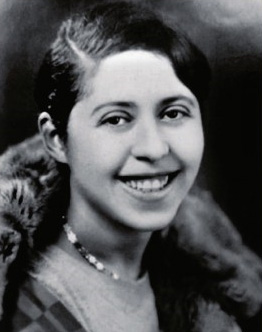

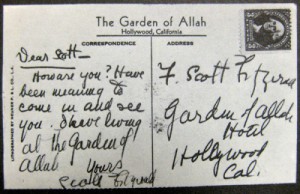

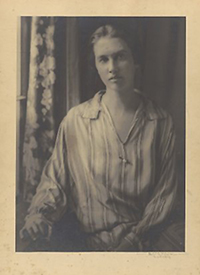
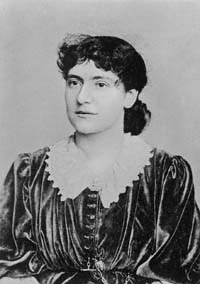


 NOTHING IS LOST
